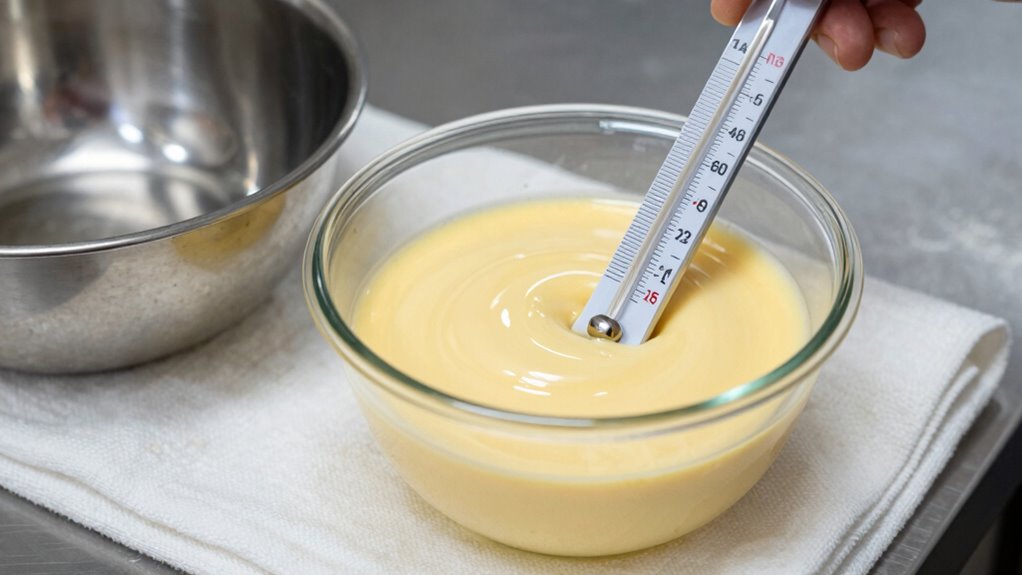

To guarantee custard safety, handle eggs carefully by storing them at 45°F or below, inspecting for cracks, and avoiding washing before storage. When cooking, gently heat eggs to 160°F, maintaining constant stirring and using a thermometer to prevent scrambling. After cooking, cool and store custard at or below 40°F within two hours, and reheat gently to 165°F. Following these rules keeps your custard safe and delicious; explore more tips to master perfect custard safety.

Get baking supplies delivered free with Prime
- Fast, free delivery on millions of items
- Prime Video, Amazon Music and more included
- Member-only deals all year
Key Takeaways
- Eggs should be stored at or below 45°F to prevent bacterial growth and ensure safety.
- During custard preparation, heat eggs gradually and monitor internal temperature to reach at least 160°F for safety.
- Use a thermometer to verify the custard’s internal temperature and prevent overcooking or curdling.
- Cool custard quickly from 135°F to 70°F within 2 hours, then refrigerate at or below 40°F.
- Avoid holding custard at unsafe temperatures over 4 hours to prevent bacterial contamination.
digital food thermometer for custard
As an affiliate, we earn on qualifying purchases.
As an affiliate, we earn on qualifying purchases.
Why Egg Safety Matters When Making Custard
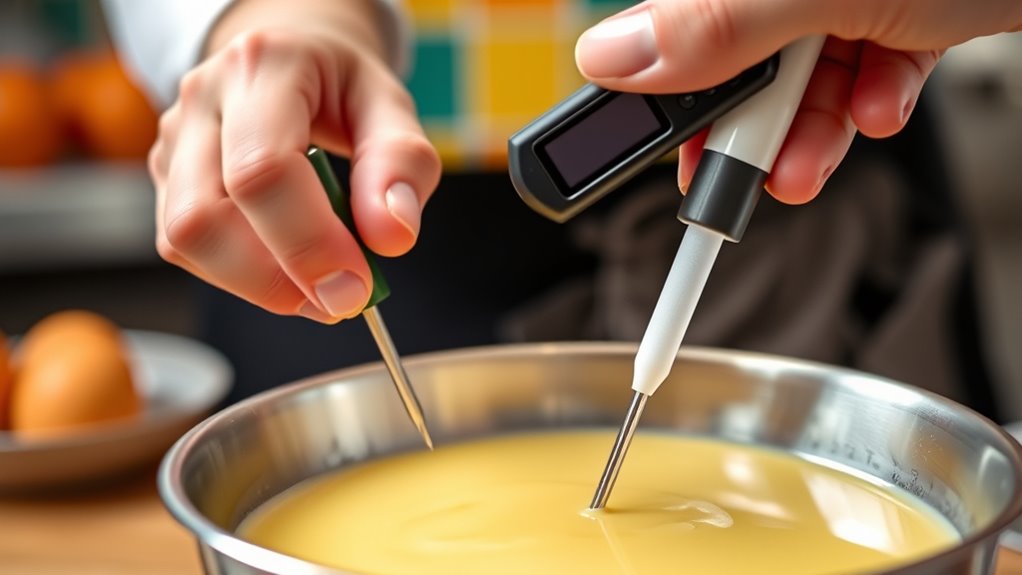
Because eggs are a common ingredient in custard, guaranteeing their safety is essential to prevent food poisoning. The eggshell can harbor bacteria like Salmonella, which can cause serious illness if ingested. Cracks or damage to the shell increase the risk of contamination, so always inspect eggs before use. Even if an egg looks clean and intact, bacteria can still be present inside. Proper handling, such as washing eggs and storing them at the right temperature, reduces the chance of contamination. Using contaminated eggs can lead to food poisoning, with symptoms like nausea, vomiting, and diarrhea. Taking these precautions helps protect your health and ensures your custard is safe to enjoy. Remember, safe eggs are the foundation of a good, worry-free dessert. Ensuring proper temperature control during storage and cooking is also crucial for egg safety. Additionally, maintaining appropriate holding temperatures during preparation prevents bacterial growth. Proper storage temperatures are essential to slow down bacterial activity and keep eggs fresh. Regularly monitoring refrigerator temperatures helps maintain optimal conditions for egg safety and freshness, and being aware of piercing care and hygiene can prevent bacteria from entering the eggs through cracks.
egg storage container with temperature control
As an affiliate, we earn on qualifying purchases.
As an affiliate, we earn on qualifying purchases.
What’s the Ideal Egg Temperature Before You Use Them?
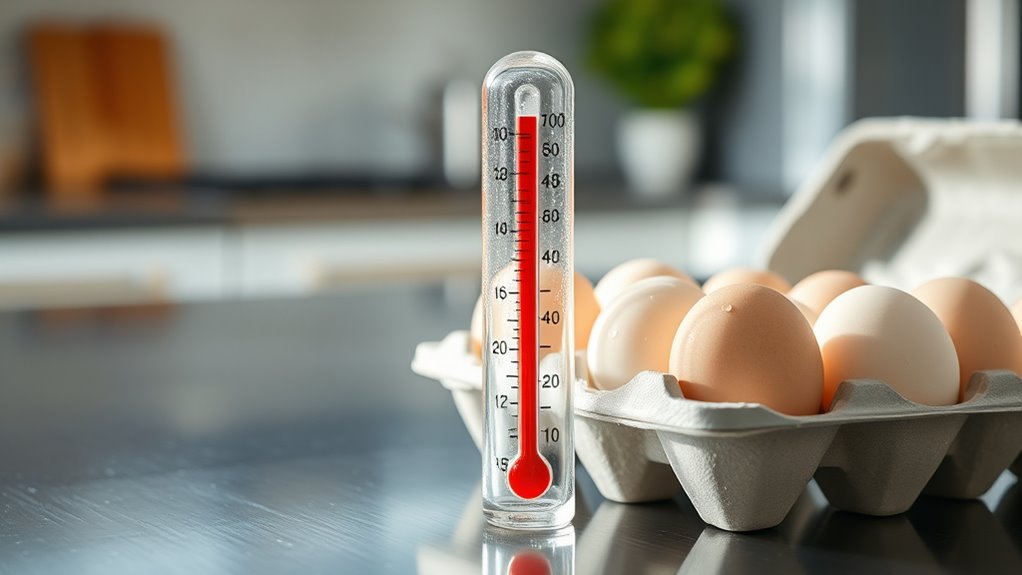
To guarantee your eggs are safe to use in custard, it’s important to check their temperature before cracking them open. Proper egg inspection involves evaluating shell integrity—look for cracks, sliminess, or powdery spots that indicate contamination. The ideal egg temperature is between 45°F and 55°F (7°C–13°C), which keeps the eggs fresh and minimizes bacterial growth. Before purchasing or storing, verify eggs are kept cold. Use the table below to compare egg conditions:
| Condition | Temperature Range | Inspection Tips |
|---|---|---|
| Fresh, raw eggs | 45°F–55°F | Check shell for cracks, cleanliness |
| Slightly warm eggs | Above 55°F | Avoid, may accelerate spoilage |
| Cold storage eggs | 45°F or below | Keep refrigerated to maintain safety |
Maintaining proper temperature and shell integrity is vital for safe custard-making. Proper handling and storage practices help ensure your eggs remain within safe temperature ranges for culinary use. Additionally, egg freshness can be better assessed through both temperature and visual inspection techniques. Ensuring eggs are stored and handled correctly can also prevent contamination risks, which is crucial when preparing custard.
refrigerator thermometer for eggs
As an affiliate, we earn on qualifying purchases.
As an affiliate, we earn on qualifying purchases.
How to Handle and Store Eggs Safely to Prevent Contamination
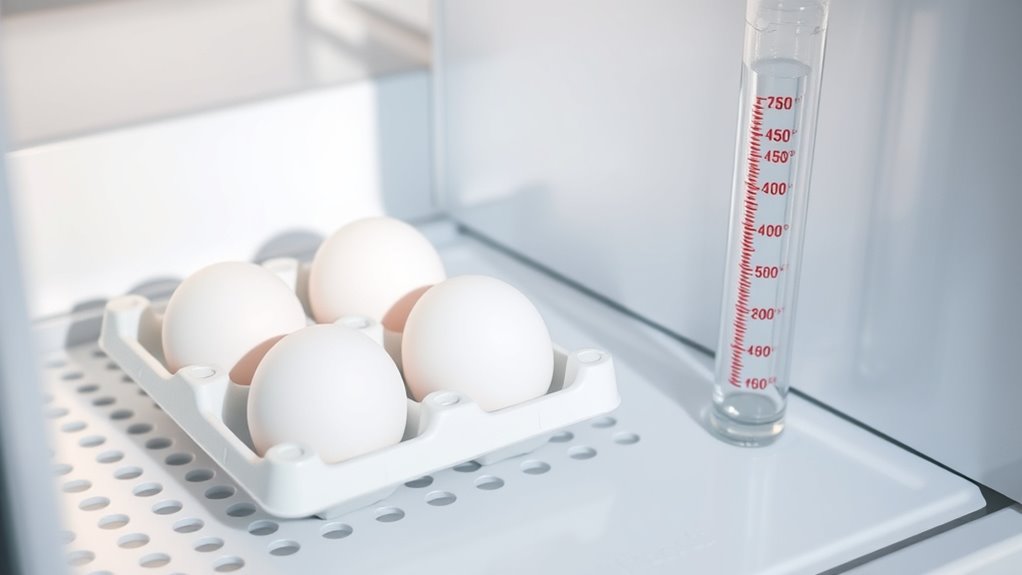
Handling and storing eggs properly is essential to guarantee contamination and ensure food safety. Start by checking egg freshness; fresh eggs have firmer shells and better shell hygiene, reducing bacteria risk. Always keep eggs refrigerated at or below 40°F (4°C) to slow bacterial growth. Store eggs in their original carton to protect the shell and prevent cross-contamination. Avoid washing eggs before storage, as this can remove the protective cuticle, making shells more vulnerable to bacteria. Handling eggs carefully to prevent cracks, which can lead to contamination, is crucial. When transferring eggs, wash your hands thoroughly afterward. Keep eggs away from raw meats and other potential sources of bacteria. Proper handling and storage are vital steps in preventing contamination and maintaining safe, high-quality eggs. Additionally, understanding deaf Vibes techniques can improve communication about food safety, especially for individuals with hearing impairments. Regularly cleaning and disinfecting kitchen surfaces helps eliminate bacteria that could contaminate eggs and other foods. Being aware of egg temperature guidelines, such as keeping eggs below 40°F, is also essential for safety. Maintaining good hygiene practices during handling can further reduce the risk of cross-contamination. Moreover, utilizing water filtration systems can help ensure the water used in cleaning eggs and kitchen surfaces is free from harmful contaminants.
custard safety temperature probe
As an affiliate, we earn on qualifying purchases.
As an affiliate, we earn on qualifying purchases.
How to Temper Eggs Without Scrambling Them

To temper eggs successfully, you need to raise their temperature gradually to prevent scrambling. Using a double boiler helps control heat and provides gentle, even warming. Keep a close eye and stir constantly to guarantee the eggs stay smooth and safe. Incorporating simple systems can help you maintain consistent temperatures and avoid accidental scrambling. Implementing temperature control devices can further enhance precision and ensure safe, successful results. Monitoring the temperature carefully throughout the process is essential for achieving the perfect consistency without risking overcooking.
Gradual Temperature Increase
When you’re tempering eggs, raising the temperature too quickly can cause them to scramble. To prevent this, increase the temperature gradually. Start by adding a small amount of hot liquid to the eggs while whisking constantly. This slow process helps the eggs warm evenly without sudden heat shocks that lead to egg cracking or yolk separation. Keep the mixture moving to distribute heat smoothly. As the eggs warm, continue adding hot liquid in small increments, always whisking. This steady approach allows the proteins to denature gently, ensuring a smooth, custard-like consistency. Patience is key—rushing this step can ruin your custard by causing curdling or scrambling. Proper temperature control is essential for achieving the desired texture and preventing overcooking. Using a thermometer can help monitor the temperature accurately and maintain a gentle heat. Maintaining consistent heat levels throughout the process helps prevent uneven cooking and ensures a silky custard. Additionally, understanding free floating techniques can help maintain the ideal environment for gentle heating, especially in delicate preparations. Incorporating gentle heat methods can further reduce the risk of overheating and improve the overall texture of your custard. With steady, incremental heating, you’ll achieve perfectly tempered eggs, ready for your recipe.
Use Double Boiler Method
Using a double boiler is an effective way to temper eggs gently and prevent scrambling. Place a heatproof bowl over a pot of simmering water, ensuring the bowl doesn’t touch the water. Whisk your eggs and any sugar or other ingredients together, then slowly add the hot water from the pot, stirring constantly. This gentle heat prevents rapid temperature changes that can cause egg cracking or curdling. By controlling the heat this way, you achieve a smooth, consistent custard texture without risking overcooking. The double boiler method distributes heat evenly, reducing the chance of hot spots that could scramble your eggs. Keep stirring, and watch the mixture thicken gradually, giving you a silky, well-tempered custard every time. Temperature control is essential to ensure your eggs don’t overheat during the process.
Monitor Consistently
How can you prevent eggs from scrambling while tempering? The key is to monitor the process consistently. Keep an eye on the temperature with a reliable thermometer, ensuring the eggs stay within the safe range. Use fresh eggs, as older ones may have weakened shells or compromised quality that increases the risk of scrambling. Maintaining proper kitchen hygiene is essential; sanitize your utensils and work surfaces to prevent contamination. Stir the eggs gently and frequently to distribute heat evenly. Avoid rushing—adding hot liquids too quickly can cause curdling. Regular checks help you respond immediately if temperatures rise too high. Staying attentive and maintaining good hygiene are crucial, and proper goal tracking can help you develop consistent habits for safe cooking practices. Additionally, understanding the different types of thermal control can assist in managing the temperature more effectively. Being aware of temperature fluctuations during the process allows for better adjustments and a smoother custard. By staying attentive and maintaining good hygiene, you can temper eggs safely without scrambling, resulting in smooth, creamy custard.
What Is the Safe Cooking Temperature for Custard? (160°F/71°C)
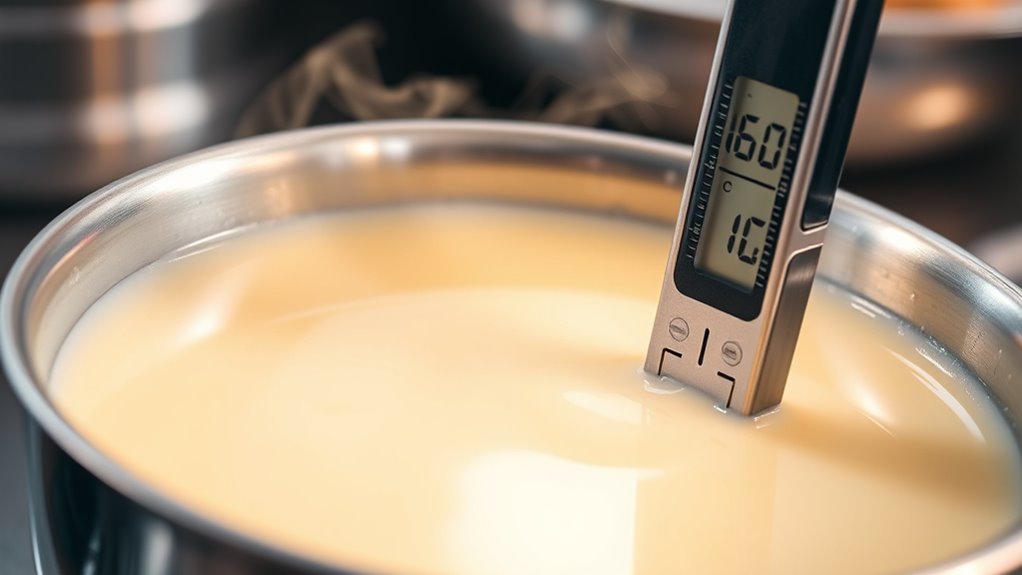
To guarantee custard is safe to eat, it needs to reach an internal temperature of 160°F (71°C). At this temperature, the egg pH shifts, reducing the risk of harmful bacteria. Achieving this ensures the custard’s viscosity thickens properly without becoming overcooked or grainy. Monitoring temperature is crucial because undercooked custard may harbor pathogens, while overcooking can ruin texture. Use a reliable thermometer to check the center of your custard, especially since egg pH can influence how quickly it thickens. Once it hits 160°F, hold it for a moment to ensure safety before removing from heat. This temperature guideline helps you balance safety with the desired creamy consistency of a perfectly cooked custard.
How to Use a Thermometer to Get Perfect Custard Temperatures
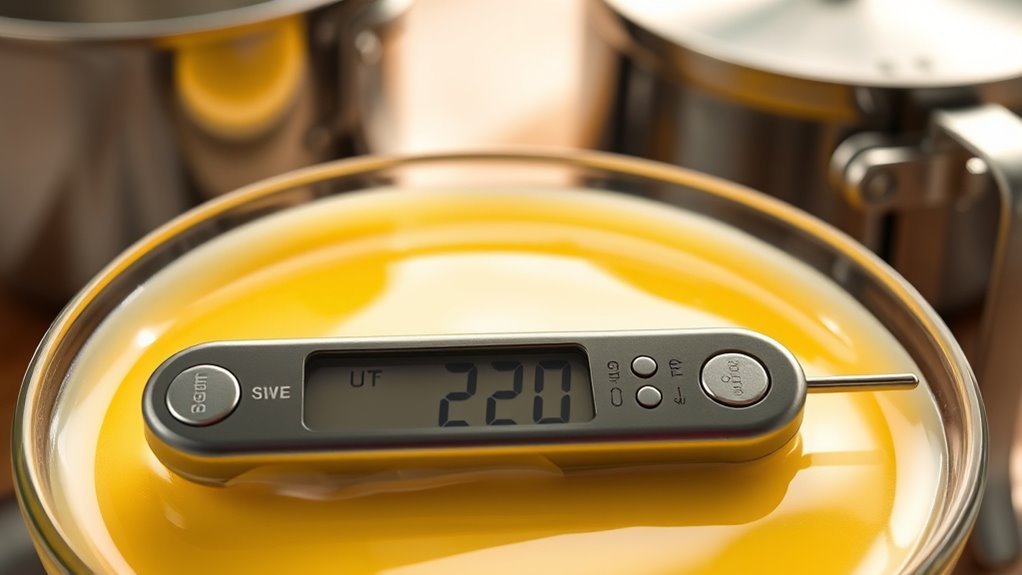
Using a thermometer correctly is key to perfect custard. You’ll want to understand the different types available and how each one works. With proper temperature techniques, you’ll consistently achieve the ideal custard consistency.
Thermometer Types Explained
Choosing the right thermometer is essential for achieving perfect custard every time. There are several types to contemplate, each suited to different needs. Digital instant-read thermometers provide quick, accurate readings, ideal for checking custard without delay. Dial analog thermometers are durable and simple to use, perfect for continuous monitoring. Infrared thermometers let you measure surface temperatures without contact, useful for checking egg freshness or storage containers.
| Thermometer Type | Best Use | Pros |
|---|---|---|
| Digital | Quick, precise readings | Fast, accurate |
| Analog | Durable, easy to calibrate | Simple, reliable |
| Infrared | Surface temperature, egg freshness | Non-contact, versatile |
Choose based on your needs to ensure your custard reaches the right temperature safely.
Proper Temperature Techniques
Ever wonder how to get the perfect custard every time? Start by checking egg freshness; fresh eggs ensure better texture and safety. When using a thermometer, insert it carefully into the thickest part of your custard, avoiding contact with the pan’s bottom to get an accurate reading. Maintain proper temperature techniques by monitoring the temperature closely and removing the custard from heat once it reaches the safe, ideal range—typically around 170°F (77°C). Always prioritize kitchen sanitation by cleaning your thermometer thoroughly before and after use, preventing cross-contamination. Consistently accurate temperature readings help prevent undercooked or overcooked custard, ensuring safety and quality. With precise temperature control and good hygiene practices, you’ll achieve smooth, perfectly cooked custard every time.
How Long Can You Hold Custard Safely Before Serving?
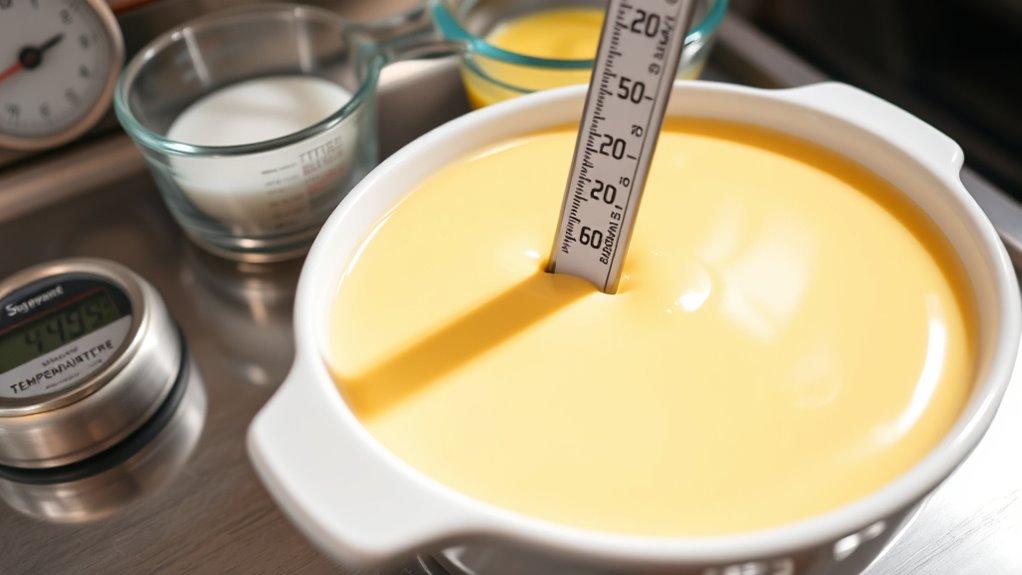
You should generally hold custard in the refrigerator for no more than two hours before serving to prevent bacterial growth. Its shelf life is limited, so adhering to proper storage guidelines is essential. If you need to hold custard longer, keep it at or below 40°F (4°C) and consume within 1-2 days. Use the table below to understand storage times:
| Storage Duration | Best Practice |
|---|---|
| Up to 2 hours | Serve immediately or refrigerate promptly |
| 2-24 hours | Keep refrigerated, consume quickly |
| Over 24 hours | Discard to ensure safety |
| Freezing | Not recommended for custard quality |
Following these guidelines helps ensure your custard remains safe and delicious.
What Happens if Custard Is Held at the Wrong Temperature?
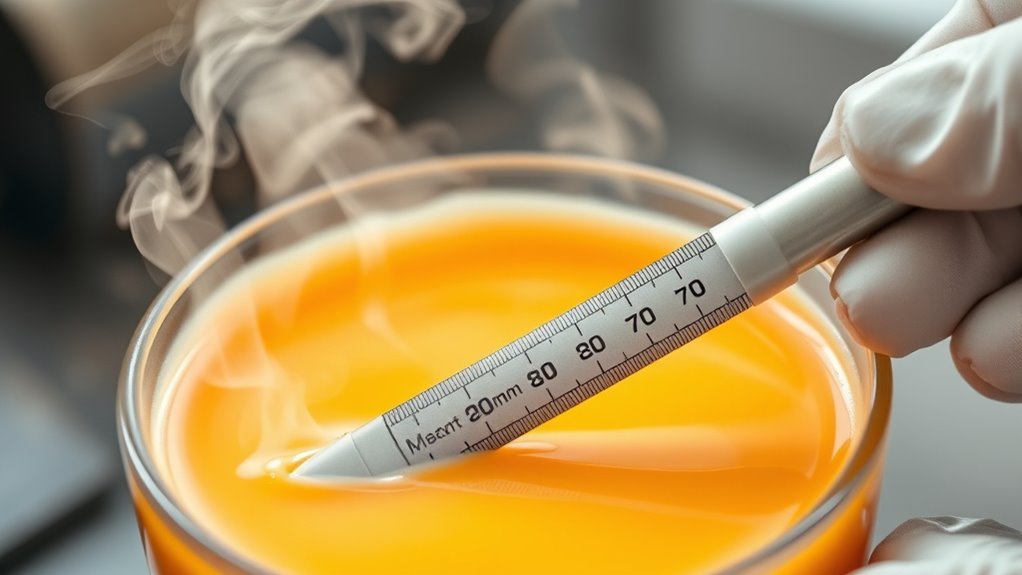
Holding custard at the wrong temperature can quickly compromise its safety and quality. When you expose custard to temperature abuse, bacteria can thrive, increasing the risk of foodborne illness. If the custard gets too warm, microbial growth accelerates, especially if it stays in the danger zone (between 40°F and 140°F) for too long. This not only heightens the chance of pathogens developing but also causes spoilage, altering the texture, taste, and appearance. Conversely, holding custard at overly cold temperatures can cause it to become rubbery or develop a skin. Ignoring proper temperature controls invites bacteria to multiply rapidly, making the custard unsafe to eat. To keep it safe, always monitor and maintain the correct holding temperatures during service.
How to Cool and Store Custard Quickly to Prevent Bacterial Growth
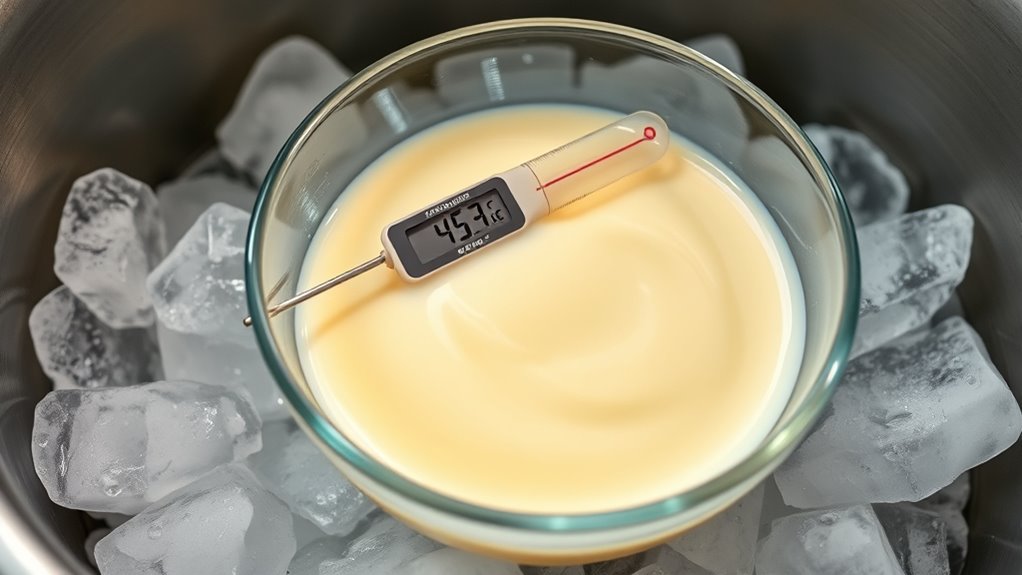
To prevent bacterial growth, you should cool custard rapidly using techniques like ice water baths or shallow containers. Keep the custard at proper storage temperatures, ideally below 40°F, and avoid holding it at unsafe temperatures for more than two hours. By following these steps, you can guarantee your custard stays safe to enjoy.
Rapid Cooling Techniques
Have you ever wondered how to cool custard quickly enough to prevent harmful bacteria from growing? The key is to use rapid cooling techniques. First, transfer the hot custard into shallow pans to increase surface area, which helps it cool faster. Stirring occasionally accelerates heat transfer and maintains egg freshness, preserving the custard’s flavor. You can also use an ice-water bath—place the container in a larger pan filled with ice and cold water, but avoid submerging the lid to prevent contamination. Stir gently to distribute heat evenly. These steps ensure the custard cools rapidly, reducing the time it stays in the temperature danger zone. Quick cooling not only safeguards against bacteria but also maintains the quality and taste of your custard.
Proper Storage Temperatures
Wondering how to keep your custard safe after cooling? Proper storage temperatures are key to preventing bacterial growth. First, guarantee your custard cools quickly using shallow storage containers, which promote faster heat dissipation. Always check egg freshness before preparing to reduce contamination risk. Once cooled, store custard at or below 41°F (5°C). Use airtight containers to prevent moisture loss and cross-contamination. Here’s a quick guide:
| Storage Method | Container Type | Temperature |
|---|---|---|
| Rapid cooling | Shallow, wide bowl | Below 41°F |
| Airtight storage | Plastic or glass | 41°F or lower |
| Proper sealing | Lids or wrap | Maintain cold |
Keeping your custard at the right temperature preserves quality and safety.
Time Limits for Holding
Cooling and storing custard promptly is essential for preventing bacterial growth. If you leave custard out too long, egg contamination can multiply rapidly, risking foodborne illness. To guarantee safety, follow these time limits:
- Cool custard from 135°F to 70°F within 2 hours using an ice bath or shallow pans.
- Once cooled to 70°F, refrigerate immediately, keeping the temperature at or below 41°F.
- Do not hold custard at unsafe temperatures for more than 4 hours, as bacteria can thrive.
- Regularly monitor your refrigerator’s temperature to maintain proper temperature regulation.
Tips for Reheating and Serving Custard Safely
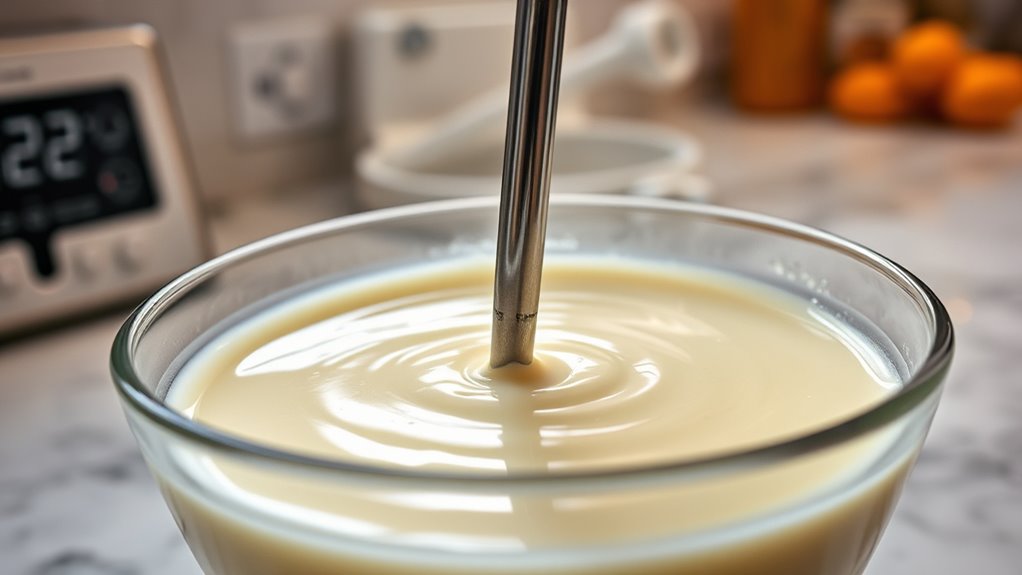
Reheating custard requires careful attention to guarantee it remains safe to eat. Always start with fresh eggs to ensure the custard’s safety and quality. When reheating, do so gently to preserve the custard texture; avoid high heat that can cause curdling. Use a double boiler or microwave in short intervals, stirring frequently to distribute heat evenly. Check that the custard reaches an internal temperature of 165°F (74°C) to kill any bacteria. If reheated leftovers smell or look off, discard them. Serve custard promptly after reheating, and don’t leave it at room temperature for more than two hours. Proper reheating helps maintain both the custard’s safety and its smooth, creamy consistency.
Frequently Asked Questions
Can I Tell if Eggs Are Safe Just by Looking at Them?
You can’t reliably tell if eggs are safe just by looking at them. A visual inspection won’t reveal bacteria or spoilage. Instead, check for signs of egg freshness like a firm shell and no cracks. Always store eggs properly and follow safe handling guidelines. If in doubt, perform a float test or smell the eggs after cracking to ensure they’re fresh and safe to use.
Are Organic Eggs Safer for Custard Preparation?
Sure, organic eggs are “safer,” right? Well, not necessarily. While they often come from hens fed organic feed, their safety in custard depends more on proper cooking than labels. Your egg safety perception might get a boost, but it’s no guarantee. Focus on cooking your custard to the right temperature, regardless of whether you use organic eggs or conventional ones. That’s the real key to safe custard!
How Does Altitude Affect Egg Cooking Temperatures?
At high altitudes, you need to make altitude adjustments when cooking eggs because lower air pressure affects egg texture and coagulation temperatures. You should increase cooking temperatures slightly to verify eggs reach a safe internal temperature, preventing undercooking. This helps maintain the desired egg texture and guarantees safety. Without these adjustments, your custard may not set properly, and eggs could remain undercooked, risking food safety concerns.
Is There a Difference Between Pasteurized and Fresh Eggs for Custard?
Yes, there’s a difference between pasteurized and fresh eggs for custard. Pasteurized eggs are safer because they’ve been heat-treated to kill bacteria, making them a better choice if you’re concerned about egg safety. Fresh eggs, while great for eating raw or in recipes, might carry more bacteria if not properly handled. For best safety and quality, consider using pasteurized eggs in custard recipes, especially if you plan to serve it uncooked or lightly cooked.
Can I Reuse Leftover Custard Safely After Refrigeration?
You can reuse leftover custard safely if you store it properly and reheat it thoroughly. Did you know that refrigeration slows bacterial growth by up to 90%? To guarantee safety, refrigerate leftover custard promptly in shallow containers, and reheat it to at least 165°F before serving again. Proper egg storage and careful custard reheating help prevent foodborne illnesses, keeping your dessert both delicious and safe.
Conclusion
By following these egg safety tips, you’ll keep your custard delicious and free from harm, just like a well-trained apothecary of old. Remember to handle eggs properly, cook to the right temperature, and keep your custard at safe holding temperatures. With a little care, you can enjoy your dessert without worry—no need for a time machine to undo a mistake. Stay vigilant, and your custard will be both tasty and safe every time.
Fall Picks
fall essentials
As an affiliate, we earn on qualifying purchases.