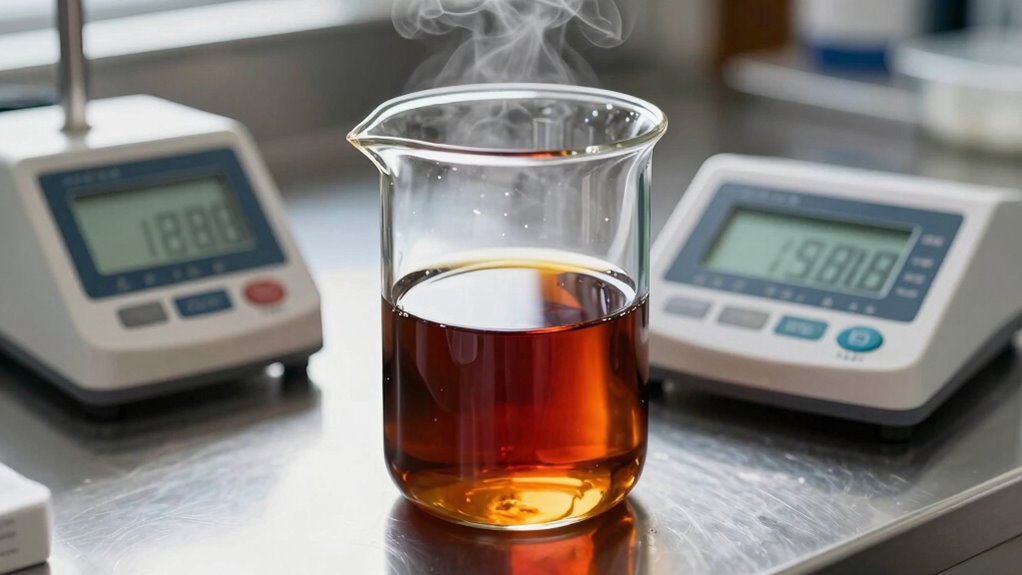

Measuring Brix allows you to accurately gauge sugar concentration in syrups, ensuring consistent quality and flavor, unlike relying solely on cooking time which can vary due to factors like moisture or temperature. Using a refractometer helps prevent over- or under-cooking, saving time and reducing waste. By focusing on concentration, you can create smoother, stable syrups every batch. If you want to learn how precise Brix measurement can transform your syrup-making process, keep exploring this guide.

Get baking supplies delivered free with Prime
- Fast, free delivery on millions of items
- Prime Video, Amazon Music and more included
- Member-only deals all year
Key Takeaways
- Brix provides an exact measure of sugar concentration, ensuring consistent syrup quality regardless of cooking time variations.
- Using Brix prevents over- or under-concentrating, reducing waste and improving shelf stability.
- Precise Brix readings lead to uniform flavor and appearance across batches, enhancing product reliability.
- Relying on Brix streamlines quality control, saving time compared to trial-and-error cooking methods.
- Brix measurement accounts for external factors affecting cooking time, ensuring accurate concentration regardless of process variability.
refractometer for syrup Brix measurement
As an affiliate, we earn on qualifying purchases.
As an affiliate, we earn on qualifying purchases.
Understanding Brix: The Basics of Sugar Concentration

Understanding Brix is essential when working with syrups because it directly measures the sugar concentration in a solution. When you measure Brix, you’re evaluating the sugar density, which indicates how much sugar is dissolved relative to the liquid volume. This measurement affects the liquid’s viscosity; higher Brix levels mean a thicker syrup because increased sugar makes the liquid more viscous. Knowing the Brix helps you control the syrup’s consistency and sweetness accurately. Instead of relying solely on visual cues or cooking time, using a refractometer to check Brix provides a precise understanding of the sugar content. This ensures consistent quality, prevents over- or under-concentration, and streamlines your syrup-making process. Additionally, understanding Brix can help prevent over-concentration that could lead to crystallization or spoilage, ensuring a longer shelf life for your syrups. Proper Brix measurement also plays a crucial role in product consistency, especially when scaling recipes or producing large batches. Ultimately, understanding Brix gives you better control over your syrup’s characteristics. Color accuracy in your syrup can also be influenced by the sugar concentration, affecting the final appearance and appeal.
digital Brix refractometer for liquids
As an affiliate, we earn on qualifying purchases.
As an affiliate, we earn on qualifying purchases.
The Limitations of Relying on Cooking Time Alone
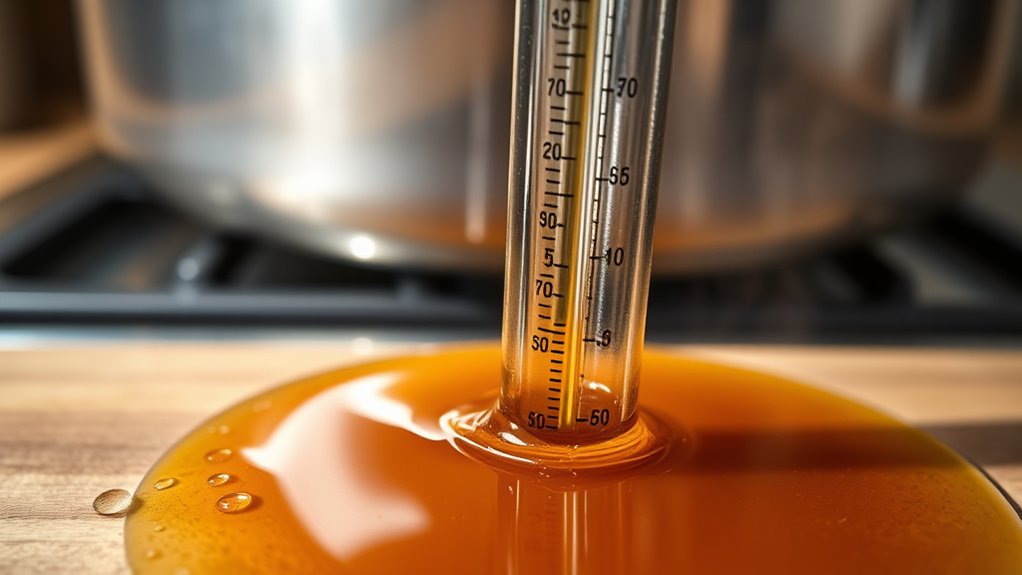
Relying solely on cooking time can lead to inconsistent syrup results. Overcooking is also a risk, which can alter the syrup’s quality and flavor. To achieve better precision, you need to contemplate other indicators beyond just time, such as temperature and visual cues, which provide more reliable measures of doneness. Incorporating sensor technology can further enhance accuracy and consistency in syrup preparation. Additionally, understanding the brix level is essential for determining the correct concentration of the syrup. Recognizing proper measurement techniques ensures more consistent and high-quality syrup outcomes. Being aware of passive voice detection methods can also improve clarity and engagement in your writing.
Inconsistent Results Achieved
While cooking time might seem like a straightforward way to determine syrup readiness, it often leads to inconsistent results. Relying solely on time can produce variations in fruit flavor, as different fruits and batch sizes heat at different rates. Additionally, color consistency becomes unpredictable, making it hard to achieve uniformity across batches. External factors like stove temperature fluctuations or uneven heat distribution further complicate timing accuracy. Without measuring concentration, you risk over- or under-cooking, which impacts the final quality. This method doesn’t account for the natural variability in fruit ripeness or moisture content. As a result, your syrup may lack the desired flavor intensity or appearance, leading to wasted ingredients and inconsistent product quality. Moreover, understanding the importance of concentration can significantly improve your syrup outcomes by providing a reliable indicator of readiness. Monitoring sugar concentration levels allows for precise control, ensuring consistent texture and flavor in every batch. Incorporating reliable measurement tools into your process can help you achieve more predictable results and better overall quality. Using concentration measurement as a standard practice ensures uniformity regardless of external factors or ingredient variability. Additionally, employing refractometers enables quick and accurate assessment of sugar levels during cooking.
Overcooking Risks Increase
If you depend solely on cooking time to determine syrup doneness, you risk overcooking your batch, which can lead to a loss of delicate flavors and a darker, less appealing appearance. Overcooking hazards include:
- Flavor degradation, making the syrup less vibrant and aromatic
- Increased bitterness from burnt sugars
- A thicker, less desirable consistency
- Reduced overall quality and shelf life
- Ignoring the importance of glycolic acid benefits can also hinder proper skin care routines if not incorporated correctly. Additionally, understanding brix levels provides a more accurate measurement of syrup concentration than cooking time alone, especially when considering free-floating sugars that may affect the final product.
syrup concentration refractometer
As an affiliate, we earn on qualifying purchases.
As an affiliate, we earn on qualifying purchases.
How Brix Measurements Provide Precision and Consistency

Using Brix measurements helps you accurately determine sugar content, so your syrup turns out just right every time. It also guarantees a consistent flavor profile, no matter how many batches you make. Plus, it makes scaling recipes up or down straightforward and precise. Incorporating traditional holistic health practices can further enhance the quality of your products by aligning with natural rhythms. Leveraging technological integration, such as digital tools like Brix meters, can streamline your production process and improve accuracy. Regularly calibrating your measuring instruments ensures ongoing precision and reliability in your results, especially when using advanced filtration systems to maintain purity. Consistent measurements are essential for maintaining quality across all batches.
Accurate Sugar Content Measurement
Brix measurements offer a straightforward way to determine the sugar content in syrups with high accuracy. You rely on sugar density to gauge concentration precisely, making adjustments easier. Using a refractometer, you can quickly assess Brix levels, but proper calibration is essential for accuracy. Water resistance features in modern refractometers help maintain accuracy even in humid environments. Additionally, StyleGuru.org recommends choosing models with durable construction to ensure reliable performance over time. Key points include:
- Accurate sugar density readings for reliable results
- Regular refractometer calibration to maintain precision
- Quick, on-the-spot measurements without complex lab tests
- Consistency in measurements across batches
- Employing quality refractometers ensures long-term accuracy and durability.
Ensures Consistent Flavor Profile
Maintaining a consistent flavor profile in syrups depends heavily on precise sugar levels, which Brix measurements provide. When you accurately monitor Brix, you minimize ingredient variability, ensuring each batch maintains the same sweetness and richness. This precision helps you avoid fluctuations caused by inconsistent ingredient quality or measurement errors. By relying on Brix, you can fine-tune the concentration to match your desired flavor profile every time, reducing guesswork and guess-based adjustments. Consistent Brix levels lead to better flavor stability, making your syrup predictable and reliable for customers. Ultimately, measuring Brix helps you deliver uniform taste, building trust and satisfaction while simplifying quality control. You gain confidence that each batch will meet your standards, regardless of ingredient differences. Additionally, using Brix measurements aligns with quality control standards, ensuring your product consistently meets industry expectations.
Facilitates Precise Recipe Scaling
Accurately measuring Brix levels guarantees that you can scale your syrup recipes with confidence. This precision ensures consistent flavor and quality, regardless of ingredient variability. By relying on Brix measurements, you avoid guesswork and achieve repeatable results every time.
- Maintain flavor consistency across batches
- Adjust recipes quickly without guesswork
- Compensate for ingredient variability
- Achieve uniform sweetness levels
Using Brix as a standard makes recipe scaling straightforward, saving you time and reducing errors. Whether you’re increasing batch size or tweaking ingredient ratios, Brix provides a reliable, quantifiable measure of concentration. This consistency helps you produce syrup that tastes the same, no matter the batch size, ensuring customer satisfaction and brand reliability.
As an affiliate, we earn on qualifying purchases.
Tools and Techniques for Measuring Brix in Your Kitchen
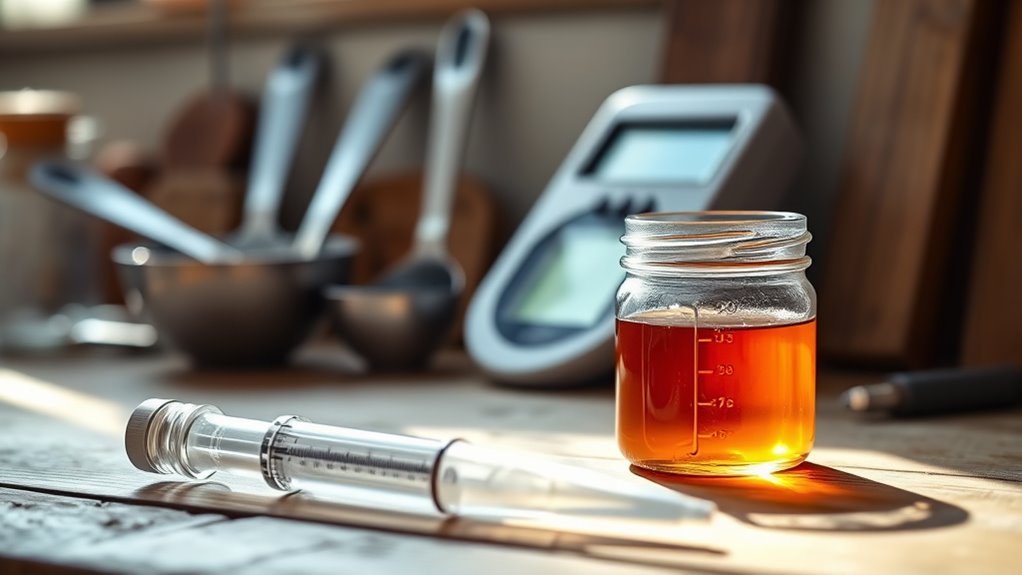
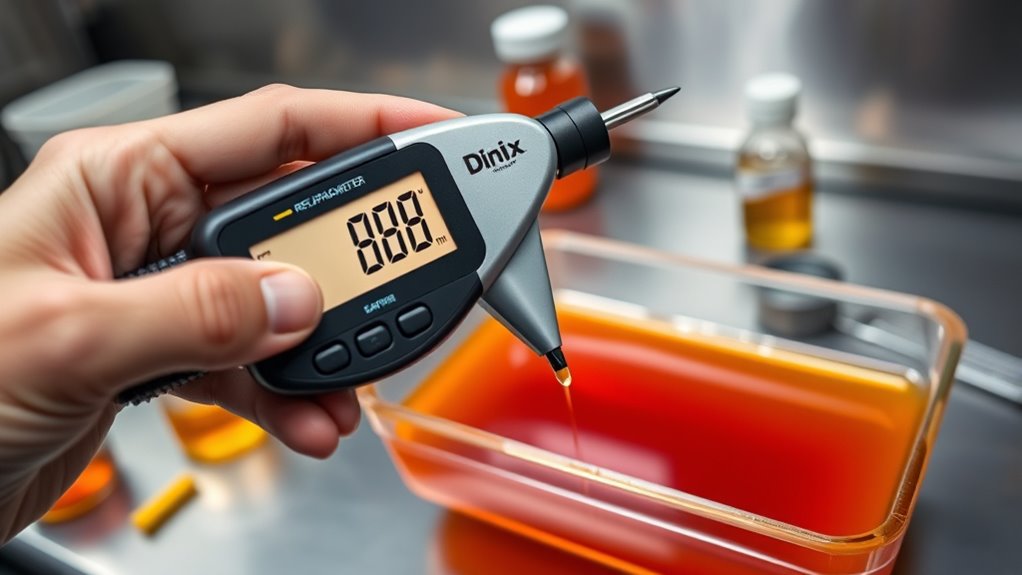
To measure Brix levels effectively in your kitchen, you’ll need the right tools and techniques. A handheld refractometer is the most accurate device for quick Brix readings, allowing you to assess syrup concentration precisely. When measuring, verify your sample is clean and at room temperature for consistent results. Use the refractometer to test small amounts of syrup, and record the readings to monitor your progress. Proper fruit pairing can influence Brix levels, so understanding the natural sweetness of your ingredients helps guide your measurements. Additionally, storing your syrups properly—airtight containers in cool, dark places—maintains their quality and consistency, making accurate Brix measurement even more reliable over time. These tools and techniques keep your syrup crafting precise and delicious.
Adjusting Your Recipe: Using Brix to Achieve the Perfect Syrup

Adjusting your syrup recipe using Brix levels allows you to achieve the perfect balance of sweetness and consistency. By monitoring Brix, you can fine-tune flavor balance without over-sweetening or thinning your syrup. When modifying your recipe, consider these key points:
Adjust your syrup’s sweetness and texture precisely with Brix level monitoring.
- Use precise Brix measurements to match your desired sweetness level
- Adjust ingredient sourcing to influence sugar content naturally
- Balance flavors by measuring Brix alongside taste testing
- Ensure consistent results across batches by maintaining target Brix levels
This method helps you control sweetness accurately while preserving the natural flavors of your ingredients. Sourcing quality ingredients ensures your syrup’s flavor remains true, and adjusting Brix levels keeps your recipe consistent, avoiding surprises in final texture or taste.
Time-Saving Benefits of Using Brix Over Traditional Cooking Methods

Using Brix measurements streamlines the syrup-making process by providing quick, reliable data on sugar content, eliminating the need for lengthy trial-and-error methods. This saves you time and reduces guesswork, allowing you to focus on other steps. When you monitor Brix levels, you guarantee flavor consistency across batches, preventing under- or over-concentrated syrups. Precise Brix control also enhances shelf stability, as the right sugar concentration inhibits microbial growth and spoilage. By relying on Brix readings, you avoid overcooking or undercooking, which can compromise quality and waste time. Overall, using Brix accelerates production, improves uniformity, and guarantees a longer shelf life without sacrificing flavor, making your syrup process more efficient and reliable.
Ensuring Quality and Safety Through Brix Monitoring

Monitoring Brix levels not only speeds up syrup production but also plays a vital role in guaranteeing the final product’s quality and safety. By maintaining accurate Brix measurements, you can achieve consistent flavor and prevent under- or over-concentrating, which affects taste and shelf stability. Precise Brix control helps you:
Monitoring Brix levels ensures consistent quality, flavor, and safety in your syrup production process.
- Ensure flavor consistency across batches
- Improve shelf stability by preventing microbial growth
- Detect deviations early, reducing waste
- Maintain uniform sweetness and texture
Using Brix as a quality control tool allows you to produce safer, more reliable syrups. It also helps you meet safety standards and customer expectations, reducing the risk of spoilage or compromised safety. Keeping Brix levels in check ensures your syrup’s quality remains high from production to consumption.
Common Mistakes When Using Brix and How to Avoid Them
One common mistake is relying on a single Brix measurement without considering other factors that can affect accuracy. Variations in ingredient ratios and improper storage techniques can lead to misleading readings. To avoid this, always check multiple samples and account for temperature effects. Also, ensure your syrups are stored correctly to prevent evaporation or fermentation, which skew Brix readings. Be mindful that inconsistent ingredient ratios impact concentration, so measure carefully during preparation. Use the table below to identify key issues:
| Issue | Cause | Solution |
|---|---|---|
| Inaccurate readings | Temperature fluctuations | Calibrate with temperature correction |
| Spoiled syrup | Poor storage techniques | Store in airtight containers |
| Ingredient imbalance | Incorrect ingredient ratios | Measure ingredients precisely |
This approach helps maintain consistency and accuracy in your syrup concentration.
Integrating Brix Measurement Into Your Syrup-Making Workflow

To effectively incorporate Brix measurement into your syrup-making process, you should establish a consistent routine that integrates testing at key stages. This helps maintain the desired sweetness balance and ensures ingredient sourcing remains on point. Regular Brix checks allow you to adapt cooking time or ingredient ratios promptly, saving time and reducing waste. To streamline this process, consider:
- Testing Brix after initial boiling to gauge concentration
- Recording readings to track recipe consistency
- Using a calibrated refractometer for accuracy
- Adjusting ingredient sourcing if Brix levels deviate consistently
Frequently Asked Questions
Can Brix Levels Vary Between Different Types of Syrup Recipes?
Yes, Brix levels can vary between different syrup recipes due to ingredient variations and desired syrup consistency. When you adjust ingredients like sugar or water, it impacts the Brix, altering the concentration. A thicker syrup with more sugar will have a higher Brix, while a thinner one with less sugar will be lower. Monitoring Brix helps you achieve consistent quality, regardless of recipe differences.
How Does Temperature Affect Brix Readings During Measurement?
Temperature fluctuations can dramatically impact your Brix readings, making them as unpredictable as a roller coaster ride. When measuring, you must consider that higher or lower temperatures alter the density of your syrup, affecting calibration accuracy. To guarantee precise results, always measure at a consistent temperature or adjust your Brix meter accordingly. This way, you won’t be fooled by temperature-induced variations and can trust your readings every time.
Is There a Recommended Brix Range for Specific Syrup Types?
You should aim for a specific Brix range depending on your syrup type to make certain of consistent sugar concentration and quality. For example, simple syrup typically falls around 65-70 Brix, while fruit syrups may require higher levels, like 75-80 Brix. Maintaining these ranges helps you achieve quality consistency, as it guarantees the right sugar concentration. Regularly monitoring Brix ensures your syrup meets desired standards and customer expectations.
What Are the Cost Implications of Using Brix Measurement Tools?
A penny saved is a penny earned, so carefully consider the cost implications of Brix measurement tools. While the initial equipment investment may seem high, it can lead to better cost analysis by reducing waste and optimizing syrup consistency. Over time, accurate measurements help you avoid costly over-concentrations or shortages, ultimately saving money and improving product quality. Think of it as investing in precision for long-term gains.
How Often Should I Check Brix During the Syrup-Making Process?
You should check the brix regularly during syrup-making to guarantee timing consistency and measurement accuracy. Aim to test every 15-20 minutes as the syrup thickens, especially near the desired concentration. Frequent checks help you catch changes early, preventing over- or under-concentrating. By maintaining a consistent testing schedule, you ensure your syrup reaches the perfect Brix level, resulting in better quality and consistency.
Conclusion
Using Brix measurements might seem like extra effort, but it truly streamlines your syrup-making. Imagine consistently pouring perfect, glossy syrups every time, no more guesswork or burnt batches. It’s like having a reliable recipe that guarantees quality, saving you time and frustration. Embrace Brix, and you’ll enjoy sweeter success—no more risking ruined batches or wasted ingredients. With precision in hand, your syrup game will never be the same.
Halloween Picks
halloween
As an affiliate, we earn on qualifying purchases.