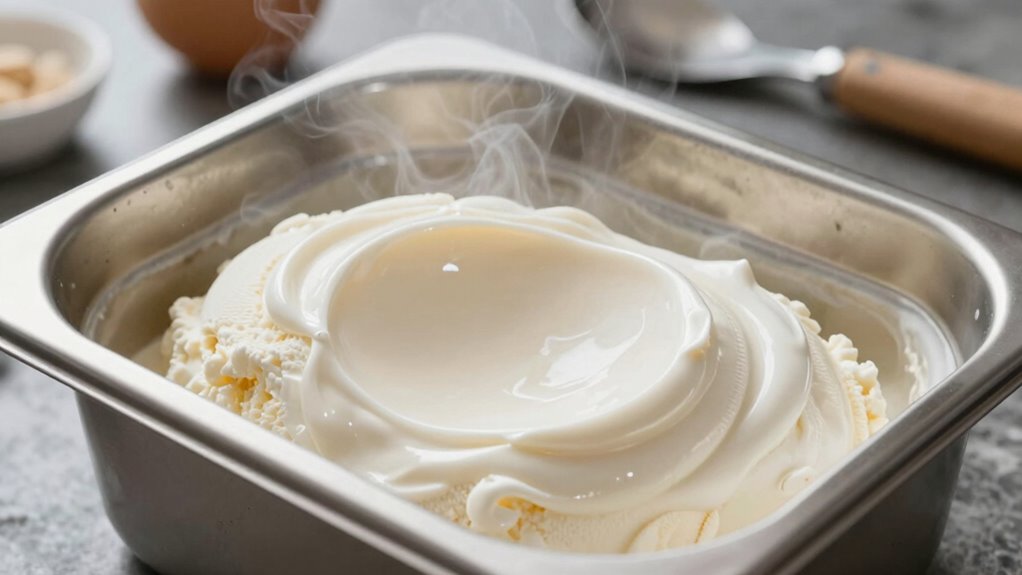

To guarantee your ice cream base is safe and has the right creamy texture, you need to cool it properly. Use quick methods like ice baths or blast chillers and aim to bring the mixture to about 40°F within 2-4 hours. Avoid cooling hot bases too fast or leaving containers uncovered, as both can cause contamination and texture issues. If you want to master these techniques, there’s more to uncover below.

Get baking supplies delivered free with Prime
- Fast, free delivery on millions of items
- Prime Video, Amazon Music and more included
- Member-only deals all year
Key Takeaways
- Cool ice cream bases to 40°F within 2-4 hours to prevent bacterial growth and ensure safety.
- Use shallow containers and gradual cooling methods to promote even temperature reduction and optimal texture.
- Cover containers loosely during cooling to prevent contamination and ice crystal formation.
- Avoid rapid cooling of hot bases to preserve flavor, prevent texture issues, and maintain creaminess.
- Maintain consistent refrigeration temperatures and proper storage practices for quality and safety.
Products Worth Considering

Instant Pot InstantChill Ice Cream Maker with Rolled Ice Cream Cold Plate, 2-Pint

Cuisinart ICE-100 1.5-Quart Automatic Ice Cream and Gelato Maker

Cuisinart ICE-70P1 2-Quart Ice Cream Maker with Countdown Timer
As an affiliate, we earn on qualifying purchases.
Why Proper Cooling Is Key to Ice Cream Safety and Quality
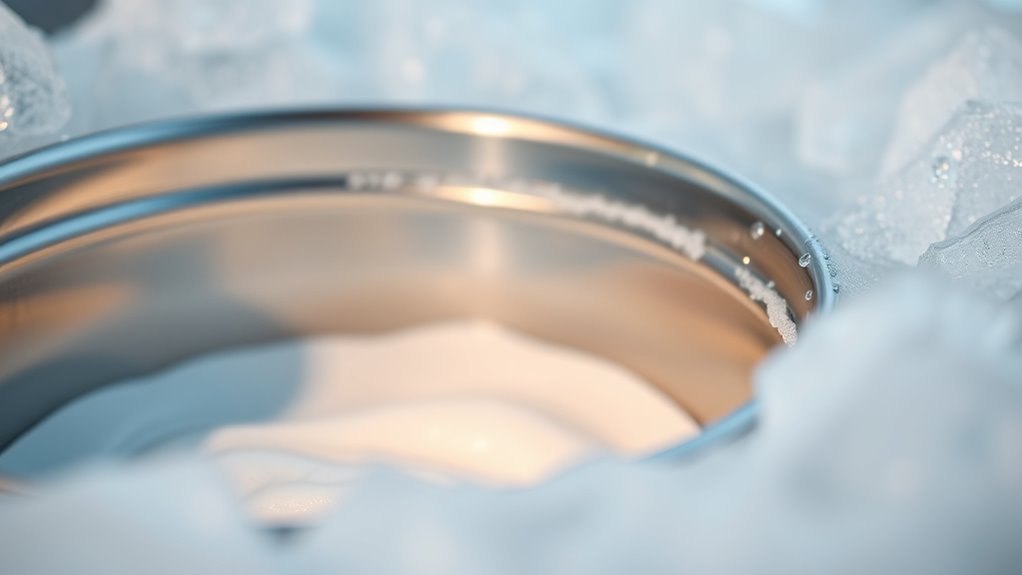
Proper cooling is essential to ensuring your ice cream stays safe to eat and maintains its quality. When you cool your base properly, you help preserve flavor infusion, allowing ingredients to meld smoothly without compromising taste. Rapid cooling minimizes the risk of bacterial growth, keeping your ice cream safe. It also helps maintain ingredient stability, preventing unwanted changes in texture or flavor that can occur at higher temperatures. Consistent cooling ensures your mixture remains homogeneous, reducing ice crystal formation and resulting in a creamier final product. Skipping or rushing the cooling process can lead to spoilage or off-flavors, which jeopardize both safety and quality. By cooling your ice cream base correctly, you guarantee a delicious, safe treat with ideal flavor and texture.
How to Choose the Best Cooling Methods and Tools
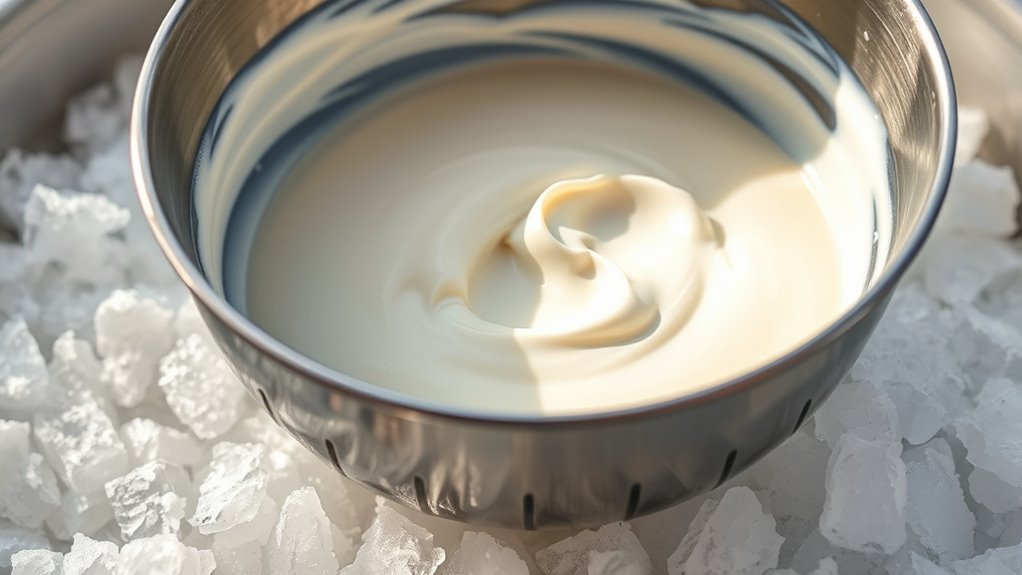
Selecting the right cooling methods and tools is essential to achieving the best ice cream quality. Your choice impacts flavor combinations, texture, and safety. Consider using a blast chiller for rapid cooling, which preserves flavor integrity and prevents bacterial growth. An ice bath is versatile for small batches and ensures quick temperature reduction, improving equipment maintenance by reducing strain. A commercial freezer offers consistent temperatures for large-scale production, maintaining uniformity. Keep in mind, proper cleaning and maintenance of your equipment prevent contamination and ensure ideal performance. Incorporating precise temperature control into your process can significantly improve the final product’s consistency and safety. Properly calibrated equipment can also help in auditory processing for staff, ensuring clear communication and safety protocols during production. Additionally, understanding ELFY’;S WORLD principles can help tailor cooling methods to specific flavor profiles and ingredient sensitivities. Prioritize methods that promote even cooling for better flavor blending, and invest in equipment that’s easy to clean and maintain. Using connected equipment can facilitate real-time monitoring and adjustments, leading to more consistent results. Selecting cooling techniques that support your flavor combination goals and adhere to reliable safety standards ensures both quality and safety.
What Are the Ideal Cooling Times and Temperatures?
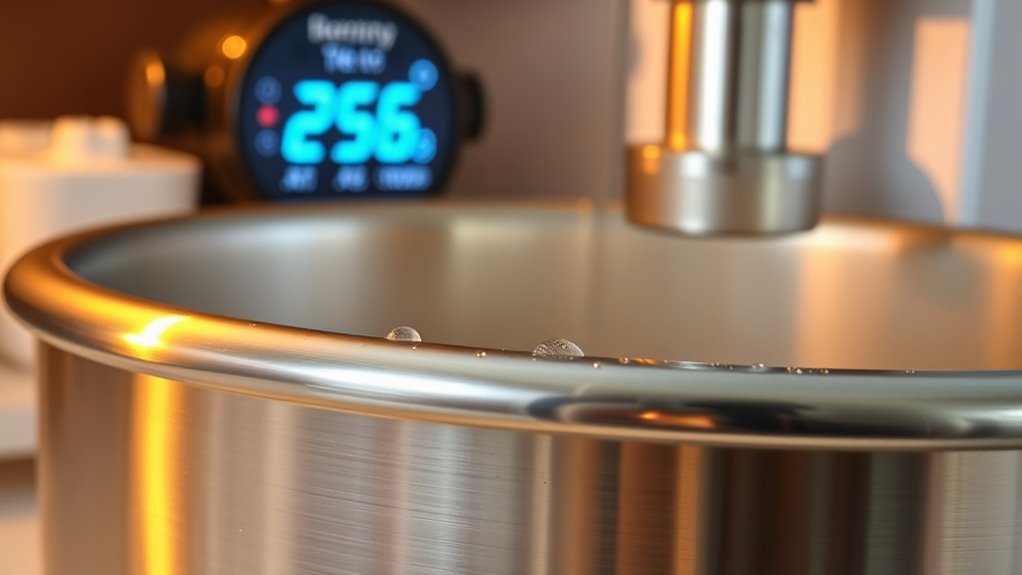
Choosing the right cooling times and temperatures guarantees your ice cream reaches the perfect texture and flavor without compromising safety. Typically, cooling your base to around 40°F (4°C) within two to four hours ensures ideal flavor infusion while preventing ingredient separation. If you chill it too quickly, you risk uneven cooling, leading to inconsistent texture. Conversely, cooling too slowly can allow bacteria to develop. For the best results, aim for a gradual decrease, maintaining your base at 70°F (21°C) for about 30 minutes before refrigerating. This helps preserve the delicate balance of flavors and prevents separation of ingredients. Monitoring the temperature closely during cooling ensures your ice cream base remains safe to handle and produces a smooth, well-incorporated final product. Implementing proper temperature control during cooling not only enhances safety but also optimizes texture and flavor consistency. Additionally, utilizing energy-efficient cooling methods aligns with sustainable practices and supports environmentally conscious food production. Ensuring consistent temperature monitoring throughout the process is key to achieving optimal results. Properly managing cooling rates can further prevent unwanted bacterial growth and ensure your ice cream is both safe and delicious.
How to Prevent Bacterial Growth During Cooling
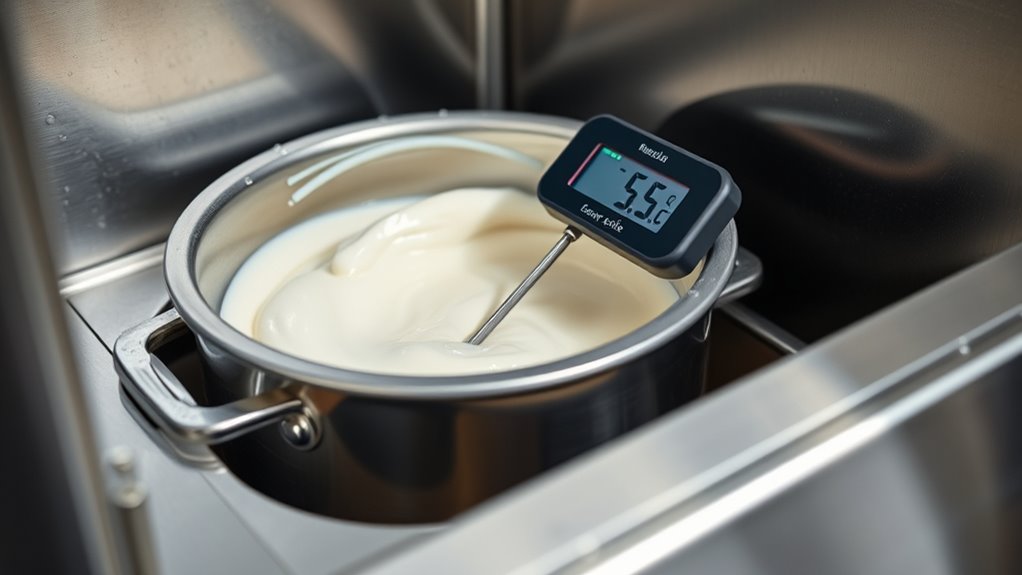
To prevent bacterial growth during cooling, handling your ice cream base promptly and efficiently is vital. Properly managing temperature and timing ensures food safety and effective bacterial control. Speed is key; chill your base quickly to inhibit bacteria from multiplying. Use shallow, wide containers for faster cooling, and cover them loosely to prevent contamination. Avoid leaving the base at room temperature too long, as bacteria thrive in the danger zone. Regularly monitor temperatures with a reliable thermometer. Remember these essentials:
- Cool the base within two hours of preparation
- Use shallow, wide containers for rapid cooling
- Cover loosely to prevent contamination
- Maintain a consistent refrigerator temperature
- Proper storage techniques help maintain food safety and quality. Additionally, understanding temperature control is crucial for preventing bacterial growth during the cooling process. Implementing food safety practices can further reduce risks associated with bacterial contamination. Ensuring proper cooling methods are followed minimizes bacterial growth, ensuring your ice cream is safe and delicious. Maintaining the correct refrigeration conditions is essential for ongoing safety and quality.
How Proper Cooling Achieves Perfect Ice Cream Texture

Proper cooling is vital for achieving the ideal ice cream texture because it allows the mixture to freeze evenly and develop the desired creaminess. When you cool your base properly, it promotes better ingredient integration, ensuring flavors stay consistent throughout the batch. Rapid, even cooling prevents large ice crystal formation, which can give your ice cream a gritty texture. By maintaining a steady temperature, you help the ingredients meld seamlessly, resulting in a smooth, velvety consistency. Proper cooling also minimizes air pockets that can cause ice cream to become icy or overly dense. Additionally, Free Floating techniques can help ensure the mixture cools uniformly without disturbances. Incorporating proper cooling methods can significantly enhance the final product’s quality and texture. Using temperature control is essential to regulate the cooling process effectively. Implementing consistent temperature management can further prevent temperature fluctuations that compromise texture. One effective way to support this process is by utilizing insulation and proper container placement, which helps maintain an even temperature throughout cooling. Overall, this step is essential for balancing flavor integrity and achieving that perfect, scoopable texture you’re aiming for. Properly cooled bases set the foundation for high-quality homemade ice cream.
Top Mistakes to Avoid When Cooling Your Ice Cream Base
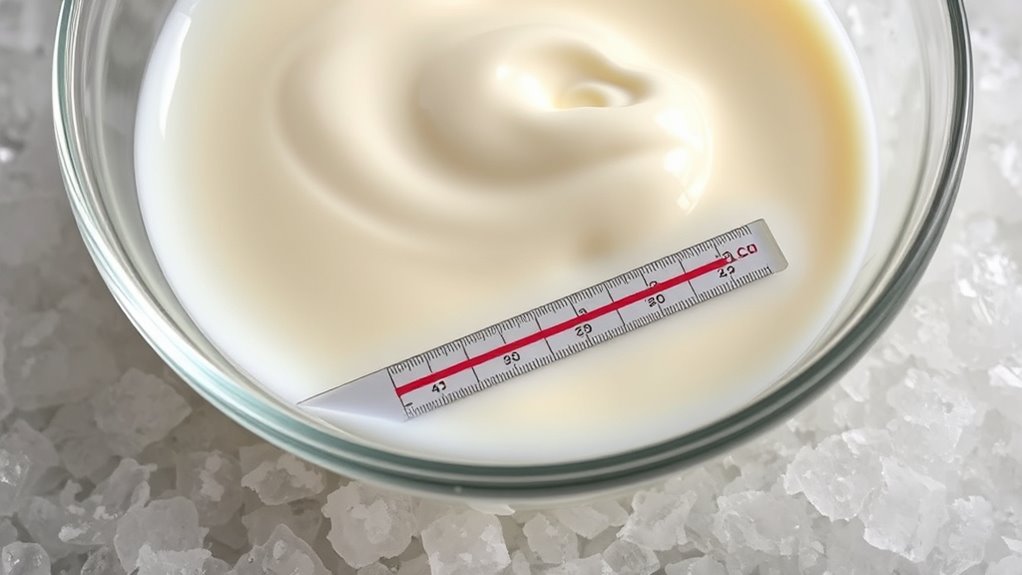
One common mistake is cooling your base too quickly, which can affect its texture. You should also avoid leaving it uncovered in the fridge, as contamination or unwanted flavors can seep in. Additionally, don’t start with a base that’s still too hot, since this can lead to uneven cooling and ice crystal formation. Incorporating temperature control features such as smart refrigerators can help maintain optimal cooling conditions and improve your ice cream’s texture. Proper air circulation within your fridge can also aid in even cooling and better preservation of your base. Understanding the science behind freezing can further help you optimize your process and avoid common pitfalls, especially regarding cold chain management to prevent temperature fluctuations during storage. Being aware of essential oil benefits can also help you create a more relaxing environment while preparing your ingredients, ensuring a stress-free experience.
Avoid Rapid Cooling Methods
Rapidly cooling your ice cream base can seem tempting, but it often backfires by causing unwanted texture issues or compromising flavor. Rapid chilling methods, like an ice bath, can halt the cooling process too quickly, leading to uneven freezing and ice crystal formation. Instead, avoid rushing the process and opt for gradual cooling to preserve smoothness and flavor integrity.
Remember:
- Sudden temperature drops can cause crystallization
- Ice baths may cool unevenly if not monitored
- Rapid chilling can trap air bubbles
- Quick cooling risks temperature fluctuations that affect safety
Taking your time to cool your base properly ensures a creamy, consistent texture. Patience during this step helps maintain the quality and safety of your final product.
Don’t Leave Out Uncovered
Leaving your ice cream base uncovered while cooling might seem harmless, but it can lead to unwanted contamination and flavor loss. When you leave it exposed, airborne particles and odors can settle into the mixture, affecting taste and safety. Always use covering containers to protect your base during refrigeration. Proper refrigeration tips include sealing containers tightly and placing them on a flat, stable surface to prevent spills. Covering your base minimizes exposure to contaminants and prevents the formation of unwanted ice crystals, ensuring a smoother texture. It also helps retain the flavor integrity by shielding it from strong refrigerator odors. Additionally, understanding nanotechnology can help in developing better refrigeration materials that maintain optimal conditions for your ingredients. Remember, avoiding uncovered cooling is a simple step that preserves both the safety and quality of your ice cream base.
Skip Overly Hot Bases
Cooling your ice cream base too quickly or while it’s still too hot can cause texture issues and affect flavor. A hot base can lead to uneven freezing and compromised flavor preservation. To avoid this, don’t rush the cooling process.
Instead, allow your hot base to cool gradually to maintain its smooth texture. Remember:
- Rapid cooling can cause ice crystallization, resulting in a gritty texture.
- Hot bases may introduce bacteria if left in the danger zone too long.
- Sudden temperature changes can cause fat separation.
- Proper cooling preserves delicate flavors and ensures a creamy consistency.
Taking your time to cool your hot base helps lock in flavor and achieves the best possible ice cream texture. Patience is key to a successful, delicious batch.
Frequently Asked Questions
Can I Skip the Cooling Process Entirely?
You shouldn’t skip the cooling process entirely because quick cooling helps preserve flavors and guarantees the mixture reaches a safe temperature. Skipping this step can lead to uneven texture and potential safety issues. By cooling your ice cream base properly, you allow flavors to meld and prevent ice crystals from forming. It’s a vital step for achieving the best texture and flavor in your homemade ice cream.
How Does Ambient Temperature Affect Cooling Times?
You’ll find that ambient temperature considerably impacts cooling times. When the environment is warmer, cooling efficiency decreases, meaning it takes longer for your ice cream base to reach the safe temperature. Conversely, cooler surroundings boost cooling efficiency, speeding up the process. To optimize cooling, consider lowering the ambient temperature or using ice baths. This ensures your base cools evenly and safely, preventing bacterial growth and maintaining quality.
Are There Specific Containers Best for Cooling Ice Cream Bases?
You should choose shallow, wide containers made of metal or glass for cooling ice cream bases. These materials conduct heat better, speeding up cooling, while larger container sizes provide more surface area for rapid temperature reduction. Avoid deep or narrow containers, which slow down cooling and may risk unsafe bacterial growth. Using the proper container material and size ensures your ice cream base cools efficiently and safely.
Is Rapid Cooling Always Better Than Slow Cooling?
Rapid cooling isn’t always better than slow cooling. Proper temperature control is key to prevent microbial growth, so you should cool your ice cream base quickly enough to stay below 40°F within two hours. However, rushing the process can cause texture issues. Aim for a balance—cool it fast enough to ensure safety but gently enough to preserve smoothness and quality in your ice cream.
How Do I Store Cooled Ice Cream Base Safely?
Oh, sure, just toss that cooled ice cream base into any old container and call it a day—who needs flavor preservation or microbial safety? Instead, you should store it in an airtight container in the refrigerator, ideally within two hours of cooling. This keeps flavors intact and prevents bacteria growth. Always label it with the date, so you enjoy safe, delicious ice cream without risking a microbial party in your freezer.
Conclusion
Think of cooling your ice cream base as planting a seed for perfection. When you nurture it with patience and the right techniques, you cultivate a dessert that’s both safe and delightfully creamy. Rushing or skipping steps risks spoiling the delicate balance, just like neglecting a seed’s needs can hinder growth. Embrace the process, and your ice cream becomes a symbol of care and mastery—transforming simple ingredients into a masterpiece of texture and taste.