
When you use coconut oil in baking, its temperature greatly affects the outcome. Melting it creates softer, spreadable baked goods, while keeping it solid results in flaky or crumbly textures. Whipping coconut oil before mixing can add air, making treats lighter. Adjusting temperature allows you to tailor moisture and tenderness to your preference. Exploring how these changes influence your baked goods helps you perfect your recipes—you’ll discover more effective ways to use coconut oil creatively.
Key Takeaways
- Melting coconut oil results in softer, more spreadable baked goods, while solid form creates flaky, crumbly textures.
- Whipping coconut oil introduces air, making baked items lighter and fluffier.
- Temperature control influences moisture, tenderness, and crumb structure in baked products.
- Adjusting coconut oil’s temperature allows customization of texture and final product consistency.
- Using melted, solid, or whipped coconut oil impacts flavor, texture, and nutritional profile of baked goods.
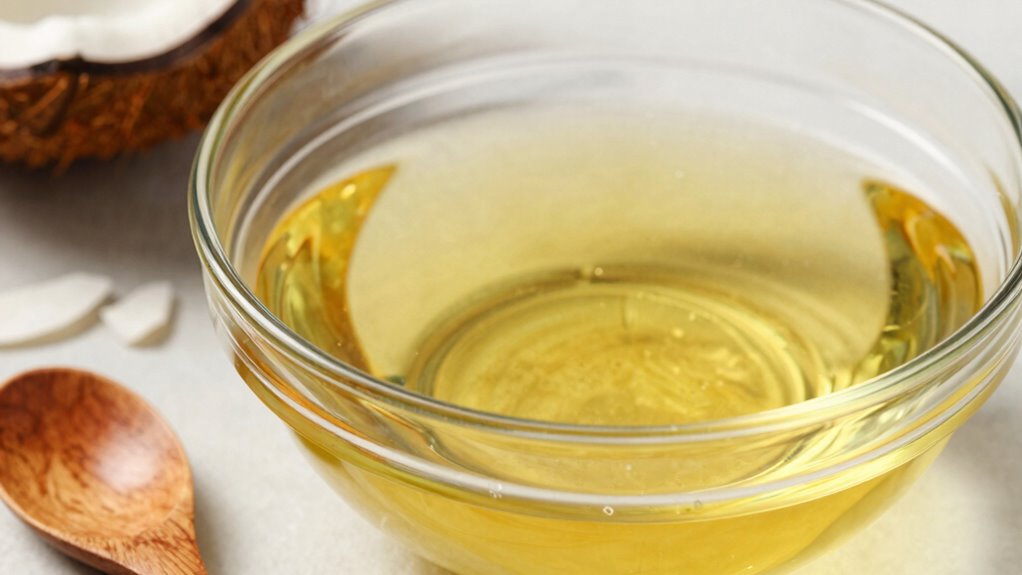
Coconut oil has become a popular ingredient in baking because it adds moisture, flavor, and a subtle tropical aroma to your treats. Its versatility allows you to explore numerous recipe variations, making baked goods more exciting and unique. When you swap out traditional fats for coconut oil, you can create everything from cookies and muffins to bread and cakes, each with distinct textures and flavors. The temperature at which you use coconut oil plays a *pivotal* role in how your baked goods turn out. For instance, using melted coconut oil can lend a different crumb than solid or whipped forms, affecting the final texture. By adjusting the temperature, you can control whether your batter or dough is more moist, crumbly, or tender, giving you more control over your recipe outcomes.
Understanding the health benefits of coconut oil can also influence how you incorporate it into your baking. Coconut oil contains medium-chain triglycerides (MCTs), which are quickly absorbed and used by your body for energy. This makes it a favored choice among health-conscious bakers who want to boost the nutritional profile of their treats. Some studies suggest that coconut oil may support weight management, improve cholesterol levels, and provide antioxidant properties. When you bake with coconut oil, you’re not only enhancing flavor but also adding potential health benefits, especially compared to heavily processed fats or oils high in trans fats. Temperature control is also essential because it influences how coconut oil interacts with other ingredients and the overall texture of your baked goods. However, it’s important to balance its use within a healthy diet, as coconut oil is still high in saturated fat.
Coconut oil provides MCTs, supports weight management, and offers antioxidant benefits for healthier baking choices.
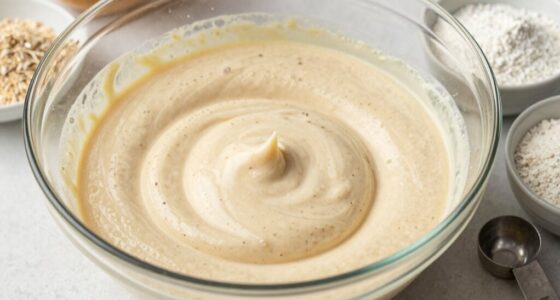
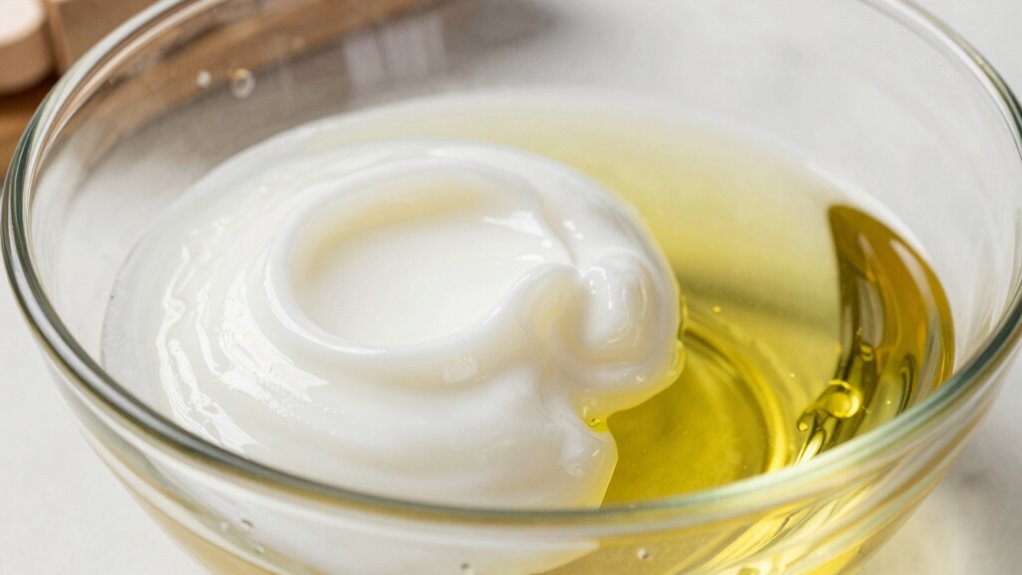
Temperature changes also impact the texture and consistency of coconut oil in your recipes. If you prefer a softer, more spreadable outcome, melting the oil before mixing can help achieve that. Conversely, using solid coconut oil can give your baked goods a flakier or crumbly texture, perfect for pie crusts or biscuits. Whipping coconut oil before incorporating it into batter can introduce air, making your baked goods lighter and fluffier. The key is to experiment with these variations to see which techniques best suit your desired result.
In the end, understanding how temperature affects coconut oil in baking allows you to tailor your recipes precisely. Whether you’re aiming for moist muffins, crisp cookies, or tender bread, adjusting the state of the coconut oil can make all the difference. Plus, with its health benefits and ability to add depth of flavor, coconut oil truly elevates your baking game. So, don’t be afraid to try different recipe variations, experiment with temperatures, and enjoy the delicious, nutritious results.
organic coconut oil for baking
As an affiliate, we earn on qualifying purchases.
As an affiliate, we earn on qualifying purchases.
Frequently Asked Questions
Can Coconut Oil Replace Butter in All Baking Recipes?
You can replace butter with coconut oil in many baking recipes, but keep in mind the coconut oil flavor may modify the taste. Coconut oil offers health benefits like healthy fats and antioxidants, making it a good alternative. However, it doesn’t work perfectly in every recipe, especially those needing the richness or structure butter provides. Adjust quantities and consider the flavor impact to ensure the best results.
How Does Coconut Oil Affect Baking Times and Oven Temperature?
Did you know coconut oil’s melting point is around 24°C (75°F)? Its temperature sensitivity impacts baking times and oven temperature. When using coconut oil, you might need to adjust baking times slightly, as it melts faster than butter, affecting baking consistency. For best results, keep your oven at the recommended temperature and monitor baking closely, especially in recipes relying on solid fats for structure.
Is Melted Coconut Oil Suitable for Making Frosting or Icing?
Yes, melted coconut oil is suitable for making frosting or icing. When coconut oil melts, it creates a smooth, creamy consistency that blends well with powdered sugar or other ingredients. To achieve the perfect frosting consistency, you may need to regulate the amount of coconut oil or chill it slightly after melting. This ensures your frosting isn’t too runny or too stiff, giving you a beautiful, glossy finish.
Does Refrigerated Coconut Oil Alter Baking Results?
Refrigerated coconut oil turns solid, which can affect your baking results. If you use solid coconut oil, it might be harder to mix smoothly into batters or doughs, leading to uneven textures. To get the best results, let the coconut oil warm to room temperature so it’s in liquid form. This guarantees proper blending and consistent baking outcomes, whether you’re making cookies, cakes, or frosting.
What Are the Best Storage Methods for Coconut Oil Used in Baking?
You should store your coconut oil in a cool, dark place to preserve shelf stability. Use airtight storage containers to prevent moisture and odors from affecting it. Keep it away from direct sunlight and heat sources, as temperature fluctuations can cause it to melt or spoil. Proper storage ensures your coconut oil stays fresh longer, preserves its quality, and makes it ready for baking whenever you need it.
whipped coconut oil for baking
As an affiliate, we earn on qualifying purchases.
As an affiliate, we earn on qualifying purchases.
Conclusion
So, next time you bake, remember that coconut oil’s temperature can turn your perfect treat into a disaster—or a delightful surprise. Ironically, what seems like a small detail can make all the difference, reminding you that even the simplest ingredients demand attention. Don’t overlook the temperature; it’s the secret behind your baking success or failure. After all, in baking, a little science can go a long way—sometimes, even more than the recipe itself.
solid coconut oil for flaky crusts
As an affiliate, we earn on qualifying purchases.
As an affiliate, we earn on qualifying purchases.
melted coconut oil for cookies
As an affiliate, we earn on qualifying purchases.
As an affiliate, we earn on qualifying purchases.