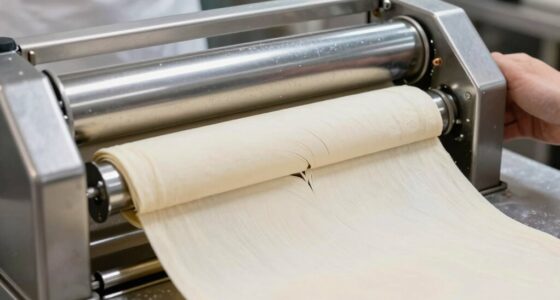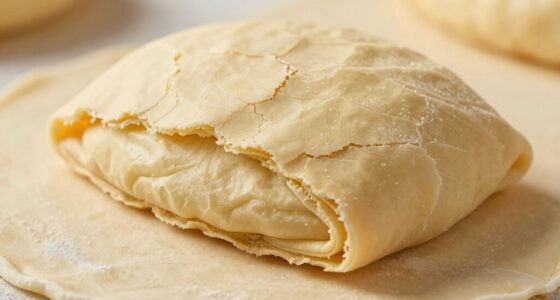
In winter, lower temperatures cause your tart dough to become firmer and more brittle, making it prone to cracking when you handle or roll it out. Cold air and ingredients cool the dough quickly, reducing its flexibility, so it’s harder to work with smoothly. To avoid cracks, you need to manage its temperature carefully by warming it slightly or resting it at room temperature. Keep going to discover tips that can help you master winter baking.
Key Takeaways
- Cold temperatures cause dough to become stiff and less elastic, increasing cracking during rolling and shaping.
- Reduced dough warmth in winter leads to rapid cooling, making it more resistant and prone to cracks.
- Cold ambient conditions cause dough to cool quickly, requiring faster handling to prevent cracking.
- Cold dough is less pliable; letting it warm slightly at room temperature improves flexibility.
- Proper temperature control of ingredients and environment helps prevent cracks in winter baking.

When winter arrives, you might notice your tart dough cracks more easily during rolling or shaping, and this is no coincidence. Cold weather affects dough in ways that can make your baking more challenging. Seasonal baking in winter often brings lower ambient temperatures, which influence dough temperature and elasticity. If your dough is too cold, it becomes stiff and difficult to work with, leading to cracks and tears. Recognizing this connection helps you adapt your process to guarantee smoother pastry.
Dough temperature plays a critical role in how pliable and workable your tart crust will be. In colder months, your ingredients and environment tend to be cooler, causing the dough to chill faster and become less flexible. When you pull it out of the fridge or refrigerator, it might feel firm and resistant. If you try to roll it out immediately, cracks are almost inevitable. To combat this, it’s essential to manage the dough temperature actively. Letting the dough sit at room temperature for a few minutes before rolling can help soften it enough to prevent cracking. If it’s still too firm, a light knead or gentle warming with your hands can make a difference.
You might also notice that your typical seasonal baking routines need adjustment during winter. For example, if your kitchen is chilly, the dough cools rapidly, so you may need to work faster or adjust your storage methods. Wrapping the dough tightly in plastic wrap and letting it rest at room temperature for a short period before rolling can make it more pliable. Conversely, if the dough warms too much, it becomes sticky and harder to handle. Striking the right balance of dough temperature is key to avoiding cracks and achieving a perfectly smooth tart shell. Understanding how seasonal conditions influence dough properties can help you develop more consistent baking results year-round. Additionally, paying attention to ingredient temperature and how it interacts with the environment can significantly impact your baking outcomes. Properly managing dough handling techniques during winter ensures better control and reduces the risk of cracks. Being aware of environmental influences on your baking process can further improve your results. Ultimately, understanding how seasonal baking impacts dough temperature helps you adapt your technique. Keeping your ingredients and dough at ideal warmth ensures a more manageable, crack-free tart shell. When you pay attention to these details, winter’s chill becomes less of a barrier and more just another aspect of perfect pastry craftsmanship.
As an affiliate, we earn on qualifying purchases.
Frequently Asked Questions
Can Using Colder Ingredients Prevent Tart Dough Cracks?
Using colder ingredients like cold butter and chilled eggs can help prevent tart dough cracks. When you work with cold butter, it creates a flaky texture and keeps the dough firm enough to handle without cracking. Chilled eggs also help maintain the dough’s consistency. Keep your ingredients cold, and you’ll find the dough is easier to roll out smoothly, reducing cracks and ensuring a perfectly tender tart crust every time.
Does Resting the Dough Affect Its Susceptibility to Cracking?
Resting your dough improves its elasticity and promotes better gluten development, making it less prone to cracking. When you give it time to relax, the gluten strands loosen, allowing the dough to stretch more easily without tearing. This process helps distribute moisture evenly and reduces tension, especially in colder weather. So, by resting your dough, you’re fundamentally strengthening its structure, ensuring a smoother, crack-free tart crust every time.
Are There Specific Types of Flour That Crack Less in Winter?
You’ll find that alternative flour blends, like those with rice or almond flour, often crack less in winter because they typically develop less gluten, making the dough more flexible. Using flours with lower gluten content helps prevent cracking. To improve gluten development, knead the dough gently and avoid overworking it. These adjustments help maintain the dough’s elasticity, reducing the chances of cracks during colder months.
How Does Humidity Influence Tart Dough Cracking?
Like a knight’s armor in a drought, low humidity effects your tart dough’s elasticity, making it more prone to cracking. Higher humidity helps keep the dough supple, reducing cracks by maintaining proper moisture levels. When humidity is low, the dough becomes brittle, so you should adjust water content or knead lightly. Remember, moisture is your ally—embrace it to keep your crust smooth and crack-free, even in winter’s chill.
Can Adjusting Baking Temperature Reduce Cracks in Winter?
Yes, adjusting the baking temperature can help reduce cracks in winter baking. Warmer oven temperatures can increase dough elasticity, making it more pliable and less prone to cracking. When you bake tart dough in winter, set the oven slightly higher than usual to compensate for the cold environment. This helps maintain consistent heat, allowing the dough to stay flexible and smooth, resulting in fewer cracks and a more even crust.
dough rolling pin with temperature control
As an affiliate, we earn on qualifying purchases.
As an affiliate, we earn on qualifying purchases.
Conclusion
Next winter, remember that your tart dough is like a delicate porcelain—more prone to cracks in the cold. When I first tried making a tart in winter, my dough kept splitting, just like a frozen lake cracking under pressure. But with patience and a warmer environment, it came together smoothly. So, treat your dough gently, keep it cozy, and you’ll create a perfect, crack-free tart that’s as comforting as a warm fire on a chilly night.
As an affiliate, we earn on qualifying purchases.
As an affiliate, we earn on qualifying purchases.