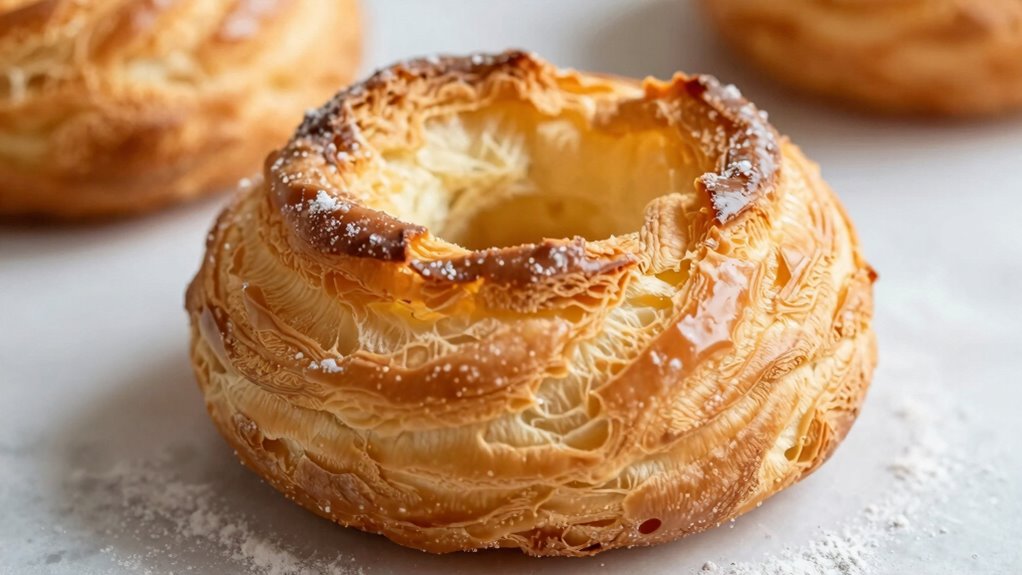

Your choux pastry collapses after baking mainly because of temperature issues or insufficient drying. If the oven isn’t hot enough, the shells won’t expand properly and may collapse once cooled. Overmixing the dough weakens the structure, and underbaking leaves the shells moist and fragile. Proper cooling and handling are also essential to maintain shape. To prevent this, you’ll want to control oven heat precisely and follow correct baking techniques—keep exploring for more tips to perfect your choux.
Key Takeaways
- Insufficient oven temperature causes inadequate rising and weak structure, leading to collapse after baking.
- Removing shells from the oven too early or opening the door frequently prevents proper setting.
- Underbaking leaves shells moist and fragile, resulting in collapse once cooled.
- Filling shells before they are fully cooled and dry weakens their structure.
- Overmixing dough develops gluten, making shells less tender and prone to collapse.
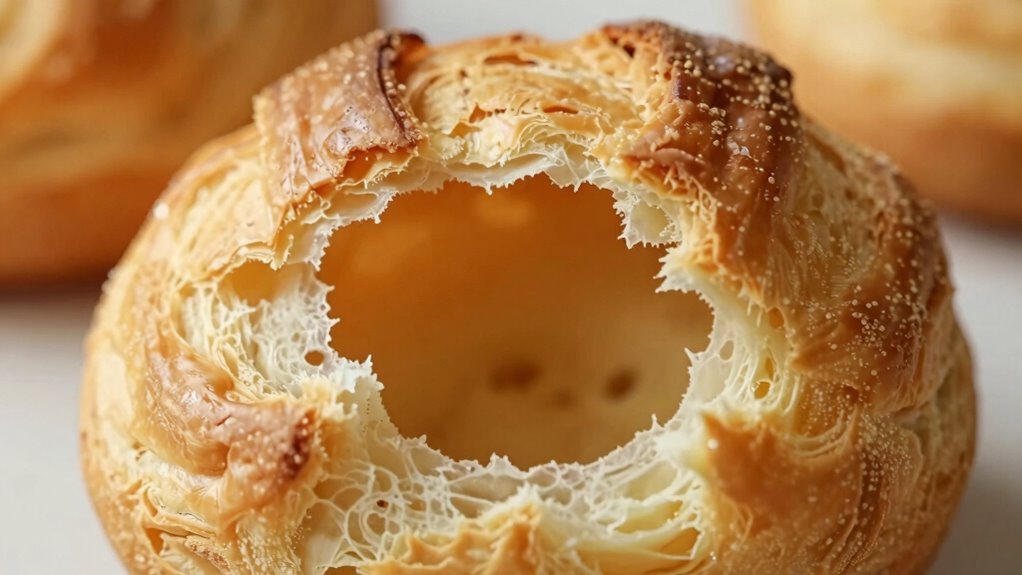
When you bake choux pastry and it collapses afterward, it can be frustrating and confusing. You’ve followed the recipe, monitored the oven, and yet, your delicate puffs deflate and lose their shape. One common cause is the oven temperature. If the oven isn’t hot enough, the pastry won’t rise properly; it will expand too slowly, and the steam generated inside won’t be enough to support the structure. Conversely, if the oven is too hot, the outside can burn or set too quickly, preventing the interior from expanding fully. This uneven heat causes the pastry to be structurally weak, leading it to collapse once removed from the heat or when cooling. To avoid this, use an oven thermometer to ensure the temperature is precise, typically around 375°F to 400°F (190°C to 200°C). Maintaining a consistent, proper oven temperature helps the choux puff up evenly and retain its shape. Proper oven temperature is essential for the ideal rise and structure of the pastry.
Another crucial factor is the cream filling. If you fill the pastry before it’s fully cooled and dry, the added moisture can weaken the structure from inside, causing it to collapse. Make sure your choux shells are completely cooled and dry before adding any cream filling. This prevents excess moisture from seeping into the delicate pastry walls, which can cause them to sag or collapse under the weight of the filling. When filling, use a piping bag with a small tip to inject the cream gently, avoiding overfilling that can strain the shells. It’s best to fill just before serving to keep the pastry crisp and firm. Proper dough handling can also impact the overall strength of the shells, so avoid overmixing to prevent developing gluten that could make the shells less tender. Additionally, overmixing the dough can lead to weak, dense shells that don’t hold their shape well. Ensuring you bake long enough is also important; underbaking leaves the shells moist and fragile, making them collapse easily once cooled or filled. Proper cooling techniques are vital—letting the shells cool completely on a wire rack helps set their structure and prevents collapse. Once out of the oven, avoid opening the door too often or too early, as sudden temperature drops can cause the shells to deflate. Let them cool completely on a wire rack before handling or filling.
As an affiliate, we earn on qualifying purchases.
Frequently Asked Questions
Can Over-Beating the Batter Cause Choux to Collapse?
Yes, over-beating the batter can cause choux to collapse. When you over-incorporate eggs, the batter becomes too loose, which weakens its structure. Additionally, if your oven temperature is too low or too high, it can prevent the choux from setting properly, leading to collapse. To avoid this, beat eggs just until incorporated and make sure your oven is at the right temperature to help your choux stay firm after baking.
Does the Type of Flour Affect Choux Stability?
Think of your choux as a delicate skyscraper—you need a sturdy foundation. The type of flour you choose impacts gluten development and flour protein, which directly influence its stability. High-protein flours create stronger gluten networks, giving your choux more structure to hold its shape. Low-protein flours can make it fragile, leading to collapse. So, selecting the right flour guarantees your pastry stands tall, not crumbles at the slightest touch.
How Does Humidity Influence Choux Puffing?
Humidity effects greatly influence choux puffing, as high humidity adds extra moisture to the dough, making it harder for the pastry to rise properly. To guarantee your choux puffs well, you need moisture control—baking in a dry environment helps the steam develop fully. Too much humidity can cause the choux to collapse or become soggy, so keep your kitchen well-ventilated and dry to achieve perfect, airy pastries.
Is Underbaking a Reason for Collapse?
Yes, underbaking can cause choux to collapse. When the oven temperature isn’t high enough, the steam inside the dough doesn’t fully expand and set the structure, leading to a weak shell. If you try ingredient substitution, like replacing butter or eggs, it can also affect stability. To prevent collapse, make certain you bake at the right oven temperature and avoid underbaking, which leaves the inside too moist and fragile.
Should I Open the Oven Door During Baking?
You shouldn’t open the oven door during baking because it causes temperature fluctuations that can make choux collapse. Maintain a consistent oven temperature and follow the recommended baking time to guarantee proper rising. Opening the door too early lets cold air in, disrupting the delicate structure. Wait until the baking time is nearly complete before checking, and avoid sudden temperature drops that compromise the choux’s shape and stability.
As an affiliate, we earn on qualifying purchases.
Conclusion
Ultimately, a fallen choux is like a quiet garden after rain—still beautiful, just a little shy. Sometimes, it’s a gentle reminder that even the most delicate creations need a little extra care or patience. With a tender touch and a dash of understanding, your next batch can rise to meet your expectations. Embrace the imperfections as part of the sweet journey in baking, and let each attempt be a soft bloom in your culinary garden.
As an affiliate, we earn on qualifying purchases.
As an affiliate, we earn on qualifying purchases.