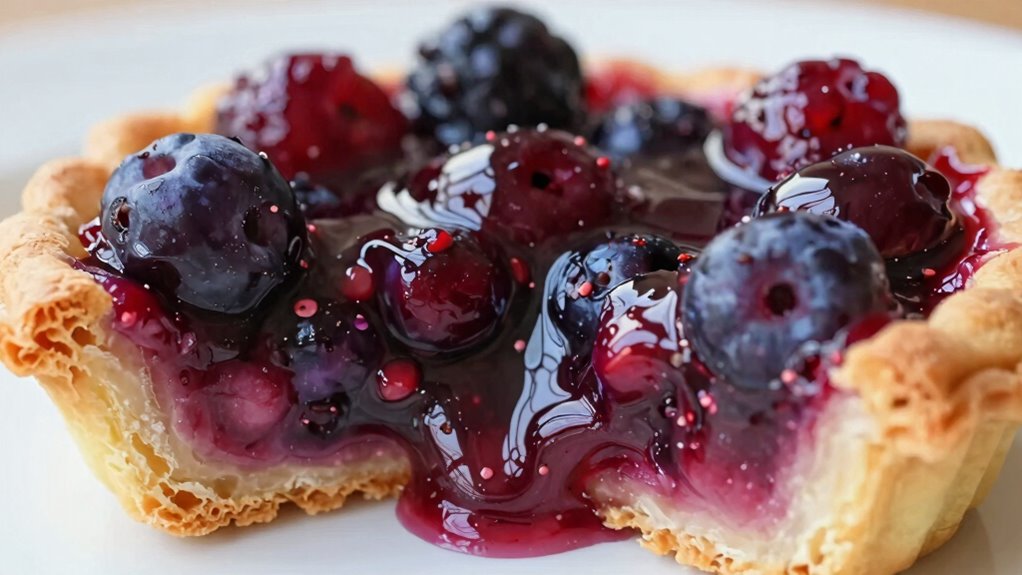

Your fruit filling turns runny after cooling because excess moisture isn’t fully thickened during baking. Juices released from fruits like berries or cherries can seep out if you don’t use enough thickening agents like cornstarch or tapioca. Overripe or overly juicy fruit also increases the risk. Proper baking allows these agents to activate, and slow cooling helps the filling set. Keep exploring to discover key tips for achieving a perfectly firm fruit filling.

Get baking supplies delivered free with Prime
- Fast, free delivery on millions of items
- Prime Video, Amazon Music and more included
- Member-only deals all year
Key Takeaways
- Excess natural juices from fruits seep out as the filling cools, causing a watery texture.
- Insufficient or improperly activated thickening agents fail to set the filling properly.
- Overripe or excessively juicy fruits increase moisture, leading to runny fillings.
- Rapid cooling prevents the filling from fully setting, resulting in liquid pooling.
- Inadequate baking time leaves the thickening agents undercooked, causing instability.
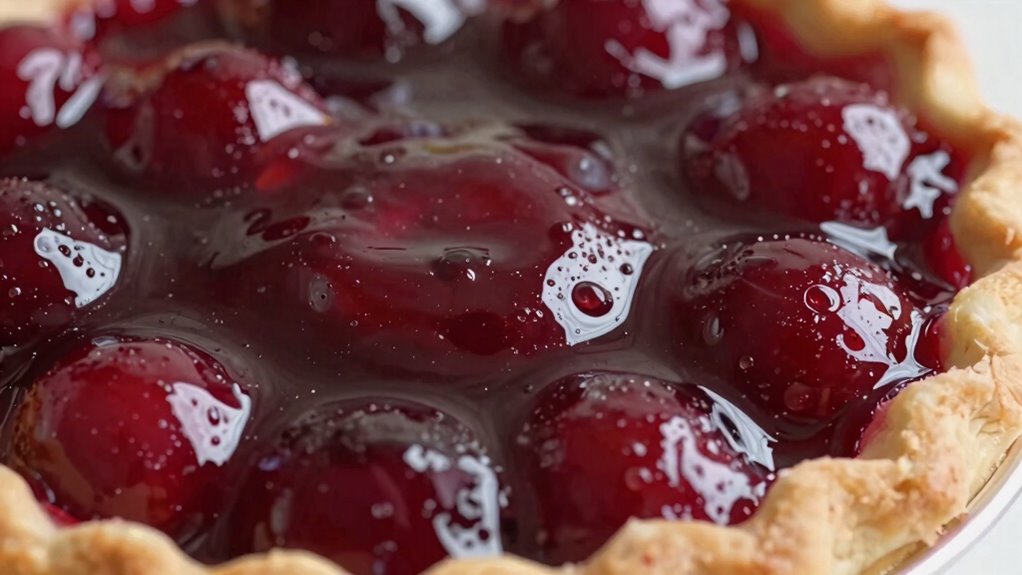
When you bake a pie or pastry with fruit filling, you might notice it becomes runny after cooling, which can be frustrating. This common issue happens because fruit filling contains natural juices that are released during baking. When the pie cools, these juices often seep out, creating a watery or runny texture that ruins the presentation and taste. To avoid this, understanding fruit preservation and applying effective baking techniques can make all the difference.
One reason fruit fillings turn runny is that some fruits naturally release more liquid than others. For example, berries and cherries tend to produce more juice, while apples or peaches hold their shape better. If you want a thicker filling, it’s essential to adjust your fruit selection or pre-treat the fruit to reduce excess moisture. Techniques like macerating the fruit with sugar beforehand can help draw out some juice, which you can then drain before assembling the pie. Additionally, tossing fruit with a small amount of flour or cornstarch before baking helps absorb moisture during cooking, leading to a firmer, less runny filling. This is a crucial baking technique that improves fruit preservation by stabilizing the filling and preventing it from becoming too watery once cooled. Proper fruit preservation techniques during preparation can significantly improve the final texture of your pie. Incorporating the right baking techniques can also ensure your filling sets properly and stays firm.
Pre-treat fruit with sugar and cornstarch to create firm, less runny pie fillings.
Another key factor is the thickening agents you choose. Commercial pie fillings often include cornstarch or tapioca because they expand during baking and set as they cool, creating a gel-like consistency that traps juices. Using the right amount of thickener is vital; too little results in a runny filling, while too much can make it overly stiff. When baking, it’s also important to bake the pie long enough for the thickening agents to activate fully, ensuring the filling is properly set before cooling. Cooling slowly at room temperature allows the filling to gel properly, reducing the risk of juices seeping out once the pie is fully cooled. Proper thickening agents and correct baking time are both essential to achieve a stable and appealing filling. Furthermore, understanding the role of gelatin or pectin can assist in creating a more consistent filling that resists runniness after cooling.
Proper fruit preservation during the preparation stage is also essential. If fruit is overripe or excessively juicy, it’s more likely to produce a runny filling. Using fresh, firm fruit and preparing it correctly can help maintain the desired consistency. When you follow the right baking techniques—such as pre-treating fruit, using appropriate thickeners, and baking thoroughly—you’ll notice your fruit fillings stay firm and delicious even after cooling. Mastering these methods ensures your baked goods look appealing and have the perfect texture, making the effort all worthwhile.
cornstarch for fruit pie filling
As an affiliate, we earn on qualifying purchases.
As an affiliate, we earn on qualifying purchases.
Frequently Asked Questions
Can Adding Cornstarch Prevent Fruit Fillings From Becoming Runny?
Adding cornstarch can help prevent fruit fillings from becoming runny by acting as a thickening agent, but for better stabilization, consider gelatin or other ingredient substitutions. Gelatin provides a firmer texture and reduces liquid separation. Combine cornstarch with gelatin for ideal results, especially in fruit pies or tarts. Be sure to cook the mixture thoroughly to activate the thickening properties, ensuring your filling stays thick and stable after cooling.
Does the Type of Fruit Affect the Filling’s Consistency After Cooling?
The type of fruit definitely determines your filling’s consistency after cooling. Fruity varieties with high acidity levels, like berries or citrus, tend to break down more, leading to runny results. Softer fruits release more juice, making fillings looser, while firmer fruits hold their shape better. So, understanding your fruit’s acidity and texture helps you predict whether your filling will stay thick and sumptuous or become runny and runny.
How Long Should Fruit Fillings Cool Before Slicing or Serving?
You should let fruit fillings cool for at least two hours before slicing or serving. During this time, the mixture’s sugar concentration and fruit acidity balance out, helping it set properly. Cooling allows the filling to thicken as the sugar and acids stabilize. Rushing this step can cause runny fillings, so patience guarantees your dessert maintains its desired consistency and flavor.
Are There Specific Storage Tips to Maintain Filling Thickness?
To keep your fruit filling thick, store it in airtight storage containers and refrigerate promptly. Avoid metal containers, as they can cause discoloration and affect flavor variations. Before storing, make certain the filling has cooled completely to prevent condensation, which can make it runny. When reheating or serving, gently warm the filling to maintain its texture. Proper storage helps preserve the consistency and enhances the flavor of your fruit fillings.
Can Reheating Restore a Thick, Set Fruit Filling?
Reheating can sometimes bring life back to a runny fruit filling, like reviving a fading melody. To restore thickness, you can use baking techniques such as simmering gently or adding a quick cornstarch slurry. Ingredient substitutions, like incorporating a splash of lemon juice or a touch of gelatin, can also help. Just remember, reheating might not fully resurrect the original set, but it’s worth trying before resorting to new fillings.
As an affiliate, we earn on qualifying purchases.
Conclusion
So, next time you see your once-thick fruit filling turn runny and lose its shape, remember it’s like a sunset fading into dusk—still beautiful, but softer and less defined. The heat that once held everything together has cooled, giving way to a liquid glow. Embrace this change as part of the natural transformation, knowing that with a little tweaking, you can keep those fillings firm and luscious, just like a perfectly set sunset.
As an affiliate, we earn on qualifying purchases.
As an affiliate, we earn on qualifying purchases.
Columbus Day / Indigenous Peoples' Day Picks
long weekend sales
As an affiliate, we earn on qualifying purchases.