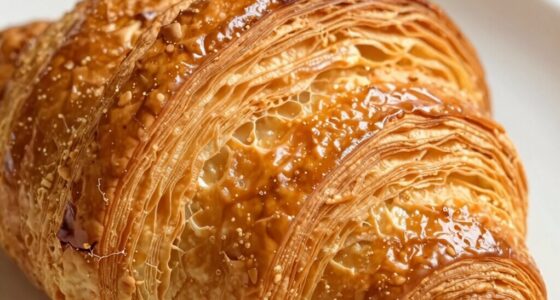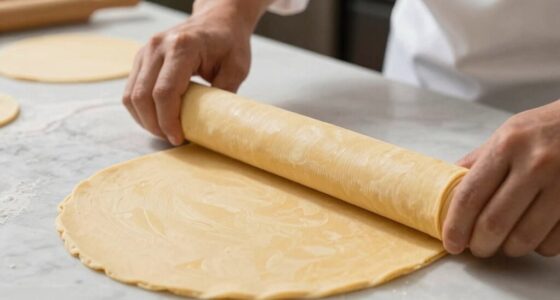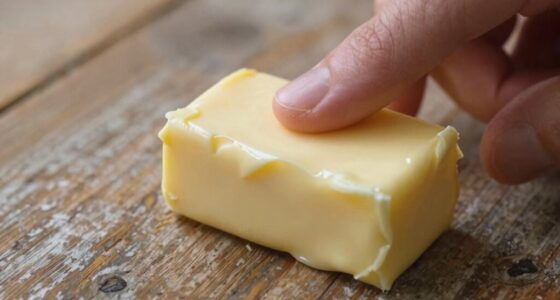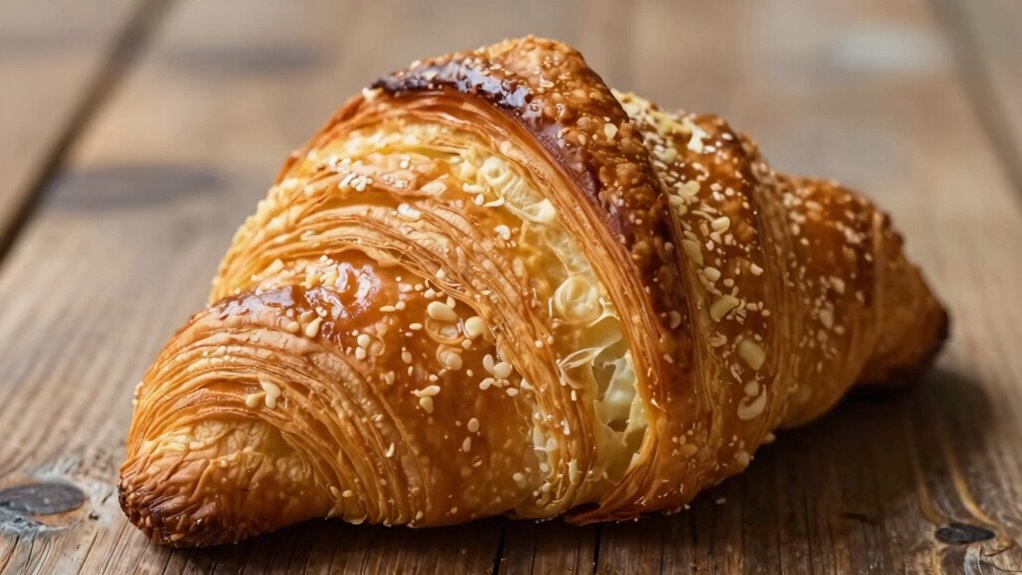

To protect croissant layers, keep your dough fermentation temperature between 75°F and 80°F (24°C to 27°C). This range guarantees ideal yeast activity, gluten development, and gas trapping for airy layers. During baking, maintain a temperature of 375°F to 400°F (190°C to 200°C) with proper steam to prevent drying out and help preserve the layers’ flakiness. Mastering this temperature window is key—you’ll find more tips on perfecting your croissants if you continue exploring.

Get baking supplies delivered free with Prime
- Fast, free delivery on millions of items
- Prime Video, Amazon Music and more included
- Member-only deals all year
Key Takeaways
- Maintain dough fermentation between 75°F and 80°F to ensure proper gluten development and gas retention.
- Bake croissants at 375°F to 400°F to create steam and support layered expansion without burning.
- Use humidity during baking to prevent crust from drying out, preserving flaky layers.
- Avoid excessive heat that weakens gluten and causes flattening or collapsing of layers.
- Control oven moisture and temperature consistently for reliable layer protection and optimal croissant structure.
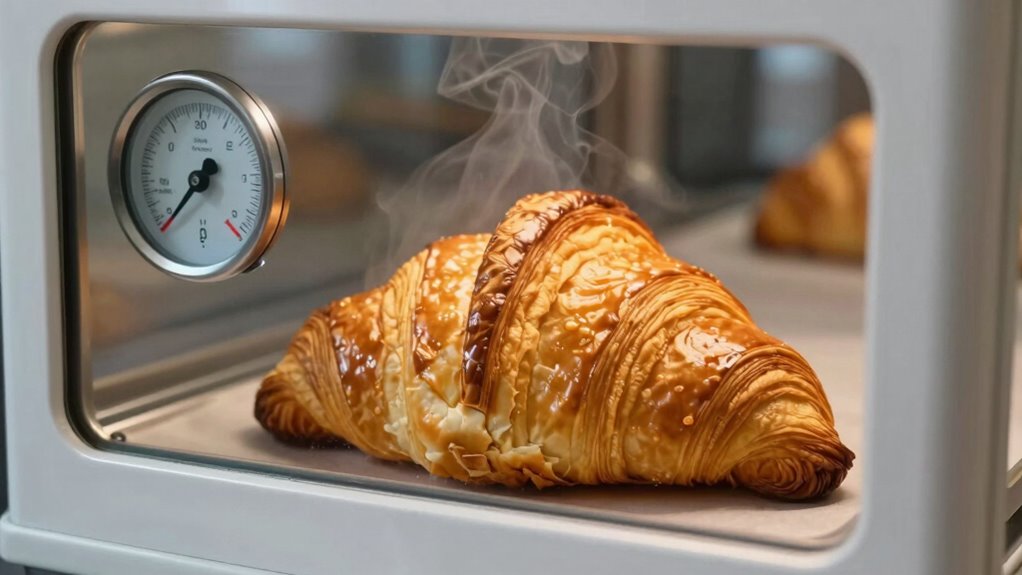
Achieving perfectly layered croissants depends heavily on controlling the temperature during each stage of the process. The key to getting those delicate, flaky layers lies in understanding how temperature impacts dough fermentation and oven moisture. When you’re working with croissant dough, maintaining the right temperature ensures proper fermentation, which develops the gluten structure and traps gases needed for lift. If the dough ferments at too warm a temperature, the yeast activates too quickly, producing excessive gas and weakening the gluten network. This results in a dough that can’t hold its shape during baking, leading to flattened layers. Conversely, if it’s too cold, fermentation slows down, and the dough may not rise enough, producing dense croissants.
During the dough preparation, you want to ferment at a temperature around 75°F to 80°F (24°C to 27°C). This range provides the ideal environment for yeast activity, allowing the dough to develop flavor and strength without overproofing. Keeping your dough in a warm, draft-free space helps ensure consistent fermentation, which directly impacts how well the layers will form later. Remember, the longer the dough ferments at the right temperature, the better it will develop gluten, helping to trap the gases that create those airy layers. Proper temperature control is essential for achieving consistent results. Additionally, monitoring ambient conditions such as humidity can help maintain this optimal environment, ensuring the dough’s fermentation remains steady. Being aware of climate effects on fermentation can help bakers adapt their process to different seasons or environments. Controlling fermentation is also crucial for consistent baking outcomes, especially in different climates or seasons.
Ferment dough at 75°F to 80°F for optimal flavor, strength, and airy layers.
When you’re ready to bake, oven moisture becomes just as vital as dough fermentation. Croissants require a humid environment during baking to prevent the layers from drying out and to allow steam to create lift. If your oven lacks sufficient moisture, the outer layers can become hard too quickly, hindering the expansion of the layers inside. To manage this, you can introduce steam into your oven at the start of baking—by placing a tray of water or spritzing water onto the oven walls. This moisture supports the expansion of the dough and helps preserve the delicate, flaky layers. Proper oven humidity management can significantly impact the final texture and appearance of your croissants.
The ideal baking temperature for croissants is usually between 375°F and 400°F (190°C to 200°C). This range provides enough heat to generate steam and melt the butter layers, while preventing the crust from setting too quickly. Maintaining this temperature window ensures that the croissants rise properly, with the layers remaining distinct and flaky. Too hot, and the outside burns before the inside fully bakes; too cool, and the layers can collapse or turn out dense. Balancing oven temperature and moisture is what ultimately preserves the integrity of your layers, giving you those beautifully laminated croissants you’re aiming for.
As an affiliate, we earn on qualifying purchases.
Frequently Asked Questions
How Does Humidity Affect the Optimal Temperature for Croissants?
Humidity affects your croissants by influencing dough hydration; higher humidity keeps the dough moist, requiring a slightly lower baking temperature to prevent over-baking. Conversely, low humidity dries out the dough, so you might need a higher temperature to ensure proper rise and crispiness. Adjusting the oven temperature based on humidity levels helps you maintain flaky layers and achieve perfect croissants every time.
Can Temperature Fluctuations During Baking Ruin Croissant Layers?
Temperature fluctuations during baking can indeed ruin croissant layers, as even a slight change can cause uneven puffing and loss of flakiness. Did you know that consistent heat guarantees ingredient stability, preserving those delicate layers? If the oven’s temperature swings outside the ideal range, you risk compromised flavor enhancement and compromised structure. Keep a stable temperature to maintain perfect layers, guaranteeing your croissants remain light, crispy, and irresistibly flaky.
What Equipment Ensures Precise Temperature Control During Croissant Baking?
You should use a reliable oven with precise temperature controls and regular calibration to guarantee perfect croissant baking. Proper oven calibration maintains consistent heat, preventing temperature fluctuations that could ruin the delicate layers. Additionally, controlling dough fermentation at ideal temperatures helps develop the right gluten structure, which impacts how well the layers puff during baking. Together, these tools and techniques help you achieve consistently flaky, beautifully layered croissants.
How Quickly Should Temperature Be Adjusted if Croissants Aren’t Layering Properly?
You should adjust the oven temperature gradually if your croissants aren’t layering properly, as they’re highly temperature sensitive. Rapid changes can disrupt layer consistency, causing uneven puffing or collapse. Lower the heat slightly and give the croissants more time to bake, then monitor closely. Slow, steady adjustments help maintain the right temperature window, ensuring the layers stay distinct and flaky without compromising the overall quality.
Does the Type of Oven Influence the Ideal Temperature Window?
Yes, the type of oven influences the ideal temperature window. Your oven’s insulation and baking chamber design affect heat distribution and retention, which impacts how evenly croissants bake. If your oven has poor insulation, fluctuations in temperature can disrupt the delicate layering process. To maintain consistent results, you might need to adjust your settings or consider upgrading to an oven with better insulation and a more uniform baking chamber, ensuring your croissants come out perfect.
dough fermentation temperature controller
As an affiliate, we earn on qualifying purchases.
As an affiliate, we earn on qualifying purchases.
Conclusion
Mastering the perfect temperature window guarantees your croissant layers stay flaky and delicious. Keep your oven just right—around 350°F to 375°F—and you’ll enjoy those crisp, airy layers every time. Did you know that even a 10-degree difference can cause your croissants to turn out dense or greasy? Staying within this precise range is key to bakery-quality results at home. So, pay attention to your oven’s temperature, and your croissants will impress every time!
As an affiliate, we earn on qualifying purchases.
baking thermometer for croissants
As an affiliate, we earn on qualifying purchases.
As an affiliate, we earn on qualifying purchases.
Halloween Picks
halloween
As an affiliate, we earn on qualifying purchases.