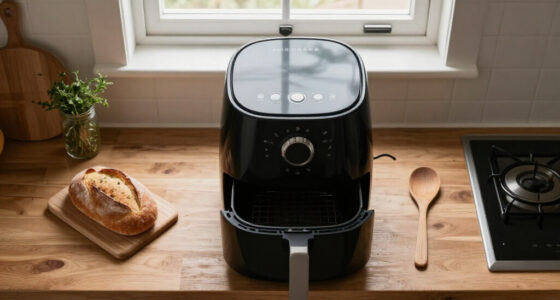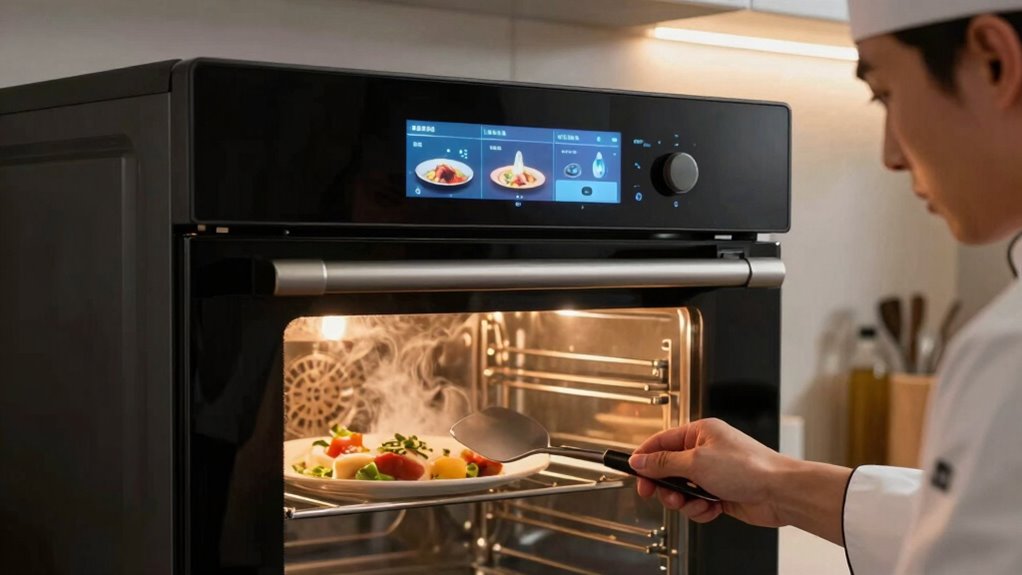
Smart ovens make cooking more convenient with touchscreens, apps, and sensors that help control temperature and timing. However, they still need your human judgment because they can’t fully interpret sensory cues like smell, texture, or color. Your experience and instincts are essential for fine-tuning results, especially with delicate dishes. Over-relying on presets or automation can dull your skills. To truly optimize your cooking, understanding when and how to adjust settings remains key—there’s more to discover here.

Get baking supplies delivered free with Prime
- Fast, free delivery on millions of items
- Prime Video, Amazon Music and more included
- Member-only deals all year
Key Takeaways
- Smart ovens rely on presets and sensors, but human judgment is needed to interpret sensory cues like smell, texture, and color.
- Complex or delicate dishes often require manual adjustments beyond automated settings for optimal results.
- Automation can diminish manual skills, making human intuition essential for fine-tuning and troubleshooting.
- Sensor technology, while advanced, cannot fully replicate human perception and understanding of food cues.
- Quick decision-making and experience remain crucial for adapting to unpredictable cooking variables.
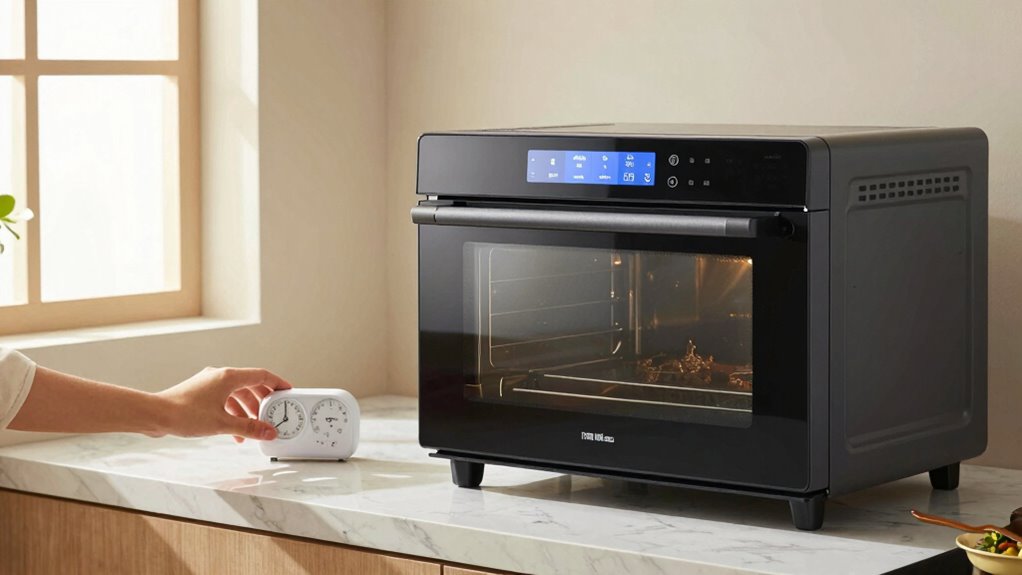
Smart ovens have revolutionized cooking by offering convenient features like automatic temperature adjustments and preset recipes, but they still can’t replace human judgment. While the user interface of these appliances makes controlling and customizing your cooking experience straightforward, it can’t fully substitute your intuition or understanding of food. The interface typically includes touchscreens, app controls, or voice commands, allowing you to select settings quickly and easily. However, despite their intuitive design, these interfaces can sometimes lead to over-reliance on presets, causing you to overlook subtle cues like smell, texture, or color that indicate doneness. Your ability to interpret these signals remains essential, especially when dealing with complex or delicate dishes where timing and adjustments matter.
Energy efficiency is another key advantage of smart ovens, but it’s not a guarantee of perfect results. These ovens often have built-in sensors that optimize power consumption, adjusting heating elements to minimize waste. They can detect when food reaches the desired temperature and shut off automatically, conserving energy and reducing your utility bills. However, this efficiency depends on your input and understanding of the cooking process. If you set the wrong preset or don’t monitor the progress manually, you may end up with overcooked or undercooked food, wasting both energy and effort. Your judgment remains crucial in selecting the right settings and knowing when to intervene, even with smart features guiding the process.
Moreover, the user interface, while designed to be user-friendly, can sometimes be limiting. Not all recipes or cooking techniques fit into predefined options, and your instinct might tell you to tweak a setting for better results. Relying solely on automation can dull your skills over time, making you less adept at adjusting on the fly. Human judgment involves more than just following instructions; it requires experience, sensory awareness, and the flexibility to adapt. A smart oven can assist, but it shouldn’t replace your ability to make quick decisions based on visual cues, taste, or smell. Additionally, sensor technology continues to improve, but it still cannot fully replicate the nuanced understanding a human cook brings to the process. Recognizing and interpreting food cues is vital for achieving the best results when using these devices. Developing this skill can also enhance your overall culinary expertise, making you more confident in the kitchen.
As an affiliate, we earn on qualifying purchases.
Frequently Asked Questions
Can Smart Ovens Replace Professional Chefs Entirely?
Smart ovens can’t fully replace professional chefs because of personalization challenges and emotional connection. You might rely on the oven’s precision, but it struggles with understanding subtle tastes or adjusting for personal preferences. Chefs bring creativity and emotional depth that technology can’t replicate. Your experience with a meal involves more than just cooking; it’s about connection, which smart ovens still lack. So, human judgment remains essential for truly personalized and heartfelt dishes.
How Do Smart Ovens Adapt to Unique or Unusual Recipes?
Smart ovens adapt to unique or unusual recipes through recipe customization features and sensor accuracy. You can input specific ingredients and cooking preferences, allowing the oven to tailor its settings accordingly. Sensors detect factors like moisture, temperature, and texture, helping the oven adjust on the fly. However, human judgment remains essential to interpret subtle nuances and experiment with new flavors, ensuring the best results for your creative culinary attempts.
What Are the Limitations of Smart Oven Sensors?
You might trust your smart oven’s sensors, but their accuracy can sometimes falter, especially with complex or unusual recipes. Sensor limitations mean they can misjudge temperature or doneness, risking spoiled dishes. Data integration isn’t flawless either; if sensors don’t communicate correctly, your cooking suffers. So, while these gadgets are impressive, you still need your judgment to guarantee perfect results, especially when precision matters most.
Are Smart Ovens Suitable for All Types of Cooking?
Smart ovens aren’t suitable for all types of cooking because their cooking versatility and user customization options vary. While they excel at tasks like baking, roasting, and reheating, complex or delicate dishes may still require human judgment. You might find that some recipes need manual adjustments, as smart ovens can sometimes misinterpret ingredients or cooking conditions. So, for specialized or intricate cooking, your input remains essential.
How Does User Experience Influence Smart Oven Performance?
You know what they say, “The proof of the pudding is in the eating.” Your experience shapes how well your smart oven performs. A user-friendly interface makes it easy to navigate, while personalization settings guarantee your cooking preferences are met. When you actively engage with these features, you optimize performance, making your cooking smoother and more enjoyable. Your familiarity and comfort directly influence the oven’s efficiency and results.
As an affiliate, we earn on qualifying purchases.
Conclusion
While smart ovens come with impressive features, they still can’t replace your judgment. A recent study shows that 78% of users prefer manually adjusting cooking times for perfect results. Your instincts, experience, and personal touch remain essential, especially when precision matters. So, next time you cook, trust your senses and use smart technology as a helpful tool—not a replacement. After all, a human touch often makes all the difference in creating a delicious meal.
As an affiliate, we earn on qualifying purchases.
As an affiliate, we earn on qualifying purchases.
Fall Picks
fall essentials
As an affiliate, we earn on qualifying purchases.