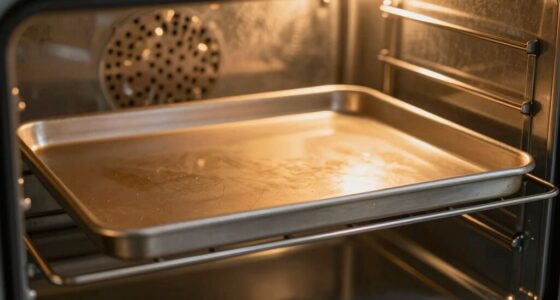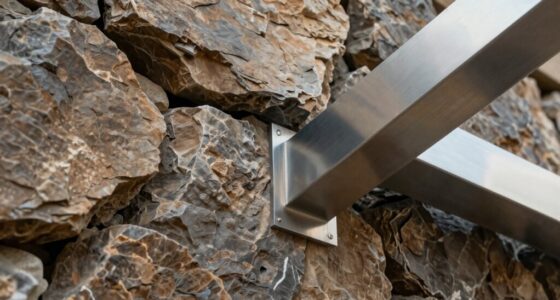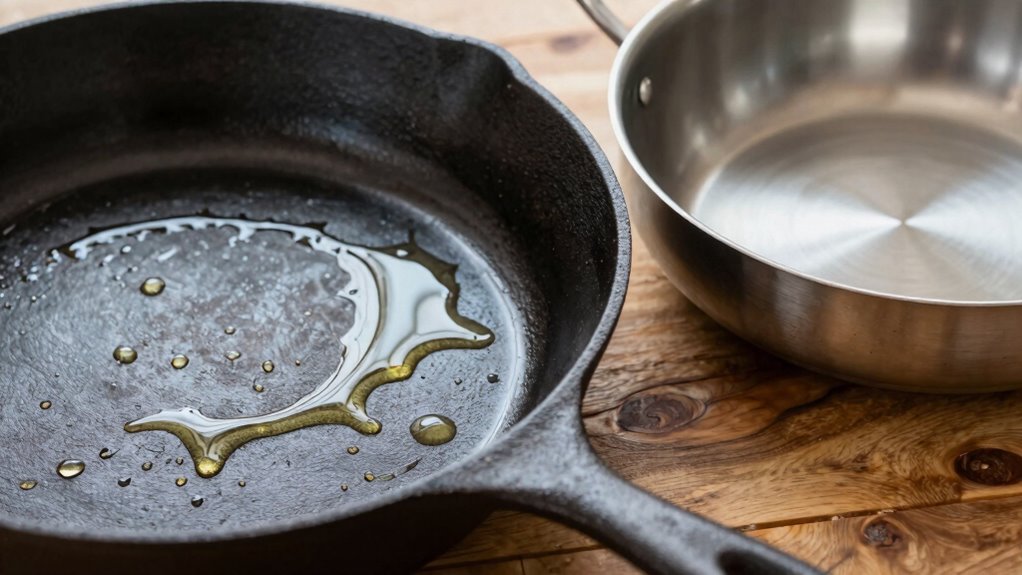
To prevent sticking on stone and steel surfaces, regularly polish with fine abrasive materials to create a smooth, even finish. Maintain the surface by inspecting for damage and cleaning thoroughly after each use. Applying protective coatings like sealers for stone or oil and wax for steel forms a barrier to reduce adhesion. Reapply these coatings periodically to keep surfaces slick and prevent buildup. Keep this routine in mind to enjoy long-lasting, easy-to-clean surfaces—more tips await you.

Get baking supplies delivered free — and shop member deals
- Fast, free delivery on millions of items
- Access to Prime Big Deal Days deals on October 6–7
- Prime Video, Amazon Music and more included
Key Takeaways
- Regularly polish surfaces with fine abrasives to create a smooth, even finish and reduce sticking risks.
- Inspect and prepare surfaces properly before applying coatings to enhance adhesion and prevent buildup.
- Apply protective coatings like sealers or waxes to create a barrier against residues and moisture.
- Reapply protective layers periodically to maintain surface slickness and long-term non-stick properties.
- Clean surfaces gently after use and dry thoroughly to prevent residue accumulation and sticking.
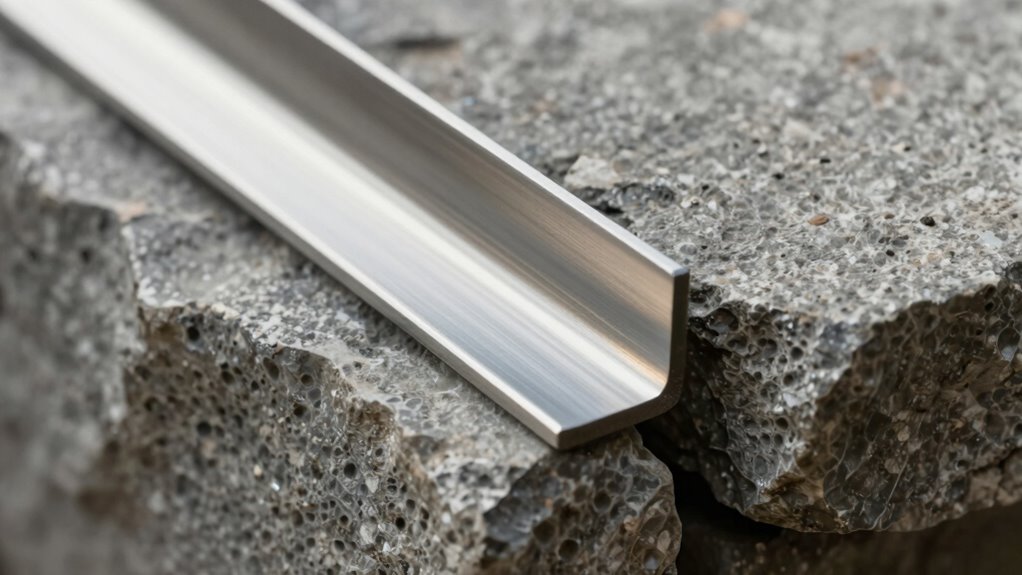
Sticking on stone and steel can be a frustrating problem, especially when you’re working with cookware or tools. It often feels like no matter how much you try, food or materials cling stubbornly to the surface, making your tasks more difficult and cleanup more tedious. The key to preventing this issue lies in understanding proper polishing techniques and applying protective coatings effectively. Polishing techniques help create a smooth, even surface, reducing the chances of sticking by eliminating rough spots where residues can latch on. When you polish stone or steel surfaces, you smooth out imperfections, making it harder for food or other materials to adhere. Using the right abrasive materials, like fine-grit sandpaper or specialized polishing pads, can considerably improve the surface’s finish. Regular polishing, especially with gentle, consistent motions, maintains the surface’s smoothness over time and prevents buildup that causes sticking. Additionally, incorporating proper surface maintenance routines can significantly extend the effectiveness of your polishing efforts and coatings. Regularly inspecting surfaces for signs of wear and damage can help catch potential sticking issues early before they worsen. Proper surface preparation before applying coatings ensures better adhesion and durability of the protective layers.
Beyond polishing, applying protective coatings is vital for long-term prevention. These coatings act as barriers, reducing direct contact between the surface and whatever you’re working with. For stone surfaces, sealers that penetrate and fill tiny pores can make a big difference. They prevent liquids and residues from seeping in, which often leads to sticking and staining. For steel, a thin layer of oil, wax, or a commercial protective coating can create a slick surface that discourages adhesion. When applying these coatings, make sure to follow manufacturer instructions carefully to guarantee they bond properly and last longer. Reapplying protective coatings periodically keeps surfaces slick and easier to clean, especially after heavy use or cleaning. Proper surface maintenance also plays a crucial role in preventing buildup, as neglecting cleaning can lead to more sticking issues over time. Incorporating routine cleaning and coating reapplication not only preserves the surface’s non-stick properties but also prolongs its lifespan. Consistent care, including gentle cleaning and drying, helps preserve the integrity of protective layers and reduces the likelihood of residues causing sticking.
stone surface sealer for countertops
As an affiliate, we earn on qualifying purchases.
As an affiliate, we earn on qualifying purchases.
Frequently Asked Questions
Can Seasoning Oils Prevent Sticking on Stone and Steel Surfaces?
Yes, seasoning oils can prevent sticking on stone and steel surfaces. When you apply seasoning oils to your cooking surface and heat it, they create a natural non-stick layer that enhances food release. Regularly seasoning your stone or steel surface with these oils builds up a durable, smooth coating. This process not only prevents sticking but also protects the surface and improves cooking performance over time.
Are There Specific Cleaning Products That Reduce Sticking?
You might think any cleaner will do, but specific cleaning products can actually reduce sticking. Ironically, some harsh chemicals worsen residue buildup, making surfaces stickier. Focus on cleaning techniques that emphasize gentle residue removal—use pH-neutral cleaners or specialized stone and steel cleaners. Regularly wiping surfaces after cooking or using mild scrubbing helps prevent stubborn residue, ensuring your cookware stays smooth and non-stick without relying solely on seasoning oils.
How Often Should I Re-Season My Stone or Steel Cookware?
You should re-season your stone or steel cookware every few months, especially if you notice increased sticking or oil absorption. Regular re-seasoning helps maintain excellent heat retention and creates a natural non-stick surface. After cleaning, apply a thin layer of oil, heat the pan to guarantee even coating, and let it cool. This routine keeps your cookware performing well and prolongs its lifespan.
Do Different Types of Stone Require Different Care?
Different types of stone do require varying care, especially considering their porosity and surface sealing. For example, porous stones like sandstone need regular sealing to prevent sticking and absorption of moisture, while denser stones like granite are more resistant and require less maintenance. You should investigate your specific stone’s porosity to determine the best care routine. Proper sealing maintains their surface and prevents sticking, making cooking and cleaning easier.
Is It Safe to Use Metal Utensils on Seasoned Stone or Steel?
Using metal utensils on seasoned stone or steel is generally safe, but it depends on utensil compatibility and metal safety. Hard, stainless steel utensils usually won’t damage seasoned surfaces, but softer metals like aluminum might cause scratches. To safeguard your cookware, opt for wooden, silicone, or nylon utensils when possible. Always check your cookware’s instructions to guarantee your utensil choice aligns with the recommended care, preventing damage and maintaining seasoning quality.
steel cookware non-stick coating
As an affiliate, we earn on qualifying purchases.
As an affiliate, we earn on qualifying purchases.
Conclusion
Think of your stone and steel surfaces as a dance floor where your tools perform. When you keep them clean, seasoned, and well-maintained, they glide smoothly, avoiding any sticky missteps. Remember, a little preparation goes a long way—like setting the stage for a flawless performance. With these tips, you’ll keep your surfaces dancing effortlessly, turning every cooking session into a graceful, enjoyable routine. Keep practicing, and your skills will shine as brightly as a well-choreographed show.
abrasive polishing pads for stone and steel
As an affiliate, we earn on qualifying purchases.
As an affiliate, we earn on qualifying purchases.
protective wax for steel surfaces
As an affiliate, we earn on qualifying purchases.
As an affiliate, we earn on qualifying purchases.
Fall Picks
fall essentials
As an affiliate, we earn on qualifying purchases.