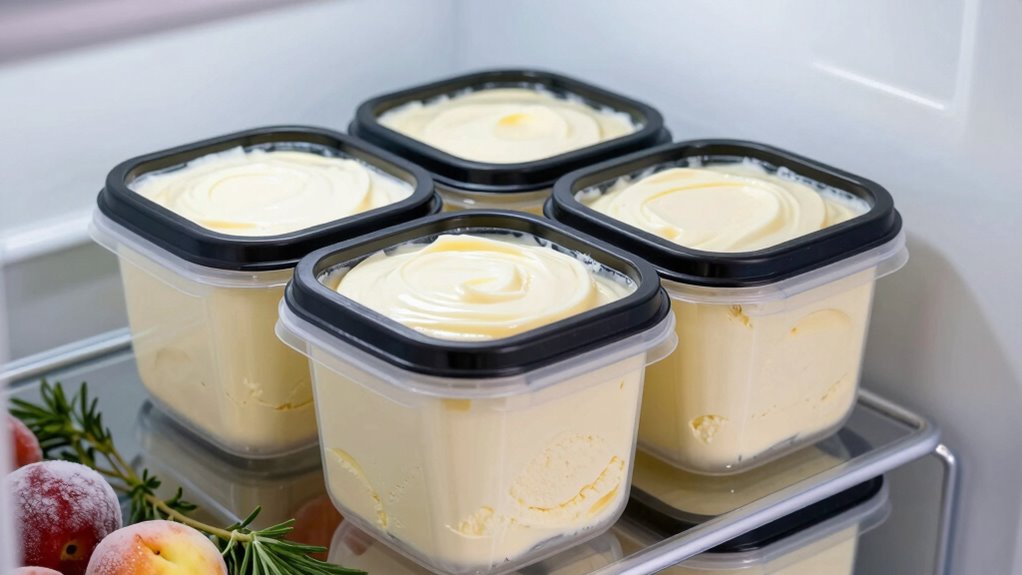

To prevent freezer burn on your homemade ice cream, store it in airtight containers, pressing plastic wrap directly onto the surface before sealing. Keep your freezer at around -10°F to -20°F and avoid opening it frequently. Use strong, sealed lids or double wrap with foil for extra protection. Proper placement away from freezer vents and quick consumption also help maintain its creamy texture. Continue exploring ways to keep your ice cream fresh and delicious.

Get baking supplies delivered free — and shop member deals
- Fast, free delivery on millions of items
- Access to Prime Big Deal Days deals on October 6–7
- Prime Video, Amazon Music and more included
Key Takeaways
- Use airtight, food-safe containers and press plastic wrap directly onto the ice cream surface before sealing.
- Maintain freezer temperature between -10°F to -20°F (-23°C to -29°C) for optimal preservation.
- Store ice cream on flat shelves away from door openings and airflow vents to prevent temperature fluctuations.
- Remove excess air from containers before sealing and double-wrap with foil for extra protection.
- Regularly verify freezer temperature and avoid overfilling to ensure consistent conditions and prevent freezer burn.
airtight ice cream storage containers
As an affiliate, we earn on qualifying purchases.
As an affiliate, we earn on qualifying purchases.
What Causes Freezer Burn and How It Affects Your Ice Cream
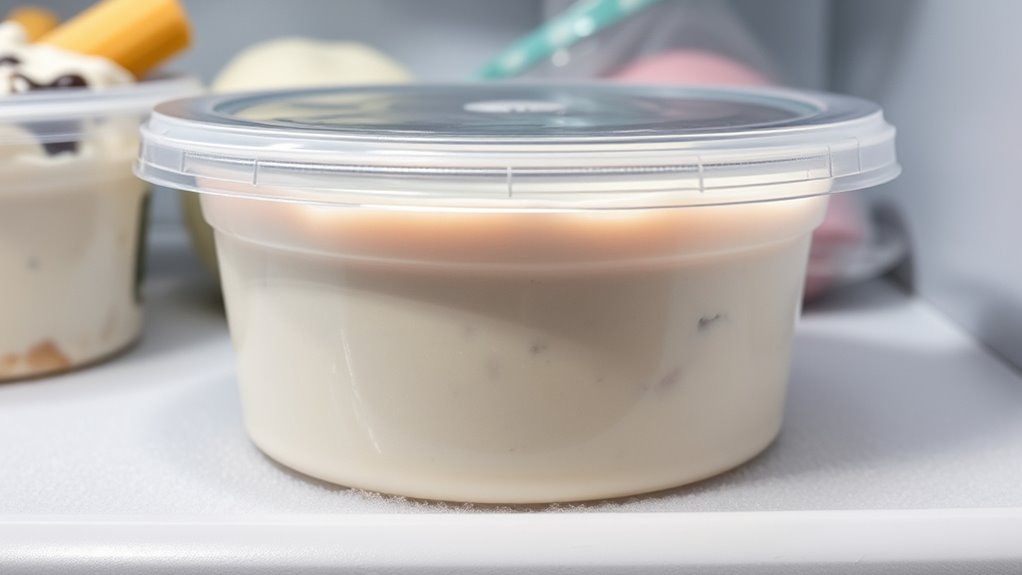
Freezer burn occurs when ice crystals form on the surface of your ice cream, often due to exposure to air and improper storage. Poor air circulation allows dry air to contact your ice cream, causing dehydration and ice crystal growth. When moisture isn’t properly managed, it escapes from the ice cream and freezes on the surface, creating a rough texture and diminishing flavor. If you leave your ice cream uncovered or don’t seal it tightly, air can reach it easily, accelerating freezer burn. To prevent this, guarantee good moisture control by using airtight containers, and avoid frequent temperature fluctuations. Proper storage techniques help maintain the creamy texture, preserve flavor, and keep your homemade ice cream tasting fresh longer. Consistent temperature also helps prevent the formation of ice crystals and preserves quality. Additionally, proper sealing methods are essential to block out air and protect your ice cream from freezer burn. Regularly checking your freezer’s temperature and avoiding temperature fluctuations can further extend the shelf life of your ice cream and improve its overall quality.
As an affiliate, we earn on qualifying purchases.
How to Pack Your Homemade Ice Cream for Freshness
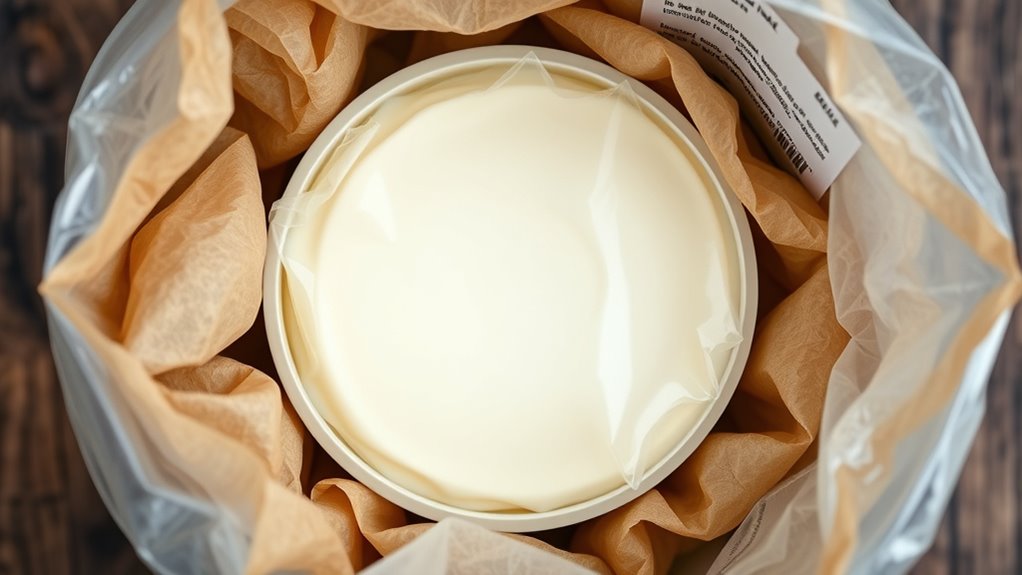
To keep your homemade ice cream as fresh as possible, it’s vital to pack it properly before storing. Start by choosing a clean, airtight container to promote flavor preservation and prevent odors from seeping in. Before filling it, verify the container is thoroughly washed and dried to maintain container hygiene. Press a piece of plastic wrap directly onto the surface of the ice cream to minimize air exposure, then seal with the lid. Removing excess air reduces the risk of freezer burn and flavor loss. Label the container with the date to keep track of freshness. Proper packing not only preserves the taste but also keeps your ice cream free from contaminants, maintaining its quality until you’re ready to enjoy it. Additionally, considering the contrast ratio of your freezer environment can help in maintaining optimal storage conditions for your ice cream, as a balanced temperature and humidity level can further prevent freezer burn and texture changes. Ensuring proper temperature control is essential for keeping ice cream at its best during storage. Regularly monitoring the freezer’s temperature settings can also help maintain consistent conditions and prolong freshness. Incorporating a consistent storage routine can further enhance the longevity of your homemade ice cream.
As an affiliate, we earn on qualifying purchases.
Setting the Right Freezer Temperature for Homemade Ice Cream
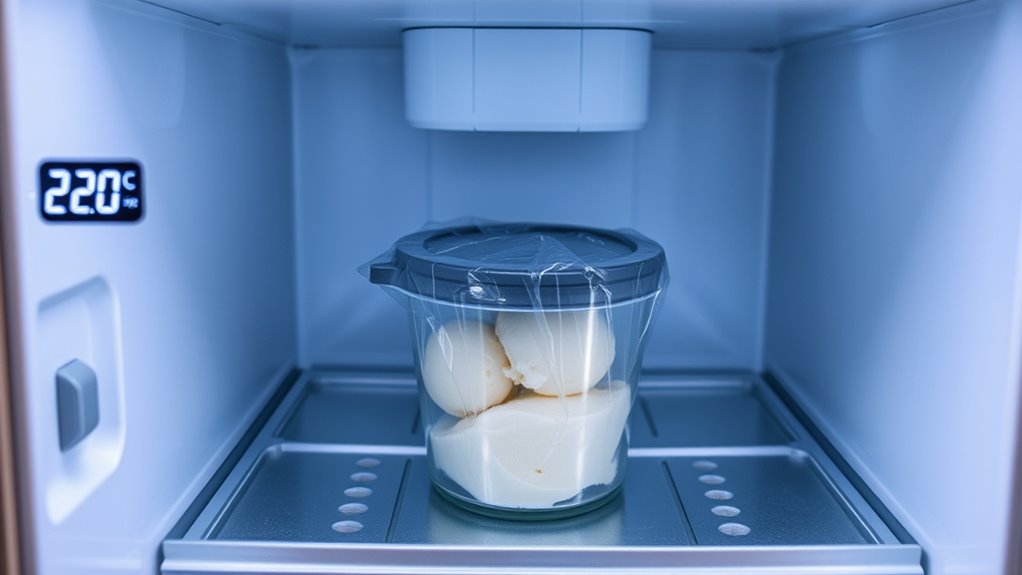
Ensuring your homemade ice cream stays firm and creamy depends heavily on setting the correct freezer temperature. For *best* ice cream texture, keep your freezer at around -10°F to -20°F (-23°C to -29°C). This range prevents ice crystals from forming too large, which can make your ice cream grainy. If the freezer is too warm, your ice cream becomes soft and prone to freezer burn; too cold, and it may become overly hard, making it difficult to scoop. Use a reliable thermometer to monitor the temperature regularly. Consistent freezer temperature helps maintain the ideal ice cream texture, ensuring each scoop is smooth and enjoyable. Adjust the temperature as needed to keep your homemade treat at its *ideal*. Maintaining a proper freezer temperature is crucial for preventing freezer burn and preserving texture over time. Keeping your freezer well-organized and avoiding frequent door openings can also help maintain a stable temperature and prevent freezer burn. Proper freezer organization minimizes temperature fluctuations caused by door openings and helps keep your ice cream at the perfect consistency. Additionally, temperature stability is essential for preventing ice crystal growth and ensuring quality of your homemade ice cream over extended storage periods. Regularly checking your freezer’s settings and avoiding unnecessary temperature fluctuations can further enhance the longevity and quality of your frozen treats.
As an affiliate, we earn on qualifying purchases.
Best Ways to Seal and Wrap Your Ice Cream
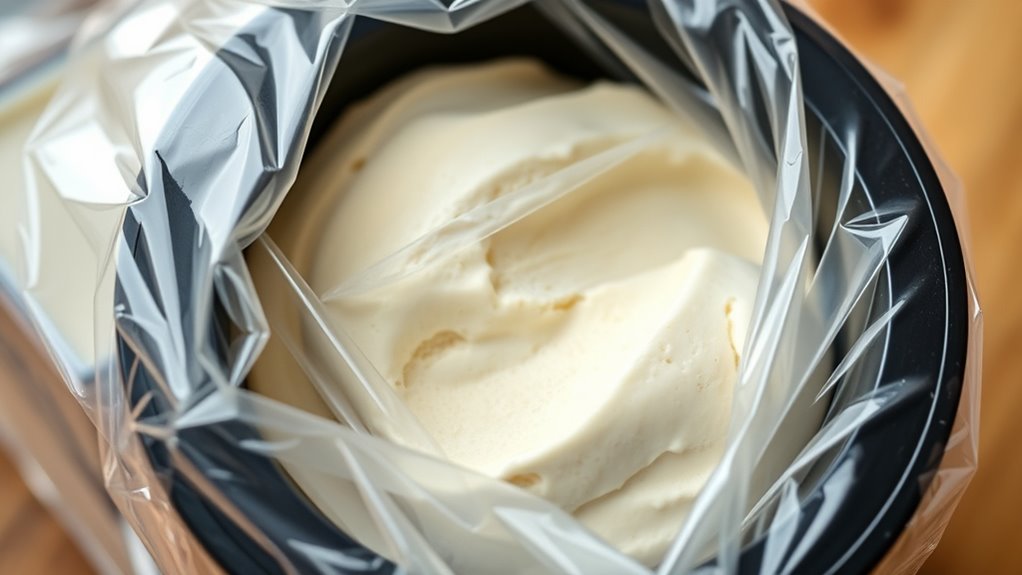
To keep your homemade ice cream fresh, it’s best to use airtight containers that prevent freezer burn. If you don’t have one, wrapping the surface tightly with plastic wrap works well to seal out air. Combining these methods guarantees your ice cream stays creamy and delicious for longer. Additionally, choosing containers made from food-safe materials can help preserve flavor and prevent contamination. Proper airtight sealing is essential for maintaining ice cream quality over time, and storing it at consistent freezer temperatures further helps prevent freezer burn and texture changes.
Use Airtight Containers
Using airtight containers is one of the most effective ways to keep your homemade ice cream fresh and prevent freezer burn. Choose airtight containers made of durable, freezer-safe packaging to guarantee a tight seal. These containers prevent air from entering, which is essential for maintaining the ice cream’s texture and flavor. Make sure to leave some space at the top of the container for expansion as the ice cream freezes. Before sealing, remove excess air from the container to minimize freezer burn. Properly sealed, airtight containers protect your ice cream from moisture and odors that can compromise quality. Investing in good-quality, freezer-safe packaging guarantees your homemade ice cream stays fresh longer and maintains its creamy consistency. Proper storage techniques, such as maintaining a consistent freezer temperature, are also crucial for preventing freezer burn. Additionally, understanding the importance of dark psychology tactics can help you recognize and avoid manipulative behaviors that might compromise your personal boundaries. To further preserve your ice cream, consider proper storage techniques that optimize freezer conditions and prevent temperature fluctuations.
Wrap With Plastic Wrap
Wrapping your homemade ice cream with plastic wrap is a simple yet effective way to create an extra barrier against freezer burn and odors. Proper plastic wrap techniques help prevent air exposure, which is essential for maintaining your ice cream’s freshness. To guarantee a tight seal, press the wrap directly onto the surface, eliminating air pockets. Make sure to cover the entire surface and edges thoroughly. For added protection, consider double wrapping or using a layer of foil over the plastic. Keep the wrap snug but avoid stretching it too much, which can cause tears. This method minimizes freezer burn risk and keeps your ice cream tasting fresh longer. Remember, preventing air exposure is key to preserving quality and texture. Additionally, using proper sealing techniques can significantly extend the shelf life of your homemade ice cream. Incorporating airtight containers after wrapping can provide an extra layer of defense against freezer burn and help maintain flavor. Ensuring your storage method involves correctly sealing the ice cream can further enhance its preservation. Using high-quality plastic wrap can also improve the effectiveness of this method by providing a better barrier against air. Employing curiosity about food storage practices can motivate you to perfect your techniques for optimal freshness.
Choosing Airtight Containers and Freezer Bags
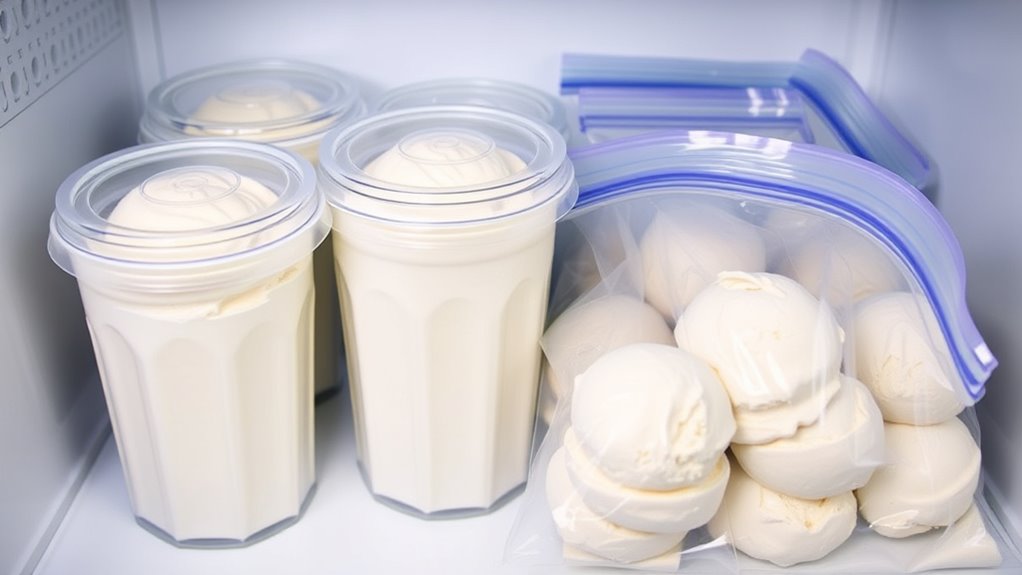
Choosing the right airtight containers and freezer bags is key to keeping your homemade ice cream fresh. You want durable materials that seal tightly to prevent air and moisture from getting in. Proper freezer placement also helps maintain the ideal texture and flavor over time.
Airtight Seal Importance
Ensuring your homemade ice cream stays fresh starts with selecting the right storage containers. An airtight seal is vital to prevent freezer burn and maintain flavor. Use containers with secure, snug-fitting lids to keep out air and moisture. Consider vacuum sealing your ice cream for an even tighter seal, which removes excess air and prevents ice crystals. When choosing a container lid, guarantee it fits properly and creates an airtight barrier. Additionally, transfer your ice cream to freezer bags designed for sealing, squeezing out excess air before closing. This minimizes exposure to oxygen, preserving texture and taste. Finally, double-check that all lids or seals are secure before placing the containers in the freezer. Proper sealing keeps your ice cream fresh longer and prevents freezer burn effectively.
Choosing Durable Materials
Selecting the right storage materials is key to keeping your homemade ice cream fresh and in top condition. You want durable materials that can withstand the cold and prevent freezer burn. Look for containers made from freezer safe options, such as BPA-free plastic or glass with airtight lids. These materials help create a strong barrier against air and moisture, essential for maintaining texture and flavor. Avoid flimsy or porous containers that can crack or allow air in. For added protection, choose freezer bags specifically designed for freezing, which conform tightly to the ice cream and minimize air exposure. Durable materials ensure your ice cream stays fresh longer and preserves its quality, making every scoop as delicious as when you first made it.
Proper Freezer Placement
To keep your homemade ice cream at its best, it’s essential to place it in airtight containers or freezer bags designed for freezing. Proper freezer placement helps maintain temperature consistency, preventing freezer burn and ice crystals. When choosing where to store, keep the ice cream away from door openings and airflow vents, where temperature fluctuates. Confirm the container is tightly sealed to prevent air exposure. For ideal storage, consider these tips:
- Place ice cream on a flat shelf, away from frequent temperature changes
- Avoid overcrowding, which can affect temperature consistency
- Use sturdy, airtight containers or freezer bags for secure sealing
- Regularly check the freezer’s temperature to stay around 0°F (-18°C)
This approach ensures your ice cream stays fresh and creamy longer.
Extra Tips to Keep Your Ice Cream Tasty and Creamy
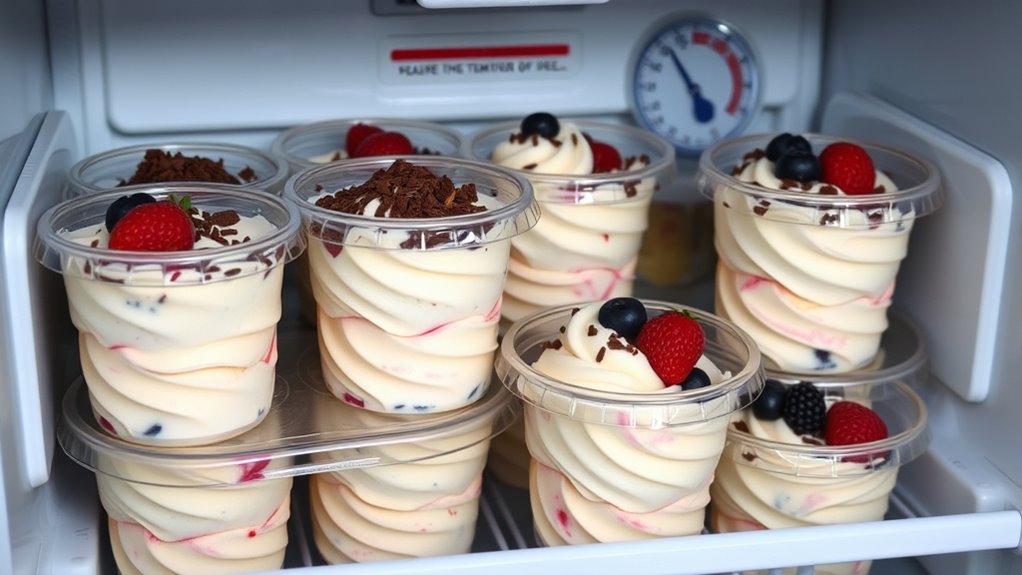
Keeping your homemade ice cream tasting fresh and creamy requires some simple extra tips. First, experiment with flavor variations by adding mix-ins or swirls before freezing to keep each scoop interesting. When serving, let the ice cream sit at room temperature for a few minutes to enhance creaminess and flavor. To preserve its richness, store it in an airtight container and press a piece of plastic wrap directly on the surface to prevent ice crystals. For added flavor, consider adding toppings or sauces just before serving. Remember, proper storage and handling are key to maintaining texture and taste. By following these tips, your ice cream stays delightful, whether you’re enjoying classic vanilla or creative flavor combinations.
Frequently Asked Questions
How Long Can Homemade Ice Cream Be Stored Before Quality Declines?
You can typically store homemade ice cream for up to 2 months before its quality starts to deteriorate. To maximize shelf life, follow proper storage tips like keeping it airtight and avoiding temperature fluctuations. Always label your containers with the date you made them, and try to consume your ice cream within this period for the best taste and texture. Proper storage ensures your homemade treat stays delicious longer.
Does Adding Alcohol Help Prevent Freezer Burn in Homemade Ice Cream?
Adding alcohol can be a real game-changer in your homemade ice cream. It helps prevent freezer burn by lowering the alcohol content, which keeps the ice cream from becoming too hard and icy. Plus, it aids in flavor preservation, ensuring your dessert stays tasty longer. Just be careful not to add too much, or you’ll end up with a soft serve that’s more like a milkshake.
Can I Refreeze Melted or Partially Thawed Homemade Ice Cream Safely?
You can refreeze melted or partially thawed homemade ice cream, but keep in mind that refreezing safety depends on how long it’s been out. If it’s only been a short time and still cold, it’s generally safe, but the texture may change, becoming icier or grainier. To maintain quality, try to refreeze quickly and avoid thawing multiple times, as this increases food safety risks.
Are There Specific Ingredients That Increase the Risk of Freezer Burn?
Did you know that fats and sugars can influence freezer burn risk? Ingredients like alcohol, fruit chunks, or high-fat dairy tend to increase ice crystal formation. Using airtight storage containers minimizes ingredient interactions with air, helping prevent freezer burn. Avoiding exposed ingredients and choosing containers like freezer-safe plastic or glass can markedly extend your ice cream’s freshness, ensuring creamy texture and flavorful bites every time you indulge.
How Does Frequent Opening of the Freezer Affect Ice Cream Preservation?
Frequent freezer opening can cause temperature fluctuations, which harm your ice cream’s quality. When you open the freezer often, warm air enters, causing the freezer temperature to rise temporarily. This disrupts the proper air circulation and can lead to ice crystals forming, increasing the risk of freezer burn. To keep your ice cream fresh, try to minimize openings and maintain a consistent freezer temperature around 0°F (−18°C).
Conclusion
Think of storing your homemade ice cream like tending a delicate garden—protect it from the harsh elements, and it’ll stay fresh and vibrant. I once left a batch uncovered, and the freezer burn crept in like a silent weed, spoiling the treat. By sealing it tight and maintaining the right temperature, you’re nurturing your ice cream’s flavor and texture. With these tips, your frozen masterpiece will stay creamy and delicious, ready to enjoy whenever you crave it.
Halloween Picks
halloween
As an affiliate, we earn on qualifying purchases.