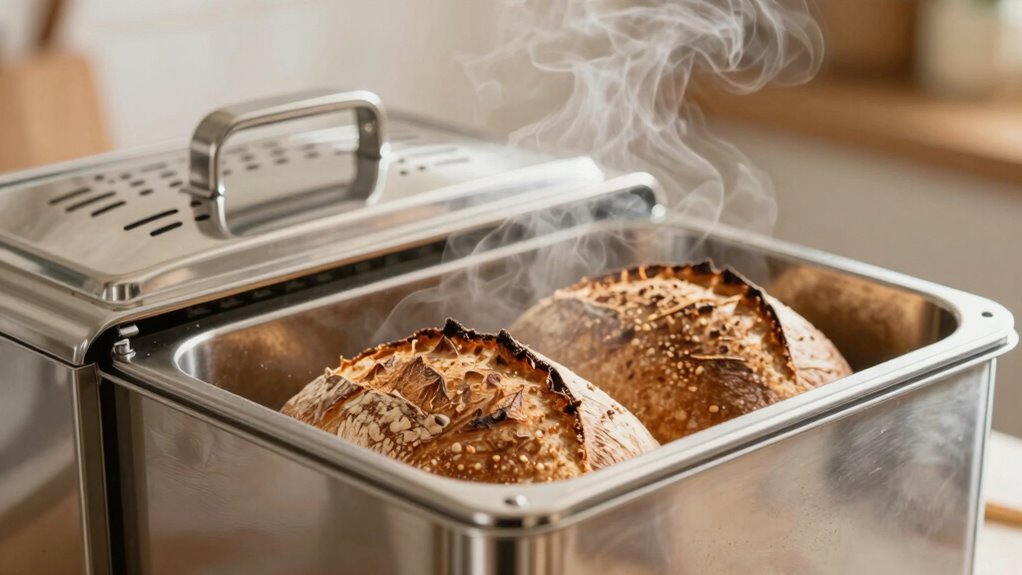

A properly sized bread baker helps you retain steam better, which is essential for creating a shiny, crispy crust. When the environment is just right, your bread develops ideal oven spring and texture, preventing crust issues like toughness or dullness. The right size guarantees consistent humidity levels, making it easier to control moisture throughout baking. Keep going to discover how choosing the right baker can elevate your bread to bakery-quality standards every time.
Key Takeaways
- Properly sized bread bakers maintain consistent humidity levels for optimal steam retention throughout baking.
- They prevent fluctuations in moisture, ensuring even crust development and bakery-quality results.
- Correct sizing allows precise moisture control, enhancing crust shine, crispiness, and overall bread texture.
- Well-designed dimensions facilitate better heat and moisture retention, reducing steam loss during baking.
- Consistent steam retention from appropriate sizing supports improved oven spring and crust formation.
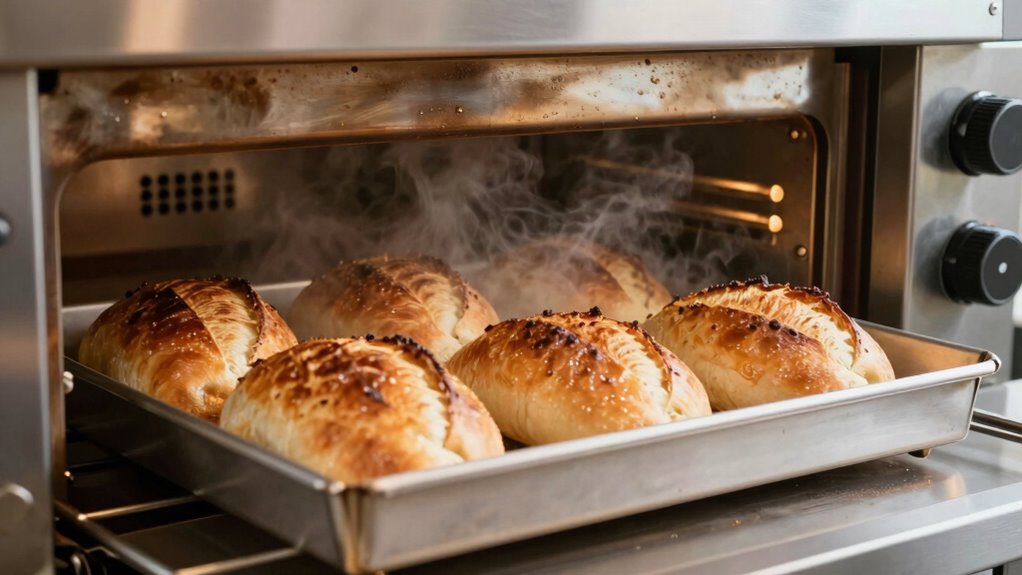
Have you ever wondered how professional bakers achieve that perfect, glossy crust on their bread? One critical factor is the way they manage steam during baking. A well-designed bread baker with an effective steam chamber can control moisture levels precisely, which directly impacts the crust’s appearance and texture. When you bake bread, creating the right environment inside your oven is essential. The steam chamber allows you to introduce moisture at specific moments, ensuring your dough develops a shiny, crisp crust without sacrificing the soft interior. Proper moisture control is not just about adding steam but maintaining the right balance throughout the baking process, and a dedicated steam chamber makes this much easier.
Effective steam management ensures a shiny, crispy crust and perfect bread texture.
A steam-retentive oven or bread baker helps you keep the moisture inside, preventing the crust from forming too early or becoming too thick. If moisture escapes too quickly, your bread can turn out dull and overly hard, lacking the appealing gloss that professional bakeries achieve. With a steam chamber, you can release steam during the initial stages of baking, which keeps the surface moist. This moisture allows the gluten to stretch and the crust to expand, creating that desirable oven spring. As baking progresses, you can reduce or eliminate the steam to help the crust set and develop its characteristic color and texture. Moisture management is a crucial aspect that influences the final quality of your bread. Additionally, a well-insulated oven can help with heat retention, ensuring consistent baking conditions. Proper humidity control is essential for achieving bakery-quality results at home.
The secret lies in the precise moisture control enabled by a well-sized bread baker. Too much steam or too long a duration can lead to a gummy crust, while too little can cause a dull, matte finish. When you bake with a dedicated steam chamber, you gain the ability to fine-tune the environment inside your oven, optimizing crust development without overdoing it. This control guarantees your bread has that attractive shine and crispy exterior that sets professional loaves apart. Additionally, a properly sized bread baker ensures the steam chamber maintains consistent humidity levels, avoiding fluctuations that can compromise the final product. Proper size and design of your bread baker are key factors in achieving consistent results.
Furthermore, understanding the importance of steam retention can help you make better choices in equipment and techniques for consistent results. In the end, mastering moisture control through an effective steam chamber enhances your baking results. It’s not just about creating steam but about managing it precisely to achieve that perfect crust. By understanding how the size of your bread baker influences steam retention, you can elevate your baking game, producing loaves with bakery-quality crusts every time. This small but essential detail makes all the difference, turning ordinary bread into a visually appealing and delicious masterpiece.
bread proofing basket with steam chamber
As an affiliate, we earn on qualifying purchases.
As an affiliate, we earn on qualifying purchases.
Frequently Asked Questions
How Does Bread Shape Affect Steam Retention?
Your bread shape directly impacts steam retention because a well-shaped loaf creates a tighter crust, trapping steam more effectively. Higher dough hydration results in a softer crumb and better expansion, which enhances crust formation. When you shape your dough properly, it maintains better steam inside during baking, leading to a glossy, crispy crust and an airy interior. Proper shaping ensures ideal steam retention, improving your bread’s overall texture and appearance.
What Materials Best Improve Steam Retention in Bread Bakers?
You’ll want materials like ceramic or cast iron for your bread baker, as they absorb and retain heat and moisture well, creating a humid environment. This boosts dough hydration and promotes crust development, giving your bread that perfect, glossy crust. Imagine the steam gently enveloping your dough, encouraging it to rise and develop a beautiful, crackly surface. These materials help maintain consistent steam, elevating your baking results every time.
Can Steam Retention Vary Between Different Bread Types?
Yes, steam retention can vary between bread types because different doughs have varying elasticity and moisture levels. For instance, high-elasticity doughs trap steam better, promoting a glossy crust, while softer doughs might not hold steam as effectively, affecting crust formation. Adjusting steam techniques based on dough elasticity helps optimize crust development and baking results for each bread type.
How Long Should Steam Be Retained During Baking?
To achieve ideal crust formation, you should retain steam for about 10 to 15 minutes during baking. This duration helps maintain dough hydration, encouraging a glossy, crispy crust. Too little steam results in a dull, weak crust, while too much can leave the loaf soggy. Monitor your oven’s environment carefully, and guarantee consistent steam retention for perfect, professional-quality bread with a beautiful, blistered crust.
Does Oven Temperature Influence Steam Retention Effectiveness?
Yes, oven temperature influences steam retention effectiveness. When you use higher temperatures, oven humidity can decrease quickly, making it harder to keep the steam trapped. Proper steam retention promotes better crust development, giving your bread a crisp, glossy finish. Managing oven temperature carefully guarantees the steam stays longer, allowing the crust to develop fully and improving the overall texture and appearance of your baked bread.
bread baker with steam retention
As an affiliate, we earn on qualifying purchases.
As an affiliate, we earn on qualifying purchases.
Conclusion
By understanding how properly sized bread bakers retain steam, you can uncover better crusts and crumb textures. It’s a common myth that larger ovens always produce superior bread, but in reality, the right size can trap more steam, boosting oven spring and crust development. So, don’t just focus on size—consider how your baker’s dimensions influence steam retention. When you choose wisely, you’ll bake bread that’s not only beautiful but also irresistibly crisp and flavorful.
home bread oven with humidity control
As an affiliate, we earn on qualifying purchases.
As an affiliate, we earn on qualifying purchases.
As an affiliate, we earn on qualifying purchases.