
To plan batch sizes for dough mixers and avoid underfilling or overfilling, you need to know your equipment’s capacity and accurately calculate ingredient amounts based on your recipe. Use proper measurement tools, follow SOPs, and consider dough type and hydration. Implement sensors and automation to monitor fill levels and make adjustments quickly. Staying vigilant prevents equipment strain and maintains dough quality—continue exploring to learn how advanced techniques can help optimize your process.
Key Takeaways
- Regularly calibrate mixers and measurement tools to ensure accurate batch sizes and prevent over/underfilling.
- Calculate batch size based on mixer capacity, dough hydration, and ingredient proportions for optimal operation.
- Implement SOPs and real-time sensors to monitor fill levels and adjust batches proactively.
- Use precise measuring equipment and standardized procedures to maintain ingredient consistency.
- Adjust batch sizes promptly in response to dough type, production demand, and equipment feedback to avoid overloading or underfilling.
Understanding Mixer Capacity and Specifications

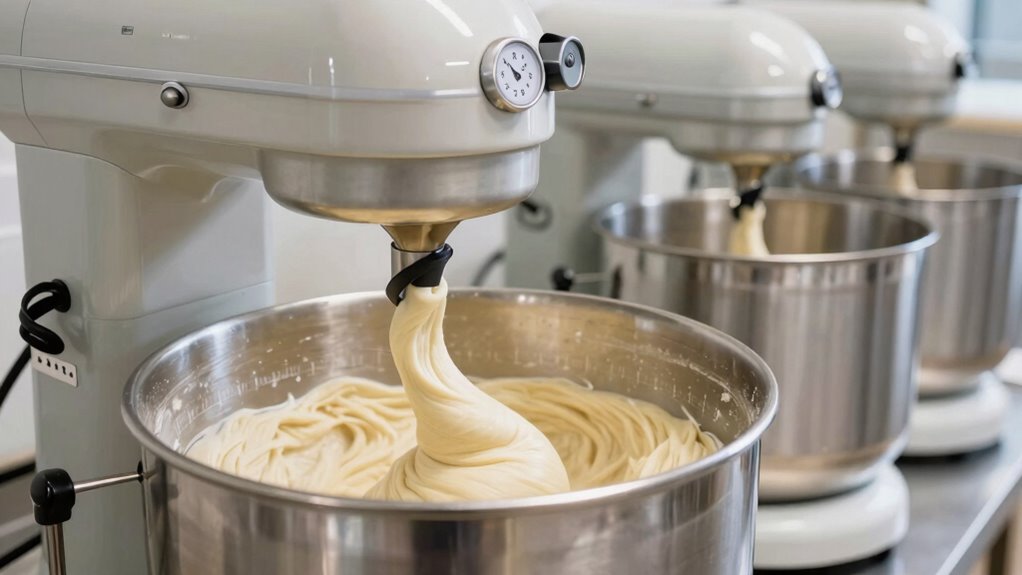
To effectively plan batch sizes for dough mixers, you need to understand their capacity and specifications. Start by reviewing the mixer’s capacity limits, which indicate the maximum amount of dough it can handle safely without strain. Overloading beyond this limit can strain the motor and affect the quality of your dough. Additionally, regular mixer calibration is essential to ensure accurate performance; it helps confirm that the mixer operates within its specified parameters. Proper calibration prevents inconsistencies and maintains efficiency. Knowing your equipment’s capacity limits and ensuring it’s properly calibrated allows you to optimize batch sizes, avoid overfilling or underfilling, and extend the lifespan of your mixer. This foundational knowledge sets the stage for precise and effective batch planning. Understanding equipment specifications is crucial for maintaining optimal operation and preventing damage.
How to Calculate the Right Batch Size for Your Recipe
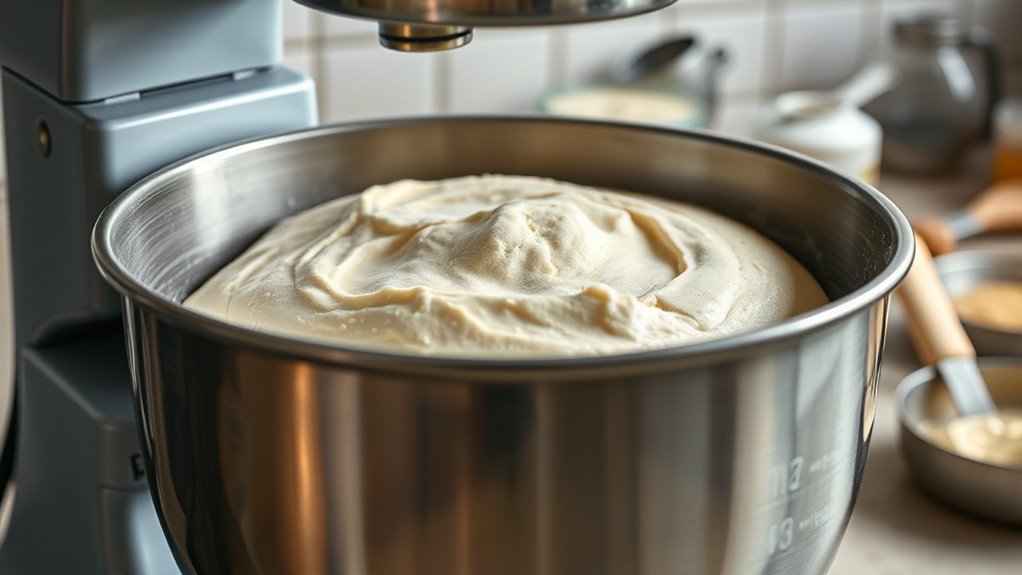
Calculating the right batch size for your recipe guarantees your dough mixer operates efficiently without risking overload or waste. To do this, start with ingredient scaling, adjusting quantities based on your desired output. Accurate ingredient measurement ensures consistency and helps you avoid overfilling or underfilling the mixer. When adapting a recipe, consider the mixer’s capacity and the typical hydration levels of your dough. Keep in mind that scaling up or down should maintain the proportions of ingredients to preserve recipe integrity. Use this information to determine a batch size that maximizes efficiency while preventing strain on your equipment. Proper calculation ensures smooth operation, minimizes waste, and guarantees high-quality dough every time. Additionally, understanding mixing techniques can further optimize your process and improve dough consistency. Incorporating sustainable practices in your batching process can also contribute to reducing energy consumption and waste.
What Factors Affect Your Batch Size Choices? (e.g., Dough Type, Hydration)
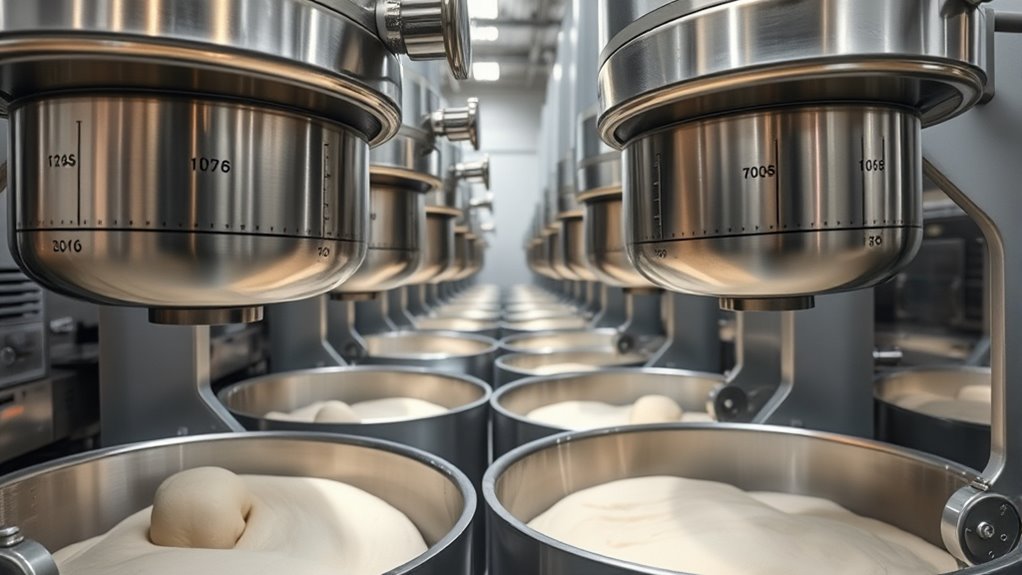
The type of dough you’re preparing markedly influences your ideal batch size because different doughs have varying handling characteristics and equipment demands. For example, high-hydration doughs require more careful mixing and may need smaller batches to ensure proper hydration and gluten development. Conversely, lower hydration doughs might allow larger batches without compromising quality. Ingredient variability also plays a role; when ingredients fluctuate in moisture content or weight, you may need to adjust your batch size to maintain consistency. Understanding how dough hydration impacts mixing and how ingredient variability affects overall consistency helps you choose the right batch size. Additionally, considering batch size optimization and payment security measures can streamline your transactions, ensuring smooth business operations. By tailoring your batch size to these factors, you can optimize mixer performance and produce high-quality dough every time.
How Can You Keep Ingredient Measurements Consistent?
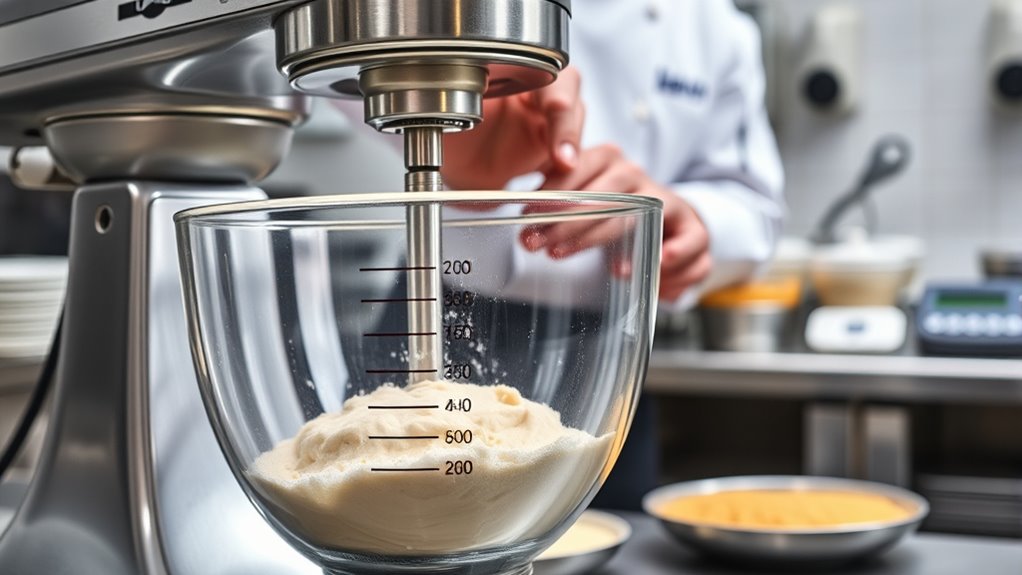
Maintaining consistent ingredient measurements is essential for producing uniform doughs and ensuring product quality. To achieve ingredient consistency, use precise measuring tools like digital scales and calibrated scoops. Avoid guesswork by always double-checking measurements before adding ingredients. Establish standard procedures for measuring each ingredient, and train staff to follow them strictly. Keep your measuring equipment clean and well-maintained to preserve measurement accuracy. Implementing standardized protocols reduces variability and helps your team consistently replicate the same batch quality. Regularly review and calibrate your measuring devices to prevent drift over time. Proper measurement techniques are crucial in avoiding underfilling or overfilling, which can compromise dough texture and product consistency. Additionally, understanding philosophical insights on existence can foster a mindful approach to quality control and precision in your baking process. Recognizing the importance of precise measurement can also help prevent costly errors and waste. By prioritizing measurement accuracy and enforcing strict measurement standards, you ensure that each batch maintains the desired consistency, leading to better dough texture and overall product excellence. Incorporating automated measurement systems can further enhance precision and reduce human error in your process. Moreover, paying attention to ingredient quality can significantly impact the final product’s consistency and flavor profile.
What SOPs Should You Follow for Batch Planning?
Establishing clear Standard Operating Procedures (SOPs) for batch planning is essential to guarantee consistency and efficiency in your dough production process. Proper SOPs help minimize errors and ensure uniform quality. Focus on key areas such as ingredient sourcing, staff training, and batch size calculations. To do this effectively, consider these guidelines:
- Standardize ingredient sourcing to ensure quality and availability.
- Train staff thoroughly on batch planning procedures to maintain consistency.
- Develop precise batch size calculations to avoid underfilling or overfilling.
- Regularly review and update SOPs to adapt to new equipment or process improvements, ensuring ongoing process optimization.
How Can Technology Help Maintain Proper Fill Levels?

Using sensors for real-time monitoring allows you to track fill levels precisely as you work. Automated batch adjustments can then be made instantly to prevent overfilling or underfilling. Data-driven process optimization helps you refine your operations for consistent, efficient dough mixing. Incorporating smart control systems with home energy management can further enhance efficiency and safety during the baking process.
Sensors for Real-Time Monitoring
Sensors for real-time monitoring play a crucial role in making certain dough mixers stay properly filled, preventing overflows or shortages. By continuously measuring the dough level, these sensors help you maintain ideal batch sizes. Proper sensor calibration ensures accurate readings, reducing errors that could lead to overfilling or underfilling. When levels deviate from set parameters, the system triggers real-time alerts, allowing immediate corrective action. This technology offers:
- Precise level detection for consistent batches
- Automated notifications to prevent over or underfilling
- Data logs for tracking and optimizing process efficiency
Implementing reliable sensors improves accuracy, minimizes waste, and keeps your production running smoothly. With real-time insights, you can quickly respond to fluctuations and maintain perfect fill levels with confidence. Additionally, understanding industry standards can help in assessing the importance of accurate monitoring in various industries. Incorporating advanced sensors can further enhance the effectiveness of these systems by providing more detailed and reliable data. Utilizing sensor calibration protocols ensures ongoing accuracy and performance over time. Using proper maintenance procedures can also extend sensor lifespan and reliability.
Automated Batch Adjustments
When integrated with advanced control systems, technology can automatically adjust batch sizes in real time to maintain proper fill levels. By monitoring ingredient proportioning and flow rates, these systems can fine-tune ingredient inputs to prevent underfilling and overfilling. This process relies on precise navigation and mapping algorithms to ensure accurate positioning and flow management. Automated adjustments reduce the need for manual intervention, minimizing errors caused by inconsistent ingredient addition. As a result, you achieve better mixing consistency and improved product quality. Real-time feedback allows the system to respond instantly to fluctuations, optimizing batch size without sacrificing accuracy. Overall, automated batch adjustments streamline operations, enhance precision, and help maintain ideal fill levels consistently across your dough production process.
Data-Driven Process Optimization
Advanced control systems leverage data analytics to optimize dough mixing processes continually. By analyzing real-time data, you can adjust for fermentation timing and ingredient variability, guaranteeing consistent fill levels. Technology helps detect subtle changes that impact batch size, preventing underfilling or overfilling.
Consider these key strategies:
- Monitoring fermentation timing to adapt mixing schedules
- Analyzing ingredient variability to fine-tune ingredient ratios
- Using sensors to track dough consistency and fill levels in real time
This approach allows for precise adjustments, reduces waste, and maintains product quality. Implementing data-driven process optimization ensures your dough mixers operate efficiently, even when fermentation conditions or ingredient properties shift unexpectedly.
How Do You Spot and Fix Underfilled Mixers?
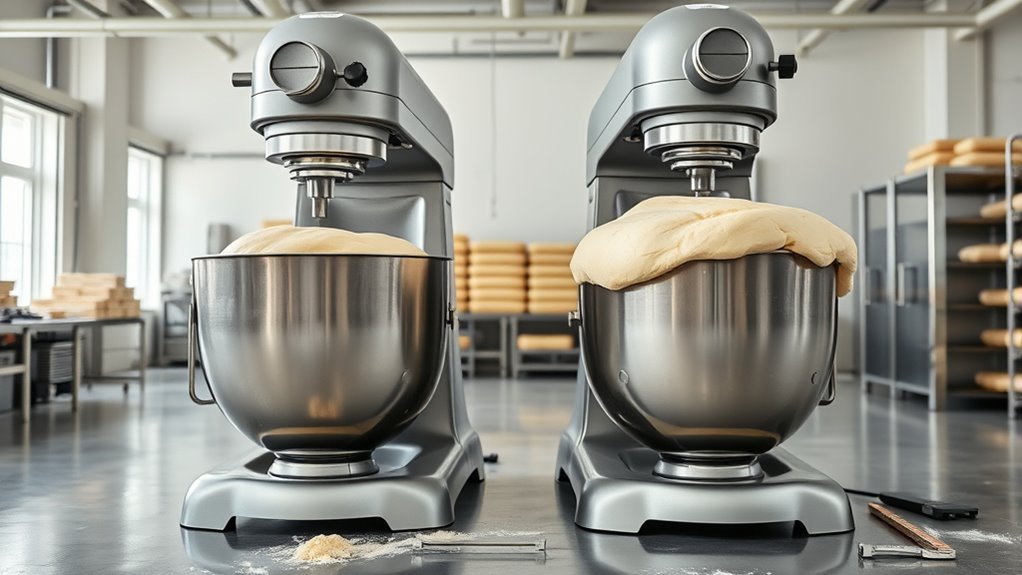
Have you noticed that your dough mixers aren’t operating efficiently? Underfilled mixers can lead to inconsistent batches and wasted ingredients. To spot the issue, check if the mixer is consistently running below the recommended fill level, which might cause uneven mixing. Use ingredient scaling to verify that your batches match the recipe’s specified weight or volume; discrepancies often signal underfilling. Fix the problem by adjusting your ingredient measurements or batch size. Ensure your equipment’s fill line is clearly marked and monitored regularly. Consistent ingredient scaling helps prevent underfilling, ensuring each batch contains the right amount of ingredients for recipe consistency. Regularly inspecting and calibrating your mixers keeps operations smooth and reduces product variability. Paying attention to mixing efficiency can help identify underlying issues caused by underfilling.
What Are the Risks of Overfilled Mixers?
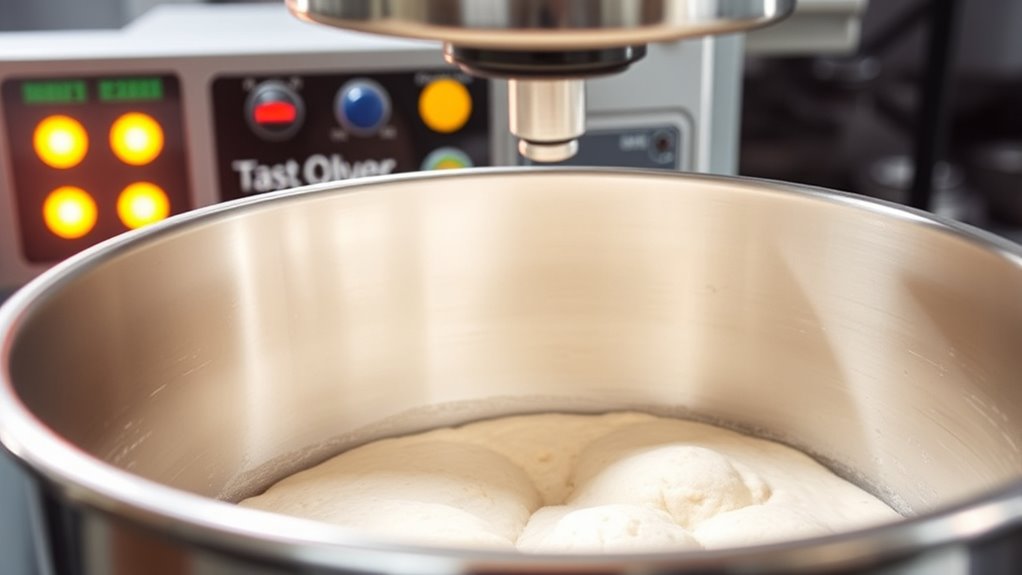
Overfilling your dough mixers can lead to spills and messy work areas, increasing cleanup time. It also reduces mixing efficiency, which may affect product quality. Additionally, overfilled machines risk damage to equipment, leading to costly repairs or downtime. Proper size and load planning can help prevent these issues and ensure safe, reliable operation. Being aware of styling product differences can assist in selecting the appropriate equipment capacity for various dough types and batch sizes. Recognizing equipment limitations is essential for maintaining optimal performance and longevity of your mixers. Understanding free floating mechanisms can also help in troubleshooting and maintaining equipment performance over time. Furthermore, understanding water in the wilderness concepts can aid in outdoor maintenance or repairs when necessary.
Spills and Messes
When mixers are overfilled, spills and messes quickly become a common problem, posing safety hazards and increasing cleanup time. Overfilling can cause ingredients to splash out, creating slippery surfaces and potential injuries. It also complicates maintaining ingredient accuracy, as measuring tools may become obstructed or inaccurate when excess ingredients spill over. To avoid these issues, be mindful of your batch size and use proper measuring tools to ensure consistent fills.
Risks of spills include:
- Slippery floors leading to slips and falls
- Contamination from spilled ingredients
- Increased cleaning time and operational delays
Keeping the correct batch size helps prevent spills, maintains safety, and guarantees ingredient accuracy, making your operation more efficient.
Reduced Mixing Efficiency
Overfilled mixers can considerably reduce mixing efficiency, leading to uneven ingredient distribution and compromised product quality. When a mixer is overfilled, there’s less space for ingredients to move freely, causing inadequate blending and inconsistent ingredient consistency. This inefficiency prolongs mixing times and increases energy consumption, negatively impacting process efficiency. Overfilling can also cause ingredients to stick to the sides or form clumps, making it difficult to achieve a uniform mixture. As a result, your final product may have variations in texture, taste, and appearance. Maintaining the correct batch size ensures suitable mixing conditions, promotes consistent ingredient distribution, and helps maximize process efficiency. Avoiding overfilling is essential to produce high-quality dough and streamline your production workflow.
Damaged Equipment
Exceeding the recommended batch size puts unnecessary strain on your dough mixer, increasing the risk of equipment damage. Overfilled mixers can cause motor burnout, gear failure, and bearing wear, leading to costly repairs or replacements. Skipping regular maintenance routines may worsen these issues, as worn parts are more vulnerable to damage from overloading. Additionally, overfilling can void your equipment warranties, leaving you responsible for repair costs. To prevent damage, always stay within specified capacity limits and adhere to maintenance schedules. Regular inspections help identify early signs of wear before they escalate. Proper batch size planning not only protects your equipment but also extends its lifespan, ensuring consistent performance and avoiding unnecessary downtime or expenses.
How Can You Adjust Batch Sizes During Production Fluctuations?
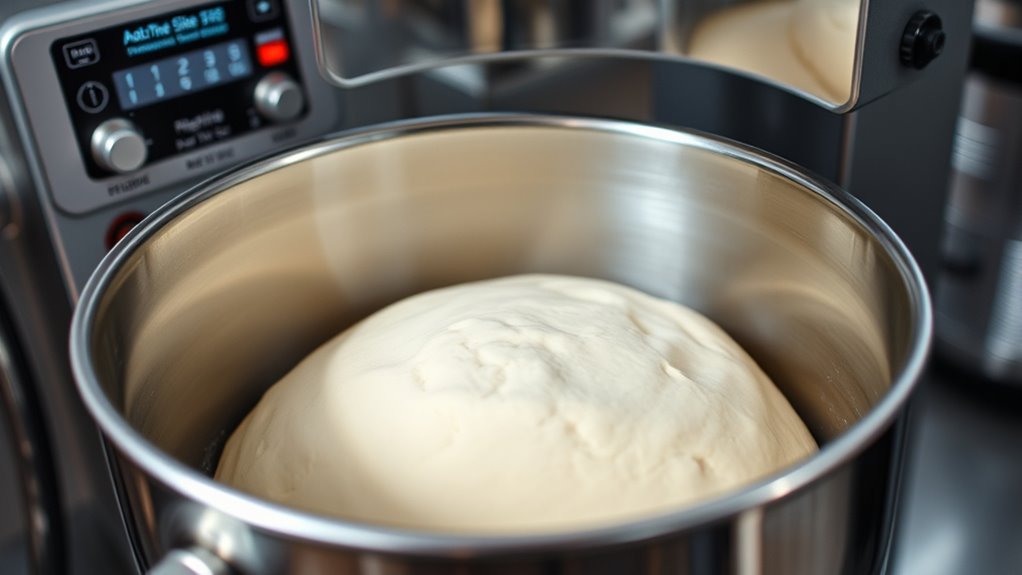
Adjusting batch sizes during production fluctuations requires quick and strategic responses to maintain efficiency and product consistency. You can do this effectively through ingredient scaling, which involves adjusting ingredient quantities proportionally based on the new batch size. This ensures that each batch remains consistent in quality and characteristics. Monitor your production flow closely, and when fluctuations occur, recalibrate your mixers accordingly. Use precise measurements and automated controls if available to avoid errors. Keeping batch consistency intact is essential to meet product standards and customer expectations. Flexibility in your process allows you to respond swiftly to demand changes without risking underfilling or overfilling. By implementing these adjustments, you maintain high-quality output and optimize your production efficiency.
Frequently Asked Questions
How Do Seasonal Changes Affect Optimal Batch Sizes?
Seasonal fluctuations and ingredient variability directly impact your ideal batch sizes. During peak seasons, increased demand may require larger batches to maintain efficiency, while off-peak times might call for smaller ones to prevent waste. Keep an eye on ingredient quality and availability, adjusting batch sizes accordingly. This proactive approach helps you avoid underfilling or overfilling, ensuring consistent product quality and minimizing waste throughout the year.
What Safety Protocols Should Be Followed During Batch Adjustments?
Imagine your mixer as a delicate dance partner—step carefully. Always follow cleaning procedures before adjustments to prevent contamination. Keep emergency shutdowns accessible, like safety nets beneath a high wire. Wear protective gear and double-check connections to avoid accidents. Communicate clearly with your team during batch changes, ensuring everyone’s aware. By adhering to these safety protocols, you keep your operation smooth, safe, and ready to handle any unexpected wobble.
How Does Ambient Temperature Influence Dough Consistency?
Ambient temperature greatly influences dough consistency by affecting ingredient behavior. When it’s warmer, your dough may become softer and sticky, requiring adjustments to maintain proper texture. Cooler temperatures can make it firmer and harder to mix. To manage this, prioritize temperature control in your environment, monitor dough regularly, and adjust ingredient ratios if needed. This helps guarantee consistent ingredient performance and prevents issues caused by temperature fluctuations.
Can Batch Size Planning Improve Overall Production Efficiency?
Ever wondered how to boost your production efficiency? Batch size planning can do just that by optimizing automation integration and managing ingredient variability. When you plan your batches carefully, you reduce waste, prevent overfilling or underfilling, and streamline operations. This proactive approach guarantees smooth workflows, consistent product quality, and faster turnaround times, making your production process more efficient and profitable. Wouldn’t you want your bakery to run like clockwork?
What Training Is Recommended for Staff on Mixer Operation and Planning?
You should provide staff training focused on mixer operation and batch size planning to guarantee efficiency and safety. Hands-on sessions teach proper handling, safety protocols, and adjusting batch sizes to avoid underfilling or overfilling. Regular refresher courses help staff stay current with best practices. Incorporate troubleshooting and maintenance tips to enhance their confidence and skill, ultimately leading to smoother production and reduced waste.
Conclusion
So, next time you think bigger is better, remember that overfilling your dough mixer might just turn your perfect batch into a doughy disaster, while underfilling leaves you wasting ingredients and time. Ironically, the secret to smooth production isn’t about pushing the limits, but about knowing them. Stick to proper planning, and you’ll avoid the messy, sticky chaos of over- or underfilled mixers—because sometimes, less really is more.