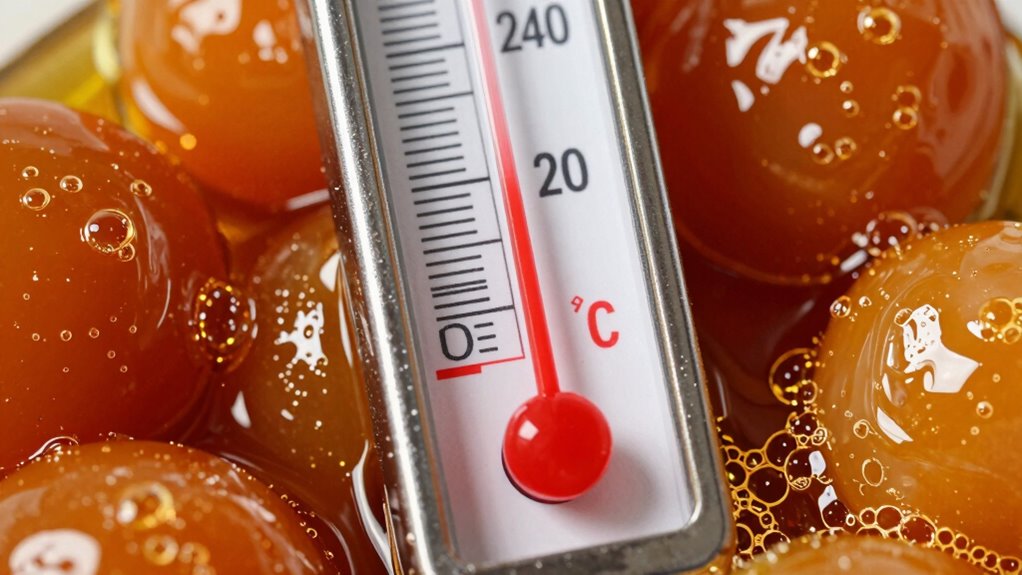
To identify sugar stages from soft ball to hard crack, use a candy thermometer to monitor temperature precisely—around 235-240°F for soft ball, 270°F for soft crack, and 300°F for hard crack. Perform the cold water test by dropping syrup into cold water, observing its consistency (pliable, firm, or brittle). With practice, you’ll master these cues and control cooking perfectly. Keep exploring to learn detailed tips for flawless candy every time.
Key Takeaways
- Use a reliable candy thermometer to precisely monitor temperature during cooking.
- Recognize sugar stages by closely observing temperature ranges: soft ball (~235–240°F), firm ball (~245°F), hard crack (~300°F).
- Perform cold water tests to confirm the stage: soft ball (pliable), firm ball (more solid), hard crack (brittle).
- Stop heating immediately at the target temperature to prevent overcooking or crystallization.
- Rely on temperature and visual cues rather than guesswork for consistent, accurate results.
What Are the Sugar Stages in Candy Making?
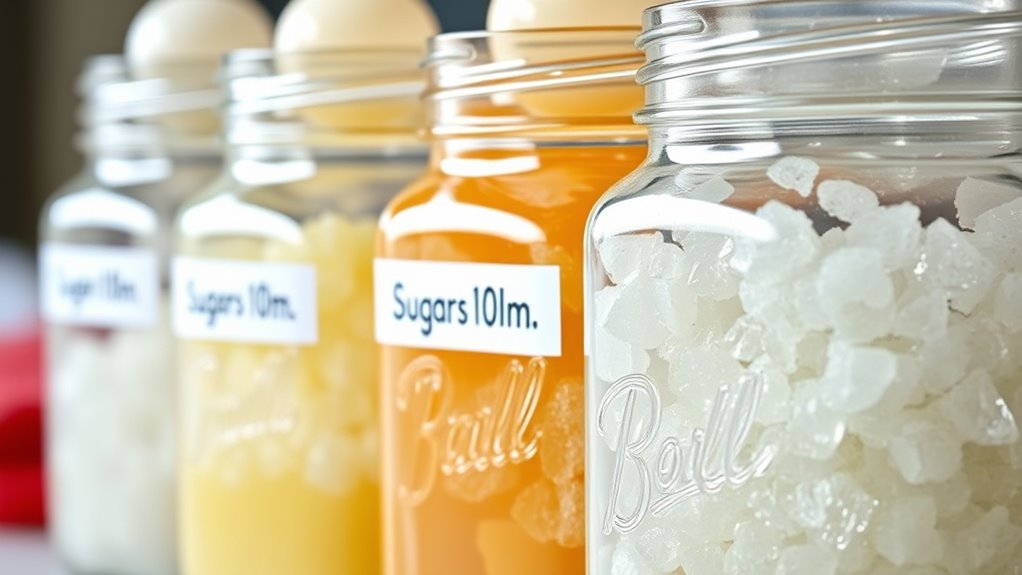
In candy making, understanding the sugar stages is essential because each stage determines the final texture and consistency of your sweets. As you heat sugar, it passes through various stages, each producing different flavors and textures. The initial stages develop a caramel flavor, which forms when sugar begins to brown during the cooking process. As temperature increases, sugar undergoes crystallization, affecting how smooth or grainy the final product becomes. For example, lower stages like soft ball or firm ball produce chewy textures, while higher stages like hard crack result in brittle candies. Recognizing these stages helps you control the process precisely, ensuring your candy reaches the desired consistency. Mastering sugar stages is key to creating perfect, professional-quality confections every time. Properly understanding sugar stages is also essential for beginners learning candy making techniques.
How to Recognize and Reach the Soft Ball Stage

To recognize and reach the soft ball stage, you need to pay close attention to the temperature of your sugar syrup and perform a simple test. Use a reliable candy thermometer to monitor the temperature, which should be around 235°F to 240°F. As the syrup heats, your goal is to control caramelization techniques so the sugar dissolves evenly without overcooking, which could lead to unwanted crystallization. Once the syrup reaches the target temperature, test it by dropping a small amount into cold water. If it forms a soft, pliable ball that can be easily flattened with your fingers, you’ve achieved the soft ball stage. Mastering this stage guarantees your candy will have the perfect texture before moving on to the next stages. Employing sugar syrup monitoring techniques can help prevent crystallization and ensure a smooth, consistent result. Proper temperature control is essential to prevent crystallization, which can ruin the texture of your candy.
How to Tell the Firm and Hard Ball Stages Apart
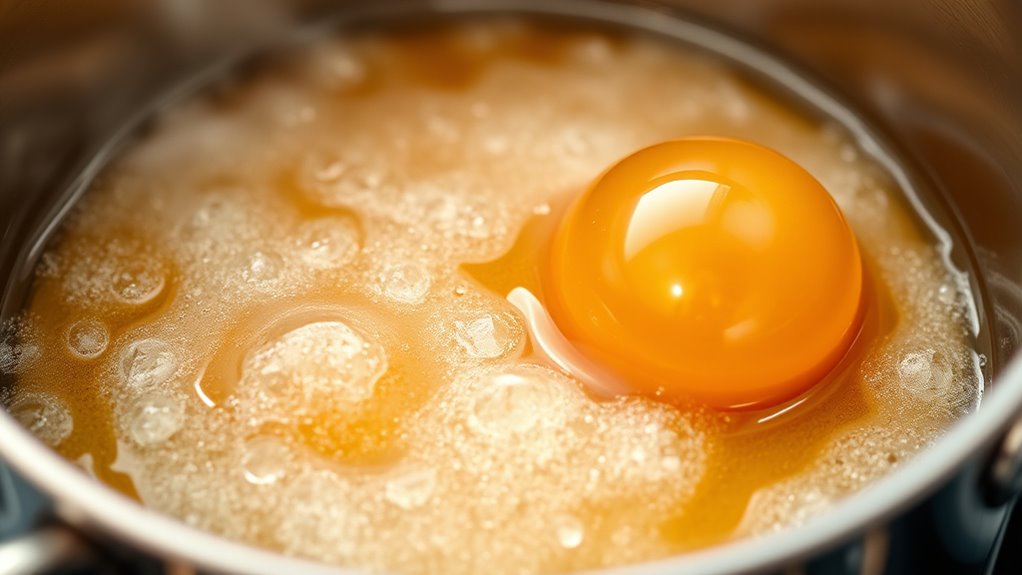
As you monitor your sugar syrup, distinguishing between the firm and hard ball stages becomes essential for achieving the desired candy texture. To tell them apart, focus on color differentiation and temperature accuracy. The firm ball stage typically appears slightly darker and can be tested by dropping a small amount into cold water; it forms a cohesive, but still pliable, ball. The hard ball stage, on the other hand, is reached at a higher temperature and results in a firmer, less malleable ball. Use a reliable candy thermometer to guarantee accuracy, as visual cues alone can be misleading. Temperature control is crucial for consistent results in candy making. Additionally, understanding the topical authority of your content can help you convey complex processes more clearly. Being aware of water temperature and how it influences the stages can improve your precision in candy making. Remember, precise temperature control and observing subtle color differences are your best tools to successfully differentiate these two crucial stages for perfect candy making. Proper candy stage identification ensures you achieve the ideal texture every time, reducing guesswork and increasing confidence in your candy-making skills.
When to Stop Heating at the Soft and Hard Crack Stages

Knowing exactly when to stop heating your sugar syrup is key to achieving the perfect soft or hard crack stage. Precise temperature control is essential, as even a few degrees can alter the final texture. For the soft crack stage, aim for around 270°F (132°C); once you reach this temperature, remove the syrup from heat immediately. For the hard crack stage, stop at approximately 300°F (149°C). Timing precision matters because overcooking results in a brittle, overly hard candy, while undercooking produces a softer, less stable texture. Use a reliable candy thermometer to monitor temperatures closely. Staying attentive allows you to stop at exactly the right moment, ensuring your candy reaches the desired stage without guesswork or guesswork-based adjustments. Temperature monitoring is crucial to prevent over- or under-cooking your candy.
How to Use the Cold Water Test to Identify Sugar Stages

Using the cold water test is an effective way to identify sugar stages without relying solely on a thermometer. It allows you to compare water temperature and sugar syrup consistency directly. To get accurate results, keep in mind that candy thermometer accuracy can vary, so this method provides a reliable alternative. When testing, drop a small amount of hot syrup into a glass of cold water. If it forms:
- A soft ball (slightly squishy)
- A firm ball (more solid but pliable)
- Hard crack (breaks easily)
- Thread (forms thin threads)
these are your cues for different stages. Remember, water temperature comparison helps you gauge the sugar’s temperature precisely. The cold water test is especially useful for beginners or when a thermometer isn’t available. This hands-on approach takes the guesswork out of cooking sugar to the right stage every time. Proper understanding of sugar stages can help you achieve the perfect consistency for your candies and confections. Utilizing temperature testing methods and understanding sugar stage identification can further enhance your accuracy and confidence in candy making.
Frequently Asked Questions
How Do Altitude Changes Affect Sugar Stage Temperatures?
Altitude changes affect sugar stage temperatures because higher elevations lower boiling points. You need to make altitude adjustments by increasing the temperature calibration when cooking sugar. This ensures your candy reaches the correct stage, despite the lower boiling point. Without these adjustments, your sugar might not reach the proper stage, resulting in inconsistent texture or failure. Always account for altitude adjustments to get accurate sugar stage temperatures.
Can Different Sugars Reach the Same Stages at Different Times?
Yes, different sugars can reach the same stages at different times due to their unique properties. For example, glucose and sucrose may crystallize differently, affecting sugar crystallization. These variations influence flavor, creating distinct taste profiles at each stage. You might notice that sugar types like honey or corn syrup behave differently during cooking, so timing and temperature are essential to achieve consistent results and desired flavor variations.
What Equipment Is Best for Precise Temperature Control?
Think of your kitchen as a delicate dance floor where precision leads. You should choose a high-quality, digital candy thermometer for accurate readings, ensuring proper thermometer calibration regularly. Opt for a cooker with a reliable heating element selection that maintains stable, consistent temperatures. This setup allows you to control sugar stages with confidence, avoiding guesswork, and creating perfect confections every time. Remember, precision in equipment equals perfection in your sweet creations.
How Do Ambient Humidity Levels Influence Sugar Stages?
Humidity impact profoundly affects sugar stages because high moisture levels can cause sugar to seize or crystallize prematurely. When ambient humidity is elevated, moisture effects weaken the sugar’s ability to reach the proper temperature, leading to inconsistent results. To prevent this, work in a dry environment, use a clean, dry thermometer, and monitor humidity levels closely. This ensures the sugar cooks evenly, reaching each stage accurately without interference from moisture.
Are There Alternative Methods to Cold Water Testing?
You can use a candy thermometer to test sugar stages accurately, avoiding cold water testing. Make sure your thermometer is properly calibrated for precise readings by checking it in boiling water or ice water. This method provides real-time temperature data, so you don’t have to guess. Using a reliable thermometer and calibrating it regularly helps you achieve perfect sugar stages every time, making your candy-making process much easier.
Conclusion
As you master the sugar stages, you’ll find that precision truly matters—sometimes, all it takes is a quick cold water test to confirm your progress. It’s funny how a simple dip can reveal whether your candy has reached just the right stage or if you need a little more heat. Trust your senses and test often; after all, the perfect candy often comes down to these small, coincidental moments of clarity.