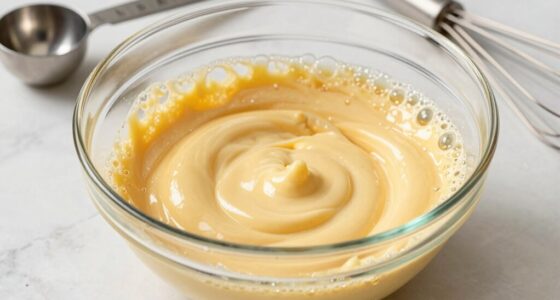
Egg yolks make ice cream creamy because they act as natural emulsifiers, blending fats and water smoothly for a velvety texture. Their lecithin stabilizes the mixture by preventing separation, while the proteins and fats add richness and depth of flavor. Proper heat control during cooking guarantees the custard thickens without curdling, resulting in a stable, silky base. Keep exploring further to learn how temperature and technique can perfect your homemade ice cream.

Get baking supplies delivered free with Prime
- Fast, free delivery on millions of items
- Prime Video, Amazon Music and more included
- Member-only deals all year
Key Takeaways
- Egg yolks contain lecithin, an emulsifier that blends fats and water for a smooth, velvety ice cream texture.
- The fats in yolks enhance creaminess and flavor richness, contributing to a luxurious mouthfeel.
- Proteins in yolks stabilize the custard, reducing ice crystal formation and maintaining smoothness during freezing.
- Proper heating of yolks thickens the custard, creating a stable base that prevents separation and graininess.
- The emulsion properties of egg yolks improve fat dispersion, resulting in a consistently creamy and stable ice cream.
As an affiliate, we earn on qualifying purchases.
How Do Egg Yolks Shape Ice Cream’s Texture?
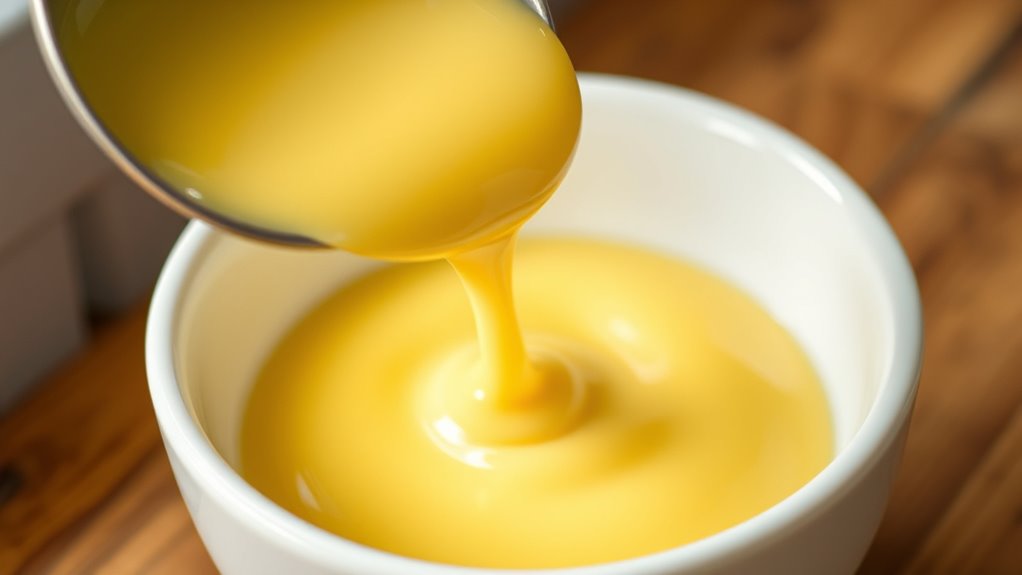
Egg yolks play an essential role in shaping the texture of ice cream because they act as natural emulsifiers. In custard chemistry, the yolk’s unique composition helps blend fats and water, creating a smooth, cohesive mixture. This process improves the overall yolk texture, giving your ice cream a rich, velvety feel. When heated, the proteins and lipids in egg yolks thicken the custard, forming a stable base that resists crystallization during freezing. This thickening ensures your ice cream remains creamy and uniform. The yolk’s natural emulsifying properties help trap air, resulting in a soft, luscious mouthfeel. Additionally, understanding the emulsification process can deepen your appreciation of how egg yolks contribute to a luxurious, well-balanced ice cream texture. Properly incorporating egg yolks and controlling the temperature during cooking are crucial for achieving the desired creamy consistency in your ice cream, as precise temperature control prevents curdling and ensures a silky custard. Recognizing the importance of custard chemistry can help you perfect your technique for consistently smooth results. Moreover, mastering heat management during preparation can further enhance the final texture of your ice cream.
egg yolk emulsifier for ice cream
As an affiliate, we earn on qualifying purchases.
As an affiliate, we earn on qualifying purchases.
Why Do Egg Yolks Act as Natural Emulsifiers and Stabilizers?

Why do egg yolks serve as natural emulsifiers and stabilizers in custard-based ice cream? Egg yolk chemistry allows them to facilitate the emulsification process by connecting fat and water molecules. The key lies in the lecithin found in yolks, which has both hydrophilic and hydrophobic properties. This enables them to:
- Break down fat into smaller, stable droplets.
- Bind water and fat, preventing separation.
- Create a uniform, smooth mixture.
- Stabilize the custard during freezing and storage. Understanding emulsification helps in appreciating how egg yolks naturally improve ice cream texture. This natural emulsification process guarantees the custard remains cohesive and prevents ice crystals from forming, leading to a creamy texture. Egg yolks’ unique chemistry makes them essential for stabilizing and thickening custard-based ice creams naturally, thanks to their inherent emulsifying properties. Additionally, the presence of proteins in egg yolks contributes to the overall stability of the custard during the freezing process.
As an affiliate, we earn on qualifying purchases.
How Egg Yolks Make Ice Cream Creamier and Smoother
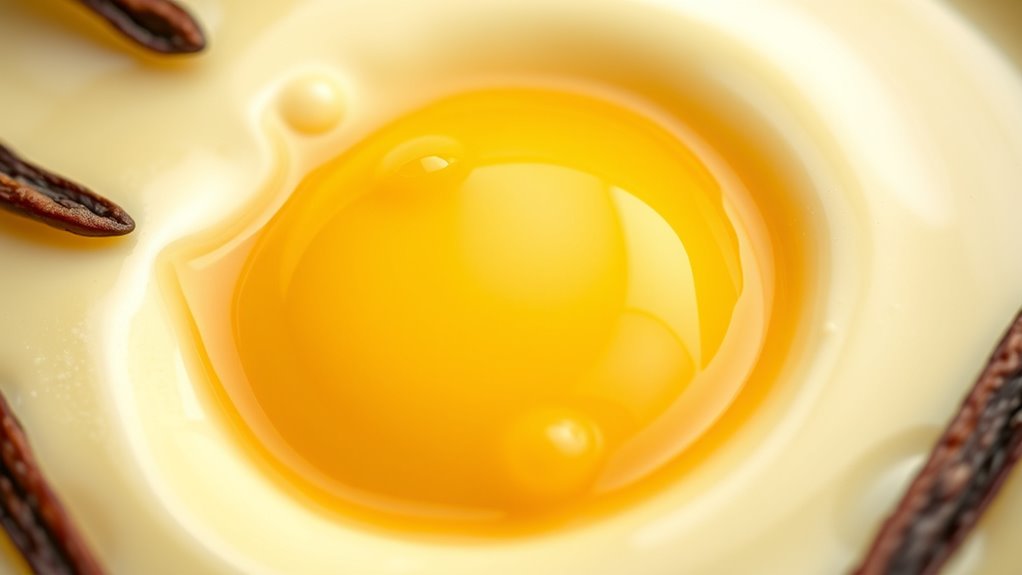
Egg yolks contain lecithin, which helps blend fats and liquids smoothly, creating a creamier ice cream texture. Their natural fat content also contributes to richness and a silky mouthfeel. Together, these factors make your ice cream irresistibly smooth and indulgent.
Lecithin’s Emulsifying Role
Lecithin, a natural emulsifier found in egg yolks, plays a crucial role in creating the smooth, creamy texture of ice cream. Its emulsifying role helps blend water and fat, preventing separation and ensuring consistent texture. When you use egg yolks, you’re also adding a subtle egg yolk flavor contribution that enhances taste. To understand lecithin’s function better: 1. It stabilizes the mixture by reducing surface tension between ingredients. 2. It promotes uniform fat dispersion, preventing ice crystal formation. 3. It improves the overall mouthfeel, making ice cream smoother. 4. It enhances flavor integration, balancing sweetness and richness. Understanding emulsification processes is key to mastering ice cream texture. Additionally, leveraging technological tools like digital applications can optimize the production process and achieve desired consistency. Exploring ingredient interactions can further refine the creaminess and overall quality of your ice cream.
Egg Yolks’ Fat Content
The rich, natural fats found in egg yolks play a crucial role in making ice cream creamy and smooth. The egg yolks’ fat content helps create a luscious texture by coating fat globules and preventing ice crystals from forming large, coarse structures. This fat acts as an emollient, giving the custard its velvety mouthfeel. In culinary uses, the fat in egg yolks enhances flavor and richness, making desserts more indulgent. When incorporated into ice cream, these fats contribute to a stable, cohesive mixture that melts smoothly on your palate. The balance of egg yolks’ fat content is essential for achieving that perfect creamy consistency, making egg yolks a vital ingredient in custard-based ice creams.
As an affiliate, we earn on qualifying purchases.
What Proteins and Fats in Egg Yolks Do for Your Ice Cream
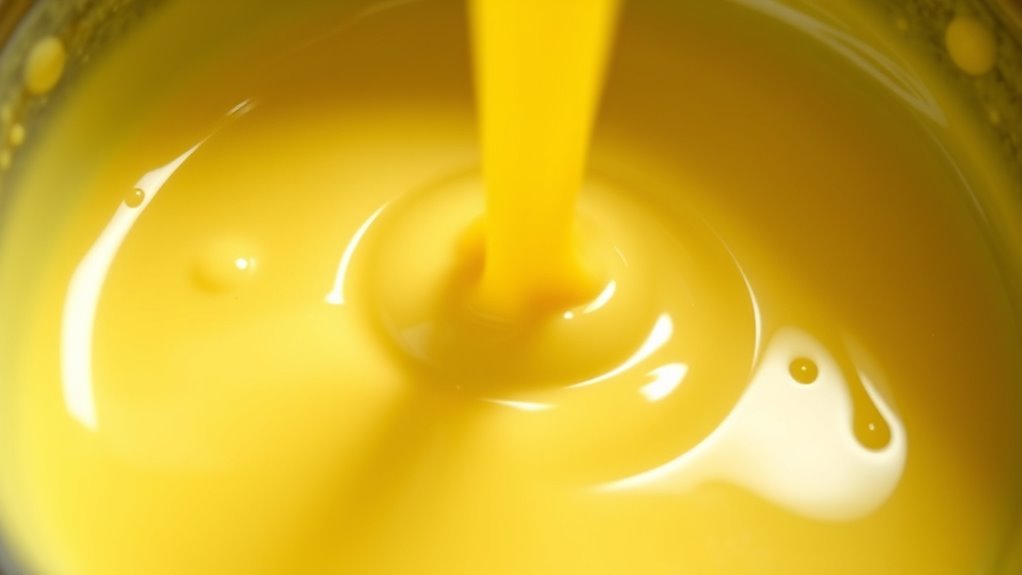
Proteins and fats in egg yolks play a crucial role in shaping the texture and stability of your ice cream. The protein interactions help create a smooth, cohesive structure, preventing ice crystals from forming. Meanwhile, the fat composition contributes to creaminess and richness. Specifically, egg yolk proteins:
- Bind water and fat molecules, improving emulsion stability
- Enhance the mouthfeel by thickening the custard
- Aid in aeration, giving ice cream its lightness
- Protect against ice crystal growth, maintaining a velvety texture
- Contribute to protein interactions that help maintain the overall stability of the ice cream mixture. Additionally, these proteins can prevent separation, ensuring a consistent texture throughout storage.
The fat in egg yolks also influences protein interactions, making the mixture more resistant to separation. Together, these proteins and fats create a balanced, creamy consistency that’s essential for high-quality ice cream.
Why Temperature Matters When Cooking Egg Yolks for Ice Cream

Cooking egg yolks to the right temperature is essential because it guarantees safety, prevents curdling, and achieves the ideal texture for your ice cream base. Precise temperature control guarantees the egg yolks don’t overheat and become scrambled, maintaining egg yolk stability. When you heat the mixture too quickly or too high, the proteins can coagulate unevenly, resulting in a grainy or curdled custard. Conversely, cooking too slowly might risk bacterial growth if not heated sufficiently. Using a thermometer helps you monitor the temperature closely, typically aiming for around 170°F (77°C). This careful control ensures the yolks thicken properly, creating a smooth, creamy custard foundation that enhances the final ice cream’s texture and flavor. Proper temperature management is key to perfect custard every time.
How to Safely Cook Egg Yolks to Thicken Custard
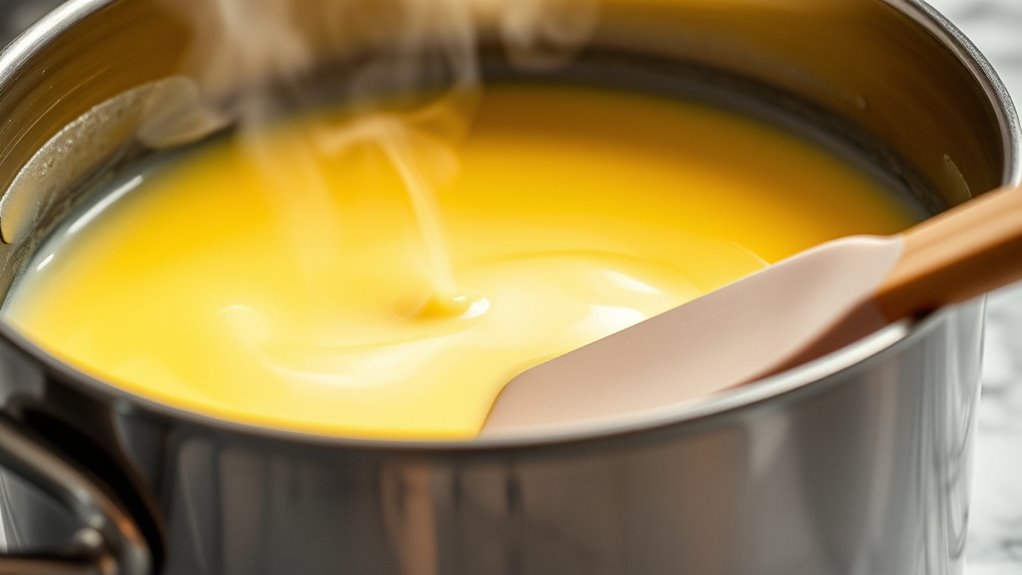
To safely thicken your custard, apply gentle heat and avoid rushing the process. Keep the heat low and stir constantly to prevent the eggs from curdling. This steady technique guarantees a smooth, creamy texture without risking overcooking. Regular temperature monitoring is essential to maintain the proper cooking temperature and ensure safety.
Gentle Heat Application
When thickening custard, applying heat gently is essential to prevent curdling and achieve a smooth, creamy texture. Understanding egg yolk chemistry helps you control heat transfer techniques effectively. To do this well:
- Use low or medium heat to avoid rapid temperature changes.
- Warm your mixture gradually, stirring constantly to distribute heat evenly.
- Maintain a consistent temperature close to 170°F (77°C) to thicken without overcooking.
- Use a double boiler or a heat diffuser to prevent direct contact with high heat sources.
- Recognizing the importance of vetted temperature control methods ensures the best custard results. Proper heat management preserves the delicate structure of egg yolks and prevents overcooking.
- Efficient fan operation can also help regulate temperature in the kitchen, maintaining a steady environment during cooking. Additionally, understanding thermal conductivity helps optimize heat transfer for more precise custard preparation. Being aware of clouding or curdling can alert you to overcooking, allowing for timely adjustments. Implementing these techniques can also help prevent thermal shock that might cause uneven cooking or texture issues.
These methods ensure gentle heat application, reducing the risk of scrambled yolks and promoting a silky custard. Proper heat transfer techniques preserve the delicate structure of egg yolks, resulting in a velvety, perfect custard every time.
Constant Stirring Technique
Maintaining constant stirring while gently heating custard is essential to prevent the eggs from curdling and guarantee a smooth, velvety texture. Consistent stirring keeps the heat evenly distributed, ensuring the eggs cook gently and the whisk consistency remains smooth. Adjust your stirring speed to avoid agitation that’s too vigorous or too slow, which can affect thickness and texture. Use a gentle, steady motion to help the custard thicken uniformly without scrambling the eggs. To help visualize, here’s a quick guide:
| Stirring Speed | Effect on Custard | Best Use |
|---|---|---|
| Slow | Gentle heat transfer | Final stage |
| Moderate | Even cooking | Thickening process |
| Fast | Risk of curdling | Not recommended |
Keeping these tips in mind ensures perfect custard every time. Additionally, understanding the temperature control is crucial for preventing overcooking or undercooking during this process. Proper heat regulation helps maintain the ideal temperature range for thickening without overcooking the eggs. Regular stirring technique is also important to achieve a consistent texture and prevent hot spots that could cause uneven cooking. Paying attention to custard consistency can help you determine the right moment to remove it from heat for optimal results.
Comparing Custard-Based and Non-Custard Ice Creams: Which Is Better?
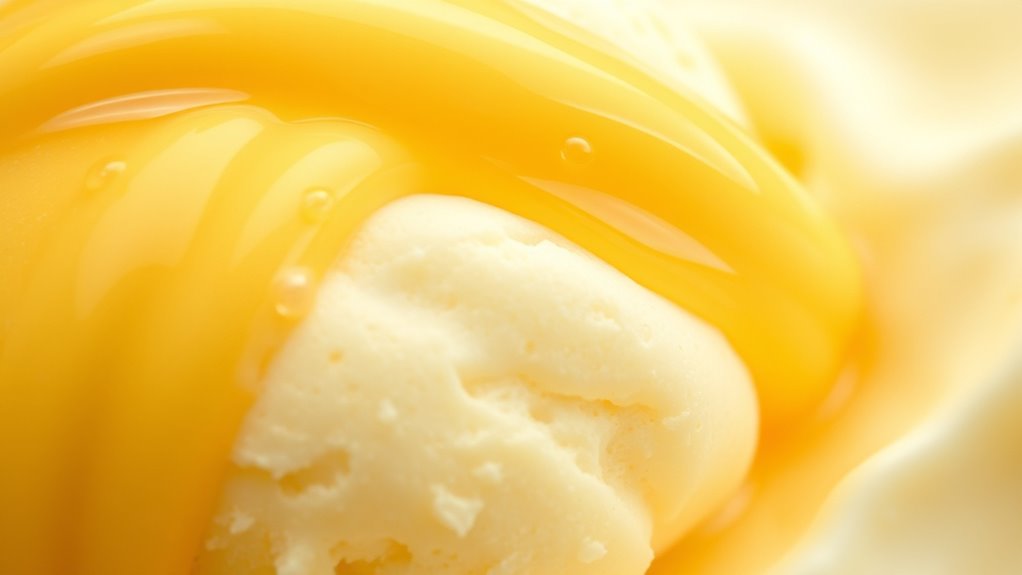
Choosing between custard-based and non-custard ice creams often comes down to personal preference, but understanding their differences can help you make an informed decision. Custard ice creams tend to be richer and creamier because of the egg yolks, which add smoothness and depth. Non-custard varieties are lighter and often emphasize fruit or flavor infusions. Consider these points:
Choosing between custard and non-custard ice creams depends on your preference for richness or fruit flavors.
- Custard bases usually have a creamier texture, ideal if you like richness.
- Non-custard types can incorporate sugar alternatives for dietary needs.
- Flavors are more robust in custard, thanks to the egg yolks enhancing complexity.
- Non-custard options often highlight fruit or unique flavor infusions better.
Knowing these distinctions helps you choose based on texture, flavor, or dietary preferences, making your ice cream experience more satisfying.
How Egg Yolk Quality and Quantity Affect Your Ice Cream
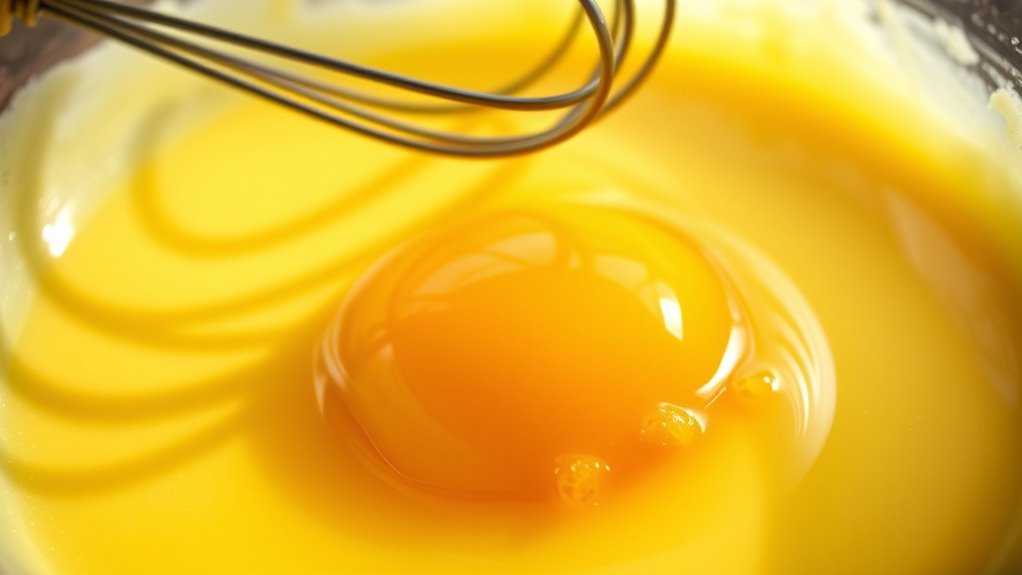
The quality and amount of egg yolks in your custard base directly influence the final ice cream’s texture and flavor. Higher-quality egg yolks boast better nutrient content, including healthy fats, proteins, and emulsifiers that create a smoother, creamier consistency. Using more egg yolks amplifies these effects, resulting in a richer, more luxurious mouthfeel. When sourcing egg yolks, you have options like organic, free-range, or local farms, which often provide fresher, nutrient-dense yolks. The nutrient content varies among sources, impacting not only flavor but also the stability of your custard. By choosing quality egg yolks and adjusting their quantity, you can fine-tune your ice cream’s creaminess, ensuring it’s both indulgent and well-balanced.
Tips to Incorporate Egg Yolks Perfectly Into Your Ice Cream Base
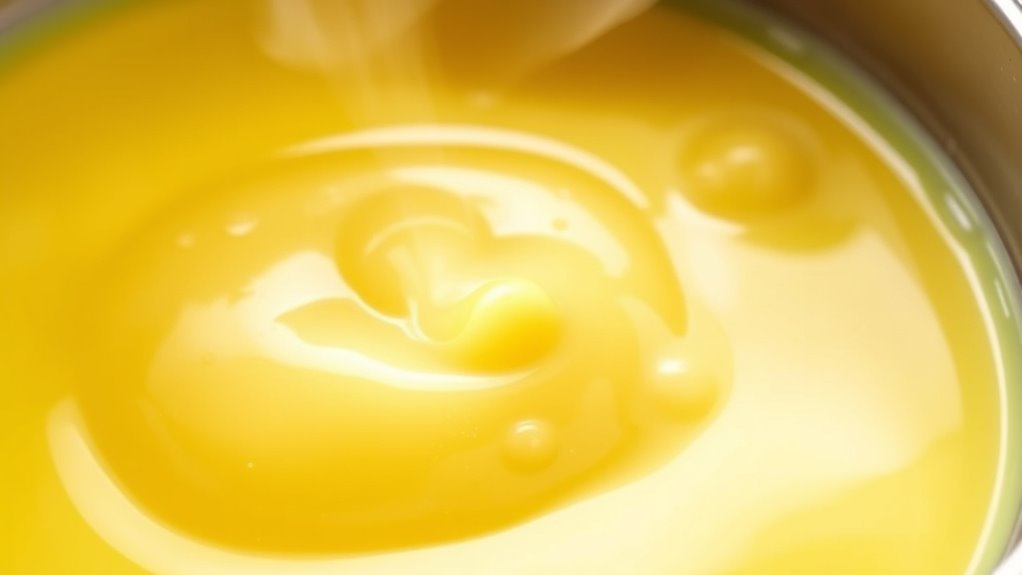
To guarantee your egg yolks integrate smoothly into your ice cream base, start by tempering them. This process prevents curdling and preserves the delicate egg yolk flavor. First, slowly add a small amount of hot cream or milk to the yolks while whisking constantly. Next, follow these tips:
- Use high-quality egg yolk sourcing to ensure freshness and better flavor.
- Gradually incorporate the yolks into the warm base to avoid shocking them.
- Keep the mixture on low heat, stirring constantly, until it thickens.
- Strain the custard to remove any cooked egg bits, ensuring a silky texture.
Common Mistakes With Egg Yolks and How to Avoid Them
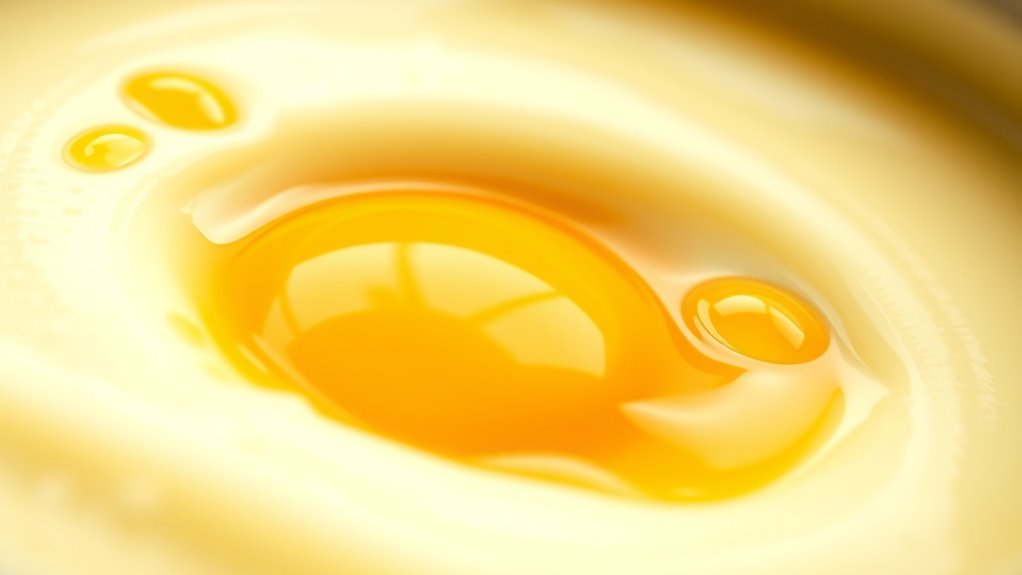
One common mistake when working with egg yolks is adding them directly to hot liquids without tempering, which can cause curdling and disrupt the custard consistency. To avoid this, slowly warm the egg yolks by gradually mixing in a small amount of hot liquid, then combine everything carefully. This prevents egg yolk separation and ensures a smooth, creamy base. Another mistake is overcooking the custard, leading to a scrambled texture instead of silky smoothness. Keep the heat moderate and stir constantly. Also, rushing the process can cause uneven heating, making it harder to achieve the perfect custard consistency. By tempering yolks properly and controlling heat, you’ll avoid common pitfalls and create a rich, velvety ice cream base every time.
Frequently Asked Questions
Can I Make Egg Yolk-Based Ice Cream Without Using Eggs?
Yes, you can make egg yolk-based ice cream without using eggs by opting for egg substitutes like cornstarch, gelatin, or commercial egg replacers. These alternatives can help achieve a creamy texture similar to traditional custard-based ice cream. Just be sure to adjust the recipe accordingly, simmering or blending your substitutes to mimic the richness and smoothness that egg yolks typically provide, ensuring a deliciously creamy result.
How Does the Age of Eggs Affect Custard Quality?
You’ll notice that fresher eggs improve custard quality because their egg yolks have higher yolk viscosity, which helps create a richer, creamier texture. Fresh eggs also have better egg freshness, meaning the yolks stay stable and blend smoothly. Older eggs tend to have less yolk viscosity and can result in a thinner, less cohesive custard. Using fresh eggs guarantees your ice cream turns out smooth, creamy, and delicious.
Are There Plant-Based Alternatives to Egg Yolks in Ice Cream?
You can definitely use plant-based stabilizers and vegan cream alternatives instead of egg yolks in ice cream. Ingredients like agar, cornstarch, or xanthan gum work as stabilizers, giving your ice cream a creamy texture. Vegan creams made from coconut, cashews, or soy also mimic the richness of traditional custard bases. These options keep your ice cream dairy-free while maintaining smoothness and flavor, making them great substitutes for egg yolks.
How Long Can Custard-Based Ice Cream Be Stored Without Spoilage?
You can store custard-based ice cream for about 2 to 4 weeks in your freezer, but proper storage duration is key to spoilage prevention. Keep it tightly sealed in an airtight container to avoid freezer burn and absorb odors. For the best quality, consume it within this timeframe, and always check for any signs of spoilage like ice crystals or off smells before enjoying.
Does the Type of Eggs (Hen, Duck, Quail) Influence Custard Texture?
Think of eggs as the paintbrushes in your ice cream masterpiece. Different types—hen, duck, quail—bring unique textures, influenced by egg shell quality and yolk color variation. Duck eggs, with richer yolks, make custard silkier, while quail eggs add a delicate touch. Your choice shapes the creaminess, so pick according to the texture you crave. Each egg type paints a different picture in your frozen creation.
Conclusion
Now that you understand how egg yolks weave their magic, you hold the key to creating ice cream that’s irresistibly smooth and rich. Think of it as stirring a symphony where each note—fats, proteins, and emulsifiers—harmonize perfectly. With careful attention and a gentle touch, you’ll craft frozen dreams that dance on your palate like a silky melody. Embrace the science, and let your ice cream be a masterpiece of creamy bliss.
Fall Picks
fall essentials
As an affiliate, we earn on qualifying purchases.