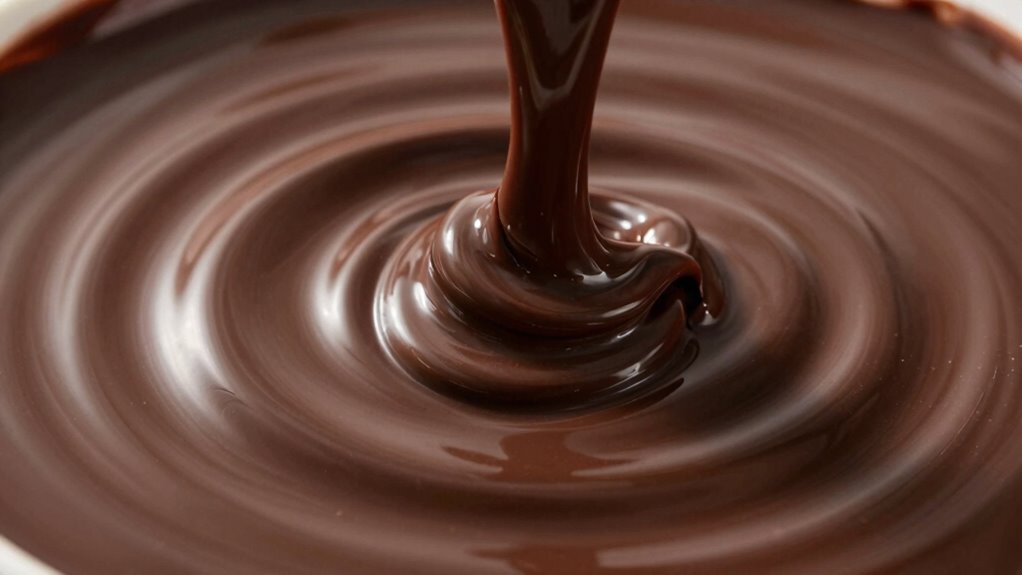
Cocoa butter controls chocolate’s fluidity through its crystalline structure and melting behavior. When properly crystallized, it melts smoothly at body temperature, giving chocolate a silky, melt-in-your-mouth feel. Variations in crystal types and temperature fluctuations can disrupt this balance, causing uneven melting or bloom. Tempering and precise temperature control help stabilize cocoa butter’s crystals, ensuring fluidity and gloss. Keep exploring to discover how processes and innovations refine this essential ingredient’s role in chocolate quality.
Key Takeaways
- Cocoa butter’s crystalline structure influences how easily chocolate melts and flows at different temperatures.
- Stable crystal forms, especially Form V, promote smooth, consistent fluidity during melting.
- Temperature fluctuations can disrupt crystal stability, causing variations in chocolate’s fluidity and texture.
- Proper tempering aligns cocoa butter crystals, enhancing fluidity and preventing issues like bloom or uneven melting.
- Innovations in blending and enzyme treatments help stabilize cocoa butter, improving chocolate’s flow properties and shelf stability.
What Is Cocoa Butter’s Role in Chocolate’s Texture?
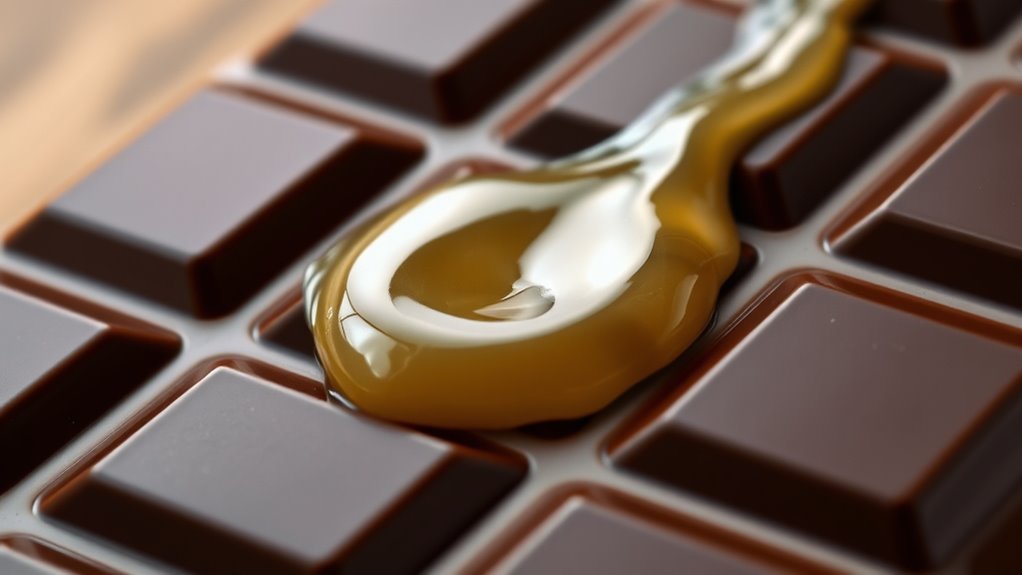
Have you ever wondered why chocolate feels smooth and melts effortlessly in your mouth? The answer lies in cocoa butter’s unique composition. Cocoa butter is made up of triglycerides with specific fatty acids that create a silky, creamy texture. Its melting point is just below body temperature, giving chocolate its luxurious fluidity. This composition influences not only texture but also flavor delivery, as cocoa butter helps carry and enhance the chocolate’s rich taste. When properly tempered, cocoa butter forms a stable fat crystal structure that contributes to a smooth, glossy finish. Proper fat crystal structure is essential for achieving the ideal texture and appearance in chocolate. This structure is affected by the cooling process, which must be carefully controlled during tempering to prevent undesirable crystal formations. Without it, chocolate would be gritty and hard to melt. Additionally, maintaining the correct temperature range during tempering ensures the formation of the optimal crystal structure. The melting point of cocoa butter is critical in defining how chocolate responds to heat and how it feels when eaten. So, cocoa butter’s composition plays an essential role in making chocolate satisfying, smooth, and flavorful.
How Do Cocoa Butter Crystals Affect Chocolate’s Melting?
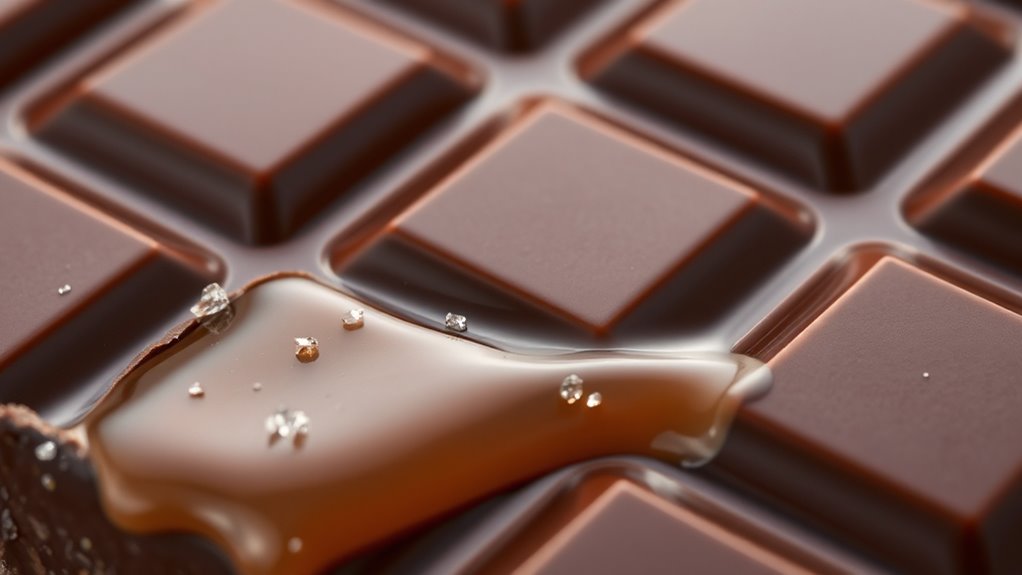
Cocoa butter crystals determine how chocolate melts by their specific structures and stability. Stable forms melt at higher temperatures, giving chocolate a smooth, glossy finish, while unstable ones melt more easily. Temperature changes cause these crystals to shift, directly impacting your chocolate’s melting behavior. Understanding crystal stability is essential for controlling chocolate texture and appearance during processing.
Crystal Structure and Melting
The crystal structure of cocoa butter plays a crucial role in determining how chocolate melts. Different crystal forms influence melting behavior, affecting texture and mouthfeel. Factors like bean origin and refining techniques impact crystal formation, leading to variations in melting points. You might notice that chocolates from different regions melt uniquely because of subtle differences in crystal structure. Proper tempering encourages the formation of stable crystals, ensuring smooth melting. Unstable crystals, however, cause uneven melting and a dull appearance. European innovations in cloud technology are also being explored to optimize production processes, including tempering. Understanding these factors helps you appreciate how crystal structure directly affects chocolate’s melting properties and overall quality. Additionally, crystal stability plays a vital role in maintaining chocolate’s texture over time, preventing bloom and spoilage.
Stable vs. Unstable Forms
Since stable crystal forms are essential for smooth melting, understanding how cocoa butter crystals behave can considerably impact your experience with chocolate. Stable forms, like Form V, ensure consistent melting and a desirable mouthfeel, enhancing the cocoa butter aroma and supporting flavor development. Unstable crystals, such as Form IV or other less stable forms, can cause uneven melting, dulling the chocolate’s texture and compromising its flavor profile. When chocolate contains mostly stable crystals, it melts smoothly at body temperature, releasing appealing aromas and enriching the flavor experience. Conversely, unstable crystals lead to a gritty or waxy texture, diminishing aroma release and impairing flavor development. Recognizing the difference between these forms helps you appreciate high-quality chocolate and avoid products with compromised melting qualities.
Temperature and Crystal Transitions
Temperature plays a crucial role in determining how cocoa butter crystals transform and, consequently, how chocolate melts. When heated, cocoa butter crystals change structure, affecting the chocolate’s fluidity and texture. Proper temperature control guarantees the formation of stable crystals, which help preserve the chocolate’s rich flavor and cocoa aroma. If temperature fluctuations occur, unstable crystals form, leading to a waxy or dull appearance and dulling the chocolate’s flavor. Understanding these crystal transitions allows you to optimize melting behavior, enhancing sensory experience.
- Precise temperature management preserves the vibrant cocoa aroma and chocolate flavor
- Proper crystal transitions prevent unwanted texture and appearance changes
- Consistent melting improves overall quality and mouthfeel
What Types of Cocoa Butter Crystals Are There, and How Do They Form?

Cocoa butter forms distinct types of crystals that influence the texture and appearance of chocolate. These different crystal forms result from the crystal formation process, which depends on factors like temperature and cooling rate. The origin of cocoa butter, including its natural composition, affects how easily specific crystals develop. There are six primary crystal forms, labeled I through VI, with form V being the most desirable for glossy, firm, and snappy chocolate. Each crystal type has a unique structure, impacting how the chocolate feels and looks. Proper control of temperature during cooling encourages the formation of the most suitable crystal type. Crystallization control is essential in the chocolate-making process to achieve optimal texture and appearance. Understanding the crystal formation process helps you produce high-quality chocolate with ideal fluidity and texture. Additionally, techniques like tempering are utilized to promote the formation of the desirable crystal form V, ensuring consistent quality in finished chocolate products. Mastering crystal stability is crucial to prevent undesirable crystal formations that can affect the final product’s quality. Achieving the correct cooling rate is vital to guide the development of the desired crystal structure and improve overall product quality. Furthermore, controlling the cooling environment can significantly influence the types of crystals that form during solidification.
How Does Tempering Help Control Cocoa Butter Crystallization?
Tempering guides cocoa butter to form stable crystal structures, ensuring your chocolate has the right texture. It also helps control melting point variations, so your chocolate melts smoothly in your mouth. Plus, proper tempering gives your finished product a glossy, professional finish that looks as good as it tastes. Temperature control is essential for achieving consistent results in chocolate making. Proper tempering prevents undesirable crystal formations, leading to a more appealing and high-quality final product. Additionally, understanding the crystal formation process can help bakers and chocolatiers refine their techniques for optimal results.
Promotes Stable Crystal Forms
By controlling the crystallization process through tempering, you encourage the formation of stable cocoa butter crystals, which are essential for achieving the desired texture and appearance in chocolate. Proper tempering guides the crystal formation processes, leading to cocoa butter stability and uniformity. When you promote stable crystal forms, the chocolate develops a smooth, glossy surface and a firm snap. This stability prevents issues like bloom or melting inconsistencies. Achieving the right crystal structures ensures your chocolate maintains its quality over time.
- Enhances visual appeal with a shiny finish
- Improves mouthfeel and texture
- Extends shelf life by preventing bloom
Controls Melting Point Variations
Controlling the melting point of chocolate hinges on managing how cocoa butter crystals form during processing. Tempering helps regulate this by encouraging the formation of specific fat crystal types, which influence melting behavior. Adjusting factors like cocoa butter pH can also impact fat crystal formation, leading to more consistent melting points. When crystals form properly, they create a stable crystalline structure that melts smoothly at body temperature. Improper crystallization results in uneven melting and a dull appearance. By precisely regulating temperature, agitation, and pH, you promote the formation of desired crystal types, minimizing variations in melting point. This process ensures your chocolate melts evenly, providing a pleasurable mouthfeel and maintaining quality during storage.
Ensures Glossy Finish
Have you ever wondered how chocolate achieves its smooth, glossy appearance? Tempering helps control cocoa butter crystallization, which directly influences the chocolate’s shine. Properly crystallized cocoa butter creates a uniform surface, resulting in that appealing gloss. This process also stabilizes the cocoa butter color, giving the chocolate a vibrant, attractive look. Additionally, well-tempered chocolate resists blooming, extending its shelf life and maintaining its glossy finish over time. Gold IRA markets play a role in diversifying financial portfolios, similar to how proper tempering diversifies chocolate’s crystal structures to achieve optimal appearance and texture. Understanding cocoa butter crystallization is essential for chocolatiers aiming for consistent quality and beauty in their confections. Recognizing the importance of investment diversification can help protect your assets against market volatility, much like how controlled crystallization ensures chocolate stability.
How Does Temperature Influence Cocoa Butter’s Melting Point?
Temperature plays a crucial role in determining when cocoa butter melts, directly affecting the texture and feel of chocolate. In temperate climates, subtle temperature shifts can influence how quickly cocoa butter reaches its melting point, shaping chocolate’s mouthfeel. Different cocoa bean varieties contain varying types of fats, which also impact melting behavior. For example, some varieties have fats with lower melting points, making the chocolate softer at room temperature. When temperatures rise, cocoa butter begins to melt more readily, causing chocolate to become more fluid and less firm. Conversely, cooler temperatures slow melting, resulting in a firmer texture. Understanding how temperature interacts with cocoa bean varieties helps chocolatiers control the melting point, ensuring the desired consistency and mouthfeel in the final product. Additionally, Vetted research indicates that the fat composition of cocoa beans significantly influences melting characteristics, allowing producers to select specific beans for targeted chocolate textures. Recognizing the thermal properties of cocoa butter enables better production practices and product stability across different environments.
How Do Cocoa Butter Quality Variations Change Chocolate Texture?
Variations in cocoa butter quality substantially influence the texture of chocolate, affecting how it melts and feels in your mouth. Higher cocoa butter purity means fewer impurities, resulting in a smoother, more refined mouthfeel. Conversely, lower quality cocoa butter can introduce graininess or waxy sensations. These quality differences also impact flavor profiles, making some chocolates taste more delicate and nuanced, while others may seem dull or greasy. Additionally, the sound vibrations associated with high-quality cocoa butter help facilitate a more uniform melting process, enhancing the overall sensory experience. Recognizing the purity of cocoa butter is crucial for chocolatiers aiming to improve the consistency and quality of their products. Moreover, temperature control during tempering plays a vital role in optimizing the melting characteristics linked to cocoa butter quality.
How Does Cocoa Butter Transition From Solid to Liquid?
Cocoa butter’s ability to change from solid to liquid is fundamental to how chocolate melts in your mouth. During cocoa butter extraction, the fat is carefully separated from the cocoa solids, preserving its unique crystalline structure. When exposed to heat, these crystals break down, allowing the cocoa butter to shift smoothly into a liquid state. This melting process is essential for developing the chocolate’s flavor profile, as it releases aromatic compounds and creates that silky mouthfeel. The transition from solid to liquid depends on the specific arrangement of cocoa butter’s fat molecules, which melt at just the right temperature. This precise melting behavior ensures chocolate melts evenly, delivering a satisfying sensory experience that highlights its rich flavor.
What Factors Can Disrupt Cocoa Butter Crystals and Change Fluidity?
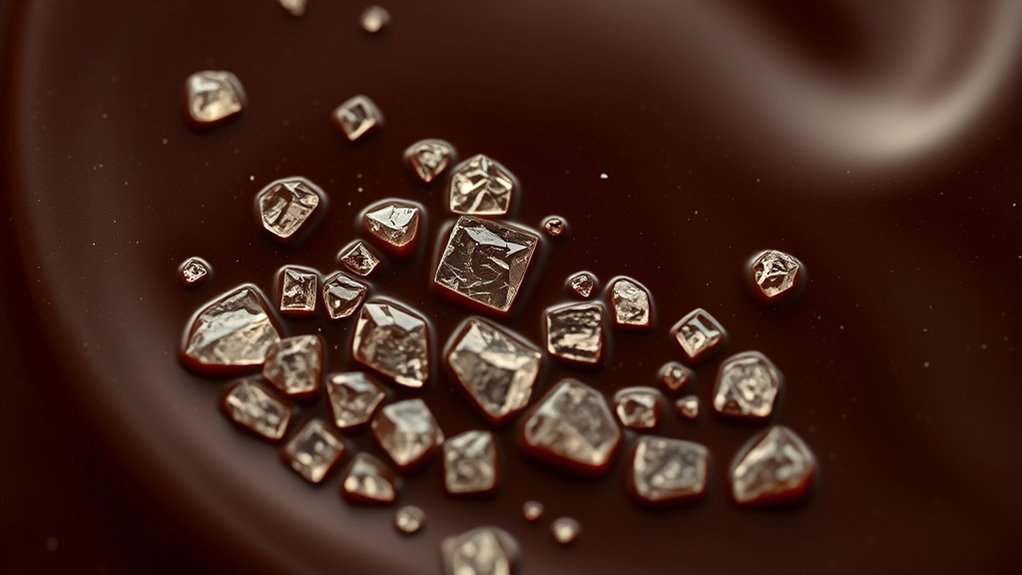
Various factors can disrupt the crystalline structure of cocoa butter, altering its fluidity and melting behavior. Cocoa butter polymorphism, the ability to form different crystal types, is sensitive to temperature, agitation, and impurities. Disrupting the crystal formation processes can lead to unstable or mismatched crystals, affecting how chocolate melts and feels. For example, fluctuations in temperature during tempering can hinder proper crystal formation, resulting in inconsistent texture. Similarly, contamination from moisture or foreign particles can interfere with crystal stability. These disruptions cause the cocoa butter to shift away from its ideal crystalline form, increasing fluidity or causing bloom. Recognizing these factors helps you maintain the desired crystalline structure for smooth, glossy chocolate with consistent melting properties.
What Are the Latest Innovations for Improving Cocoa Butter’s Fluidity?

Recent innovations in cocoa butter technology focus on enhancing its fluidity to improve chocolate processing and texture. Researchers are developing modified cocoa butter blends and using enzyme treatments to achieve smoother melting properties, which help in better flow during tempering. These improvements not only aid in processing but also contribute to flavor enhancement by allowing ingredients to blend more uniformly. Additionally, new stabilization techniques are being introduced to boost shelf stability, preventing fat bloom and ensuring consistent quality over time. These innovations allow manufacturers to produce chocolates with a more appealing mouthfeel and extended shelf life. By optimizing cocoa butter’s fluidity, these advancements support the creation of high-quality, stable chocolates that satisfy consumer expectations for texture and flavor.
Frequently Asked Questions
How Does Humidity Affect Cocoa Butter’s Crystal Formation in Chocolate?
Humidity effects markedly influence cocoa butter’s crystal formation in chocolate. When humidity is high, moisture can cause cocoa butter to seize or develop unwanted crystal forms, leading to a dull appearance and coarse texture. You’ll notice that controlling humidity helps maintain proper crystal formation, ensuring your chocolate remains glossy and smooth. Keeping the environment dry prevents moisture-related issues, allowing the cocoa butter to crystallize correctly and produce high-quality, well-tempered chocolate.
Can Adding Other Fats Alter Cocoa Butter’s Impact on Chocolate Fluidity?
Yes, adding other fats can alter cocoa butter’s impact on chocolate fluidity. When you replace or supplement cocoa butter with different fats, it modifies the texture and melting behavior of your chocolate. This process, called fat replacement, allows you to tweak the fluidity and firmness, providing more control over the final product. Keep in mind that the type and amount of added fats considerably influence the chocolate’s overall texture and mouthfeel.
What Role Do Emulsifiers Play in Cocoa Butter Crystallization?
Emulsifiers like lecithin and PGPR help control cocoa butter crystallization by stabilizing fat crystals and preventing unwanted formations. They promote crystal stabilization, which results in smoother, glossy chocolate with better texture. By reducing fat bloom and improving viscosity, emulsifiers guarantee consistent fluidity. Your task is to choose the right emulsifier types to optimize crystallization, making your chocolate more appealing and maintaining quality during storage and handling.
How Does Storage Temperature Influence Cocoa Butter’s Crystalline Structure Over Time?
Imagine you’re a 21st-century chocolatier in the 1800s; storage temperature directly impacts cocoa butter’s crystalline structure. If you keep chocolate too warm or cold, it can ruin its tempering techniques and reduce storage stability. Consistent, cool temperatures promote proper crystallization, ensuring smooth texture and glossy appearance. Over time, improper storage can cause fat bloom, so maintaining stable temperatures preserves chocolate’s quality and crystalline integrity.
Are There Natural Methods to Modify Cocoa Butter’s Melting Characteristics?
You can naturally modify cocoa butter’s melting characteristics through techniques like natural tempering and fat substitution. Natural tempering involves carefully cooling and warming the chocolate to stabilize the crystalline structure, improving melting behavior. Alternatively, using alternative fats or oils as substitutes can alter the melting point, making chocolate melt sooner or later. These methods allow you to customize melting properties without artificial additives, enhancing your chocolate’s texture and sensory experience.
Conclusion
Understanding how cocoa butter’s crystallization influences chocolate’s fluidity helps you craft the perfect texture. Did you know that proper tempering creates stable crystals that prevent chocolate from becoming too hard or soft? By controlling temperature and quality, you can guarantee smooth, melt-in-your-mouth chocolate every time. Mastering cocoa butter’s behavior not only improves your confections but also enhances consistency—so next time, pay close attention to those crystalline structures for flawless results.