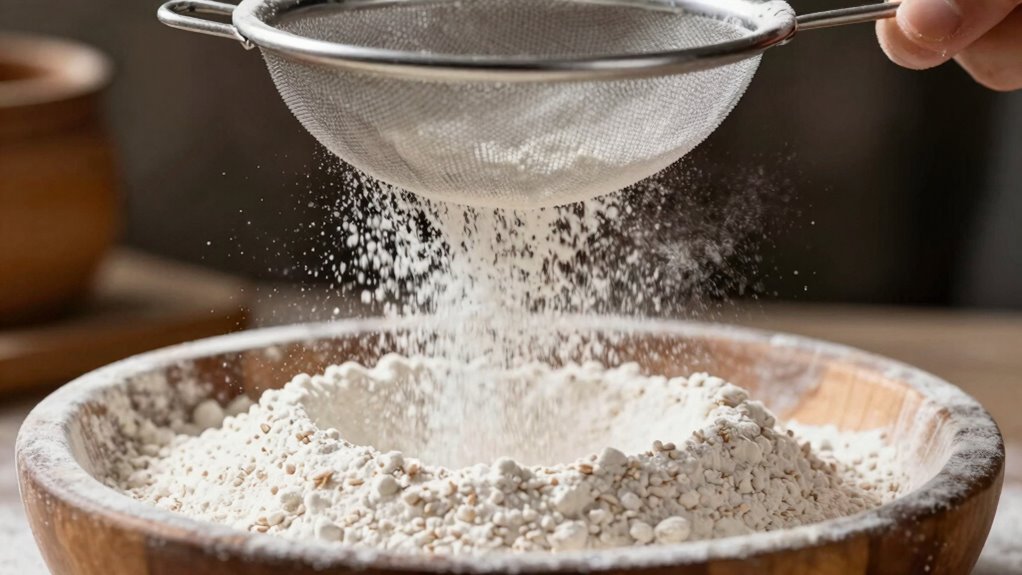

Sifting flour does more than just break up lumps; it aerates and lightens the flour, improving your baked goods’ texture. It also guarantees even distribution of ingredients like baking powder, leading to better rise and consistency. Plus, sifting affects measurements since lighter flour takes up more space, so your recipes come out right. When you understand these impacts, you’ll see why sifting can truly change your baked results—more than you might think.
Key Takeaways
- Sifting aerates flour, making baked goods lighter and affecting the recipe’s texture and rise.
- It removes clumps, ensuring smoother batter and more consistent ingredient blending.
- Sifting increases flour volume, which can alter measurements and impact recipe accuracy.
- It exposes flour to air, potentially reducing shelf life if not stored properly.
- Sifting can slightly change nutritional content by removing surface impurities and affecting fiber levels.
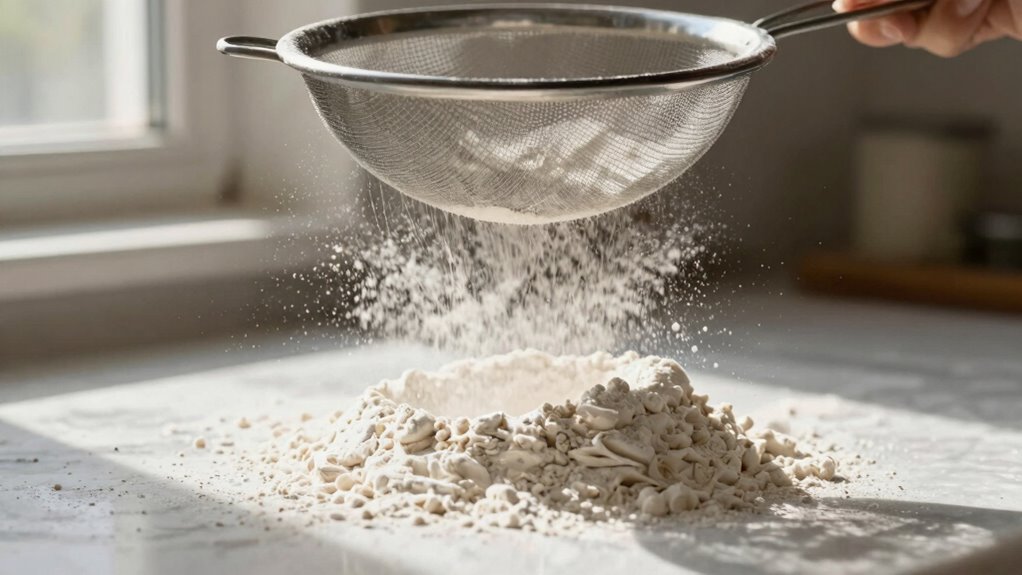
Have you ever wondered why many recipes call for sifting flour? It’s a simple step, but it actually serves multiple important purposes that can considerably influence your baking results. When you sift flour, you’re doing more than just breaking up clumps; you’re aerating it, which leads to a lighter, fluffier texture in your baked goods. This process ensures even distribution of ingredients like baking powder and spices, which can be unevenly mixed if the flour isn’t sifted. Beyond the immediate baking benefits, sifting also impacts the nutritional profile and storage considerations of your flour.
From a nutritional impact perspective, sifting can slightly alter the composition of flour. Although it doesn’t remove nutrients directly, it can remove small amounts of surface impurities, dust, or residual bran particles that may be present depending on the type of flour you’re using. For those seeking a more refined, consistent product, sifting guarantees that you’re getting a uniform flour, which can help your recipes turn out as intended. However, it’s worth noting that sifting can also decrease the fiber content slightly if you’re using whole wheat flour, as some of the bran particles tend to stay behind in the sifter. So, if you’re aiming for maximum nutritional retention, you might want to think about how much you sift and whether it’s necessary for your specific recipe.
Storage considerations also come into play when you sift flour. Sifting introduces air into the flour, which can make it more prone to spoilage if not stored properly. After sifting, it’s best to use the flour promptly or store it in an airtight container to prevent it from absorbing moisture or odors from the environment. When flour is stored in a humid or warm area, sifted flour can clump or develop mold more quickly because of the increased surface area exposed to air. Conversely, if you keep your flour in a cool, dry place, sifting doesn’t considerably impact its shelf life, but it’s still important to keep it sealed tightly. Additionally, sifting can make the flour lighter and less dense, which may influence how you measure it. You might need to adjust your measuring techniques to account for the increased volume when using sifted flour, especially if you’re following precise recipes.
Top picks for "sift flour chang"
Open Amazon search results for this keyword.
As an affiliate, we earn on qualifying purchases.
Frequently Asked Questions
How Does Sifting Flour Affect Baking Time?
Sifting flour can slightly influence baking time because it improves baking consistency and flour aeration. When you sift, you break up clumps and incorporate air, making the flour lighter. This can lead to a quicker rise and more even baking, possibly reducing the baking time by a minute or two. Overall, sifting guarantees better ingredient integration, helping your baked goods turn out perfectly with consistent texture.
Can Unsifted Flour Cause Texture Issues in Baked Goods?
Unsifted flour can cause texture issues in your baked goods because it tends to have air pockets and uneven gluten development. When you skip sifting, the flour may clump, leading to dense or uneven textures. This can result in baked items that are heavy or crumbly. Sifting helps break up clumps, aerate the flour, and promote consistent gluten formation, ensuring your baked goods turn out light, tender, and with a better texture.
Is Sifting Necessary for All Types of Flour?
Don’t throw the baby out with the bathwater—sifting isn’t necessary for all flour types. For alternative flours like almond or coconut, sifting can improve texture, but it’s less critical for gluten development in wheat-based flours. If you’re after a light, airy bake, sifting helps incorporate air and evenly distribute ingredients. So, consider your recipe and flour type before deciding whether sifting boosts your baked goods’ quality.
What Tools Are Best for Sifting Flour?
You should use a fine-mesh sieve or flour sifter for sifting flour. A traditional metal sifter offers quick sifting and easy cleanup, while a hand-held or crank-style sifter provides consistent results. When comparing tools, consider ease of use and efficiency. Mastering sifting techniques, like gentle tapping or swirling, guarantees you get evenly aerated flour. Choose the right tool for your needs to improve baking results and save time.
Does Sifting Flour Improve Nutritional Value?
Sifting flour doesn’t substantially improve its nutritional impact or health benefits. It mainly aerates the flour, making baked goods lighter and easier to mix. While sifting can remove lumps or impurities, it doesn’t alter the nutritional content. So, if you’re aiming for better health benefits, focus on using whole grain or enriched flours rather than relying on sifting alone.
Conclusion
So, next time you sift your flour, remember you’re not just aerating it—you’re opening a gateway to fluffier baked goods. Think of sifting as the magic wand turning a dense, heavy mixture into a light, airy masterpiece. It’s a small step that makes a big difference, like adding a pinch of fairy dust to your recipe. Embrace the process, and watch your baking rise to new heights with just a few gentle taps.