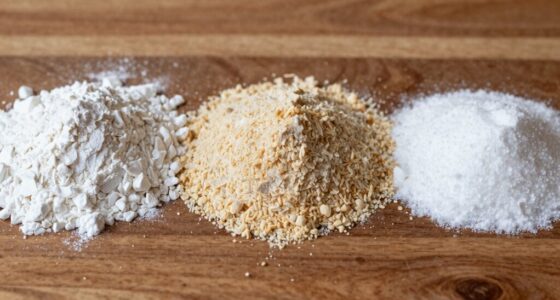

Not all sugars spin into cotton candy smoothly because their composition, moisture content, and particle size matter. Pure granulated sugar is best because it melts evenly and creates a clear, fluffy thread. Sugars with high moisture or excessive crystallization can cause clumping and uneven spinning. Artificial sweeteners or sugar substitutes often don’t melt properly and can clog your machine. Keep an eye on these factors if you want perfect, airy cotton candy every time. Keep exploring for more tips.

Get baking supplies delivered free with Prime
- Fast, free delivery on millions of items
- Prime Video, Amazon Music and more included
- Member-only deals all year
Key Takeaways
- Sugars with high crystallization tendencies can cause clumping, preventing smooth melting and spinning.
- Artificial sweeteners and sugar alcohols often do not melt properly or form the necessary syrup for spinning.
- Excess moisture or humidity causes sugar to absorb water, leading to clumping and poor spinning performance.
- Improper sugar blends or impurities can alter melting points, resulting in uneven spinning or failure to spin.
- Using non-confectionery-grade sugars or coarse particles disrupts the formation of fine, airy cotton candy strands.
As an affiliate, we earn on qualifying purchases.
What Makes Cotton Candy Sugar Work?

Cotton candy sugar works because it’s specially formulated to melt quickly and evenly when heated. This uniform melting prevents unwanted sugar crystallization, ensuring smooth, airy cotton candy. Proper crystallization control is essential because large sugar crystals can cause clumping and uneven spinning. Additionally, many cotton candy sugars are designed for color enhancement, giving your treat vibrant hues that appeal visually. The right formulation helps the sugar dissolve uniformly, creating the fine, fluffy threads you expect. When sugar crystallization is managed well, it results in a consistent texture, while color enhancement makes your cotton candy more attractive. crystallization control is a crucial factor that influences the final quality of the spun sugar. Furthermore, sugar formulation plays a vital role in achieving optimal melting and spinning properties. Proper sugar processing ensures the sugar maintains its desirable characteristics during preparation, which is essential for a successful cotton candy experience. Advances in food technology are also beginning to influence how these properties are engineered at a molecular level, leading to even more consistent results. Overall, these carefully designed properties work together to produce the perfect spinning experience and visually appealing cotton candy every time you use the right sugar.
As an affiliate, we earn on qualifying purchases.
How Does Sugar Composition Affect Spinning Success?

The composition of sugar directly influences how successfully it can be spun into cotton candy. If the sugar crystallizes too easily, it won’t melt smoothly in the spinning process, causing clumps and inconsistent texture. Proper sugar blends prevent unwanted crystallization, resulting in a light, fluffy cotton candy. Additionally, certain sugars enhance flavor, making the final product more appealing. Sugars with added flavor compounds or specific impurities can interfere with the melting point, affecting spinning success. When choosing sugar, it’s vital to consider how its composition will behave under heat and agitation. A well-balanced sugar mix ensures smooth melting, reduces crystallization issues, and boosts flavor, ultimately leading to a more successful spinning process and delicious cotton candy. Understanding sugar chemistry can help optimize the spinning process for better results, especially when considering crystallization control techniques and auditory processing principles to monitor and improve the process.
As an affiliate, we earn on qualifying purchases.
Which Sugars Are Best for Cotton Candy?

When choosing sugars for cotton candy, you typically prefer pure granulated sugar for the best texture and flavor. However, some use alternative sweeteners, which can affect how well the candy spins and tastes. Additionally, the type of sugar influences the candy’s color and flavor, giving you more options to customize your treat. Using body jewelry materials such as titanium or surgical steel can also be beneficial if you plan to add edible decorations or flavors.
Pure Sugar Preferences
Choosing the right sugar is essential for achieving the perfect cotton candy. Pure cane sugar is often your best bet because it melts smoothly and promotes ideal sugar crystallization, resulting in fluffy, light cotton candy. Its consistent structure helps prevent clumping and ensures even spinning. Additionally, pure sugar enhances flavor, allowing the natural sweetness to shine through without interference from additives or fillers. This clarity in flavor makes it easier to customize with your preferred flavorings later. When selecting sugar, look for high-quality, granulated options designed for confectionery use. Avoid processed or blended sugars that may contain impurities or alter the sugar crystallization process. Pure cane sugar’s reliable melting properties and purity are key factors that contribute to successful cotton candy production. Ultimately, pure sugar provides the clean taste and reliable performance necessary for consistently perfect cotton candy. Using high-quality, granulated sugar also minimizes the risk of inconsistent results during the spinning process.
Alternative Sweeteners Use
While experimenting can be fun, understanding the health implications helps ensure you make choices that are both delicious and safe. Additionally, some alternative sweeteners may not provide the same traditional spinning qualities as sugar, affecting the overall appearance of your cotton candy. It’s also important to consider how these sweeteners interact with spinning mechanisms and whether they produce the desired fluffy texture. Since haute couture emphasizes intricate details and mastery in craftsmanship, selecting the right sweetener is essential for achieving high-quality results in cotton candy production. Furthermore, the composition of sugars influences their ability to melt and spin smoothly, which is crucial for consistent cotton candy texture. For example, certain sugar substitutes lack the caramelization properties necessary for optimal spinning performance.
Color and Flavor Impact
The type of sugar you use considerably influences the color and flavor of your cotton candy. Different sugars can produce vibrant hues and unique tastes through color mixing and flavor pairing. For example, using white granulated sugar allows you to add food coloring for bright, pure shades. Flavored sugars, like vanilla or cherry, enhance specific profiles. Imagine these options:
- Bright pink with cherry flavor, perfect for a funfair vibe
- Light blue with a hint of vanilla, creating a calming effect
- Deep purple with grape essence, for a rich, fruity experience
- Bright yellow with lemon flavor, offering a zesty twist
Choosing the right sugar type helps you craft visually appealing and flavorful cotton candy that captures attention and delights taste buds.
As an affiliate, we earn on qualifying purchases.
Why Is Granulated Sugar Usually the Best Choice?

Why Is Granulated Sugar Usually the Best Choice?
Granulated sugar offers a consistent texture and clear appearance, making your cotton candy look appealing. It melts evenly, ensuring smooth, fluffy results without clumps. Plus, its flavor releases perfectly, giving your cotton candy just the right sweetness. Additionally, choosing a reputable Gold IRA provider can help ensure your investment is secure and well-managed. Embracing the Law of Attraction can also help manifest your ideal cotton candy creation by aligning your intentions with your desired outcome. Using precise temperature control during the spinning process further guarantees optimal results for your cotton candy.
Consistent Texture and Clarity
Because of its uniform particle size, granulated sugar offers a consistent texture that is essential for achieving smooth, even results in cotton candy. This uniformity helps maintain flavor consistency and prevents unexpected crystallization, which can cause clumps or uneven spinning. When you use granulated sugar, you can expect:
- A clear, glossy syrup that spins smoothly without lumps
- Even sugar melting, avoiding hot spots or crystallization issues
- Consistent texture that creates fluffy, uniform cotton candy
- Reliable results, so you’re less likely to encounter surprises during spinning
This predictability guarantees your cotton candy remains light and airy, with a pleasing appearance. The clarity of the spun sugar is preserved, making each batch visually appealing and delicious.
Better Melting Properties
Since it melts quickly and evenly, granulated sugar is usually the best choice for making cotton candy. Its consistent melting point guarantees it liquefies uniformly, preventing clumps or uneven melting that can disrupt spinning. The better melting properties also reduce sugar crystallization during heating, keeping the sugar smooth and workable. This predictable melting behavior allows you to control the process better, resulting in a fluffy, fine cotton candy. Here’s a quick comparison:
| Sugar Type | Melting Point | Crystallization Tendency |
|---|---|---|
| Granulated Sugar | 186°C (367°F) | Low |
| Powdered Sugar | Slightly lower | Moderate |
| Sugar Cubes | Similar or higher | Higher |
Choosing granulated sugar ensures reliable melting, leading to perfect cotton candy every time.
Optimal Flavor Release
Optimum flavor release during cotton candy making depends heavily on how quickly and thoroughly the sugar melts. Granulated sugar promotes consistent sugar crystallization, ensuring even melting and better flavor enhancement. When heated, it forms a smooth, uniform syrup that releases flavor evenly. Imagine:
- Granulated sugar melting seamlessly into a clear, bubbling pool.
- Tiny crystals dissolving quickly, avoiding gritty textures.
- The syrup reaching the perfect temperature for ideal flavor extraction.
- The spun cotton forming a delicate web that captures and distributes flavor evenly.
This controlled crystallization process helps lock in flavor, creating a sweeter, more aromatic cotton candy. Additionally, consistent melting behavior during heating ensures the sugar performs predictably, resulting in a better overall experience. Using granulated sugar ensures you get the best balance of melt rate, crystal formation, and flavor release—making your treat irresistibly tasty. Incorporating temperature control techniques can further optimize the process for even better flavor release. Furthermore, understanding the sugar’s melting point can help you fine-tune the heating process for optimal results.
Which Sugar Substitutes Should You Avoid?

Not all sugar substitutes are created equal, and some may do more harm than good. Artificial sweeteners like aspartame and saccharin can cause digestive issues, headaches, and may even impact your long-term health. Similarly, sugar alcohols such as sorbitol and xylitol often lead to bloating, gas, and diarrhea when consumed in excess. These substitutes might seem like a good idea for reducing calorie intake, but they can disrupt your digestion and cause discomfort. Understanding food additives can help you make better choices and avoid hidden health risks. Being aware of food additive safety and regulation can guide you toward healthier options. Instead, look for natural alternatives or minimal-ingredient options that won’t compromise your health or the quality of your cotton candy.
How Do Moisture and Humidity Impact Sugar Performance?

Moisture and humidity levels can considerably influence how sugar behaves during the cotton candy-making process. High humidity effects cause the sugar to absorb moisture from the air, leading to clumping and difficulty spinning. You might notice the sugar turning sticky, preventing it from forming thin, delicate strands. To maintain ideal performance, moisture control is essential. Imagine:
- Granules becoming damp and sticky in the scoop
- Sugar refusing to melt evenly over the heat
- Threading becoming thick and dull instead of fine and airy
- Sugar clumping together, creating uneven batches
Controlling humidity effects means keeping the environment dry and using proper storage. This ensures your sugar stays dry enough to spin smoothly, producing that perfect, fluffy cotton candy every time.
How Do Particle Size and Purity Influence Spinning?
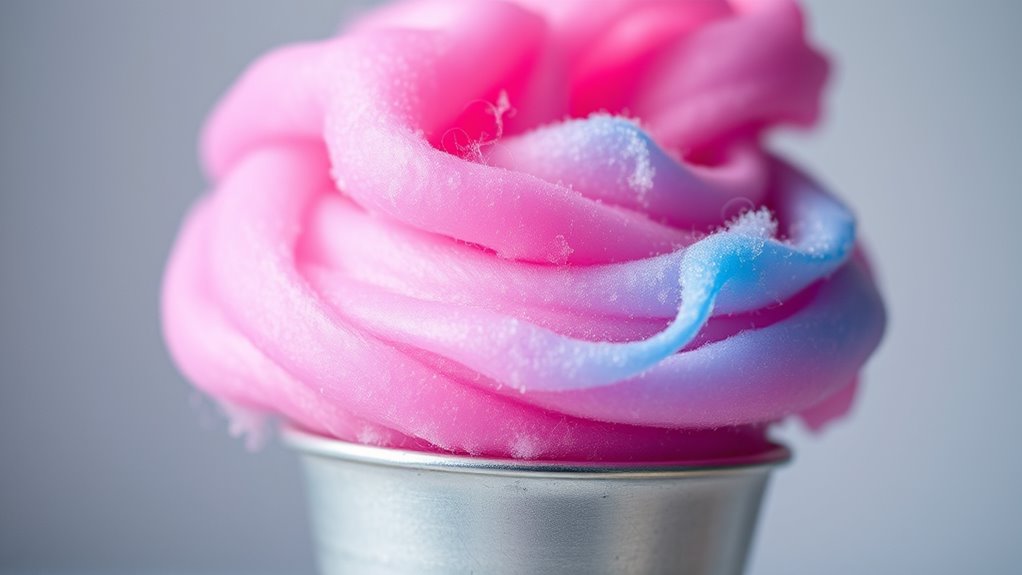
Particle size and purity play crucial roles in how smoothly sugar spins into cotton candy. If the particle size is too large, the sugar won’t melt evenly, causing uneven spinning and clumps. Conversely, very fine particles melt quickly, producing a consistent, airy cotton candy. Purity levels also matter; high-purity sugars reduce impurities that can clog the spinner or cause inconsistent texture. Impurities, such as residual starch or additives, can interfere with the melting process, leading to poor spinning performance. Using sugar with the right particle size ensures the heat is distributed evenly, creating a smooth, continuous flow. Maintaining high purity levels minimizes contaminants that could disrupt spinning. Together, ideal particle size and purity help you achieve a fluffy, well-formed cotton candy with minimal hassle.
Why Is Proper Heating and Melting Temperature Important?

Proper heating and melting temperature are essential because they directly affect how smoothly sugar transforms into cotton candy. If the temperature is too low, heat transfer is inefficient, leading to incomplete melting and unwanted sugar crystallization. Too high, and you risk burning the sugar or causing inconsistent melting. Imagine:
Proper temperature control ensures smooth melting and perfect cotton candy consistency.
- The sugar warming evenly, with no lumps or clumps disrupting the flow.
- The heat reaching every particle uniformly, preventing crystallization.
- The sugar liquefying at just the right temperature, creating a smooth, amber syrup.
- The heat transfer stopping before sugar burns, ensuring perfect consistency.
Maintaining proper temperature ensures the sugar melts thoroughly, avoiding crystallization issues that cause graininess or crystal formation. This balance creates the ideal flow for spinning, resulting in fluffy, silky cotton candy.
How Can You Choose the Perfect Sugar for Cotton Candy?

Choosing the right sugar is key to producing high-quality cotton candy. To select the perfect sugar, consider its cultural traditions and historical origins, which influence flavor and texture. Pure cane sugar is traditional, but some regions prefer beet sugar or specialty blends. Look for finely granulated sugar for smooth spinning, and avoid additives that can interfere with melting.
| Sugar Type | Origin | Best For |
|---|---|---|
| Cane Sugar | Tropical regions | Classic cotton candy flavor |
| Beet Sugar | Europe | Smooth, consistent melt |
| Flavored Sugars | Various | Unique, cultural treats |
| Powdered Sugar | Worldwide | Extra fine, easy to spin |
Frequently Asked Questions
Can I Use Flavored Sugars for Cotton Candy?
Yes, you can use flavored sugars for cotton candy, but you should consider flavor compatibility and sugar flavoring. Not all flavors work well when spun into cotton candy, as some may cause clumping or affect the spinning process. Choose sugars that are specifically designed or tested for cotton candy, and verify the flavoring is compatible with the sugar to get a smooth, delicious result. Always start with small batches to test the flavor.
How Does Sugar Color Affect the Spinning Process?
Color influence can affect the spin consistency of your cotton candy. Bright or heavily pigmented sugars may clog the machine or cause uneven melting, leading to inconsistent spinning. To maintain smooth operation, choose sugars with lighter or natural colors, or use flavored sugars without added dyes. This way, you guarantee a steady, fluffy cotton candy while avoiding machine issues caused by color influence on the spinning process.
Are Organic Sugars Suitable for Cotton Candy?
You’re in luck—organic sugars are indeed suitable for cotton candy, but don’t expect them to work magic. They offer organic alternatives with high sugar purity, which is essential for spinning. Just remember, the key isn’t just organic branding but also ensuring the sugar’s purity and granule size. So, if you’re seeking a “green” treat, go ahead, but don’t be surprised if your cotton candy isn’t quite as fluffy.
What Are Common Mistakes Beginners Make With Sugar?
When making cotton candy, you often make mistakes like using sugar with high moisture content, which causes excessive sugar crystallization and prevents spinning. You might also not heat the sugar enough, leading to inconsistent melting. Be sure to use the right type of sugar, keep moisture levels low, and heat it evenly. Avoid rushing the process, as these errors can result in poor spinning and sticky, clumped cotton candy.
How Long Can Cotton Candy Sugar Be Stored Before Use?
You can store cotton candy sugar for up to a year if you keep it in an airtight container. Think of sugar shelf life as a delicate balance—exposed to moisture, it clumps and loses its spinning ability, like a forgotten treasure. Storage tips include keeping it in a cool, dry place away from sunlight. This way, your sugar stays fresh, ready to spin a perfect cotton candy whenever you crave it.
Conclusion
Choosing the right sugar for cotton candy is like selecting the perfect brush for a masterpiece—your choice shapes the entire experience. When you pick the right sugar, you open a world of fluffy, sweet clouds that dance on your tongue. Avoid the wrong options, and your creation can be as fragile as a dream. Remember, the secret lies in understanding the ingredients—like a key unlocking the magic of spun sugar’s delicate artistry.
Halloween Picks
halloween
As an affiliate, we earn on qualifying purchases.