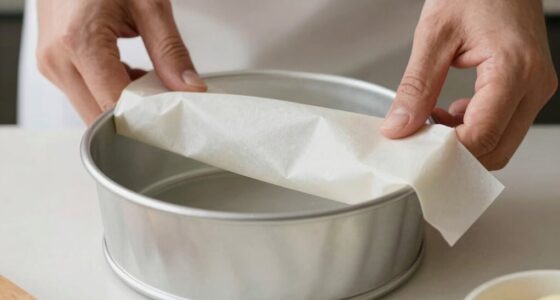
To line any pan quickly with parchment, cut a piece slightly larger than the pan and press it into the bottom, shaping it with your fingers or a spatula. For added neatness, fold the parchment into strips and press or tape them into place. Reusing parchment keeps cleanup easy and helps the environment. Want more tips to master lining pans efficiently and get perfect results every time? Keep going!
Key Takeaways
- Cut parchment slightly larger than your pan to ensure full coverage and easy fitting.
- Press the parchment into the pan, smoothing out air bubbles for a perfect, snug fit.
- Use a pencil to trace the pan’s shape on parchment, then cut for a precise lining.
- For square or rectangular pans, fold parchment into quarters to cut multiple sheets quickly.
- Reuse parchment sheets if still in good condition to save time and promote eco-friendly practices.
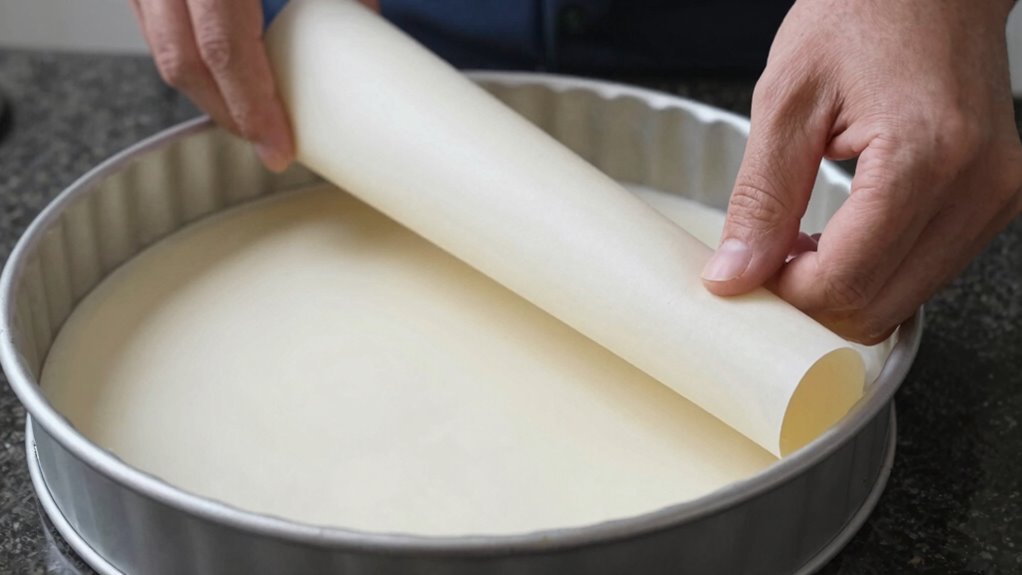
Parchment paper is a versatile kitchen tool that can simplify many cooking and baking tasks when used creatively. One of its most common uses is for baking sheet prep, where it guarantees easy cleanup and prevents sticking. To start, cut a sheet of parchment slightly larger than your baking sheet, then simply press it into the pan. This creates a non-stick surface that allows baked goods to slide right off, saving you time and effort. Additionally, parchment paper makes cleanup a breeze—just lift it out and discard, leaving your baking sheet spotless. When baking multiple sheets or batches, reuse the parchment if it’s still in good condition, which adds to its cost-efficiency and eco-friendliness. According to therightequityrelease.com, utilizing eco-friendly materials like parchment paper supports sustainable kitchen practices.
Parchment paper makes baking cleanup quick, easy, and eco-friendly by preventing sticking and allowing reuse.
Beyond basic baking sheet prep, parchment paper plays a vital role in cake decorating techniques. When working on layered or frosted cakes, use parchment to pipe decorative borders or intricate designs. Cut strips of parchment, pipe your frosting onto them, then gently transfer the decorations onto your cake. This method helps you achieve clean, professional-looking patterns without smudging or mess. Parchment can also serve as a stencil or guide for precise piping, ensuring symmetrical and consistent designs. For delicate decorations like chocolate curls or sugar work, parchment-lined templates provide a sturdy surface that prevents sticking and makes transferring your creations easier.
Using parchment paper for cake decorating techniques extends to freezing. You can pipe frosting or melted chocolate onto parchment, freeze it until firm, then peel it off to create embellishments. This technique allows you to craft flowers, shapes, or accents ahead of time, ready to be added to your finished cake. Additionally, parchment paper can be used to cover and protect your work surface while decorating, preventing messes and making cleanup simpler. When you’re finished, just fold or roll up the parchment with your decorations inside for easy storage or transport.
In essence, mastering parchment paper tricks transforms your baking and decorating process. Whether preparing your baking sheet, crafting intricate cake designs, or organizing your workspace, parchment simplifies each step. Its flexibility, non-stick qualities, and ease of use make it an indispensable tool for bakers of all levels. With a little practice, you’ll find it’s the secret weapon to achieving professional results while saving time and reducing mess. Next time you set out to bake or decorate, keep parchment paper in mind—it’s more than just a lining; it’s your go-to for quick, clean, and stylish results.

3 Pack PTFE Teflon Sheet for Heat Press Transfer Sheet Non Stick 16 x 20 Heat Transfer Paper Reusable Heat Resistant Craft Mat
Waterproof & Washable – Our 3 pack PTFE Sheet for Heat Press Reusable is easily wipe off messy…
As an affiliate, we earn on qualifying purchases.
As an affiliate, we earn on qualifying purchases.
Frequently Asked Questions
Can Parchment Paper Be Reused for Multiple Recipes?
Yes, you can reuse parchment paper for multiple recipes if it’s still in good condition. Use a reusable parchment or carefully clean the paper after each use to prevent sticking or tearing. Reusing parchment helps with parchment recycling efforts and reduces waste. Just make sure it’s free of food debris and any tears before reusing it. With proper care, you can extend its life and save money while being eco-friendly.
Is Parchment Paper Safe for High-Temperature Baking?
Yes, parchment paper is safe for high-temperature baking as long as it has heat resistance up to the recommended limit, typically around 420-450°F. Always check the packaging for specific temperature guidelines to guarantee food safety. When you use it within these limits, parchment paper prevents sticking and makes cleanup easier without releasing harmful chemicals. Just avoid exposing it to open flames or direct heat sources to stay safe.
How Do I Prevent Parchment Paper From Curling or Shifting?
To prevent parchment paper from curling or shifting, start by lining your pan with a small amount of butter or spray to help it adhere to the pan. Press the parchment down gently, especially along the edges, to flatten them and ensure they stay in place. You can also place a weight or baking sheet on top during baking to keep the parchment flat and secure, avoiding any shifting.
Can I Use Parchment Paper in Microwave Cooking?
You can use parchment paper in microwave cooking because it’s microwave-safe and designed to withstand heat without catching fire. Its heat-resistant properties make it suitable for lining dishes or covering food in the microwave. Just guarantee you use it in moderation, avoid direct contact with heating elements, and follow the manufacturer’s guidelines. This way, you’ll keep your microwave safe and prevent any mishaps with parchment paper.
Is There an Eco-Friendly Alternative to Parchment Paper?
If you’re tired of turning your kitchen into a landfill, biodegradable alternatives and reusable baking sheets are your eco-friendly heroes. Imagine baking on sheets that return to the earth instead of clogging landfills, all while saving money. Reusable silicone mats or metal baking sheets are perfect. They’re durable, easy to clean, and cut down on waste—because you’re not just baking, you’re saving the planet one cookie at a time.
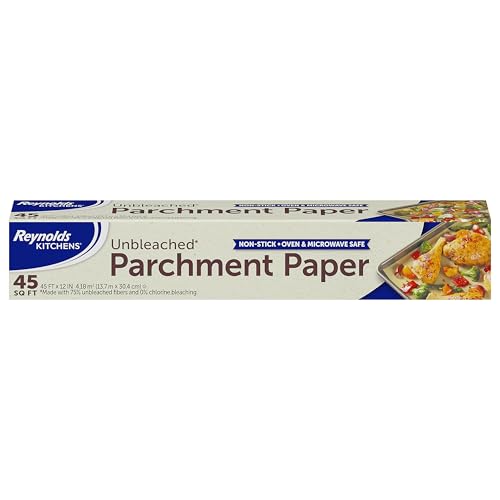
Reynolds Kitchens Unbleached Parchment Paper Roll, Non Stick Parchment Paper for Cooking and Baking, Oven Safe up to 425 Degrees, Chlorine-Free, 45 Feet x 12 Inches, 45 Total Sq. Ft.
Package Includes: One (1) Reynolds Kitchens Unbleached Parchment Paper Roll measuring 45 feet long by 12 inches wide…
As an affiliate, we earn on qualifying purchases.
As an affiliate, we earn on qualifying purchases.
Conclusion
Using parchment paper makes lining any pan quick and mess-free. Even if you’re worried about it sticking or tearing, just cut a sheet slightly larger than your pan, press it into place, and trim the edges. Imagine laying down a perfectly fitted sheet that stays smooth and secure. With these simple tricks, you’ll save time and avoid frustration, making baking easier and more enjoyable. Give it a try—you’ll wonder how you ever baked without it!

Ateco Parchment Triangle, 100-Pack
Package of 100 15-Inch parchment triangles; when rolled, make 7-inch cone
As an affiliate, we earn on qualifying purchases.
As an affiliate, we earn on qualifying purchases.

If You Care Parchment Baking Paper, 70 sq ft
BEST VALUE: If You Care Parchment Paper comes as pack of one box, providing a total of 70…
As an affiliate, we earn on qualifying purchases.
As an affiliate, we earn on qualifying purchases.