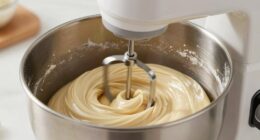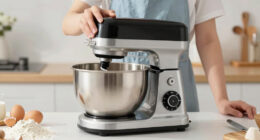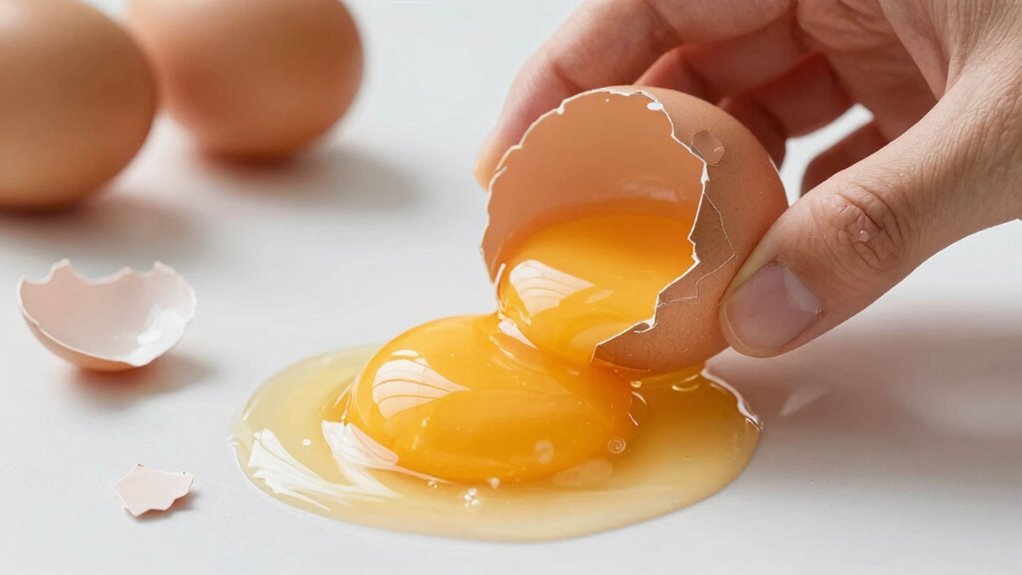
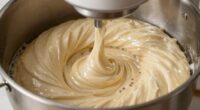
The most common mistake when adding eggs is pouring them in all at once instead of gradually mixing them in. This quick addition can cause curdling, uneven texture, or separation, especially if the mixture isn’t properly prepared. To prevent this, add eggs slowly while continuously stirring or beating gently. Proper technique ensures even blending and a smoother final product. If you want to master this skill, there’s more to discover that can improve your baking results.
Key Takeaways
- Adding eggs too quickly or all at once causes uneven mixing and curdling.
- Cracking eggs directly into batter without gradual incorporation leads to separation.
- Not beating eggs lightly before adding can hinder smooth blending.
- Failing to add eggs slowly while mixing results in curdling or separation.
- Overlooking egg freshness can negatively affect the mixture’s consistency and quality.
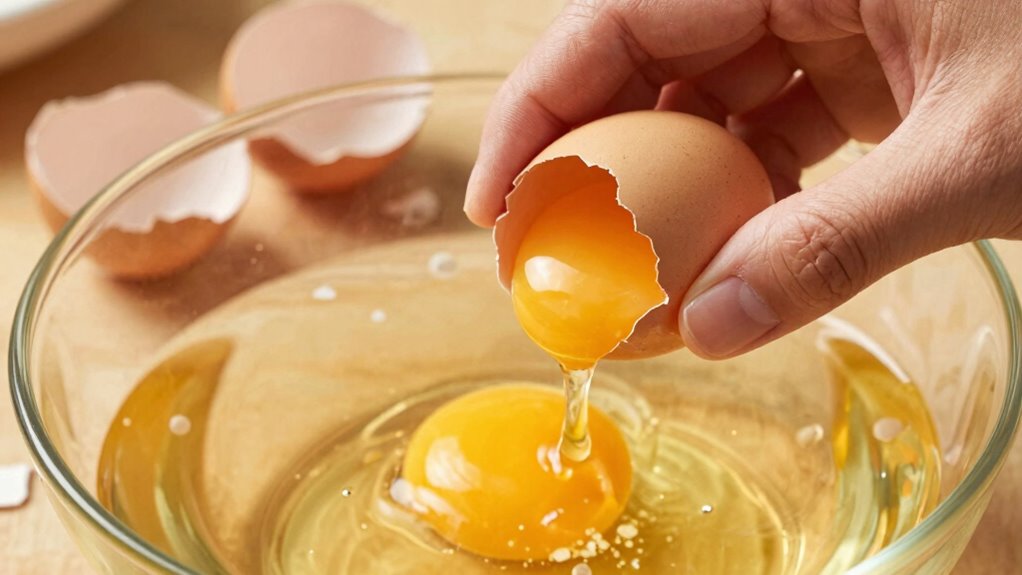
Adding eggs to a recipe might seem straightforward, but the most common mistake people make is adding them too quickly or all at once. This hasty approach can lead to a range of issues, especially if you’re not paying attention to egg freshness and your cooking techniques. When you crack eggs directly into batter or dough without gradual incorporation, the mixture can curdle or become uneven, ruining the texture of your final product. To prevent this, you need to understand how to incorporate eggs smoothly and why egg freshness matters so much. Additionally, understanding the emulsification process can help you achieve a more stable and uniform mixture. Egg freshness plays an essential role in baking and cooking. Fresh eggs tend to have firmer whites and more intact yolks, which makes them easier to blend into your mixture. If you’re using eggs that are a week or more old, they may be a bit more watery or runny, making it harder to achieve a uniform batter. This is especially true if you’re making delicate baked goods like cakes or mousse, where consistency is paramount. Always check the freshness of your eggs before adding them—an easy test is to place the egg in a bowl of water; fresh eggs sink while older eggs tend to float. Using fresh eggs ensures smoother mixing, which means you don’t have to work as hard to evenly incorporate them. Your cooking techniques also influence the success of adding eggs. Instead of cracking all your eggs into the mixture at once, it’s better to add them gradually, especially when making batter or custards. Start by lightly beating the eggs in a separate bowl, then add them slowly while continuously mixing. This gradual process allows the eggs to blend more thoroughly with the other ingredients, preventing curdling or separation. Furthermore, tempering eggs—adding a small amount of hot liquid to them before mixing into the main batter—can help maintain a smooth texture and prevent scrambling. This technique is especially useful when making sauces or custards, where controlling temperature and mixing speed is essential.

Umite Chef Mixing Bowls with Airtight Lids Set, 8PCS Stainless Steel Khaki Nesting Bowls with Grater Attachments, Kitchen Bowls with Non-Slip Bottoms, Size 5, 4, 3.5, 2, 1.5QT for Mixing & Serving
3GRATER ATTACHMENTS: This bowl set comes with 3 different grater attachments (slicing/grating/shredding) just shred or slice right into…
As an affiliate, we earn on qualifying purchases.
As an affiliate, we earn on qualifying purchases.
Frequently Asked Questions
How Do I Prevent Eggs From Sticking to the Pan?
To prevent eggs from sticking to the pan, start with a non-stick coating or well-seasoned pan. Make sure you use proper heat; too high heat can cause sticking, so keep it at medium or medium-low. Add a small amount of oil or butter and let it heat up before pouring in the eggs. This creates a barrier, helping eggs slide right off without sticking.
What Is the Best Way to Store Eggs Before Cooking?
Think of your eggs as treasures waiting to be opened—freshness is key. Store eggs in their original carton in the coldest part of your fridge, ideally at 40°F (4°C). This protects their natural coating and keeps them fresh longer. Avoid storing eggs near strong-smelling foods to prevent odor absorption. Proper storage methods preserve egg quality, ensuring they’re ready to crack when you need them most.
Can I Add Eggs Directly From the Fridge?
Yes, you can add eggs directly from the fridge. To guarantee they’re fresh, perform a simple freshness test by placing the egg in water—if it sinks, it’s fresh; if it floats, discard it. When cracking cold eggs into your dish, you might notice a slight crack or shell fragment. To avoid surprises, crack the egg into a bowl first, checking for any signs of spoilage before adding it to your recipe.
How Do I Tell if Eggs Are Fresh?
To tell if eggs are fresh, check egg freshness indicators like a float test: place the egg in a bowl of water; if it sinks and lays flat, it’s fresh. Also, examine the shell for cracks or sliminess. Remember, egg freshness expiration dates help guide you, but always trust these indicators for the best results. Fresh eggs have a firm yolk and thick whites, ensuring quality in your cooking.
Are There Differences in Adding Eggs for Baking Versus Cooking?
When adding eggs for baking versus cooking, you’ll notice baking often requires precise egg incorporation to guarantee proper texture, while cooking might need gentle folding or scrambling. If you have egg allergies or need an egg substitution, choose alternatives like applesauce or flaxseed. Be mindful that some recipes depend heavily on eggs’ properties, so adjusting accordingly helps maintain dish quality and safety for allergy sufferers.
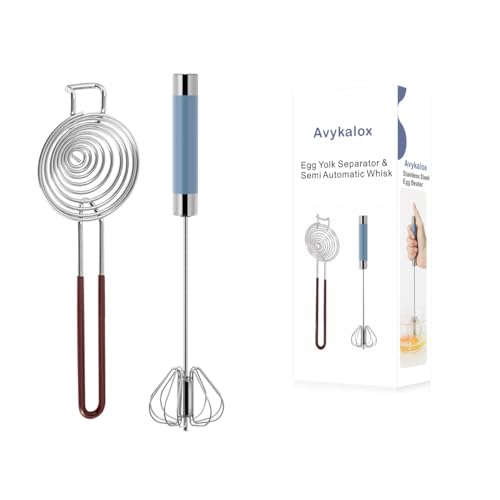
Avykalox Semi Automatic Whisk & Egg Yolk Separator, Stainless Steel Mini Hand Push Whisk, Hand Mixer Egg Beater Wisking Tool & Egg Separator for Raw Eggs Set, for Cooking, Baking
Quick Separation & Whisking: Innovative spiral separator for instant egg yolk/white separation; spring-design semi automatic whisk for effortless…
As an affiliate, we earn on qualifying purchases.
As an affiliate, we earn on qualifying purchases.
Conclusion
Remember, rushing when adding eggs can crack more than just shells—your recipe’s success. I once watched a novice baker pour eggs too quickly, like a rushing river, causing the batter to curdle. It’s a reminder that patience isn’t just a virtue; it’s the secret to perfect results. So, take your time, add eggs gently, and let your culinary masterpiece rise smoothly—just like a well-tended garden, it needs careful nurturing to flourish.

FOREV Egg Timer for Hard Boiled Eggs Soft Boiled Color Changing Indicator Tells When Eggs are Ready, Yellow 2pcs
Premium Nontoxic Heat Resistant – 100% bpa Free, no BPF and made of durable Food-Safe and Non-toxic Polyresin….
As an affiliate, we earn on qualifying purchases.
As an affiliate, we earn on qualifying purchases.

ChefAide 5 Pieces Silicone Spatula Set, Food Grade Rubber Spatula, Upgrade Strong Handle with Ergonomic Grip, Heat Resistant Up to 600°F for Nonstick Cookware, Cooking
Premium 100% Food Grade Silicone: The silicone spatula set is made of healthy and friendly material, resistant to…
As an affiliate, we earn on qualifying purchases.
As an affiliate, we earn on qualifying purchases.