Cookies spread more on some trays than others because the tray’s material and color affect heat absorption and reflection. Dark or non-stick pans absorb more heat, causing fats to liquefy faster and cookies to spread wider. Light-colored or shiny sheets reflect heat, helping cookies keep their shape. Your tray’s material and placement in the oven also play a role in how cookies behave. Keep exploring to find out how you can control spread more effectively.

Get baking supplies delivered free with Prime
- Fast, free delivery on millions of items
- Prime Video, Amazon Music and more included
- Member-only deals all year
Key Takeaways
- Dark or non-stick baking sheets absorb more heat, causing cookies to spread more rapidly.
- Heavier or thicker trays conduct heat unevenly, leading to inconsistent spreading.
- Tray placement in the oven affects heat exposure, influencing cookie expansion.
- Multiple trays stacked or placed too close can cause uneven heat distribution and spreading.
- Proper preheating and use of oven thermometers ensure consistent oven temperature, reducing uneven spreading.
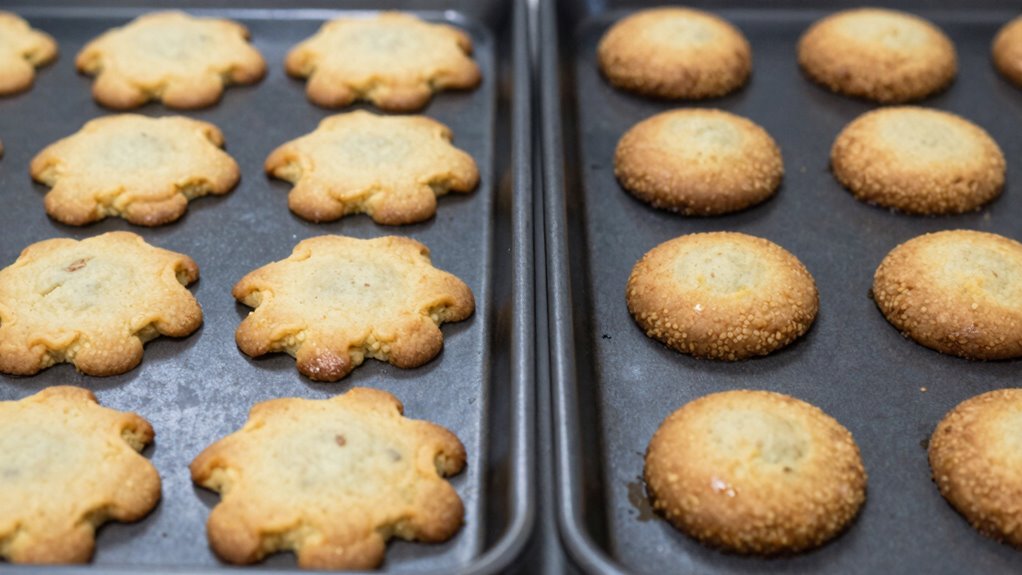
When baking cookies, you might notice that some trays result in more spreading than others, and understanding why can help you achieve more consistent results. One major factor influencing cookie spread is baking temperature. If your oven runs hot or cools unevenly, the heat affects how quickly the fats in your cookie dough melt. When the oven is too hot, the fats liquefy rapidly, causing the cookies to spread out more before they set. Conversely, if the temperature is too low, the cookies might not spread much at all, staying thick and dense. To prevent uneven spreading, it’s crucial to preheat your oven thoroughly and use an oven thermometer to monitor the precise temperature, especially if you’re using multiple trays or different oven racks. Additionally, oven calibration ensures your oven heats accurately, which is vital for consistent cookie spreading.
Another key element is cookie dough consistency. The moisture content, fat ratio, and how well you mix your ingredients directly impact how much your cookies spread. If your dough is too soft or oily, it will likely spread more during baking. This can happen if you use too much butter or if the dough isn’t chilled properly before baking. On the other hand, if the dough is too stiff or dry, the cookies won’t spread much and may turn out thick and cakey. Achieving the right dough consistency involves careful measurement of ingredients and sometimes chilling the dough before baking. Chilling solidifies the fats, giving the dough a firmer structure that resists spreading as much when it hits the oven’s heat. Additionally, understanding the role of fats in cookie dough can help you control how much the cookies spread during baking.
The type of baking sheet you use also plays a role. Non-stick sheets or dark-colored pans tend to absorb more heat, which can lead to increased spreading. Light-colored, shiny baking sheets reflect heat better, helping cookies maintain their shape more effectively. Additionally, the material of the tray affects heat conductivity; metal pans typically heat more evenly and quickly, influencing how your cookies spread and bake.
Lastly, the placement of your trays in the oven matters. If you put one tray on the top rack and another on the bottom, they may experience different heat intensities, causing uneven spreading. Rotating trays halfway through baking ensures more uniform results. Overall, controlling baking temperature, maintaining proper dough consistency, choosing the right baking sheet, and positioning your trays correctly can greatly reduce unwanted cookie spread. By paying attention to these factors, you’ll bake cookies that look and taste consistently perfect every time.
As an affiliate, we earn on qualifying purchases.
Frequently Asked Questions
How Does Oven Temperature Affect Cookie Spreading?
You’ll notice that oven temperature affects cookie spreading because higher heat causes the fats in your dough to melt faster, leading to more spread. Oven hot spots can make some areas warmer, causing uneven spreading, while proper baking rack placement guarantees consistent heat. To control spreading, keep your oven calibrated, position trays in the center, and avoid hot spots for evenly baked, perfectly spread cookies.
Do Different Cookie Recipes Influence Spread Patterns?
You might think all cookie recipes spread the same, but surprise—flavor variations and ingredient substitutions really do influence spreading. For example, adding more butter or sugar can make cookies spread more, while substituting applesauce for eggs can tighten them up. So, yes, your recipe’s unique ingredients and flavors shape spreading patterns, proving that even the tiniest change can turn your cookies from dainty to delightfully flat or thick.
How Does Tray Material Impact Cookie Spread?
The tray material impacts cookie spread through tray insulation and surface texture. Metal trays heat quickly, causing cookies to spread more, while glass or ceramic trays distribute heat evenly, reducing spread. A textured surface, like a silicone mat, minimizes sticking and spreading, whereas smooth metal trays promote more movement. So, choosing the right tray with proper insulation and surface texture helps control how much your cookies spread during baking.
Does Cookie Size Affect How Much They Spread?
Yes, cookie size affects how much they spread. Larger cookies tend to spread more because their shape and size influence how heat and moisture distribute during baking. If your cookie dough is chilled, it reduces spreading regardless of size, but bigger cookies still spread more than smaller ones. To control this, keep dough uniformly shaped and chilled before baking to minimize excessive spreading and achieve consistent cookie shapes.
Can Adding More Baking Powder Change Spread Behavior?
Adding more baking powder actually makes cookies spread less, not more, which is the ironic twist. It creates a fluffier, thicker cookie rather than a thin, crispy one. If you’re experimenting with flavor variations or ingredient substitutions, keep this in mind, as extra baking powder can alter texture and spread behavior. So, if you want cookies that spread out more, stick to the original amount, and don’t overdo the baking powder.
As an affiliate, we earn on qualifying purchases.
Conclusion
Just as Icarus soared too close to the sun, your cookies can overreach their ideal shape if the tray isn’t just right. Remember, the tray’s material, temperature, and spacing shape your cookies’ destiny, guiding them gently like a seasoned captain steering a ship through calm waters. Pay attention to these details, and you’ll craft cookies that rise perfectly, echoing the harmony of a well-tuned orchestra—where every element plays its part in creating something truly delightful.
As an affiliate, we earn on qualifying purchases.
As an affiliate, we earn on qualifying purchases.
Fall Picks
fall essentials
As an affiliate, we earn on qualifying purchases.