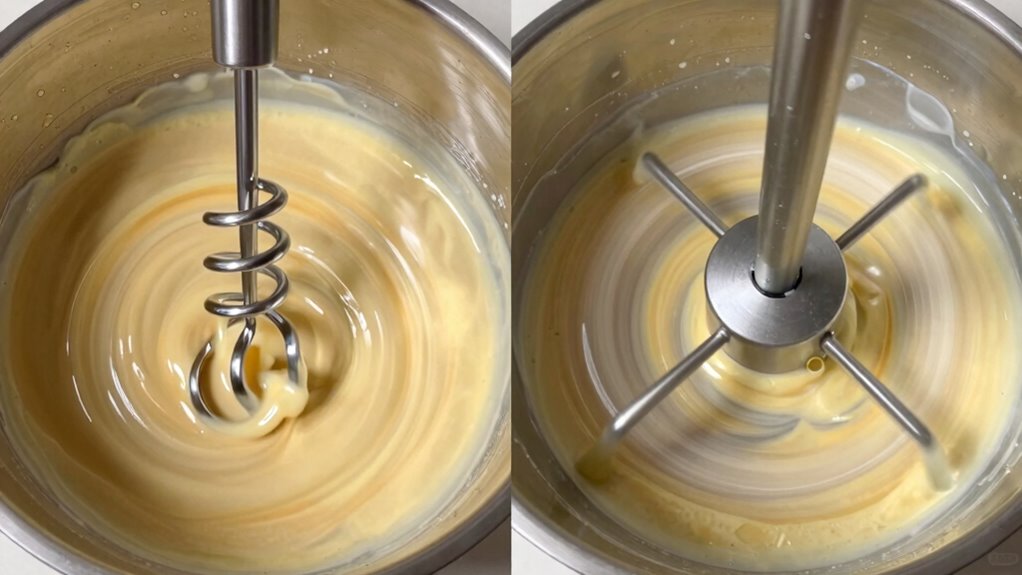

Spiral mixers are designed for kneading heavy, dense dough with continuous, thorough movement around a fixed axis, which helps you achieve uniform mixtures efficiently. They excel at handling larger quantities and reducing mix time and energy use. Planetary mixers, on the other hand, feature a rotating beaters that move in multiple directions, making them ideal for lighter ingredients and finer blending. Understanding these differences helps you optimize your process. Keep exploring to see how choosing the right mixer can transform your production.

Get baking supplies delivered free with Prime
- Fast, free delivery on millions of items
- Prime Video, Amazon Music and more included
- Member-only deals all year
Key Takeaways
- Spiral mixers are designed for kneading heavy dough with continuous, uniform movement, while planetary mixers are suited for lighter ingredients and versatile mixing tasks.
- Spiral mixers rotate ingredients around a fixed axis, promoting thorough, efficient mixing with fewer cycles; planetary mixers use a different motion for varied textures.
- Spiral mixers excel in handling dense, heavy mixtures and reducing mixing time and energy consumption compared to planetary mixers.
- The design differences impact production workflow, with spiral mixers enhancing efficiency in bread and dough production, and planetary mixers offering flexibility for multiple recipes.
- Proper selection between spiral and planetary mixers depends on ingredient type, desired product consistency, and process optimization needs.
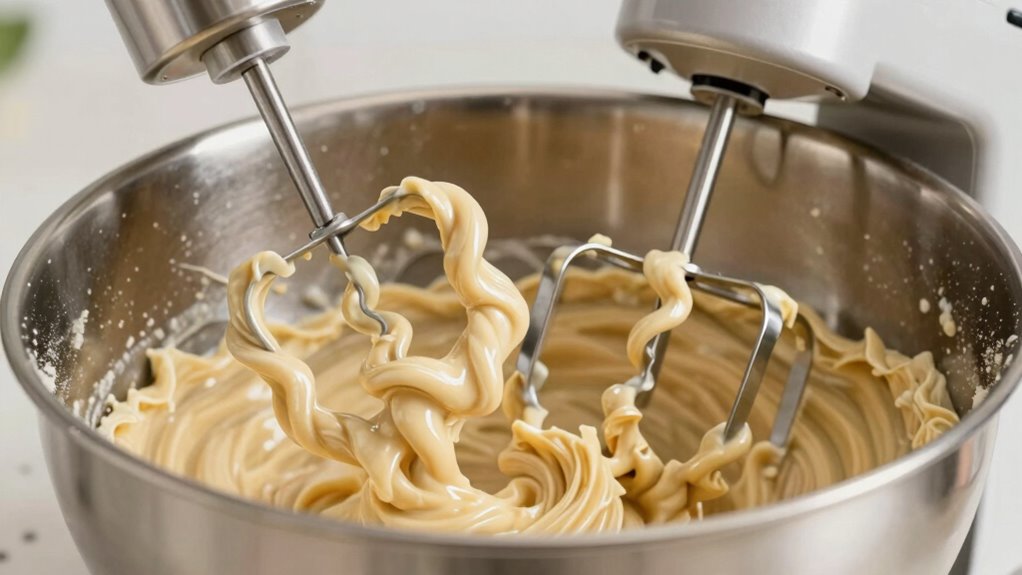
Have you ever wondered how different mixing methods impact the outcome of your culinary or industrial projects? When choosing between spiral and planetary mixers, understanding their core differences can make a significant difference in your results. One of the key factors to consider is mixing efficiency. Spiral mixers excel at kneading dough and handling dense, heavy mixtures because their design promotes continuous, consistent movement. They rotate the ingredients around a fixed axis, ensuring thorough blending without overworking the dough. This means you get a uniform mixture with fewer mixing cycles, saving you time and reducing energy consumption. Additionally, mixing techniques play a crucial role in determining the final product quality and consistency. Understanding mixing efficiency can help you select the right equipment to optimize your process and achieve the best results. Recognizing the differences between these mixers can also influence your overall production workflow and efficiency. Moreover, knowing how each type impacts mixing speed can help you better tailor your approach to different recipes and projects.
As an affiliate, we earn on qualifying purchases.
Frequently Asked Questions
Which Mixer Is More Energy-Efficient for Large Batches?
For large batches, spiral mixers are generally more energy-efficient because they consume less energy per unit of product compared to planetary mixers. Their design allows for better batch scalability, making them ideal for high-volume production. You’ll find that spiral mixers, with their continuous operation capability, minimize energy consumption while maintaining consistent quality, especially when handling large quantities. So, if energy efficiency is your priority for big batches, go with a spiral mixer.
How Do Cleaning Procedures Differ Between Spiral and Planetary Mixers?
You’ll find cleaning protocols differ markedly between spiral and planetary mixers. Spiral mixers often require thorough disassembly to access all parts, making maintenance challenging but vital to prevent contamination. Planetary mixers, with their more compact design, are easier to clean but demand careful attention to crevices that trap residues. In both cases, meticulous cleaning is essential to avoid cross-contamination and guarantee consistent performance, but the maintenance challenges keep you on your toes.
Are There Specific Applications Better Suited for Spiral or Planetary Mixers?
You’ll find spiral mixers excel in handling large dough batches, thanks to their gentle, consistent mixing that preserves ingredient quality and guarantees ingredient compatibility. They’re ideal for bread and heavy doughs. Planetary mixers, on the other hand, provide superior mixing precision for smaller, delicate ingredients like cake batter or toppings. Choose a spiral for bulk doughs and a planetary for detailed, precise mixing tasks to optimize your results.
What Maintenance Challenges Are Unique to Each Mixer Type?
You’ll find that spiral mixers require regular lubrication to keep their gears and shafts functioning smoothly, preventing wear resistance issues over time. Planetary mixers, on the other hand, pose challenges with their more complex gear systems, which can lead to increased wear if not properly maintained. Both types need routine inspections, but spiral mixers demand more attention to lubrication, while planetary mixers require careful monitoring of their intricate components for wear.
How Does Mixing Time Vary Between Spiral and Planetary Mixers?
Mixing time varies like a race, with spiral mixers often taking longer than planetary ones due to differences in mixing speed and motor capacity. A higher motor capacity and faster mixing speed in planetary mixers can cut down your time, making them ideal for quick, thorough blends. Meanwhile, spiral mixers, with their slower pace, excel at handling large batches gently but may require more time to achieve perfect consistency.
planetary stand mixer for baking
As an affiliate, we earn on qualifying purchases.
As an affiliate, we earn on qualifying purchases.
Conclusion
Ultimately, understanding the real difference between spiral and planetary mixers helps you choose the right tool for your needs. While some believe spiral mixers are better for bread due to their gentle kneading, planetary mixers excel at versatile, thorough mixing for various recipes. The truth is, both have their strengths, but their effectiveness depends on your specific tasks. By investigating these nuances, you can make smarter decisions and elevate your baking game.
As an affiliate, we earn on qualifying purchases.
As an affiliate, we earn on qualifying purchases.
Halloween Picks
halloween
As an affiliate, we earn on qualifying purchases.