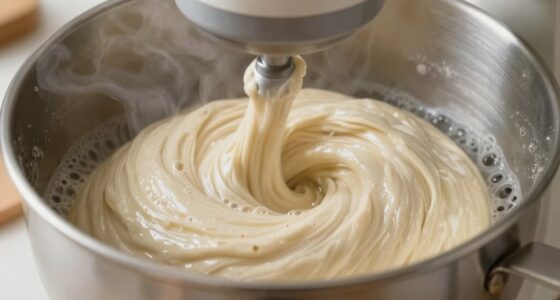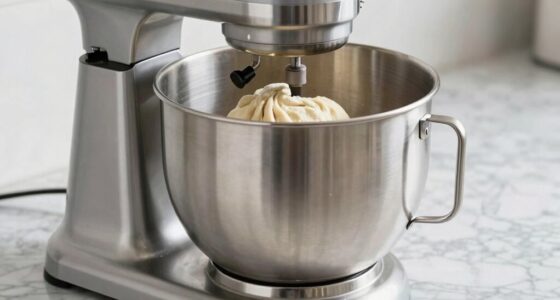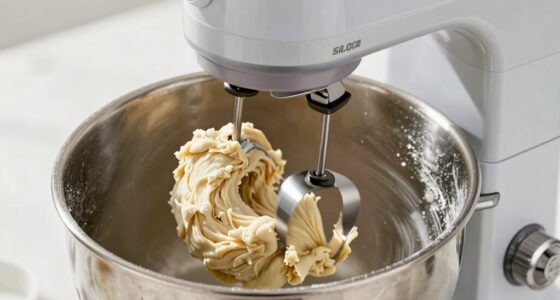
If your baked goods aren’t turning out right, stop blaming the recipe. The key often lies in your mixing sequence and technique. For example, creaming butter and sugar first adds air for lightness, while overmixing eggs early can deflate that air. Gently folding in dry ingredients prevents tough textures. Adjusting your mixing order and technique makes a big difference—getting these right can solve many common issues. Keep going, and you’ll discover how mastering these steps improves your results every time.
Key Takeaways
- Proper mixing order ensures optimal aeration, texture, and rise, reducing the likelihood of baking failures attributed to the recipe.
- Gently folding in dry ingredients after wet ingredients prevents overworking batter and tough textures.
- Incorrect sequence can impair gluten development and aeration, affecting final product quality.
- Adjusting mixing techniques when substituting ingredients maintains proper chemical reactions and structure.
- Focusing on technique and sequence, not just ingredients, helps troubleshoot and improve baking results.
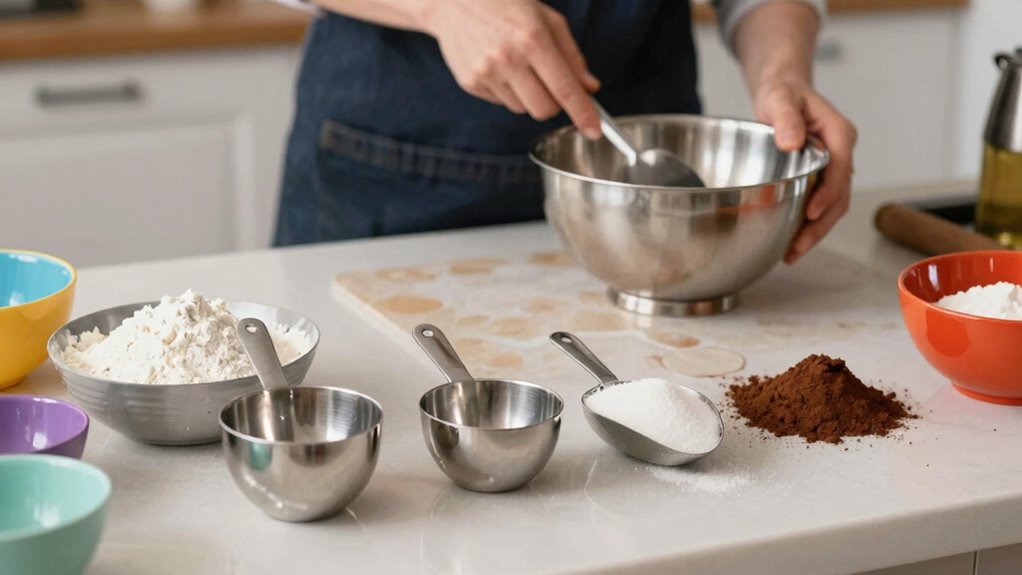
Have you ever blamed a recipe for a dish that didn’t turn out quite right? It’s frustrating to follow instructions closely and still end up with a disappointing result. But often, the real issue isn’t the recipe itself; it’s the way you approach the process, especially your mixing sequence. How you combine ingredients can make or break your baked goods, and understanding this can help you troubleshoot and improve your results. Instead of blaming the recipe, take a closer look at your baking techniques. Sometimes, adjusting your mixing order or technique can produce a better texture, rise, or flavor, even when working with ingredient substitutions.
Ingredient substitutions are common, especially when you’re missing an item or trying to make a healthier version. However, swapping ingredients without considering their roles can cause problems. For instance, replacing buttermilk with regular milk or exchanging butter for oil isn’t a simple one-to-one switch. You need to think about how each substitute affects the chemistry of your batter or dough. This is where understanding proper baking techniques becomes essential. When you make substitutions, you may need to tweak other parts of the recipe—like adjusting the leavening agents or mixing order—to compensate for the changes.
Ingredient swaps affect chemistry; adjust leavening and mixing to ensure your baked goods turn out perfectly.
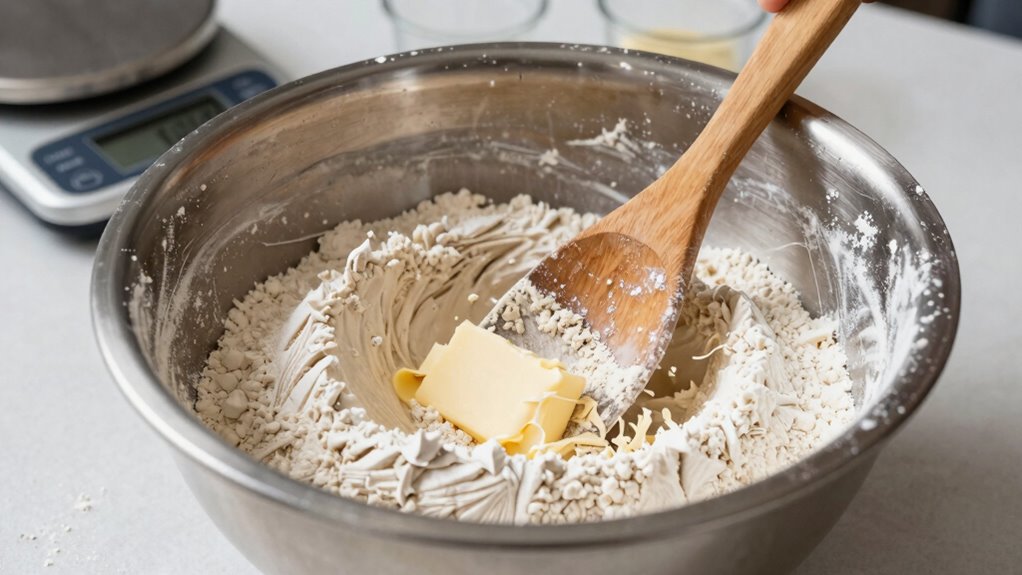
Your mixing sequence plays a significant role in the final outcome. For example, creaming butter and sugar first develops air pockets, giving your cake a light texture. If you add the eggs too early or mix them in too vigorously, you might deflate that air, resulting in a dense crumb. Similarly, folding in dry ingredients gently at the right stage prevents overworking the batter, which can lead to tough baked goods. By paying attention to the sequence—wet ingredients first, then dry, with gentle mixing—you ensure proper gluten development and aeration. This careful process influences how well your baked item rises and its overall texture. Additionally, understanding the roles of ingredients can help you make better adjustments and prevent common mistakes.
The key is to be deliberate with your mixing techniques. Don’t rush through steps or assume that all ingredients are interchangeable without adjustments. When you understand the purpose behind each step, you can adapt recipes more effectively, especially when making ingredient substitutions. This mindset shifts the focus from blaming the recipe to honing your skills. With practice, you’ll see that small changes in your mixing sequence and technique can lead to consistent improvements. Remember, baking is as much about technique as it is about ingredients. Master those fundamentals, and you’ll find that many failures are simply lessons in refining your process, not flaws in the recipe itself. Paying attention to ingredient roles and their impact on the final product can greatly enhance your baking success. Furthermore, understanding how ingredient interactions affect the chemistry can help you troubleshoot and innovate in your baking endeavors.
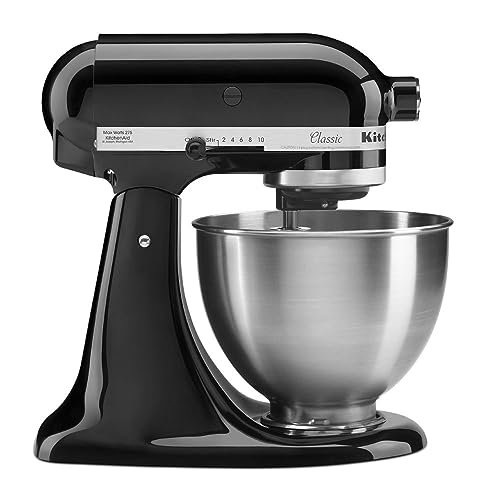
KitchenAid Classic Series 4.5 Quart Tilt-Head Stand Mixer K45SS, Onyx Black
Built to take it all on with the durable and built-to-last metal construction, and 59 touchpoints around the…
As an affiliate, we earn on qualifying purchases.
As an affiliate, we earn on qualifying purchases.
Frequently Asked Questions
How Do I Identify if My Mixing Sequence Is Incorrect?
You can identify if your mixing sequence is incorrect by noticing ingredient sensitivity, like uneven texture or inconsistent flavor, which hints at improper mixing. Pay attention to mixing consistency—if ingredients aren’t fully incorporated or you see lumps, it’s a sign. Experiment with your sequence, ensuring you add ingredients in the right order and mix thoroughly. This helps maintain ingredient sensitivity and achieves a smoother, more uniform mixture.
Can Changing the Mixing Order Improve My Baking Results?
Certainly, adjusting your mixing order can elevate your baking results. By experimenting with the sequence, you allow better flavor enhancement and ingredient interaction, leading to a more cohesive batter. Switching the order might seem small, but it can make a significant difference in texture and taste. So, try changing your mixing steps—sometimes, a simple tweak reveals your baked goods’ full potential, making them even more delicious and satisfying.
Are There Specific Ingredients That Are More Sensitive to Mixing Order?
Yes, certain ingredients are more sensitive to mixing order because of ingredient interactions and mixing timing. For example, adding eggs too early can cause overmixing, leading to tough baked goods. Similarly, incorporating leavening agents too late might reduce their effectiveness. By paying attention to mixing timing and understanding ingredient interactions, you can improve your baking results. Proper sequencing guarantees ingredients blend smoothly without compromising texture or rise.
How Does Mixing Sequence Affect the Texture of Baked Goods?
Your mixing sequence directly impacts the texture of baked goods by influencing ingredient interactions and consistency control. If you add ingredients in the wrong order, fats may not incorporate properly, resulting in a dense texture. Overmixing can develop gluten, making items tough. To get the ideal texture, you should follow the recommended sequence, ensuring ingredients blend smoothly and maintain the proper consistency for light, tender baked goods.
Should I Always Follow the Same Mixing Steps for Different Recipes?
Don’t put all your eggs in one basket; the same mixing steps don’t work for every recipe. You should adapt your process when making ingredient substitutions or adjusting baking temperature, as these factors affect how ingredients combine and cook. Sticking rigidly to the same steps might compromise your results. Instead, learn each recipe’s unique needs to guarantee the best texture and flavor, rather than blindly following a set routine.
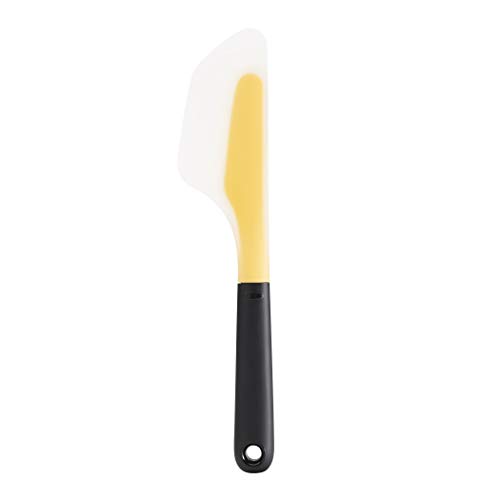
OXO Good Grips Small Flip and Fold Silicone Omelet Turner
Ideal shape and size for making omelets or quesadillas in 8" or other small pans
As an affiliate, we earn on qualifying purchases.
As an affiliate, we earn on qualifying purchases.
Conclusion
Remember, sometimes the secret to perfect baking isn’t just the recipe itself but how you approach it. A gentle tweak in your mixing sequence can make all the difference, turning a good result into a great one. Don’t be too quick to cast blame—think of it as fine-tuning your technique rather than fixing a flaw. With patience and a little attention, you’ll find your baking becoming more consistent and satisfying. Keep experimenting; your perfect batch is just a step away.
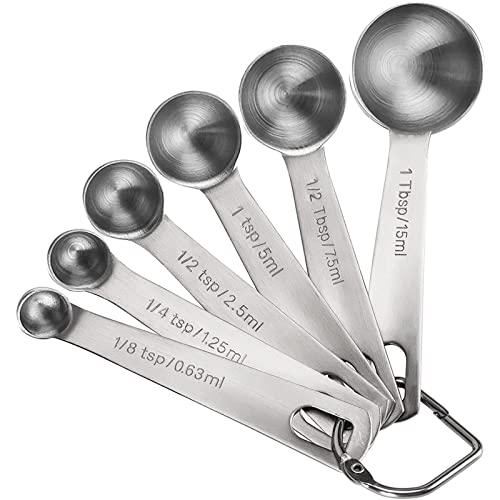
Measuring Spoons, Premium Heavy Duty Stainless Steel Measuring Spoons Cups Set, Small Tablespoon with Metric and US Measurements, Set of 6 for Measuring Dry and Liquid Ingredients
GUARANTEE SAFE FOR COOKING: Are you worried about silicone and plastic tools not safe for cooking? Protect your…
As an affiliate, we earn on qualifying purchases.
As an affiliate, we earn on qualifying purchases.

WEPSEN Mixing Bowls Set, 25PCS Stainless Steel Mixing Bowl with Lid Set, Large Nesting Bowls 7, 4.5, 3,2, 1.5QT, Measuring Cups and Spoons Baking Utensils Metal Bowl for Kitchen Prep
Sold over 50,000+ – Since its launch, more than 50,000 + families have chosen to purchase our mixing…
As an affiliate, we earn on qualifying purchases.
As an affiliate, we earn on qualifying purchases.