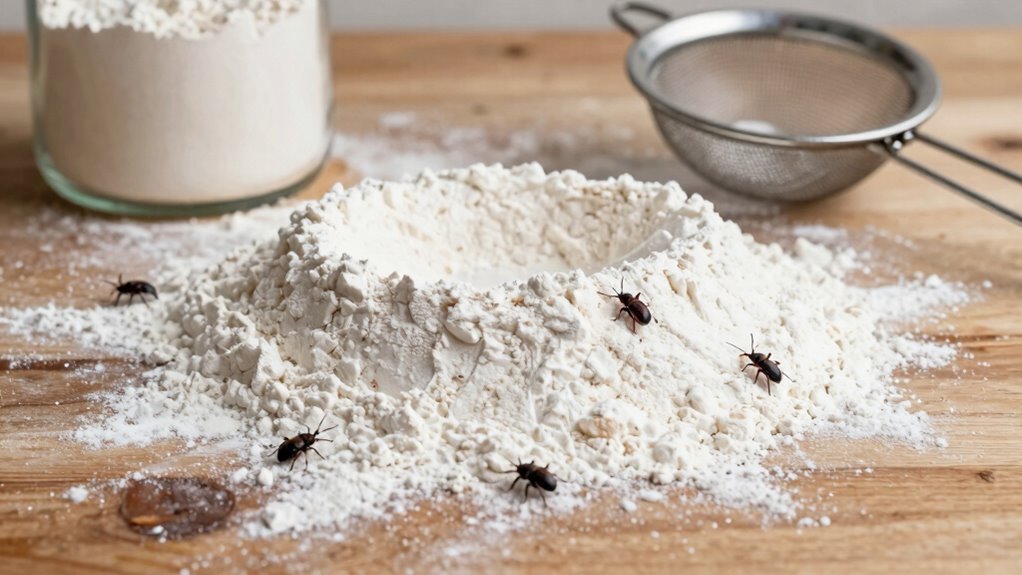

To prevent flour beetles, store your flour in airtight, pest-proof containers and keep your pantry clean and dry. Regularly inspect your supplies for signs like tiny beetles, holes, or shed skins. Proper storage, quick disposal of infested items, and maintaining low humidity help keep pests at bay. Natural remedies work well, but for long-term protection, combining good hygiene with preventative measures is key. Keep this in mind to protect your baking supplies effectively.

Get baking supplies delivered free with Prime
- Fast, free delivery on millions of items
- Prime Video, Amazon Music and more included
- Member-only deals all year
Key Takeaways
- Store flour in airtight, pest-proof containers to prevent beetle infestations.
- Regularly inspect pantry items for signs like tiny beetles, holes, or shed skins.
- Keep storage areas clean and dry; promptly discard contaminated flour.
- Use freezing for 48 hours to kill any eggs or larvae before storage.
- Seal gaps and cracks in shelves and walls to block pest entry points.
airtight pest-proof food storage containers
As an affiliate, we earn on qualifying purchases.
As an affiliate, we earn on qualifying purchases.
What Are Flour Beetles and Why Are They a Problem?
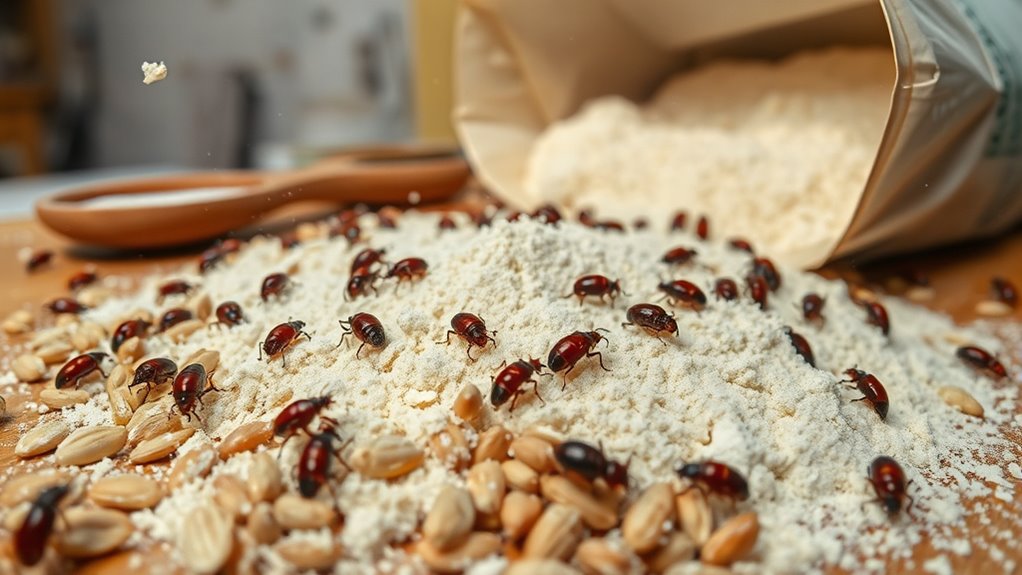
Have you ever noticed tiny insects in your stored grains or pantry? That’s a clue to pest identification, specifically flour beetles. These small, reddish-brown insects are common pantry pests that can quickly infest your dry goods. Flour beetles prefer stored grains, flour, and cereal products, and their presence signals an infestation. You might see tiny beetles crawling among your food or notice their discarded shed skins. Infestation signs also include fine powdery residue or small holes in packaging. If you spot these signs, it’s a clear indication that flour beetles have invaded your pantry. Recognizing these pests early helps prevent a full-blown infestation, saving your food and effort in cleaning and pest control.
As an affiliate, we earn on qualifying purchases.
How Do Flour Beetles Infest Your Kitchen?

Flour beetles typically enter your kitchen through contaminated grains, flour, or cereal products purchased from stores or received from suppliers. Once inside, they lay eggs in stored food, and their breeding habits can lead to rapid infestation growth. You might notice infestation signs like tiny beetles crawling on packaging or small holes in food containers. Sometimes, you’ll spot larvae or shed skins in your pantry. These beetles prefer warm, dark places, making your pantry an ideal breeding ground. They often go unnoticed at first, but their populations can explode quickly if not addressed. Understanding how they infest your space helps you identify early signs and prevents the problem from spreading further. Staying vigilant about food storage is key to controlling their breeding habits. Proper food storage techniques can help prevent future infestations and keep your pantry beetle-free.
As an affiliate, we earn on qualifying purchases.
How Can You Prevent Flour Beetles From Invading?

To keep flour beetles out of your kitchen, you should store your flour properly in airtight containers. Regularly inspecting your pantry helps catch any signs of infestation early. Using sealed containers and checking your supplies often are simple steps to prevent these pests from invading. Additionally, maintaining a clean pantry environment by promptly cleaning up flour spills and crumbs can further deter flour beetle infestations preventive measures. Incorporating pest activity monitoring principles such as monitoring for pest activity can also be effective in early detection.
Store Flour Properly
Wondering how to keep flour beetles out of your pantry? Proper grain storage is key. Store flour in airtight, pest resistant containers to prevent beetles from getting in and laying eggs. Avoid using open or flimsy packaging that pests can easily penetrate. Choose containers made of glass, metal, or heavy-duty plastic with tight-fitting lids. Keep your flour in a cool, dry place, as warmth and humidity attract pests. Regularly check your stored grains for signs of infestation, and discard any contaminated flour immediately. Ensuring your storage methods incorporate pest resistant containers can significantly reduce the risk of infestation. Using airtight storage containers also helps maintain the quality of your flour by preventing moisture and contaminants from entering. Properly sealing your flour with moisture-proof containers is essential to prevent mold growth and spoilage. Additionally, selecting pest-resistant storage options can further protect your pantry from unwanted invaders. Incorporating proper storage techniques can make a substantial difference in preventing flour beetle problems before they start. By ensuring your flour is stored properly in secure, pest resistant containers, you create a barrier that helps prevent flour beetles from invading your pantry in the first place.
Regularly Inspect Storage
Regularly inspecting your stored grains is essential for catching early signs of infestation before they become a major problem. Pest identification helps you recognize flour beetles or their larvae quickly, so you can act promptly. Look for tiny insects, webbing, or small holes in your packaging or storage containers. Proper storage techniques, such as checking for signs of pests during routine inspections, can prevent infestations from spreading. Keep an eye on your flour, grains, and other dry goods, especially if stored for extended periods. Regular inspections allow you to detect problems early, reducing the need for chemical treatments and minimizing contamination. Additionally, preventative storage methods can significantly reduce the risk of infestation. Using airtight containers and proper storage conditions can further inhibit pest development. Creating a pest-resistant environment by maintaining low humidity and consistent temperatures can help keep pests at bay. Incorporating storage environment controls, like maintaining low humidity and consistent temperatures, can help keep pests at bay. Monitoring for early pest detection and practicing thorough storage techniques can make a substantial difference in keeping your pantry pest-free and your baking ingredients fresh.
Use Airtight Containers
Using airtight containers is one of the most effective ways to prevent flour beetles from invading your stored dry goods. These containers create a barrier that pests can’t penetrate, making your storage pest-proof. When choosing containers, opt for ones with tight-fitting lids to guarantee no beetles can sneak in. Keep your containers in cool, dry areas to discourage beetle activity. Always check that your containers are clean before filling them to avoid accidental infestations. Additionally, label your containers with dates to monitor freshness. Proper storage practices play a crucial role in preventing infestations and maintaining dry goods. Regularly inspecting your stored items and practicing integrated pest management can further reduce the risk of infestations. By using airtight containers, you substantially reduce the risk of a beetle invasion and keep your baking supplies safe and fresh. Incorporating culturally relevant traditional storage methods can further enhance pest prevention efforts, respecting Indigenous wisdom about harmony with nature.
As an affiliate, we earn on qualifying purchases.
What Are Natural and Chemical Ways to Control Flour Beetles?
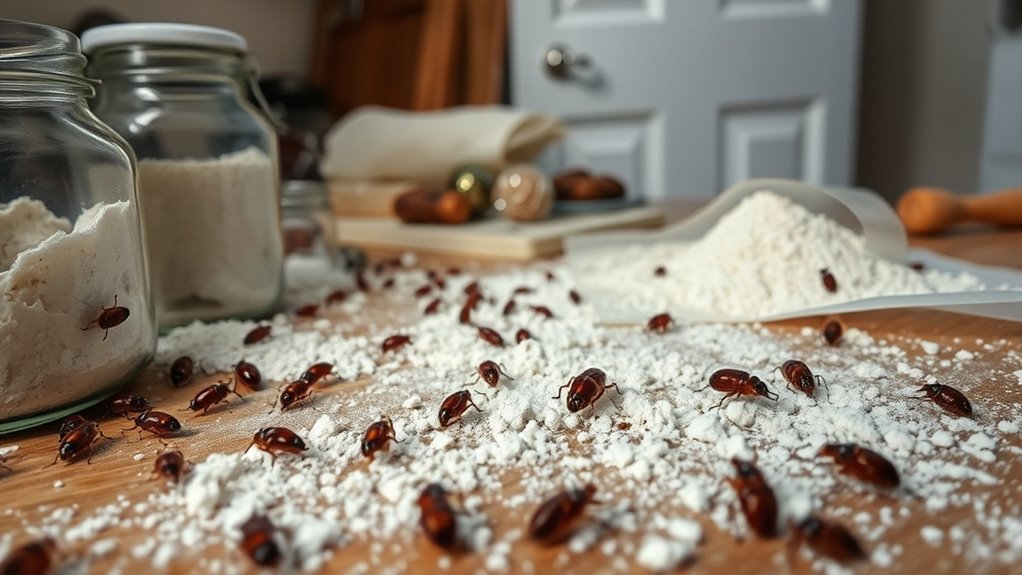
To control flour beetles effectively, you can turn to both natural and chemical methods. Natural remedies include placing bay leaves or diatomaceous earth in your pantry; these act as deterrents without harmful chemicals. You might also consider using essential oils like peppermint or eucalyptus, which can repel beetles. Additionally, maintaining proper storage conditions by keeping food in airtight containers reduces the likelihood of infestation. Proper cleaning practices are also essential, such as regularly wiping down pantry shelves to remove any debris or eggs that may attract pests. On the chemical side, chemical pesticides are available, but they should be used carefully and according to instructions to avoid contamination of your food. These pesticides can eliminate beetles rapidly, but they may have health risks if misused. Combining natural remedies with proper storage can markedly reduce infestation risks, while chemical options serve as a last resort for severe problems. Always prioritize safe, food-grade solutions to protect your home and health. Additionally, understanding wall surface finishes can help ensure that stored food remains unaffected by potential contamination.
Cleaning Tips to Eliminate Flour Beetle Infestations
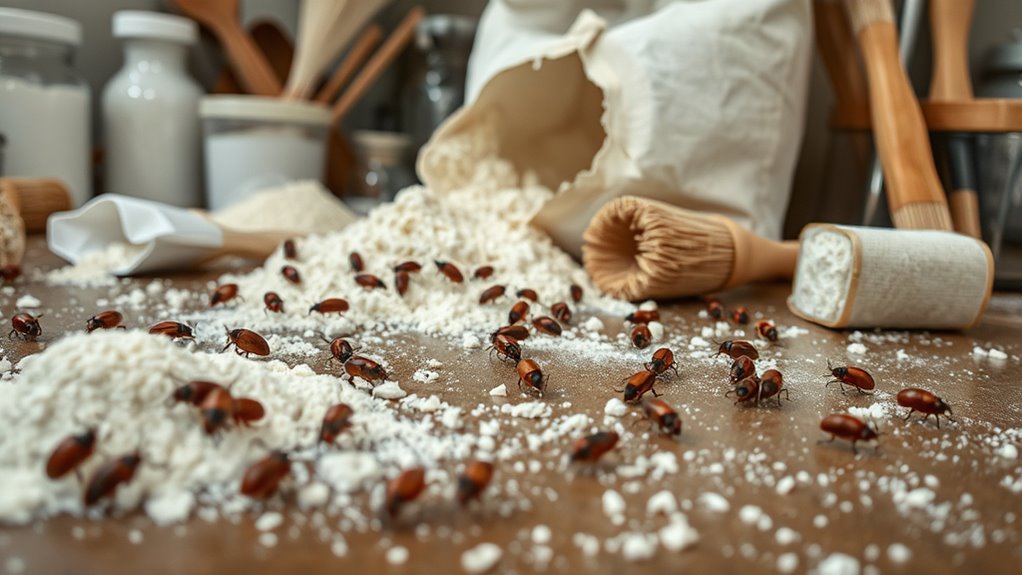
To eliminate flour beetles, you need to thoroughly clean your storage areas. Inspect all containers and dispose of any infested goods immediately. Keeping your space clean and sanitized regularly will help prevent future infestations. Utilizing smart home technology such as sensors and automation can also assist in maintaining a pest-free environment by monitoring for signs of infestation. Additionally, implementing connected monitoring systems can provide real-time alerts and help identify potential issues before they become severe. Understanding the field-of-view of your inspection area can help ensure you don’t overlook any hidden pests or eggs hiding in hard-to-see spots. Incorporating privacy policies in your pest prevention tools can ensure your data remains protected while monitoring your environment. Integrating connected home fitness devices can help you stay informed about your environment and support overall cleanliness and pest prevention efforts.
Sanitize All Storage Areas
- Wipe down shelves and containers regularly
- Use airtight, pest-proof containers
- Remove expired or damaged goods
- Vacuum cracks and corners thoroughly
- Seal gaps or holes in shelves and walls
These steps help create an inhospitable environment for beetles and keep your pantry clean and pest-free.
Inspect and Dispose of Infested Goods
Inspecting your pantry thoroughly is vital once you suspect a flour beetle infestation. Look for signs of infested goods, such as small holes, webbing, or beetles in packages. Identify and separate infested items from unaffected ones. Proper disposal methods are essential to prevent the spread. Seal infested goods in plastic bags before discarding them outside your home to contain the pests. Avoid composting or leaving infested items in your trash can, as beetles can re-infest nearby areas. Double-check unopened packages and inspect nearby shelves or storage containers. Removing and disposing of infested goods promptly halts the infestation’s progression. This step guarantees you eliminate the source and reduces the risk of beetles contaminating other pantry items.
Maintain Cleanliness Regularly
Maintaining cleanliness is one of the most effective ways to prevent and eliminate flour beetle infestations. Regularly cleaning your pantry and storage areas removes crumbs, spilled flour, and eggs that beetles might latch onto. Pay special attention to corners, shelves, and cracks where pests hide. Use pest-proof containers to store flour and grains, which helps contain any potential outbreaks. Controlling humidity is also essential, as high moisture levels encourage beetle development. Wipe down shelves with vinegar or soapy water to eliminate lingering eggs and larvae. Keep your pantry dry and well-ventilated to discourage pests. Regular cleaning routines disrupt the beetle’s lifecycle, making it harder for them to establish and thrive. Consistency is key to maintaining a pest-free baking environment.
How Home Bakers Can Keep Flour Beetles Away Long-Term

To keep flour beetles at bay long-term, you need to implement proactive storage and cleanliness habits. Focus on pest prevention by storing flour in airtight containers, which block beetle entry and prevent infestation. Maintain excellent kitchen hygiene by cleaning shelves and disposing of old or infested flour promptly. Regularly check stored items for signs of pests. Use this table to reinforce good habits:
| Storage Method | Cleaning Routine | Pest Prevention Tips |
|---|---|---|
| Airtight Containers | Wipe shelves weekly | Seal cracks and crevices |
| Clear labels | Vacuum pantry corners | Freeze flour for 48 hours |
| Keep dry and cool | Remove spilled flour | Store in low-humidity areas |
Frequently Asked Questions
How Do I Identify if I Have a Flour Beetle Infestation Early?
To identify a flour beetle infestation early, look for signs like tiny, moving insects in your flour or pantry. Early signs include small, dark pests or their shed skins, which resemble fine powder. Pest symptoms also include strange odors or clumps in flour. Regularly inspect your stored goods, especially if you notice tiny insects or unusual smells, so you can catch the problem before it spreads.
Are There Specific Types of Flour More Prone to Beetle Infestation?
Think of some flours as inviting a pest party. Pest-resistant flour, often stored in airtight containers and kept cool, is less prone to beetle infestations. Whole wheat and organic varieties may be more susceptible due to their natural oils and less processing. For safe grain storage, select pest-resistant flour and keep it in sealed, cool places. This proactive step helps lock out those unwanted guests and keeps your baking pristine.
Can Flour Beetles Harm Stored Food Beyond Baking Ingredients?
Yes, flour beetles can harm stored food beyond baking ingredients, contaminating cereals, grains, and dried goods. To safeguard your entire pantry, use pest-resistant storage containers and consider natural deterrents like bay leaves or cloves. Regularly check your food, keep storage areas clean, and make certain airtight seals. These steps help prevent infestations and keep your pantry safe from beetles and other pests.
How Often Should I Inspect My Pantry for Signs of Beetles?
You should inspect your pantry at least once a month, especially during seasonal pest monitoring periods. Regular inspections help catch signs of beetles early before they spread. Maintain a consistent pantry cleaning frequency, including wiping shelves and checking all stored items, to prevent infestations. If you spot tiny beetles or larvae, take immediate action to quarantine affected items and thoroughly clean your pantry to keep your food safe.
Are There Environmentally Friendly Methods to Permanently Eliminate Beetles?
You can eliminate beetles eco-friendly by using natural repellents like bay leaves or diatomaceous earth, which are safe for your home and the environment. Set up eco-friendly traps such as sticky cards or homemade bait stations to catch beetles without harmful chemicals. Regularly cleaning your pantry and sealing food containers also help prevent re-infestation, ensuring a permanent, environmentally friendly solution.
Conclusion
By staying vigilant and practicing good storage habits, you can keep flour beetles out of your kitchen. Regular cleaning and using natural or chemical controls help prevent infestations before they start. Did you know that flour beetles can lay up to 300 eggs in just a few months? That’s why early prevention is key. With these tips, you’ll protect your baked goods and enjoy pest-free baking sessions for years to come.
Halloween Picks
halloween
As an affiliate, we earn on qualifying purchases.