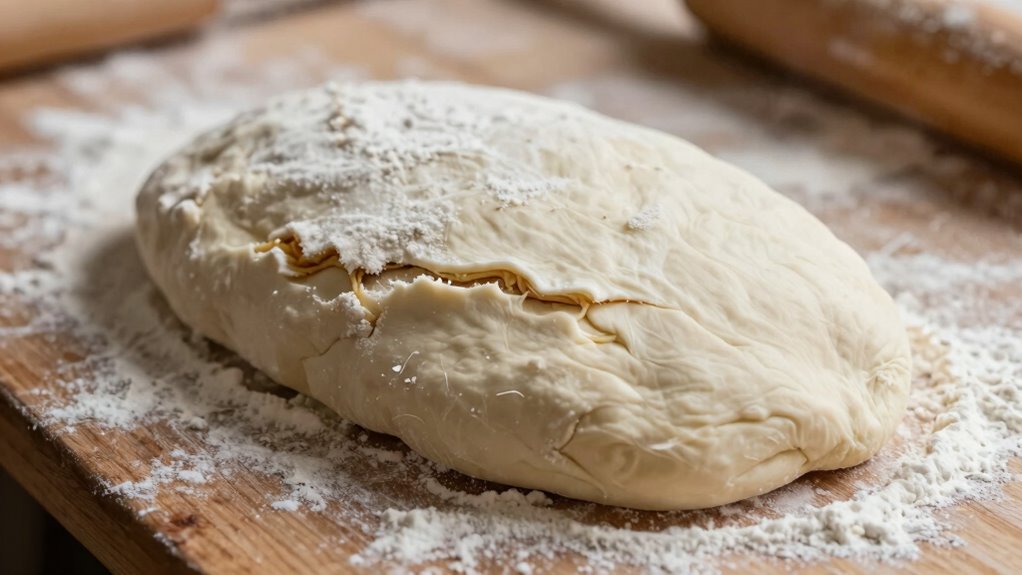
Your dough tears during final shaping mainly because its gluten network isn’t strong enough or it’s too dry, making it fragile and prone to ripping when stretched. Overworking or underdeveloping gluten, along with insufficient hydration, weakens the dough’s elasticity. When the dough lacks proper structure, it can’t expand smoothly, increasing tears. To prevent this, you need to balance kneading, hydration, and resting. Keep going to discover how to perfect your dough so it won’t rip when shaped.
Key Takeaways
- Insufficient gluten development weakens dough, making it prone to tearing during shaping.
- Overworking or under-kneading disrupts gluten structure, reducing elasticity and causing tears.
- Low hydration levels lead to dry, fragile dough that tears easily when stretched.
- Inadequate resting time prevents gluten networks from fully forming, increasing tearing risk.
- Excessive stretching without proper elasticity causes the dough to rip during final shaping.
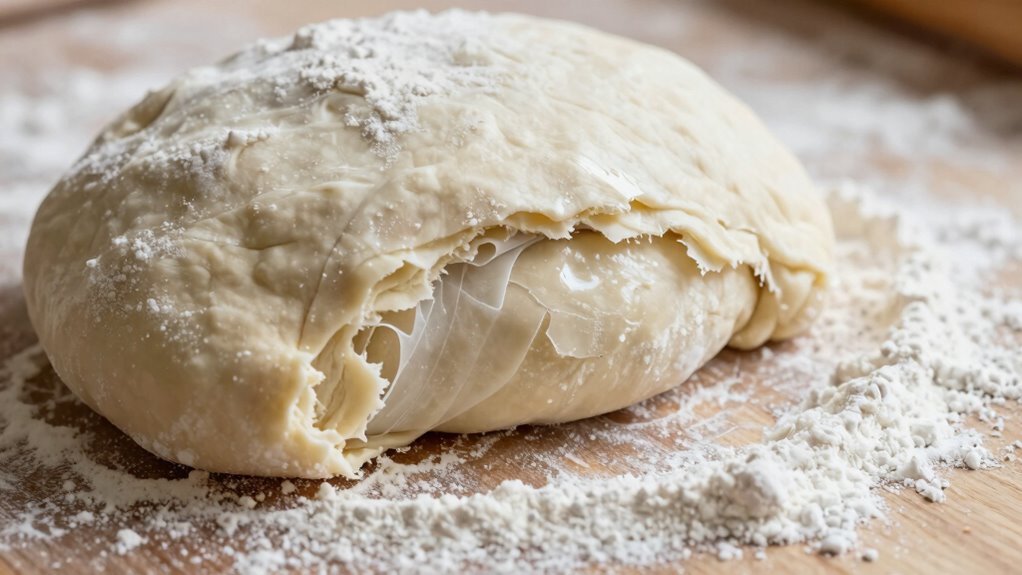
If your dough tears during final shaping, it’s often because it hasn’t developed enough gluten strength or has become too dry. Gluten development is the key to creating a dough with enough structure and resilience to hold its shape without tearing. When you knead your dough properly, you encourage gluten strands to form and align, giving the dough elasticity that allows it to stretch smoothly without ripping. If you stop kneading too early or don’t knead enough, the gluten network remains weak, making the dough fragile and prone to tearing during shaping.
Proper gluten development ensures a strong, elastic dough that resists tearing during shaping.
Dough elasticity plays a crucial role here. A well-developed gluten network gives your dough the flexibility to stretch thin without breaking. When the dough is elastic enough, it can expand and shape easily, forgiving gentle pulls and folds. But if the gluten isn’t sufficiently developed, the dough feels stiff or sticky, and it’s more likely to tear when you apply tension. Overworking the dough can also make it tough and less elastic, so striking the right balance during kneading is essential. You want enough gluten development to give the dough strength but not so much that it becomes overly tight or resistant.
Other factors can influence gluten development and dough elasticity, such as hydration. If your dough isn’t hydrated enough, the gluten strands won’t form properly, leading to a weaker structure. Conversely, too much water can make the dough slack and difficult to handle, also increasing tear risk. The temperature of your ingredients and environment can impact how quickly gluten forms and the dough’s overall elasticity. Warmer conditions speed up gluten development, but if it gets too warm, the dough can become sticky and unmanageable. Additionally, understanding the role of hydration levels helps you optimize dough texture and elasticity for shaping. Proper temperature management also supports consistent gluten development and dough handling. Recognizing the importance of gluten strength during mixing and resting allows for better control over the final dough’s resilience. Resting time can also influence the gluten network development, making the dough easier to shape without tearing.
bread dough gluten development tools
As an affiliate, we earn on qualifying purchases.
As an affiliate, we earn on qualifying purchases.
Frequently Asked Questions
Can Using Too Much Flour Prevent Dough Tearing?
Using too much flour can prevent dough tearing by reducing sticking and making dough easier to stretch. However, the quality of the flour matters; lower-quality flour may lack gluten strength, causing tearing despite the flour dusting. When you dough stretch, use just enough flour to prevent sticking without making it dry. Properly floured, high-quality flour supports elastic dough, minimizing tears during final shaping.
Does the Type of Flour Affect Dough Elasticity?
Yes, the type of flour affects dough elasticity because of its gluten development and protein content. Higher protein flours, like bread flour, develop more gluten, making the dough more elastic and resilient. Lower protein flours, such as cake flour, create a softer, less elastic dough that’s prone to tearing. Choosing the right flour based on its protein level directly influences how well your dough stretches without tearing during shaping.
How Does Hydration Level Influence Dough Tearing?
Higher hydration levels make your dough more prone to tearing because they hinder gluten development, reducing dough elasticity. When dough is too wet, gluten strands don’t form as strong, flexible networks, making it harder to stretch without ripping. To prevent tearing, find a hydration balance that promotes ideal gluten development, giving your dough enough elasticity. Proper hydration ensures a smooth, elastic dough that can be shaped easily without tearing.
Can Resting Time Reduce Tearing During Shaping?
Think of resting time as giving your dough a gentle nap, much like a well-rested athlete. It helps improve dough elasticity and promotes better gluten development, making it less prone to tearing during shaping. By allowing your dough to rest, you give the gluten time to relax, resulting in a smoother, more manageable surface. So yes, resting time can definitely reduce tearing, leading to a more perfect final bake.
Is Cold Dough More Prone to Tearing?
Yes, cold dough is more prone to tearing because its lower temperature slows gluten development, making the dough less elastic and more fragile. When dough is too cold, the gluten strands haven’t fully formed, reducing flexibility during shaping. To prevent tearing, let your dough warm slightly to an ideal temperature, ensuring proper gluten development. This makes it easier to shape and less likely to tear during final handling.
As an affiliate, we earn on qualifying purchases.
Conclusion
So, next time your dough tears during shaping, remember it’s likely due to underdeveloped gluten or insufficient resting. Don’t blame the flour or your technique alone—patience and proper kneading make all the difference. Trust that with a little more attention and care, you’ll create a smooth, elastic dough that shapes beautifully. Embrace the process, learn from each tear, and enjoy the journey of baking perfect bread or pastries every time.
As an affiliate, we earn on qualifying purchases.
As an affiliate, we earn on qualifying purchases.