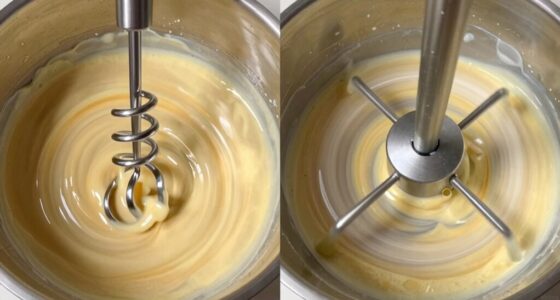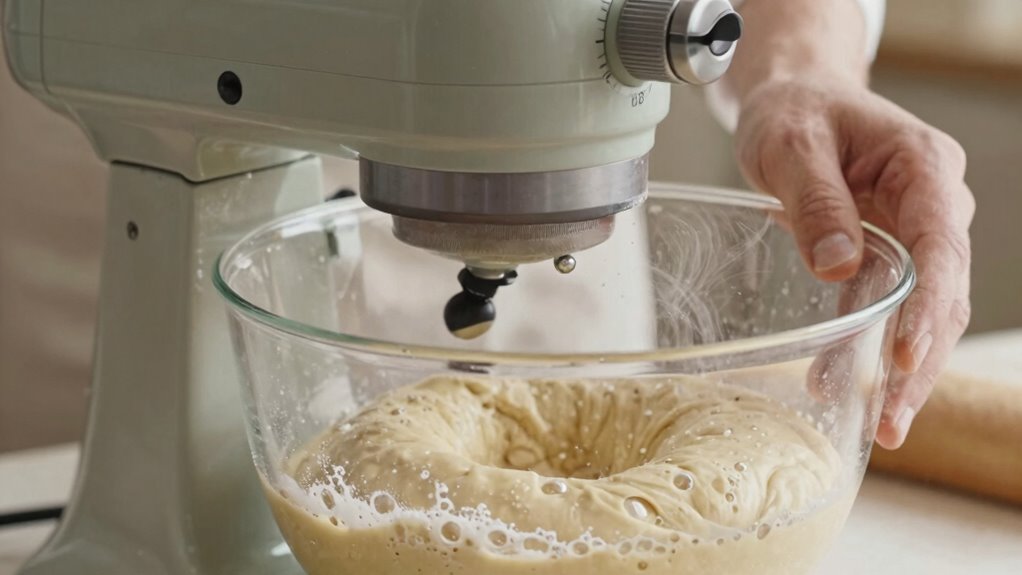
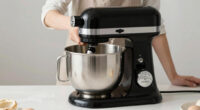
For ideal bread dough, start with a low or medium mixer speed to gently activate the yeast and evenly distribute ingredients. Once the dough begins to form a smooth, elastic ball, raise the speed slightly for a few short intervals, but avoid overworking it. Watching the dough’s texture helps you modify speed to prevent tearing or sticky results. Mastering the correct speed ensures better fermentation and a perfect rise—if you keep going, you’ll discover how to fine-tune your technique for top-quality bread.
Key Takeaways
- Use low or medium speed initially for gentle yeast activation and initial dough mixing.
- Increase speed briefly when dough becomes smooth and elastic, avoiding overmixing.
- Monitor dough texture closely to adjust speed and prevent tearing or stickiness.
- Higher speeds are only needed briefly during kneading, not throughout the process.
- Proper speed control promotes gluten development, fermentation, and consistent bread quality.

When you begin mixing, especially with warm liquids, a gentle speed allows the yeast to activate gradually without being overwhelmed. High speeds can create turbulence that stresses the yeast, possibly killing some of the cells and impairing fermentation. A low or medium speed encourages a gentle, even distribution of yeast, sugar, and liquids, setting the stage for proper fermentation and rise. Proper yeast activation at the start helps develop flavor and ensures your bread rises well. Controlling the mixing speed appropriately can also prevent overworking the dough, which is crucial for achieving the desired texture. Additionally, understanding the ideal mixer speed can help you customize your process for different bread types, ensuring consistent results. Mastering the proper mixing technique can also improve overall bread quality and consistency. The key is to observe how your dough behaves and adjust accordingly. Start with a low or medium setting to activate the yeast gently and develop gluten gradually. As the dough comes together and begins to form a smooth, elastic ball, you can increase the speed slightly if needed, but only for short intervals. It’s also beneficial to monitor dough texture throughout the process to ensure optimal development. Be attentive to the dough’s texture—if it’s sticky or tearing apart, adjust the speed or kneading time. It’s also helpful to remember that consistent mixing promotes even fermentation and better dough development. Ultimately, mastering the right speed setting allows you to control the dough’s development process, leading to better fermentation, improved kneading, and, most importantly, perfect bread every time.
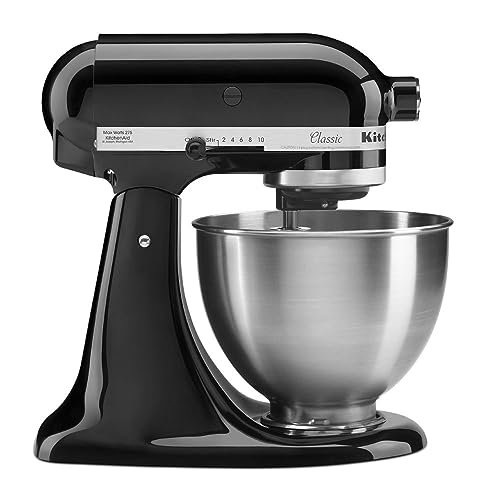
KitchenAid Classic Series 4.5 Quart Tilt-Head Stand Mixer K45SS, Onyx Black
Built to take it all on with the durable and built-to-last metal construction, and 59 touchpoints around the…
As an affiliate, we earn on qualifying purchases.
As an affiliate, we earn on qualifying purchases.
Frequently Asked Questions
Can I Use a Different Mixer Brand for Bread Dough?
Yes, you can use a different mixer brand for bread dough, but you should check mixer compatibility and compare brands first. Not all mixers handle heavy dough equally, so look for one with a powerful motor and sturdy construction. Read reviews and compare features to guarantee it can manage bread dough effectively. Choosing a reputable brand with good durability will make your baking process smoother and help prevent motor strain or damage.
How Does Humidity Affect Dough Kneading Speed?
You might notice that humidity effects your dough’s kneading consistency—high humidity can make dough stickier, slowing down the kneading process, while low humidity can dry it out, making kneading tougher. As you knead, adjust your speed accordingly; slower speeds help manage stickiness, while faster speeds work better when the dough is less humid. Being attentive to humidity guarantees you achieve the perfect dough texture every time.
Is It Safe to Leave the Mixer Unattended During Kneading?
It’s not safe to leave your mixer unattended during kneading because dough hydration can quickly cause splatters or electrical issues. As the mixer kneads, yeast activation and gluten development happen, and the process can get messy if left alone. Always stay nearby, monitor the dough, and stop the mixer if anything seems off. This guarantees safety and consistent results for your bread.
How Do I Adjust Speed for Different Bread Types?
Adjust the speed for different bread types by focusing on mixing consistency and speed calibration. For soft doughs like brioche, use a lower speed to prevent overworking, while for stiff doughs like bagels, crank up the speed for thorough kneading. Always start slow, then gradually increase to the desired setting, ensuring the dough is well-mixed without overdoing it. Think of it as fine-tuning your mixer for perfect results every time.
What Are Signs of Over-Kneading at High Speeds?
You’ll notice over-kneading at high speeds when gluten development becomes excessive, making the dough tough and overly elastic. The dough’s consistency shifts from smooth and elastic to overly stiff and resistant, losing its ability to stretch easily. It may also snap back quickly when you poke it, indicating it’s been kneaded too much. Keep an eye on these signs to prevent over-kneading and guarantee your bread turns out perfect.

BREVELTION 50QT Commercial Stand Dough Mixer Double Action Fast and Slow Speed Spiral Electric Dough Mixing Machine for Professional Bread Making Kneading Machine with Speed Time Control 50L 2200W
【Stainless Steel】- All parts in contact with food are made of 304 stainless steel, which is sturdy, durable,…
As an affiliate, we earn on qualifying purchases.
As an affiliate, we earn on qualifying purchases.
Conclusion
Now that you know the ideal speed setting for your bread dough, you can confidently knead like a pro, even if you’re just a beginner. Remember, patience and the right speed make all the difference—don’t rush your dough like a runaway train. With this knowledge, baking bread becomes less of a quest and more of a delightful adventure, kind of like stepping into a time machine and savoring fresh bread in the golden age of home baking.

Red Star Bread Machine Yeast, 4 Ounce
Red Star Bread Machine Yeast, 4 Ounce
As an affiliate, we earn on qualifying purchases.
As an affiliate, we earn on qualifying purchases.

MARRTEUM 2 Pcs Bread Maker Kneading Paddle, Stainless Steel Non Stick Bread Machine Paddle Mixing Kneading Blade Replacement for Most Bread Maker (Black)
【Compatible Models】Top D shape hole diameter: 0.27". Total size (L x H): 2.6" x 1.5". Tube size (Dia….
As an affiliate, we earn on qualifying purchases.
As an affiliate, we earn on qualifying purchases.