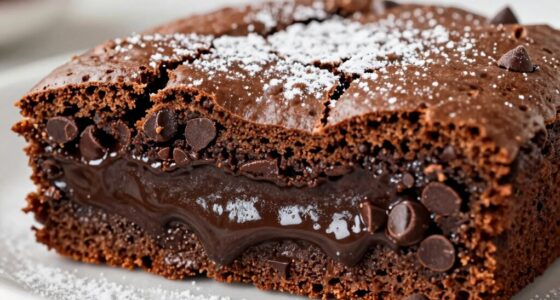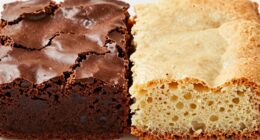
If your brownies turn out too cakey, try changing the egg-to-flour ratio by reducing the eggs or replacing some with moisture-rich ingredients like mashed banana or applesauce. Lowering the eggs decreases leavening, helping your brownies stay dense and fudgy. Additionally, adjusting the oven temperature and baking time can make a big difference. If you’d like to learn more about fine-tuning your brownie recipe for the perfect texture, keep exploring the tips below.
Key Takeaways
- Reduce the number of eggs or substitute with moisture-rich alternatives like mashed banana or applesauce.
- Lower the oven temperature to around 325°F to slow baking and promote a fudgier texture.
- Extend baking time slightly to ensure the center remains moist without overbaking.
- Use an oven thermometer to maintain accurate, consistent baking temperature.
- Combine fewer eggs with lower heat for a dense, fudgy brownie instead of a cakey one.
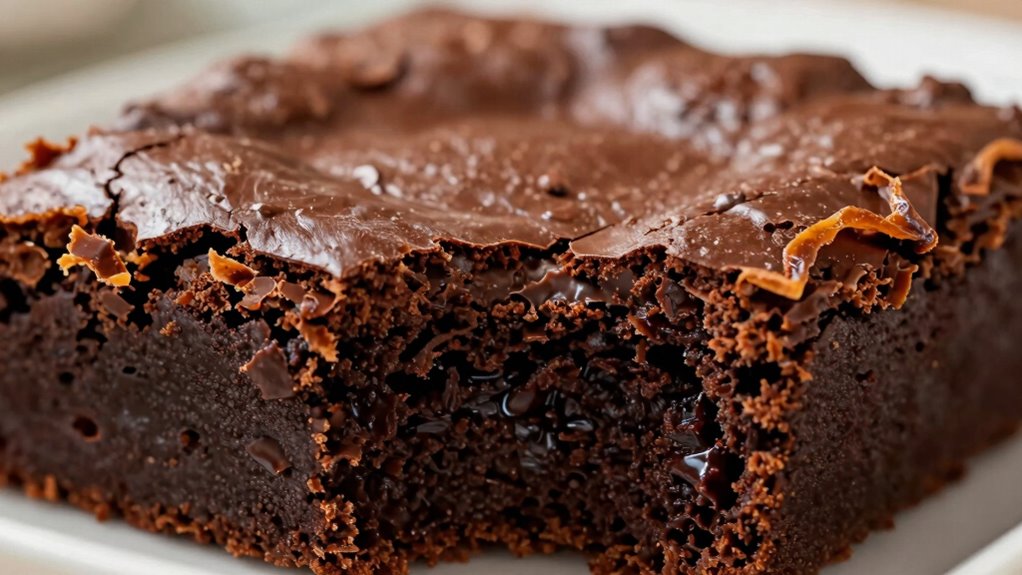
If your brownies turn out too cakey instead of fudgy, it’s usually because of the recipe or baking process. One common culprit is the number of eggs used. Eggs are essential for structure and moisture, but too many can lead to a lighter, more cake-like texture. To make your brownies denser and fudgier, consider egg substitution options. For instance, replacing each egg with half a mashed banana or a tablespoon of applesauce can add moisture without the leavening effect that eggs provide. You might also use commercial egg replacers or ground flaxseed mixed with water—about one tablespoon of ground flaxseed plus three tablespoons of water per egg—to achieve a similar binding effect without adding lift. These substitutions reduce the leavening power, helping your brownies stay moist and fudgy rather than airy.
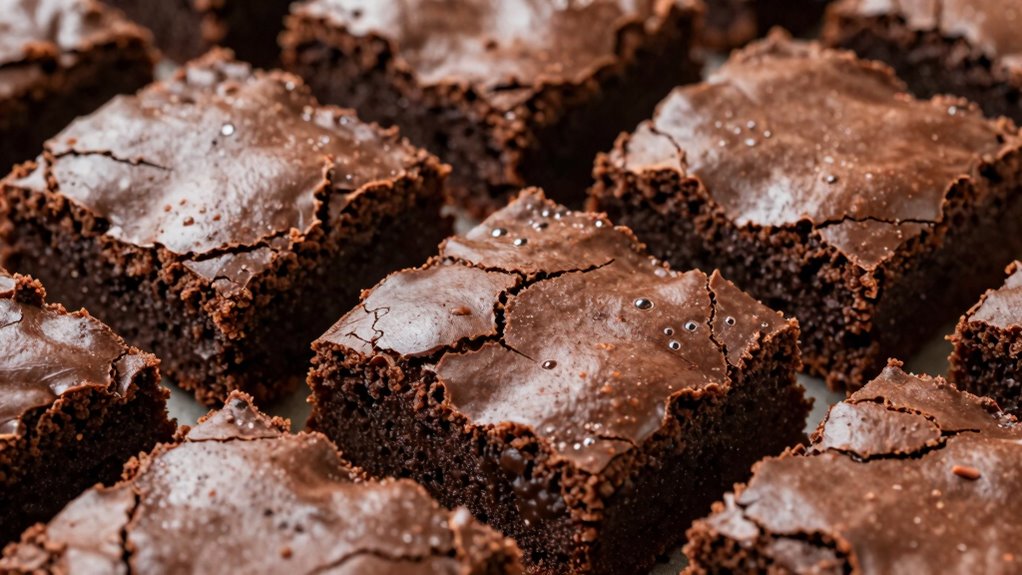
Another factor that influences the texture is oven temperature. Many recipes call for baking brownies at around 350°F (175°C), but if your oven runs hot or if you bake at a higher temperature, the exterior sets too quickly, trapping air inside and creating a more cake-like crumb. To counteract this, lower your oven temperature slightly—try baking at 325°F (160°C). This slower baking process allows the center to cook more evenly and retain moisture, resulting in a fudgier consistency. Keep a close eye on your baking time, as it might extend slightly at the lower temperature, but the payoff is a richer, denser brownie.
Adjusting the oven temperature is particularly effective when combined with a tweak in egg content. For example, if you’re using fewer eggs or an egg substitute, lowering the oven temperature ensures the batter doesn’t dry out before the center has a chance to set properly. Also, consider using an oven thermometer to verify your oven’s actual temperature. Many ovens tend to run hotter or cooler than the dial indicates, which can throw off your baking results.
Frequently Asked Questions
Can Substituting Different Types of Flour Affect Brownie Texture?
Yes, substituting different types of flour can affect your brownie’s texture. Using alternative flour options like almond or coconut flour often results in a denser, moister brownie, while gluten-free adjustments might need extra binding agents like xanthan gum. Keep in mind, each flour type absorbs liquids differently, so you might need to tweak your recipe slightly to achieve the perfect balance and avoid a cakey or crumbly result.
What Role Does Egg Size Play in Brownie Cakiness?
Egg size considerably impacts your brownie’s texture and moisture. Larger eggs add more liquid and fat, making your brownies denser and moister, while smaller eggs can lead to a drier, cakier outcome. When mixing, make sure your ingredients are balanced; changing egg size alters ratios, affecting baking results. Adjust your recipe accordingly to achieve the desired density, moisture, and tender crumb, considering the egg size to control the final brownie texture.
How Does Oven Temperature Influence Brownie Moisture and Density?
You should keep the oven heat moderate to guarantee proper moisture retention and avoid dryness. Higher temperatures can cause the brownies to become denser and drier, while lower heat helps keep them moist and fudgy. Adjusting the oven temperature slightly can make a big difference in texture, so monitor your baking time and temperature carefully to achieve the perfect balance of moisture and density in your brownies.
Are There Specific Ingredients That Can Make Brownies Less Cakey?
Think of your brownies as a symphony—rich, moist, and perfectly balanced. To achieve this, add a touch of chocolate ganache for extra moisture and depth, making them less cakey. Incorporate nut add-ins like walnuts or pecans to add texture and weight, grounding the batter. Using less baking powder and more butter also helps, creating a dense, fudgy delight that melts in your mouth instead of feeling airy.
How Does Mixing Technique Impact Brownie Final Texture?
Your mixing technique greatly impacts your brownies’ final texture. If you mix at a slow speed, you avoid over-developing the gluten, keeping the brownies tender. Using a gentle folding technique helps incorporate ingredients smoothly without overmixing, which can lead to a cakey result. By being mindful of mixing speed and folding carefully, you guarantee your brownies stay fudgy and moist instead of becoming too dense or airy.
Conclusion
So, next time your brownies turn out too cakey, remember that adjusting the ratio isn’t about sacrificing texture but enhancing it. Like a delicate balance between softness and richness, tweaking the ingredients lets you craft brownies that are dense yet tender. It’s a subtle art—finding that perfect harmony between cake and fudge. Embrace the change, and you’ll discover that sometimes, a simple ratio shift transforms your baking from good to unforgettable.