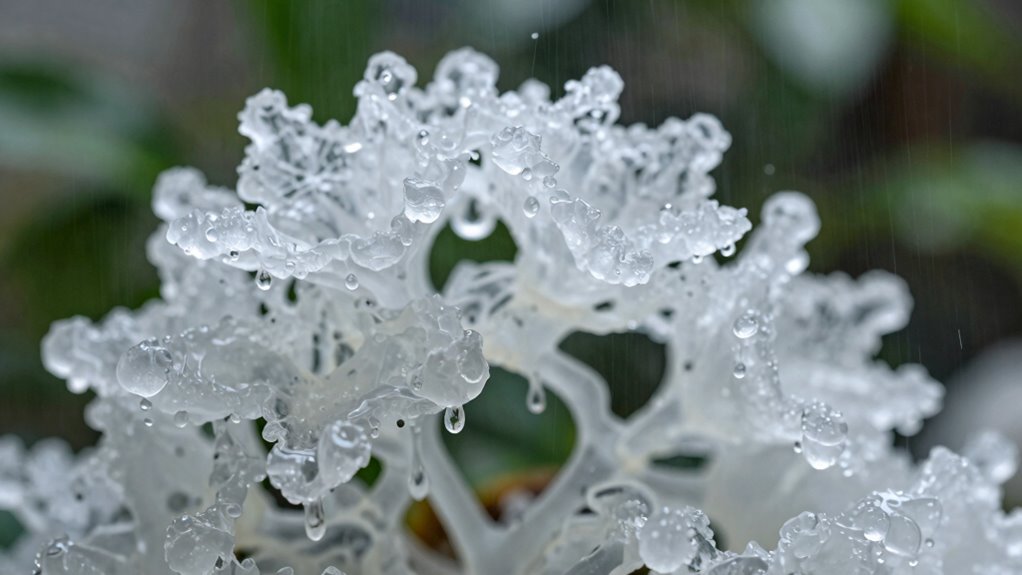

Humid days make sugar work challenging because moisture makes the sugar sticky, grainy, and hard to shape or decorate neatly. The humidity causes sugar to absorb moisture from the air, disrupting the delicate balance needed for smooth finishes and intricate designs. Tools and surfaces also become more difficult to work with as moisture gathers. If you want to keep your sugar decorations crisp and beautiful, understanding how humidity impacts your work is essential—keep going to find out more.

Get baking supplies delivered free — and shop member deals
- Fast, free delivery on millions of items
- Access to Prime Big Deal Days deals on October 6–7
- Prime Video, Amazon Music and more included
Key Takeaways
- Humidity makes sugar sticky and difficult to shape or finish smoothly.
- It encourages premature crystallization, resulting in grainy, dull surfaces.
- Moisture causes sugar decorations to become soft, deformed, and less durable.
- Handling becomes challenging as tools and surfaces attract moisture and stickiness.
- Proper climate control is essential to maintain the quality and longevity of sugar work.

Humid days can turn sugar work into a frustrating challenge, especially if you’re trying to create intricate designs or smooth finishes. When the air is saturated with moisture, the humidity effects on your sugar mixture become immediately noticeable. Instead of easily molding or shaping your confection, you might find it sticky, uncooperative, or prone to developing unwanted textures. High humidity substantially disrupts the delicate balance of sugar work, making it harder to achieve the crisp, glossy, and clean look you’re aiming for.
Humid days make sugar work sticky, uncooperative, and difficult to achieve a crisp, glossy finish.
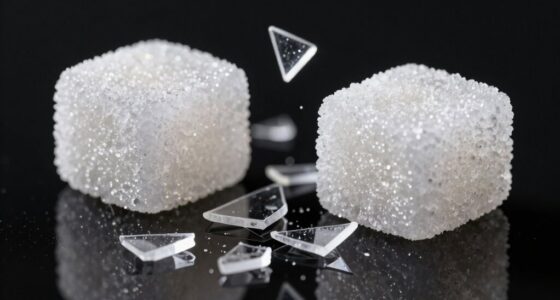
One of the primary issues humidity causes is sugar crystallization. Under dry conditions, sugar tends to stay smooth and pliable when heated or shaped. But in humid environments, moisture in the air interacts with the sugar, encouraging tiny crystals to form prematurely. This sugar crystallization leads to a grainy or gritty surface, ruining the smooth, shiny finish that’s essential for professional-looking decorations. Instead of a sleek, polished appearance, your work may turn cloudy or matte, reflecting the moisture that’s seeped in.
As you try to work with sugar on humid days, you’ll notice the mixture often becomes more difficult to handle. It may become sticky and tacky, making it hard to roll out or cut without sticking to your tools or surface. The moisture in the air causes the sugar to absorb it, which interferes with the proper consistency needed for delicate work. You might need to constantly dust your surface with cornstarch or powdered sugar just to prevent sticking, but these fixes aren’t always enough to combat the effects of high humidity. Additionally, the environmental conditions greatly influence the success of your sugar work, so understanding and controlling them becomes crucial. Knowing how to adapt your techniques or use humidity control methods can make a significant difference in your results. Proper storage and climate control are also essential for maintaining the quality of your sugar decorations over time. Without proper humidity management, even well-made sugar pieces may not last long or look their best.
Furthermore, humidity not only affects the texture but also the stability of your finished pieces. Decorations that are meant to be crisp and firm may become soft or sticky over time, especially if placed in a humid environment. This can be particularly discouraging if you’ve spent hours perfecting a detailed design or if you’re preparing for an event. The moisture in the air can cause your sugar work to soften or deform, undermining your effort and patience.
sugar work humidity control tools
As an affiliate, we earn on qualifying purchases.
As an affiliate, we earn on qualifying purchases.
Frequently Asked Questions
How Does Humidity Specifically Affect Sugar Crystallization Processes?
Humidity effects directly influence sugar crystallization processes by introducing moisture that promotes unwanted crystal growth. Higher humidity makes it harder to control crystallization, leading to larger, uneven crystals and affecting the final product’s texture. To manage this, you need effective crystallization control methods, like proper sealing and temperature regulation, to minimize humidity’s impact. This way, you maintain consistent sugar quality and prevent problems caused by excess moisture.
What Types of Sugar Work Are Most Impacted by Humid Conditions?
Imagine a delicate dance, where sugar work is a performer on a thin wire. Humid conditions weigh down this dance, causing moisture absorption that makes the sugar soften, losing its crispness. This impacts tasks like piping royal icing or creating brittle candies most. As humidity rises, these sugar crafts become too soft, losing their shape and texture, making your work unreliable and frustrating your artistic flow.
Can Humidity Levels Be Controlled in a Typical Kitchen?
Yes, you can control humidity levels in a typical kitchen. Use a dehumidifier or air conditioner to reduce excess moisture and maintain ideal humidity control. Guarantee proper ventilation by opening windows or using exhaust fans, especially when cooking or baking. Keep your kitchen dry by wiping down surfaces and avoiding excess water. These steps help create a stable kitchen environment, preventing sugar work from becoming sticky or difficult to handle in humid conditions.
Do Humid Days Affect the Safety or Shelf Life of Sugar Products?
Think of sugar as a delicate secret, easily revealed by moisture. Humid days do affect the safety and shelf life of sugar products, as moisture absorption can cause clumping, mold, or spoilage. To protect your sugar, store it in airtight storage containers, which shield it from humidity. By doing so, you preserve its quality, ensuring it remains safe and effective for your baking needs, even amidst unpredictable weather.
Are There Alternative Methods to Prevent Sugar From Melting in Humidity?
To prevent sugar from melting in humidity, you can enhance sugar preservation by using humidity barriers, such as airtight containers or vacuum sealing. Adding desiccants like silica gel packs inside packaging also helps control moisture. Store sugar in cool, dry places away from moisture sources, and consider coating the sugar with a thin layer of powder or cornstarch to absorb excess humidity. These methods effectively keep sugar dry and maintain its quality.
candy thermometer for sugar work
As an affiliate, we earn on qualifying purchases.
As an affiliate, we earn on qualifying purchases.
Conclusion
So, when the humidity rises, sugar work becomes like trying to catch lightning in a bottle—you’re chasing stability that keeps slipping away. Humid days can turn your sweet creations into a sticky mess, making your work feel like fighting a losing battle. But remember, with patience and the right tricks, you can tame the weather’s mood swings. Keep your cool and adapt—soon enough, you’ll have your sugar work shining bright, rain or shine.
As an affiliate, we earn on qualifying purchases.
sugar decoration storage containers
As an affiliate, we earn on qualifying purchases.
As an affiliate, we earn on qualifying purchases.
Fall Picks
fall essentials
As an affiliate, we earn on qualifying purchases.