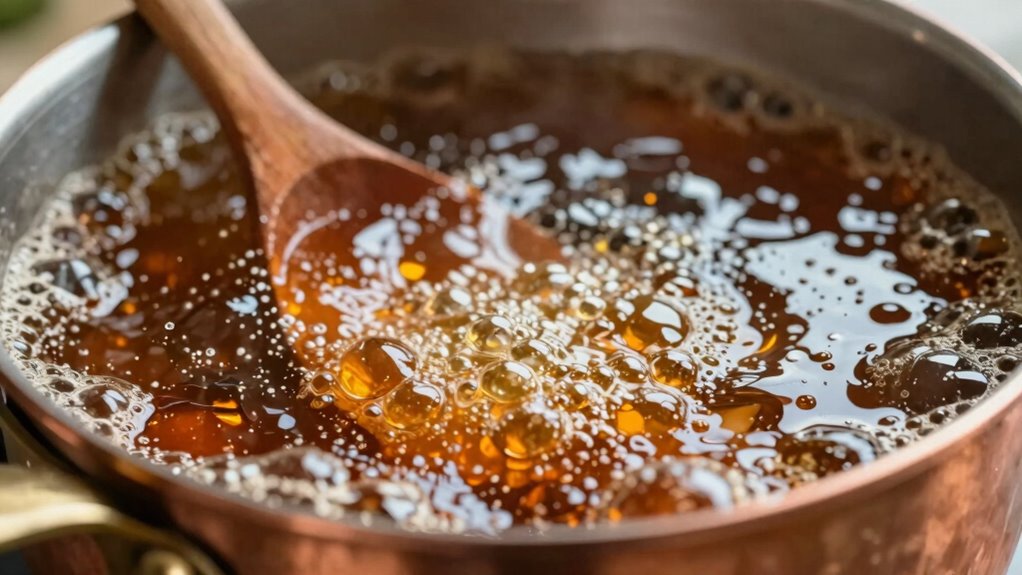

You should focus on syrup stages rather than just time because visual cues and temperature help you achieve consistent, flavorful results. Relying solely on time can lead to over- or under-cooking, affecting texture and taste. Recognizing stages like color, bubble size, and temperature guarantees you hit the right point for flavor infusion and proper storage. Mastering these cues helps you adapt to environmental changes and creates better, more reliable syrup every time. Keep exploring to learn how to identify each stage accurately.

Get baking supplies delivered free — and shop member deals
- Fast, free delivery on millions of items
- Access to Prime Big Deal Days deals on October 6–7
- Prime Video, Amazon Music and more included
Key Takeaways
- Visual and temperature cues accurately indicate syrup stages, ensuring proper cooking rather than relying solely on time.
- Infusing flavors at specific stages enhances taste complexity and prevents over- or under-extraction.
- Proper stage recognition ensures correct storage, preserving syrup quality and preventing crystallization.
- Environmental factors affect boiling points; stage monitoring allows adjustments for consistent results.
- Mastery of stages provides better control over syrup consistency, stability, and adaptability to recipes.
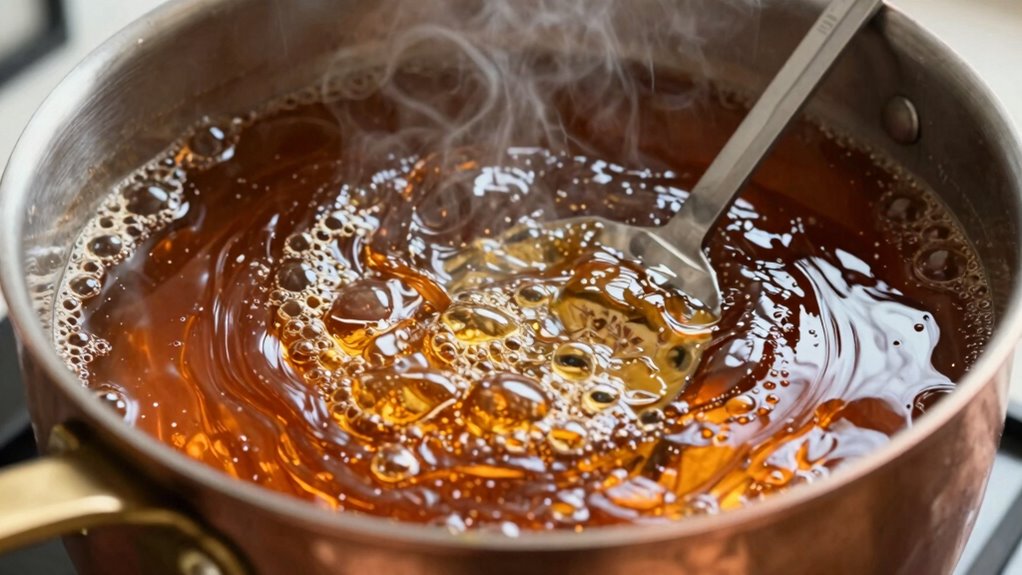
Understanding sugar syrup stages is essential for achieving perfect results in candy-making, cooking, or baking. The process is not solely about reaching a specific time but about understanding how the syrup transforms at each stage. When you monitor these stages carefully, you can control the texture, consistency, and flavor infusion of your creations. Relying only on time can lead to overcooking or undercooking, which may ruin your final product. Instead, focus on visual cues and temperature to determine the right moment to proceed. Each stage offers unique opportunities to infuse flavors—adding herbs, spices, or extracts—that can elevate your dish. For example, during the simmering process, you can introduce flavor infusion elements, allowing the syrup to absorb these nuances, resulting in a more complex and vibrant taste.
Furthermore, understanding sugar syrup stages is vital for proper storage techniques. Once you reach the desired stage, cooling the syrup quickly and storing it correctly prevents crystallization and spoilage. If you don’t pay attention to the stage, your syrup may crystallize prematurely or develop an off-flavor. For instance, a simple syrup intended for cocktails or desserts needs to be stored in an airtight container, kept away from moisture, and cooled rapidly to preserve its clarity and smoothness. Knowing the specific stage also helps you determine whether the syrup is thick enough for drizzling or thin enough for brushing onto baked goods. This precision ensures consistency in your recipes and saves you from wasting ingredients.
Timing alone doesn’t account for variations in heat, humidity, or ingredient quality, which all influence how your syrup develops. Focusing on the stages instead of just the clock means you’re more responsive to your actual cooking environment. As you become familiar with the visual and tactile cues—such as the syrup’s color, the size of bubbles, or how it drips—you’ll gain confidence in timing your next steps. This mastery allows you to experiment with flavor infusion at just the right moments, enhancing your recipes with subtle or bold flavors. Plus, by recognizing the stages, you can better adapt storage techniques, ensuring your syrup remains fresh and perfect for future use. Recognizing these stages also involves understanding the sugar concentration, which is crucial for achieving the desired consistency and stability. Additionally, monitoring the boiling point of the syrup helps you precisely identify each stage, especially in varying environmental conditions.
As an affiliate, we earn on qualifying purchases.
Frequently Asked Questions
How Do Environmental Factors Affect Sugar Syrup Stages?
Environmental factors like temperature and humidity directly influence sugar syrup stages. If it’s too warm, syrup viscosity decreases, making sugar crystallization more likely, while high humidity can introduce moisture, affecting the consistency. Conversely, cooler temperatures slow down crystallization, helping you maintain the desired syrup stage. By controlling these factors, you guarantee the syrup reaches the right stage without unintended crystallization, resulting in a smoother, more stable product.
Can Different Types of Sugar Alter the Stages?
Certainly, different sugar types subtly influence the stages of your syrup, much like a refined musician varies their tune. Using sugar substitutes or natural sugars can introduce delicate flavor variations, affecting the syrup’s sweetness and clarity. For instance, honey or agave might alter the stage progression compared to traditional granulated sugar. Your choice of sugar type shapes the final aroma, texture, and flavor nuances, making each batch uniquely enchanting.
What Tools Are Best for Measuring Syrup Stages?
You should use a reliable candy thermometer for measuring syrup stages because thermometer accuracy is essential for precise results. A digital or dial thermometer with a fast response works best. Pair it with consistent timing, ensuring you check the temperature at regular intervals. This combination helps you accurately identify stages like soft ball or hard crack, regardless of syrup color or type. Proper tools make all the difference in achieving perfect sugar syrup consistency.
How Do Altitude Changes Impact Syrup Boiling Points?
Altitude effects cause boiling point variations, meaning your syrup boils at a lower temperature as elevation increases. You need to adjust your thermometer readings accordingly, since water boils at less than 212°F at higher altitudes. To get the right consistency, monitor the syrup closely and use a reliable thermometer. This way, you guarantee your sugar syrup reaches the correct stage despite altitude effects on boiling points.
Are There Safety Tips for Handling Hot Sugar Syrup?
Remember, safety first—an ounce of prevention is worth a pound of cure. When handling hot sugar syrup, always wear oven mitts and use a long-handled spoon to avoid burns. Keep a bowl of cold water nearby in case of splashes, and never leave the boiling syrup unattended. Practicing sugar safety guarantees a safe, enjoyable cooking experience, so stay cautious with hot handling to prevent accidents.
As an affiliate, we earn on qualifying purchases.
Conclusion
Remember, mastering sugar syrup stages is like wielding a magic wand—you hold the power to turn simple ingredients into culinary masterpieces! Don’t just rely on time; focus on the stage to discover perfect textures and flavors. Miss it, and your sweet creations could crumble into chaos or turn into a sticky disaster. So, pay attention, stay vigilant, and treat each stage like a secret recipe—because in the world of sugar, precision reigns supreme!
visual cues for sugar syrup stages
As an affiliate, we earn on qualifying purchases.
As an affiliate, we earn on qualifying purchases.
As an affiliate, we earn on qualifying purchases.
Halloween Picks
halloween
As an affiliate, we earn on qualifying purchases.