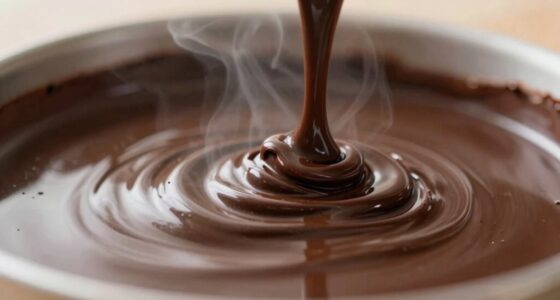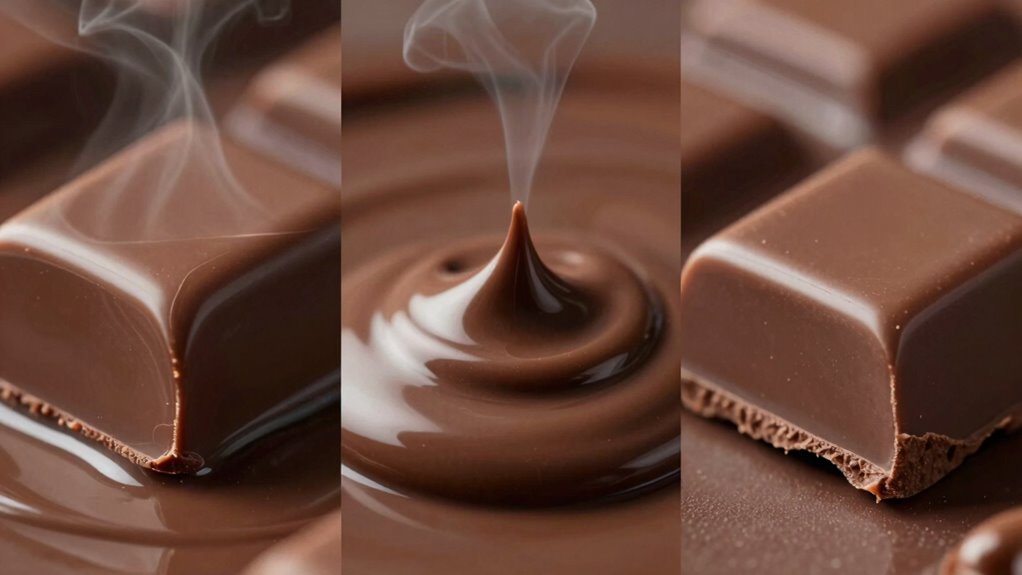

Warming chocolate gently raises its temperature for easier handling without risking burning or seizing, while melting brings it to a liquid state needed for sauces and fillings—done slowly to keep it smooth. Tempering is a precise process of cooling and reheating that stabilizes cocoa butter, creating a shiny, firm finish and longer shelf life. Understanding these techniques helps you achieve perfect textures and appearances, so keep exploring to master each step fully.
Key Takeaways
- Warming gently raises chocolate’s temperature for easier handling without altering its structure.
- Melting fully liquefies chocolate at higher temperatures for recipes like ganache or sauces.
- Tempering involves carefully cooling and reheating to stabilize cocoa butter, creating a glossy, firm finish.
- Warming is a preliminary step, while melting transforms chocolate into a liquid; tempering ensures proper crystal formation.
- Proper tempering improves appearance, texture, shelf life, and prevents bloom, unlike simple warming or melting.
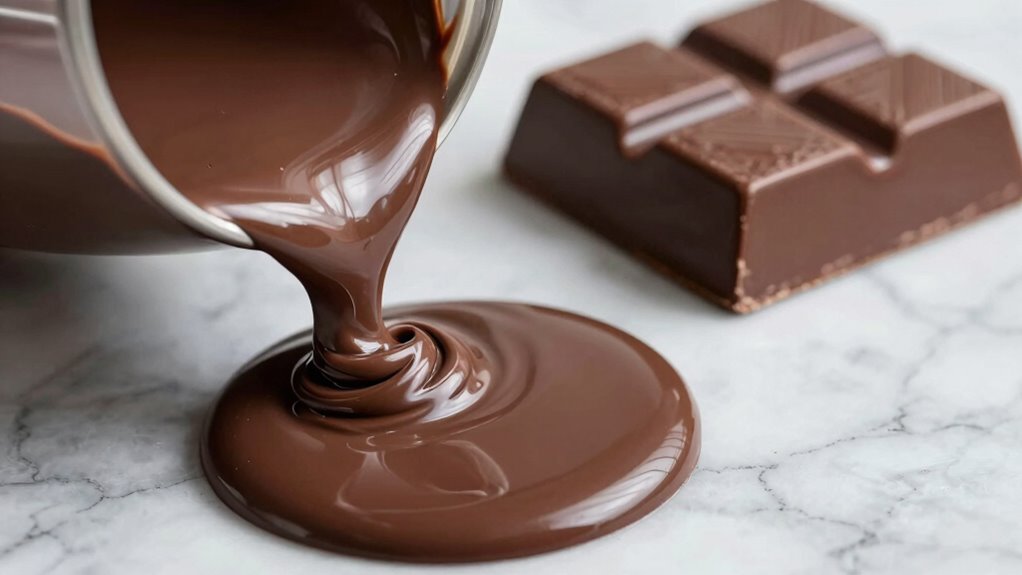
Understanding the differences between warming, melting, and tempering chocolate is essential for achieving the best results in your culinary projects. Each process impacts not just the texture and appearance but also the chocolate’s flavor profiles and how well it stores afterward. When you warm chocolate, you’re gently raising its temperature, often to make it easier to work with or to prepare it for melting. This step is paramount because overheating can burn the chocolate or cause it to seize, ruining its smooth consistency. Warming should be done carefully, ideally over a double boiler or in short bursts in the microwave, stirring frequently. This way, you preserve the delicate balance of flavors and maintain the integrity of the chocolate’s flavor profiles. Proper warming techniques are crucial to prevent damaging the delicate structure of the chocolate.
Melting chocolate, on the other hand, involves bringing it to a liquid state, usually at higher temperatures than warming. This process is necessary when you want to incorporate chocolate into recipes like ganache, sauces, or fillings. Proper melting ensures a silky, uniform texture, which is critical for professional-looking results. However, if you melt chocolate too aggressively or at too high a temperature, it can seize or develop a dull appearance. To prevent this, you should melt chocolate slowly and gently, stirring constantly, and avoid direct heat as much as possible. This gentle melting preserves the chocolate’s flavor profiles and keeps the final product smooth and glossy. Understanding the melting point of chocolate can help you optimize the process and achieve the best results. Additionally, being aware of the temperature control is vital for avoiding common mistakes during melting.
Tempering chocolate is a more precise process that involves carefully cooling and reheating chocolate to stabilize its cocoa butter crystals. When you temper chocolate correctly, you produce a shiny, firm finish with a satisfying snap. Tempering is essential if you want your chocolates to look professional and to have a long shelf life. Properly tempered chocolate not only looks appealing but also resists melting at room temperature. It’s also important for storage best practices; well-tempered chocolate stays fresh longer, maintains its texture, and prevents bloom—a whitish coating that can appear if the chocolate isn’t properly tempered or stored. If you don’t temper correctly, your chocolate may develop an uneven surface or lose its glossy finish over time, affecting both appearance and flavor retention. Mastering temper techniques can greatly enhance your chocolate creations and their overall presentation.
double boiler for melting chocolate
As an affiliate, we earn on qualifying purchases.
As an affiliate, we earn on qualifying purchases.
Frequently Asked Questions
Can You Over-Warm Chocolate Without Melting It?
Yes, you can over-warm chocolate without fully melting it. Over-warming can cause the chocolate’s temperature to rise too high, affecting its texture and flavor, and risking a dull sheen. When reheating, always monitor the temperature closely to preserve its flavor and quality. Proper chocolate storage in a cool, dry place helps prevent over-warming, ensuring it stays shiny, flavorful, and easy to work with, while avoiding unnecessary melting or spoilage.
What’s the Best Method to Re-Temper Chocolate?
You’ll love the irony—re-tempering chocolate is simpler than you think. First, melt your chocolate gently using a double boiler or microwave, then cool it carefully, stirring constantly. Use tempering techniques like the seed method or tabling to promote stable crystals. Proper chocolate storage beforehand guarantees better results. With patience and precision, you’ll transform your chocolate into a glossy, professional finish, even if it’s been a bit unruly before.
How Does Humidity Affect Tempering Chocolate?
Humidity effects can seriously impact chocolate stability, making it difficult to temper properly. High humidity introduces moisture, which can cause the chocolate to seize or develop a dull, streaky surface. This not only affects its appearance but also hampers its texture and snap. To maintain quality, keep your workspace dry and cool, and cover chocolate when not in use. Managing humidity is essential for successful tempering and a glossy, professional finish.
Is It Possible to Warm Chocolate Without Melting It?
Yes, you can warm chocolate without melting it by gently heating it to just below melting point, around 85°F (29°C), which helps with chocolate storage and preserves flavor development. Overcoming the common worry about ruining it, use a double boiler or microwave in short bursts with stirring. This gentle warming enhances flavor without changing texture, making it perfect for delicate applications like coating or flavor infusions.
What Tools Are Essential for Proper Tempering?
To properly temper chocolate, you’ll need a good-quality thermometer to monitor temperature precisely, a heat-proof bowl for melting, and a spatula for stirring. Using these tools, you guarantee the chocolate develops the ideal crystal structure, which enhances its texture and preserves its glossy finish. Proper tempering also boosts the chocolate’s flavor, making it smoother and more enjoyable. With these tools, you’ll achieve professional-quality results every time.
As an affiliate, we earn on qualifying purchases.
Conclusion
Now that you understand the dance between warming, melting, and tempering, you’re armed with the secret moves to perfect chocolate every time. Think of it as a delicate ballet—each step essential to create that glossy, smooth finish you crave. With a little practice, you’ll transform simple chocolate into a shimmering masterpiece, like a painter’s brushstroke on a canvas. So, go ahead—unlock the magic, and let your sweet creations tell their delicious story.
As an affiliate, we earn on qualifying purchases.
microwave chocolate melting bowl
As an affiliate, we earn on qualifying purchases.
As an affiliate, we earn on qualifying purchases.