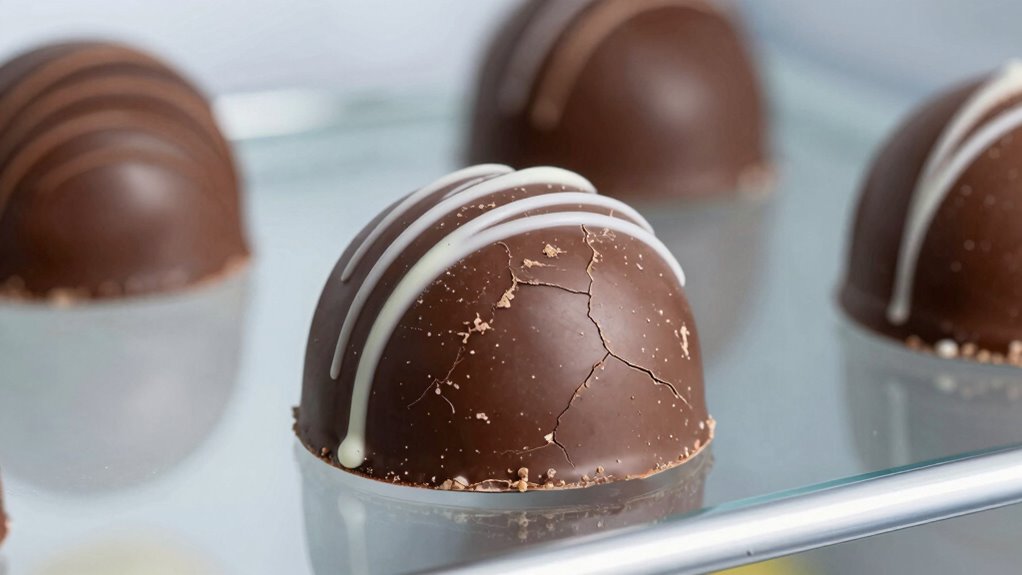

Chocolate decorations often fail in the fridge because temperature fluctuations and humidity cause surface issues like fat bloom and spots. Opening the door creates inconsistent temperatures, softening or melting the chocolate and leading to dull, blotchy appearances. High humidity also lets moisture seep in, causing sugar bloom and loss of gloss. To prevent this, you need to control the environment carefully. Keep exploring to learn more about how proper storage can keep your decorations pristine.

Get baking supplies delivered free with Prime
- Fast, free delivery on millions of items
- Prime Video, Amazon Music and more included
- Member-only deals all year
Key Takeaways
- Temperature fluctuations in the fridge cause fat bloom, dulling the appearance of chocolate decorations.
- High humidity and moisture from condensation lead to spots, streaks, and surface deterioration.
- Opening the fridge frequently creates temperature swings that promote condensation and surface defects.
- Rapid temperature changes during storage or removal cause moisture buildup, damaging decoration quality.
- Improper storage in non-climate-controlled environments accelerates visual and textural failure of chocolate decorations.
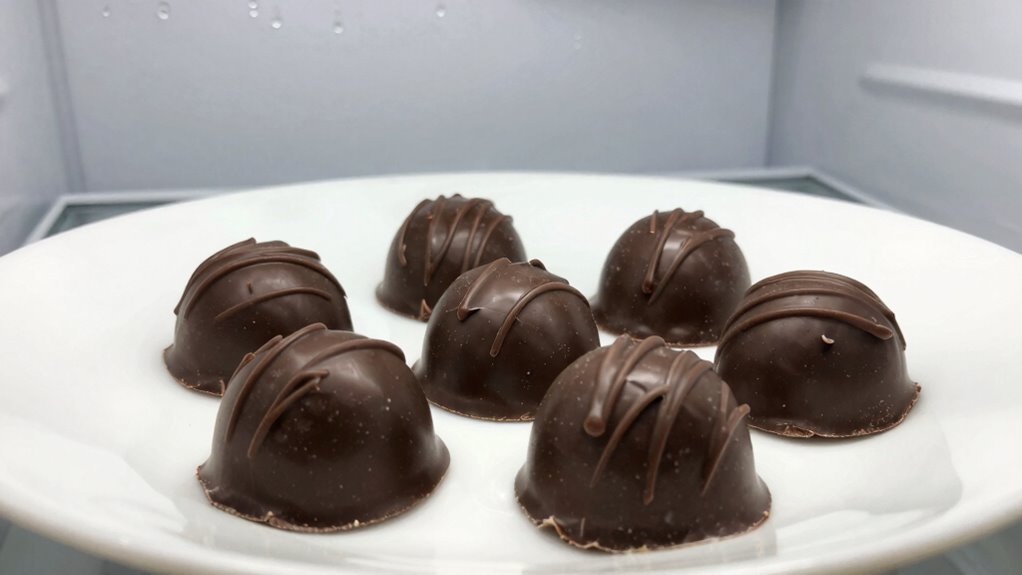
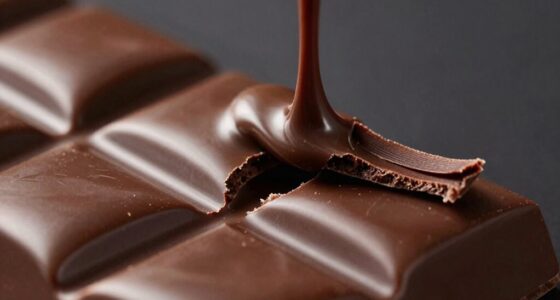
Have you ever wondered why your beautifully crafted chocolate decorations sometimes turn dull or develop unwanted spots after being stored in the fridge? The answer often lies in the delicate nature of chocolate and how it reacts to its environment. When you place chocolate decorations in the fridge, you’re exposing them to temperature fluctuations and humidity issues that can quickly spoil their appearance and texture. These changes are subtle but impactful, causing the chocolate to lose its glossy finish and sometimes develop a dull, blotchy surface.
Temperature fluctuations are a primary culprit. Even if you set your fridge to a consistent temperature, opening and closing the door causes temporary changes that can affect the stored chocolates. When the temperature drops suddenly or rises unexpectedly, the chocolate’s surface can contract or expand, leading to a phenomenon called “fat bloom.” This appears as a whitish or grayish coating, which may not affect the taste but ruins the visual appeal. Conversely, if the temperature is too high, the chocolate can soften or melt, leading to deformation or sticky textures. Maintaining a stable, cool temperature—around 15-18°C or 59-65°F—is essential to prevent these issues. Additionally, proper storage methods can help minimize these temperature-related problems. It’s also helpful to use climate-controlled storage when possible, especially in regions with high humidity or temperature variability.
Temperature fluctuations cause fat bloom and melting; keep chocolates stable at 15-18°C for optimal preservation.
Humidity issues further complicate the storage of chocolate decorations. When you store them in a humid environment, moisture can seep into the chocolate, causing it to develop spots or a sticky surface. High humidity can also promote condensation when you remove the decorations from the fridge, especially if they’re suddenly exposed to warmer air. This moisture can cause sugar bloom, which looks like white streaks or spots, and can compromise the decoration’s crispness and aesthetic. The key is to keep your chocolates in a dry, airtight container to minimize exposure to humidity and prevent moisture buildup. Using airtight containers is a simple way to create a barrier against humidity and temperature fluctuations.
Another aspect to think about is the interaction between temperature fluctuations and humidity. Rapid changes in temperature can cause condensation, which in turn introduces moisture that affects the chocolate’s surface. To further reduce the risk of moisture-related issues, it’s advisable to allow chocolates to reach room temperature gradually before handling or serving. If you’re storing decorations for an extended period, it’s best to bring them out of the fridge gradually and allow them to reach room temperature slowly to avoid sudden condensation. Properly understanding and managing these environmental factors helps preserve the appearance and texture of your chocolate decorations over time.
airtight chocolate storage container
As an affiliate, we earn on qualifying purchases.
As an affiliate, we earn on qualifying purchases.
Frequently Asked Questions
Can Humidity Affect Chocolate Decoration Stability?
Humidity definitely affects chocolate decoration stability. When humidity control isn’t maintained, moisture buildup on the surface can cause decorations to become sticky, bloom, or lose their crispness. You should keep your fridge in a cool, dry place and avoid opening it frequently to prevent humidity from seeping in. Proper storage helps preserve the appearance and texture of your chocolate decorations, ensuring they stay beautiful and intact.
Does the Type of Chocolate Impact Its Fridge Performance?
Yes, the type of chocolate impacts its fridge performance. For best results, you should temper the chocolate properly, which guarantees it hardens smoothly and maintains a glossy finish. Tempered chocolate also preserves flavor and texture better in the fridge. Unsweetened or untempered chocolates might develop bloom or become sticky, ruining decorations. Always choose high-quality, properly tempered chocolate for stable, long-lasting decorations that keep their appearance and flavor.
How Long Can Chocolate Decorations Stay Fresh in the Fridge?
You can keep chocolate decorations fresh in the fridge for up to a week, but beware of temperature fluctuations that can cause melting or condensation. While they seem sturdy, fragile decorative techniques like piping or delicate shapes are more prone to damage. To maximize their longevity, store them in airtight containers, avoid humidity, and let them reach room temperature gradually before serving. This balance keeps your creations looking perfect longer.
What Are the Best Storage Conditions for Chocolate Decorations?
To keep your chocolate decorations fresh, store them in a cool, dry place away from direct sunlight, ideally between 65-70°F. Proper chocolate tempering guarantees a glossy finish and firmness, making your decorations less prone to melting. Use airtight containers to prevent moisture absorption, which can ruin your decorative techniques. Avoid the fridge unless necessary, as temperature fluctuations and humidity often cause chocolate to bloom or lose its shine.
Can Reheating Ruin Chocolate Decorations?
Reheating can definitely ruin chocolate decorations, even if it seems harmless. Using improper reheating methods causes chocolate melting, which messes up their shape and texture. When you try to soften or melt decorations for touch-ups, you risk losing their crispness and detail. So, if you want to preserve those delicate designs, avoid reheating altogether or use gentle, controlled methods like a warm water bath — otherwise, you’ll just melt away their charm.
fridge-safe chocolate decorations
As an affiliate, we earn on qualifying purchases.
As an affiliate, we earn on qualifying purchases.
Conclusion
Storing chocolate decorations in the fridge often leads to failure because of condensation and temperature fluctuations. Did you know that up to 70% of chocolate decorations get ruined this way? To keep your creations looking perfect, store them in a cool, dry place instead. When you understand the science behind it, you’ll enjoy beautifully intact decorations every time, making your desserts look as amazing as they taste. So, avoid the fridge and preserve your chocolate’s pristine appearance!
temperature-controlled chocolate storage
As an affiliate, we earn on qualifying purchases.
As an affiliate, we earn on qualifying purchases.
humidity-proof chocolate storage box
As an affiliate, we earn on qualifying purchases.
As an affiliate, we earn on qualifying purchases.
Fall Picks
fall essentials
As an affiliate, we earn on qualifying purchases.