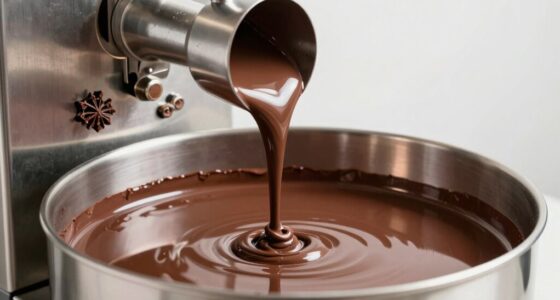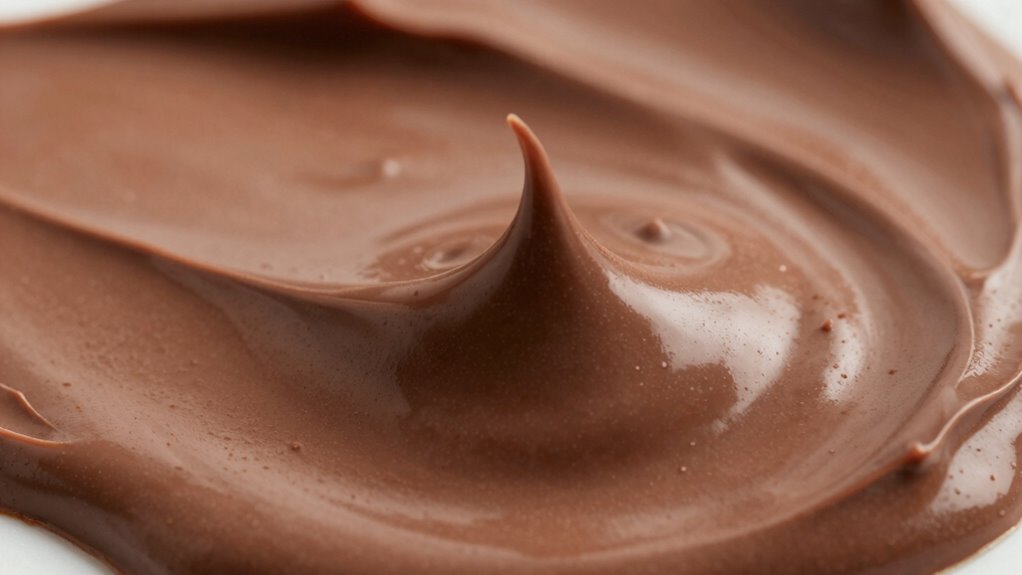

Your cocoa butter’s texture changes more than its flavor because it’s mainly influenced by its crystalline structure and melting point, not taste. How the cocoa butter melts, firms up, or becomes softer depends on how it’s processed and its origin. Things like tempering and temperature control help shape its crystalline form, affecting texture markedly. If you keep exploring, you’ll discover how these factors can be adjusted to refine product feel and stability.

Get baking supplies delivered free — and shop member deals
- Fast, free delivery on millions of items
- Access to Prime Big Deal Days deals on October 6–7
- Prime Video, Amazon Music and more included
Key Takeaways
- Cocoa butter’s crystalline structure and tempering control its firmness, directly affecting texture more than flavor.
- Variations in melting point influence the product’s softness or firmness, impacting texture significantly.
- Temperature and cooling cycles during processing shape crystal formation, determining smoothness or graininess.
- Bean origin affects melting behavior, altering texture without changing flavor substantially.
- Precise manipulation of crystalline forms allows customization of texture while flavor remains largely unaffected.
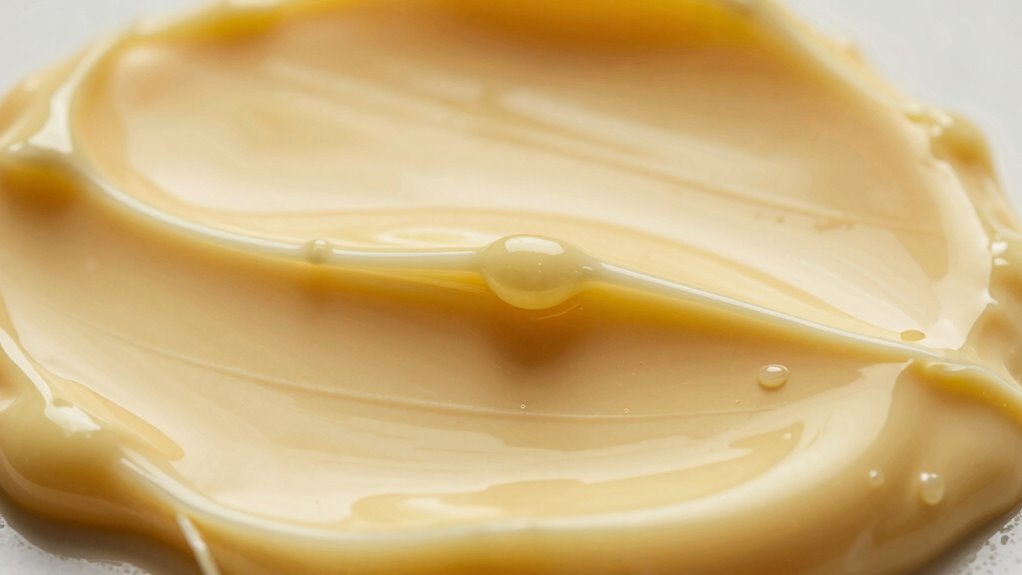
Cocoa butter is renowned for its ability to transform when exposed to different conditions, influencing the texture of various products. Its origins, specifically the bean origin, play a significant role in determining its properties. Beans from different regions—like West Africa, South America, or Southeast Asia—each produce cocoa butter with distinct characteristics, affecting how it behaves in recipes and formulations. One key factor that impacts its texture is the melting point, which is largely influenced by the bean origin and how the butter is processed. Typically, cocoa butter melts around body temperature—about 34-36°C—making it feel smooth and luxurious on the skin or in chocolates. But slight variations in bean origin can shift this melting point, leading to different textures in finished products.
When you work with cocoa butter, understanding its melting point helps you predict how it will feel and behave. For example, cocoa butter from beans with a higher melting point might give a firmer texture, making it ideal for products like lip balms or bar chocolates that need to hold their shape. Conversely, a lower melting point results in a softer, more melt-in-your-mouth sensation, perfect for cosmetic creams or fillings. As you handle cocoa butter, you’ll notice how temperature changes cause it to shift from a solid to a liquid. This transition is crucial in chocolate making, where tempering relies on precise temperature control to achieve that perfect glossy finish and snap. In cosmetics, melting point influences how quickly the product absorbs into your skin, affecting the user experience.
Beyond melting point, the bean origin also impacts the crystalline structure of cocoa butter, which further affects its texture. When it cools, cocoa butter forms crystals that determine whether a product feels smooth, brittle, or greasy. Proper tempering aligns these crystals, resulting in a stable, appealing texture. If the crystals are misaligned, the product can become grainy or greasy, demonstrating how sensitive cocoa butter’s properties are to subtle variations. You’ll find that the source of the beans influences not just flavor but also the structural qualities of the final product. This means that even with the same recipe, cocoa butter from different origins can yield noticeably different textures. Understanding the crystalline structure is essential for achieving consistent results in product formulation. Additionally, the crystalline structure can be affected by tempering techniques, which optimize the crystal formation for ideal texture and stability. Recognizing how these factors interact can help you manipulate the texture and stability of your products more effectively.
Furthermore, knowledge of crystalline structure can assist in customizing the sensory qualities of chocolates and cosmetics alike, making it a critical aspect of formulation. Paying attention to these detailed properties, such as how different crystal forms influence texture, will enable you to craft products with the desired consistency and stability. As you experiment with cocoa butter, understanding how these properties interact will help you manipulate and optimize texture to suit your needs, making cocoa butter a truly versatile ingredient.
cocoa butter for chocolate tempering
As an affiliate, we earn on qualifying purchases.
As an affiliate, we earn on qualifying purchases.
Frequently Asked Questions
Does Cocoa Butter Affect the Shelf Life of Chocolate?
Yes, cocoa butter impacts the shelf life of chocolate. Its natural preservative qualities help maintain shelf stability by preventing moisture absorption and spoilage. Proper preservation techniques, like storing chocolate in a cool, dry place, work alongside cocoa butter’s properties to extend freshness. You should be mindful of temperature and humidity, as these factors influence how long your chocolate stays good, ensuring it remains flavorful and texturally appealing.
Can Cocoa Butter Be Used in Non-Chocolate Products?
Yes, you can use cocoa butter in non-chocolate products. Its smooth texture and moisturizing properties make it a popular plant-based alternative in cosmetic applications like lotions, balms, and creams. You might also incorporate it into lip balms or soaps. Its natural emollient qualities benefit skin, and its versatility allows it to be a key ingredient in many DIY beauty and skincare formulations, beyond just chocolate.
How Does Temperature Influence Cocoa Butter’s Texture?
Imagine discovering that temperature effects your favorite cocoa butter’s texture more than its flavor. When you heat it, the texture becomes smoother and more liquid, perfect for melting or spreading. As it cools, it firms up, creating a solid, velvety feel. Temperature effects cause significant texture variation, giving you control over its consistency—whether for skincare or culinary uses—making your experience with cocoa butter truly customizable.
Is Cocoa Butter Vegan and Ethically Sourced?
Yes, cocoa butter is vegan because it’s derived from cocoa beans, not animal products. However, ethical sourcing varies; some brands prioritize fair-trade and sustainable practices, so you should look for certifications or transparent supply chains. If you’re seeking vegan alternatives, options like shea butter or coconut oil exist, but high-quality cocoa butter from ethical sources guarantees you’re supporting responsible farming and fair labor practices.
What Are the Health Benefits of Cocoa Butter?
Cocoa butter offers delightful health perks, especially for your skin. It deeply hydrates, leaving your skin feeling soft and supple, thanks to its excellent skin hydration properties. Plus, its anti-inflammatory qualities help soothe irritated skin and reduce redness. Incorporating cocoa butter into your routine can enhance your skin’s glow and comfort, making it a sweet, natural way to nurture yourself from the inside out.
organic cocoa butter for cosmetics
As an affiliate, we earn on qualifying purchases.
As an affiliate, we earn on qualifying purchases.
Conclusion
Don’t let the subtlety fool you—cocoa butter’s impact on texture can transform your chocolate experience, making it velvety smooth and irresistibly melt-in-your-mouth. You might worry that changing texture means sacrificing flavor, but in truth, it simply elevates the whole indulgence. Embrace these small tweaks, and you’ll discover a richer, more luxurious treat that’s worth every bite. After all, it’s the texture that keeps you coming back for more, even when the flavor stays the same.
cocoa butter crystalline structure
As an affiliate, we earn on qualifying purchases.
As an affiliate, we earn on qualifying purchases.
As an affiliate, we earn on qualifying purchases.
Halloween Picks
halloween
As an affiliate, we earn on qualifying purchases.