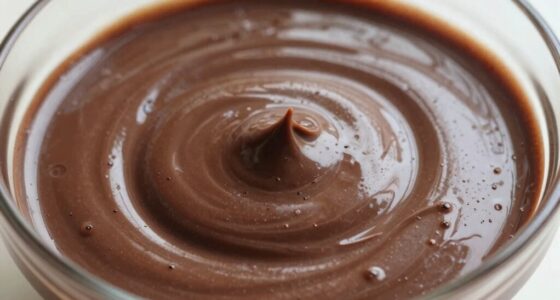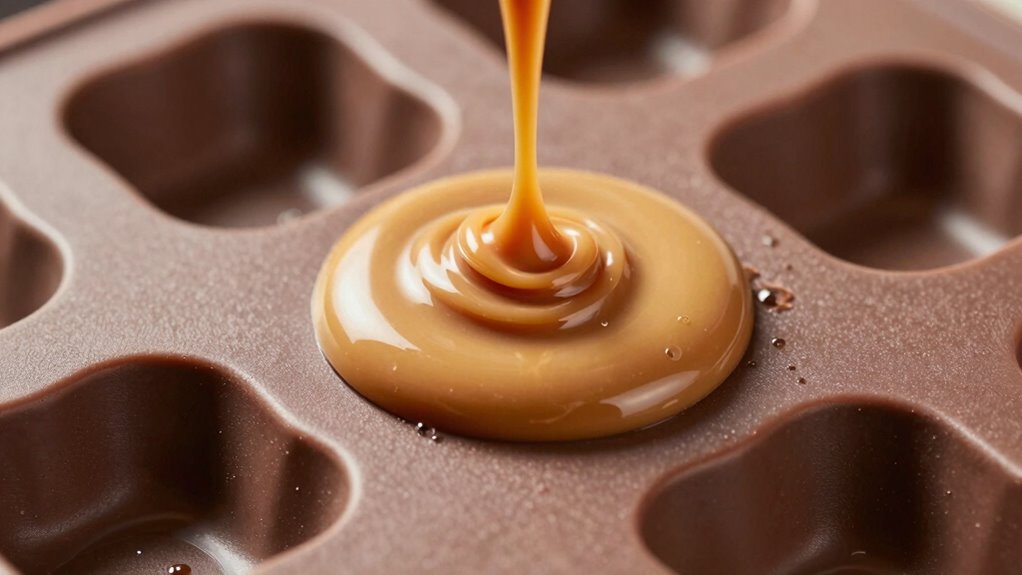

Cocoa butter’s content and quality directly influence how smoothly chocolate flows into molds, affecting its viscosity and final look. When you have more high-quality cocoa butter, the chocolate becomes less thick and flows easily, filling intricate molds better. Proper tempering and temperature control guarantee crystal stability, which helps maintain ideal viscosity. If you want to learn how different factors shape chocolate’s flow and appearance, keep exploring the details behind cocoa butter and viscosity.

Get baking supplies delivered free with Prime
- Fast, free delivery on millions of items
- Prime Video, Amazon Music and more included
- Member-only deals all year
Key Takeaways
- Higher cocoa butter content decreases chocolate viscosity, improving flow into molds.
- The quality of cocoa butter influences the smoothness and workability during molding.
- Proper tempering stabilizes cocoa butter crystals, optimizing viscosity for mold filling.
- Temperature control during processing affects cocoa butter melting and flow behavior.
- Proper crystal formation ensures consistent viscosity and efficient mold release.
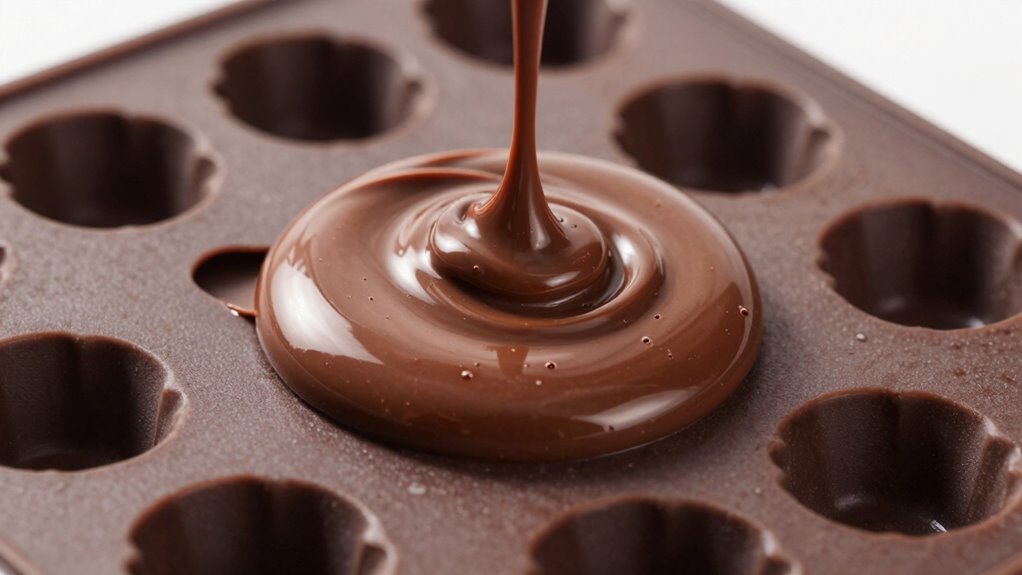
Cocoa butter plays an essential role in determining the viscosity of chocolate as it melts and flows into molds. Its smooth, glossy texture influences how easily chocolate moves and settles during the molding process. When you work with chocolate, understanding how cocoa butter impacts viscosity helps you achieve a flawless finish and uniform appearance. During chocolate tempering, you heat and cool the chocolate to specific temperatures to stabilize the cocoa butter crystals. Proper tempering results in a shiny surface, good snap, and smooth flow into molds, all of which are closely linked to the behavior of cocoa butter. If the cocoa butter isn’t properly tempered, the chocolate can become too thick or too runny, leading to incomplete filling or uneven surfaces.
Viscosity is also affected by the amount and quality of cocoa butter in your chocolate. Higher cocoa butter content generally means a lower viscosity when melted, allowing the chocolate to flow more freely. Conversely, if there’s less cocoa butter or if it’s of lower quality, the chocolate becomes thicker and harder to work with. This impacts how easily it fills intricate molds and how well it releases once cooled. Incorporating mold release agents can help mitigate some of these issues, but they work best when the chocolate’s viscosity is properly managed through cocoa butter content and tempering techniques. Proper viscosity management is crucial for achieving consistent results.
Higher cocoa butter content lowers chocolate viscosity, improving flow and mold release when properly tempered.
Additionally, temperature control during melting and cooling is vital because cocoa butter’s melting behavior directly influences how the chocolate flows. When you’re pouring chocolate into molds, the goal is to achieve a flow that’s neither too thick nor too runny. Too viscous, and the chocolate won’t fill tiny crevices or corners. Not viscous enough, and it might flow too quickly, causing overflow or air bubbles. Proper chocolate tempering ensures that the cocoa butter crystals are in the right form to optimize flow. Using mold release agents can also aid in easy removal once the chocolate has set, especially if the viscosity isn’t ideal. These agents create a barrier between the mold and the chocolate, preventing sticking without affecting flow during pouring. Additionally, understanding cocoa butter’s melting behavior is crucial for adjusting temperature control during the process. Moreover, controlling the crystal formation of cocoa butter is fundamental in achieving the desired viscosity and texture in finished chocolates. Recognizing how crystal structure influences viscosity helps refine tempering techniques for better results.
high-quality cocoa butter for chocolate making
As an affiliate, we earn on qualifying purchases.
As an affiliate, we earn on qualifying purchases.
Frequently Asked Questions
Does Cocoa Butter Viscosity Vary Between Different Chocolate Brands?
Yes, cocoa butter viscosity can vary between different chocolate brands, affecting how the chocolate flows and sets. This variation influences brand consistency, ensuring each batch maintains the desired texture and appearance. Additionally, the viscosity impacts flavor release, as smoother chocolates often deliver a better taste experience. By controlling cocoa butter levels, brands can achieve specific viscosity and flavor profiles, making each chocolate unique yet consistent across production.
How Does Temperature Influence Cocoa Butter’s Viscosity During Molding?
Temperature directly influences cocoa butter’s viscosity during molding; as temperature increases, viscosity decreases, making the chocolate flow more easily. Maintaining temperature stability is vital to guarantee consistent viscosity measurement, avoiding fluctuations that can cause imperfections. If the temperature drops, cocoa butter thickens, complicating mold filling. You should carefully monitor and control temperature throughout the process to achieve smooth, glossy chocolates with flawless surfaces.
Can Adding Other Fats Change Cocoa Butter’s Viscosity?
By blending fats, you can beautifully balance and boost cocoa butter’s viscosity stability, making your moldings more manageable. When you add other fats, such as shea or palm oil, you alter the flow, thickness, and texture. This fat fusion offers a flexible, fluid consistency, ensuring your chocolate remains smooth and moldable. So, yes, mixing fats can definitely change cocoa butter’s viscosity, giving you better control over your creations.
What Role Does Cocoa Butter Particle Size Play in Viscosity?
Your cocoa butter’s particle size markedly influences its viscosity impact in molds. Smaller particles create a smoother, more uniform melt, reducing viscosity and making it easier to pour and fill molds evenly. Larger particles increase viscosity, leading to thicker consistency and potential flow issues. So, controlling particle size helps you optimize viscosity, ensuring better mold filling, smoother finishes, and consistent chocolate textures.
How Long Does Cocoa Butter Take to Reach Optimal Viscosity?
Cocoa butter typically takes around 20 to 30 minutes to reach ideal viscosity when heated properly. During this time, it becomes fluid enough for mold filling, influencing flavor profiles and guaranteeing even distribution. Stirring consistently helps maintain uniform viscosity. Proper storage stability depends on maintaining this temperature and viscosity, preventing crystallization or separation. Monitoring your cocoa butter closely ensures it remains at the perfect consistency for high-quality, flavorful chocolates.
As an affiliate, we earn on qualifying purchases.
Conclusion
So, now that you know how cocoa butter influences viscosity in molds, you might wonder if mastering this process can elevate your chocolate creations. By understanding and controlling cocoa butter’s effects, you can achieve perfect textures and flawless finishes every time. Isn’t it satisfying to craft chocolates that not only taste amazing but also look stunning? With these insights, you’re well on your way to becoming a true artisan of chocolate!
As an affiliate, we earn on qualifying purchases.
As an affiliate, we earn on qualifying purchases.
Halloween Picks
halloween
As an affiliate, we earn on qualifying purchases.