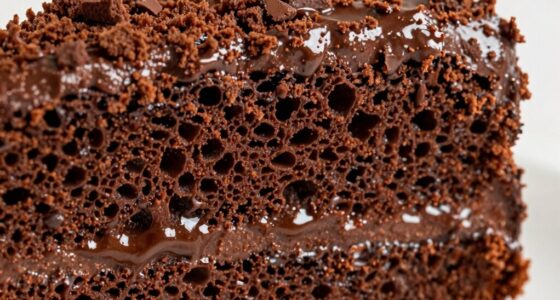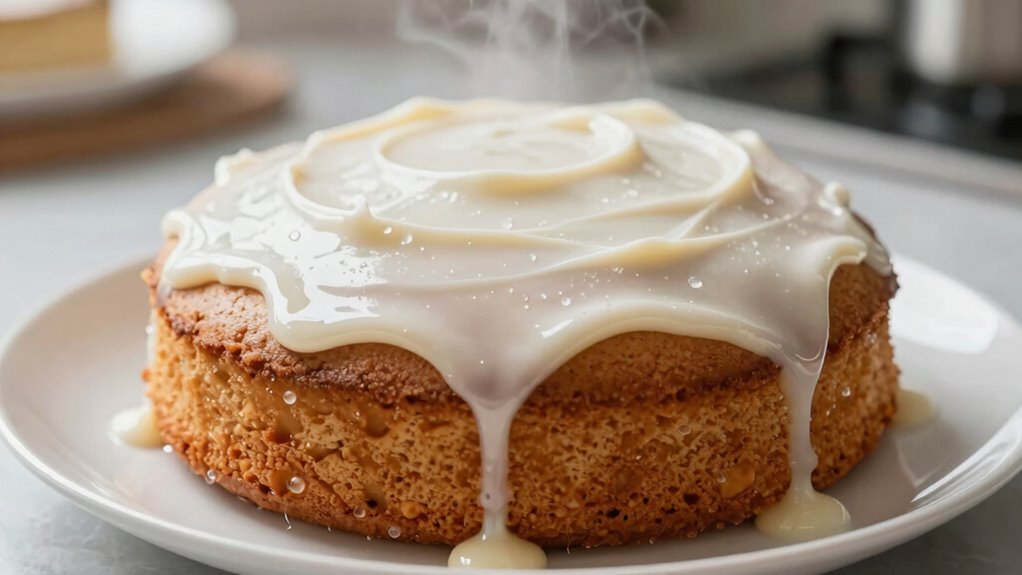

The main mistake that makes cakes sweat is cooling them too quickly or without proper airflow. When you toss a warm cake directly into the fridge or cover it tightly, moisture can’t escape, leading to condensation on the surface. This results in a soggy, sweaty cake. To avoid this, let your cake cool completely on a wire rack in a well-ventilated area and control moisture during storage. Keep going to discover more tips to perfect your cake cooling technique.

Get baking supplies delivered free — and shop member deals
- Fast, free delivery on millions of items
- Access to Prime Big Deal Days deals on October 6–7
- Prime Video, Amazon Music and more included
Key Takeaways
- Cooling the cake in a warm environment causes condensation, leading to sweating and sogginess.
- Applying frosting before the cake is fully cooled traps moisture, resulting in a sweaty appearance.
- Placing the cake directly in the refrigerator while still warm promotes moisture buildup.
- Not using proper airflow during cooling prevents moisture from escaping, causing sweating.
- Rapid cooling methods, like refrigerating immediately, increase condensation and make the cake sweat.

Ever wondered why your perfectly baked cake sometimes ends up sweating and soggy? It’s frustrating to put so much effort into baking a beautiful cake only to have it lose its texture when you frost it or store it afterward. The culprit often lies in the way you handle the cooling process and the conditions in which you store your cake. Understanding the right frosting techniques and storage conditions can make a significant difference in preventing that unwanted sweating.
Proper cooling and storage prevent cake sweating and sogginess. Handle with care for perfect texture.
When it comes to frosting techniques, timing is everything. If you apply your frosting too soon after baking, while the cake is still warm, the heat can cause condensation on the surface, leading to that soggy, sweaty appearance. Always wait until your cake is completely cooled—preferably at room temperature—before you start frosting. This prevents steam and moisture from getting trapped under the frosting, which can cause the cake to become damp. Additionally, choosing the right frosting is essential; a buttercream or ganache that’s properly whipped and spread thinly helps create a barrier against moisture. Avoid heavy, overly moist frostings on warm cakes, as they tend to seep into the sponge, making it soggy. Proper cooling techniques, such as placing the cake on a wire rack, can also help prevent condensation buildup during the cooling process. Ensuring proper airflow during cooling is crucial to avoid excess moisture settling on the cake’s surface. Proper air circulation can significantly reduce the chance of moisture accumulation during cooling. Also, incorporating humidity control during the cooling process can further help manage moisture levels and keep your cake dry.
Storage conditions play a key role in maintaining your cake’s texture. Once frosted, don’t rush to refrigerate unless necessary, because cold temperatures can cause the frosting to melt or sweat when brought back to room temperature. If you must refrigerate, do so in an airtight container to control humidity and prevent moisture from settling on the cake’s surface. Before serving, let the cake come back to room temperature gradually—about an hour—so that condensation doesn’t form on the frosting or cake surface. This step helps keep the frosting dry and prevents the cake from sweating as it reaches the ambient temperature. Proper cooling techniques, such as placing the cake on a wire rack, can also help prevent condensation buildup during the cooling process. Ensuring proper airflow during cooling is crucial to avoid excess moisture settling on the cake’s surface. Proper humidity control during storage is vital to prevent moisture buildup that can compromise your cake’s texture. Furthermore, choosing an ideal storage environment, like a cool, dry place away from direct sunlight, helps preserve the cake’s integrity.
As an affiliate, we earn on qualifying purchases.
Frequently Asked Questions
Can Certain Ingredients Prevent Cakes From Sweating During Cooling?
Yes, certain ingredients can help prevent cakes from sweating during cooling. Incorporate ingredient barriers like butter or frosting, which act as a protective layer against moisture. Proper cooling techniques, such as letting the cake cool completely at room temperature before refrigerating, also help reduce sweating. Avoid covering the cake while it’s still warm, as trapped steam causes condensation. These strategies guarantee your cake stays moist and crumbly, not sweaty.
How Does Humidity Affect a Cake’s Tendency to Sweat?
Imagine humidity as the silent thief stealing moisture from your cake. High humidity levels hinder humidity control, causing moisture migration that leads to sweating. When the air is moist, your cake’s surface absorbs excess moisture, making it sweat as it cools. To prevent this, keep your cake in a cool, dry place, and consider using a fan or dehumidifier during cooling to maintain ideal conditions and avoid unwanted moisture migration.
Is There a Specific Cooling Time Recommended for All Cake Types?
You should let your cake cool for at least 1-2 hours, but the exact time depends on the cake type. Proper cooling guarantees your cake is firm enough for decoration and helps preserve flavor by preventing excess moisture. If you rush the process, your decorations might slip, and flavors could become muted. Always allow sufficient time for cooling before decorating or storing to achieve the best results.
Can Wrapping a Cake While Still Warm Cause Sweating?
Yes, wrapping a warm cake can cause sweating because the moisture trapped inside turns into condensation. To prevent this, use proper cooling techniques like allowing the cake to cool completely before wrapping. If you need to speed up cooling, consider ingredient substitutions that reduce moisture. This way, you avoid excess humidity, ensuring your cake stays moist without sweating, and you can enjoy perfect texture and flavor.
What Role Does Cake Storage Temperature Play in Sweating?
Think of cake storage temperature like a cozy blanket—if it’s too warm, condensation forms, making your cake sweat. When you store a cake in a cool, stable environment, it helps prevent sweating caused by cake insulation issues. An ideal storage environment keeps the cake at a consistent temperature, avoiding the moisture buildup that occurs with fluctuating temperatures. Proper storage guarantees your cake stays fresh, moist, and free of unwanted condensation.
As an affiliate, we earn on qualifying purchases.
Conclusion
If you ignore this simple cooling mistake, your cake’s inevitable sweat could turn it into a soggy disaster that ruins your baking reputation overnight. Think of it as releasing a torrential rainstorm inside your carefully crafted masterpiece—an epic betrayal of your culinary artistry. So, don’t let your hard work drown in moisture; master the art of proper cooling, or risk your cake’s glorious debut being forever overshadowed by a soggy, disappointing climax.
As an affiliate, we earn on qualifying purchases.
humidity control for baked goods
As an affiliate, we earn on qualifying purchases.
As an affiliate, we earn on qualifying purchases.
Halloween Picks
halloween
As an affiliate, we earn on qualifying purchases.