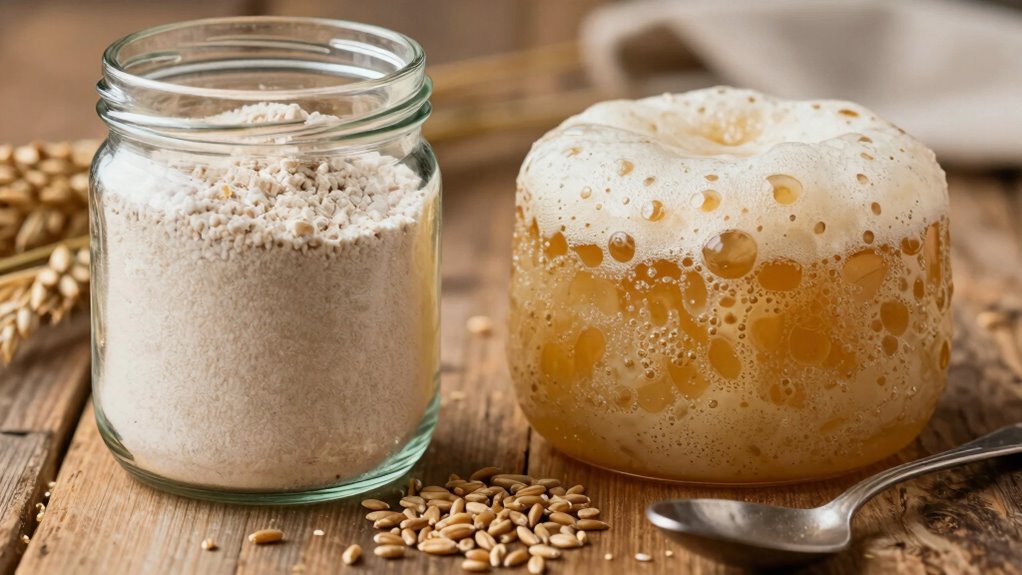

Rye flour supercharges fermentation in sourdough because it contains natural enzymes and nutrients that speed up yeast activity and flavor development. Its high levels of enzymes break down starches into sugars, fueling active fermentation, while its acidity stabilizes the starter and prevents unwanted bacteria. Plus, the soluble fibers act as prebiotics, supporting beneficial microbes. If you’re curious, you’ll discover how these factors work together to create a more vigorous, flavorful sourdough.
Key Takeaways
- Rye flour accelerates fermentation by providing natural enzymes and nutrients that boost wild yeast and bacteria activity.
- Its high enzyme content, especially amylases, breaks down starches into sugars, fueling fermentation.
- Rye’s acidity creates a stable environment, encouraging vigorous fermentation and inhibiting undesirable bacteria.
- Rich in prebiotic fibers, rye enhances microbial health and promotes lively, resilient starters.
- Incorporating rye improves flavor complexity, texture, and overall fermentation efficiency in sourdough bread.
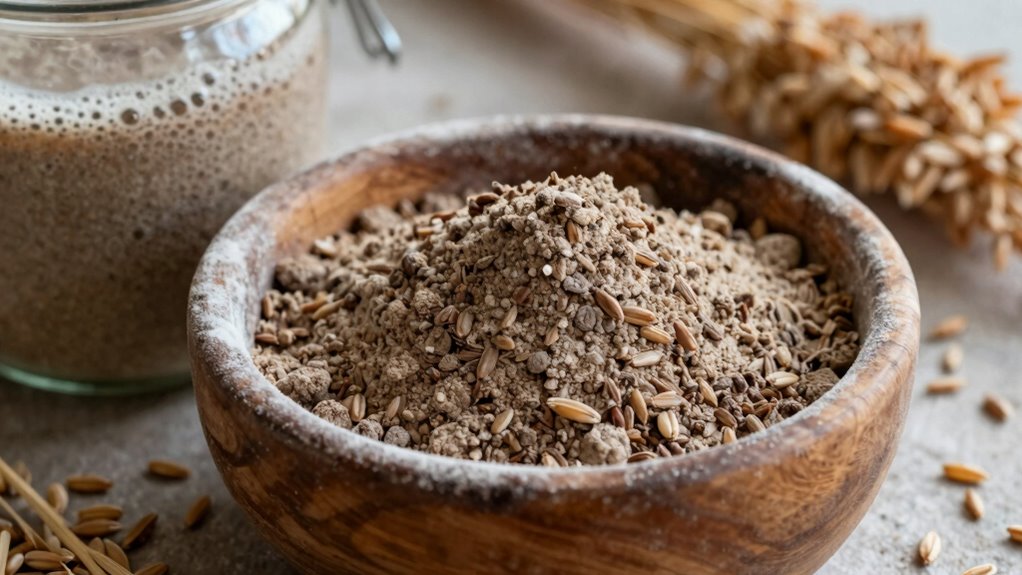
Have you ever wondered why rye flour is a popular choice for sourdough baking? It’s because of its unique ability to supercharge fermentation, offering distinct advantages that enhance both the process and the final bread. The fermentation benefits of rye flour go beyond just speeding up rising times; they also create a more complex flavor and improve digestibility. Rye’s natural enzymes and nutrients foster an environment where wild yeasts and beneficial bacteria thrive, leading to a robust and lively starter. When you incorporate rye into your sourdough, you’re fundamentally giving your fermentation process a boost, making it more resilient and flavorful. This is why many bakers prefer a rye blend or pure rye starters—they notice a more vigorous fermentation, which results in bread with a superior texture and depth of taste. Additionally, the techniques used in handling rye dough help maximize its fermentation potential. Understanding the rye nutritional profile helps clarify why it’s so effective in fermentation. Rye is packed with nutrients that serve as fuel for the microorganisms responsible for leavening. It contains higher levels of certain enzymes, such as amylases, which break down starches into sugars. These sugars are vital because they feed the yeast and bacteria, promoting a lively fermentation process. Additionally, rye is rich in dietary fiber, especially soluble fibers like pentosans, which act as prebiotics, nourishing the beneficial microbes within your starter. The minerals found in rye—such as magnesium, phosphorus, and potassium—also support microbial activity, ensuring a healthy fermentation environment. This thorough nutritional profile not only accelerates fermentation but also enhances the development of organic acids that give sourdough its signature tang. Another benefit of using rye flour is that it contributes to a more stable fermentation process. Its natural acidity helps create an environment where unwanted bacteria are less likely to thrive, which means your sourdough starter stays healthy and active longer. This stability encourages a consistent rise and flavor development over time. Plus, rye’s unique composition helps produce a more open crumb and a moist, tender crumb structure, making your bread more enjoyable. As a baker, you’ll notice that incorporating rye flour into your sourdough routine leads to a more vigorous fermentation, richer flavors, and a more resilient starter—attributes that elevate your baking to the next level. So, whether you’re a seasoned baker or just starting out, understanding how rye flour’s fermentation benefits and nutritional profile work together can transform your sourdough baking experience.
Frequently Asked Questions
Can I Substitute Rye Flour With Other Whole Grain Flours in Sourdough?
Yes, you can substitute rye flour with other whole grain flours in sourdough, but expect some differences. Whole grain flours like wheat or spelt have varying gluten content, which affects the dough’s structure and fermentation rate. Rye flour supercharges fermentation due to its unique nutrients, so using alternatives may slow down or alter the process. Experimenting helps you find the best balance for flavor and rise in your sourdough.
How Does Rye Flour Affect the Sourdough’s Flavor Profile?
Imagine slicing into a warm loaf and catching a whiff of earthy, tangy aroma—that’s rye flour’s impact on flavor. You’ll notice increased flavor complexity and aromatic enhancement, giving your sourdough a richer, more nuanced taste. Rye’s natural sugars and acids deepen the tang, while its unique grain profile adds subtle nutty and sour notes. This combination creates a sensory experience that elevates your bread beyond basic sourdough.
Is Rye Flour Suitable for Gluten-Sensitive Individuals?
If you’re gluten-sensitive, rye flour might not be suitable since it contains gluten, though in lower amounts than wheat. You can explore rye alternatives like buckwheat, rice, or gluten-free oats to enjoy sourdough baking without triggering sensitivities. Always check labels and choose certified gluten-free options to guarantee safety. Remember, individual reactions vary, so testing a small amount first helps you determine what’s best for your dietary needs.
What Are Common Pitfalls When Baking With Rye Sourdough?
When baking with rye sourdough, you need to watch for overfermentation and mold development. Overfermentation happens quickly because rye ferments faster, leading to a sour, overly tangy flavor and a dense texture. Mold can develop if you leave it too long or store it improperly. To avoid these pitfalls, keep a close eye on your dough’s fermentation time, maintain proper hygiene, and store your bread in a cool, dry place.
How Long Does It Take to Develop a Strong Rye Sourdough Culture?
It typically takes about 5 to 7 days for your rye sourdough starter to develop maturity. During this fermentation timeline, you’ll notice active bubbling and a pleasant, tangy aroma, indicating it’s strong enough for baking. To speed up the process, feed it regularly with rye flour and keep it at a consistent, warm temperature. With patience, your starter will become reliably robust and ready for perfect sourdough bread.
Conclusion
So, next time you bake sourdough, consider adding rye flour to give your fermentation a real boost. Its unique enzymes and nutrients can supercharge the process, resulting in a richer, more flavorful loaf. Are you ready to experiment with this ancient grain and uncover new depths of sourdough perfection? Don’t be afraid to try it—your taste buds and fermentation game will thank you!