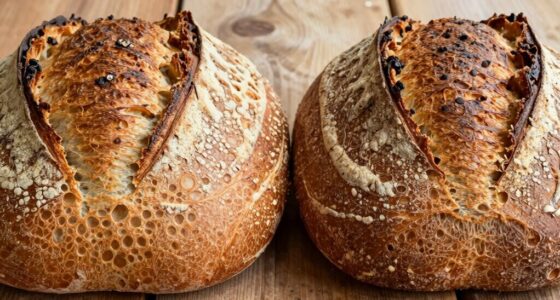
When baking a batard and a boule in covered pots, you shape the dough differently: a boule is round and larger, encouraging even expansion, while a batard is elongated, creating a different expansion pattern. The shape influences steam interaction, crust, and crumb. Both benefit from preheated vessels to trap steam and support oven spring. For more tips on handling each shape and achieving perfect results, keep exploring these baking techniques.

Get baking supplies delivered free with Prime
- Fast, free delivery on millions of items
- Prime Video, Amazon Music and more included
- Member-only deals all year
Key Takeaways
- Boule’s round shape promotes even expansion and a uniform crust, while a batard’s elongated form influences a different expansion pattern.
- Both shapes benefit from preheated covered pots to trap steam, but their surface interaction and crust development differ.
- The shape affects oven spring and final appearance, with boule typically having a more domed top and batard a flatter profile.
- Handling and shaping techniques vary to maintain the integrity of each shape and prevent deflation during baking.
- Baking times and steam exposure may slightly differ due to the shape’s surface area and volume distribution.

Have you ever wondered how to achieve that perfect crust and airy crumb when baking a traditional French bread? The key lies in mastering your fermentation techniques and understanding how ingredient variations can influence the final result. Whether you’re baking a batard or a boule, both styles benefit from careful handling of these core aspects. The main difference between them mostly comes down to shape and size, but the baking process, especially when using covered pots, plays an essential role in developing their crust and interior.
Mastering fermentation and ingredient choices unlocks perfect crust and airy crumb in French bread baking.
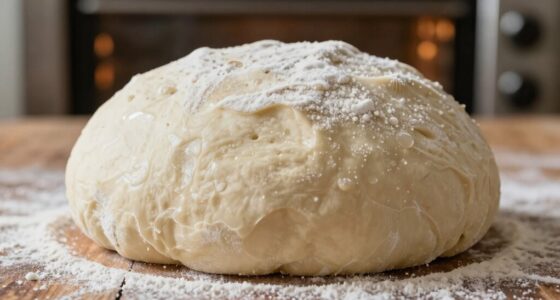
When working with fermentation techniques, you want to focus on developing flavor and gluten structure through proper proofing. Longer, slower fermentation not only enhances taste but also improves the bread’s texture. For both a batard and a boule, you might experiment with ingredient variations such as using different flours—whole wheat, rye, or bread flour—to introduce complex flavors and alter hydration needs. These variations impact how the dough ferments and how it responds to the baking process, especially in a covered pot. Proper fermentation creates a strong gluten network that traps gases, leading to an open crumb and a well-developed crust. Understanding fermentation techniques is crucial for achieving the desired bread characteristics and ensuring a successful bake. Additionally, monitoring the fermentation process carefully can help prevent under- or over-proofing, which significantly affects the final outcome. Recognizing the importance of dough handling techniques can also make a difference in achieving the ideal loaf, as improper handling can deflate the dough or create uneven shapes.
Using a covered Dutch oven or similar vessel traps steam during baking, which is crucial for creating that characteristic crust. The shape of the dough influences how steam interacts with the surface. A boule, being round and larger, has a more uniform shape that encourages even expansion and a consistent crust. A batard, which is elongated, allows for a different expansion pattern, giving it a slightly different texture and appearance. When baking in a covered pot, preheating the vessel is essential to guarantee immediate steam contact with the dough, helping it rise quickly and develop a shiny, crispy crust. The even heat distribution inside the covered vessel is also key to achieving a uniform bake. Proper vessel preheating ensures optimal steam retention and heat transfer, which are vital for a professional-quality loaf. Moreover, maintaining the right oven temperature is crucial for controlling the crust development and crumb structure.
Adjusting your fermentation times based on ingredient variations can make a significant difference. For example, whole wheat flour absorbs more water, requiring adjustments in hydration and longer fermentation to prevent a dense crumb. Conversely, using a higher percentage of rye flour might necessitate different fermentation timings due to its enzymatic activity. These variations influence how the dough develops during proofing and how it responds to the oven environment. Understanding how ingredient variations impact fermentation helps bakers adapt techniques for different types of bread. Being aware of these factors can also help troubleshoot common baking issues, such as dense or flat loaves. Additionally, keeping track of your fermentation and baking results can help refine your process over time, leading to consistently better loaves in your baking repertoire.
Ultimately, whether you’re baking a batard or a boule in a covered pot, paying attention to fermentation techniques and ingredient variations is key. It’s these factors that determine the bread’s structure, flavor, and crust quality. With practice, you’ll learn how subtle changes in fermentation and ingredients can transform your bread from good to exceptional, achieving that perfect balance of airy crumb and crispy crust every time.
As an affiliate, we earn on qualifying purchases.
Frequently Asked Questions
Can I Use the Same Dough for Both Shapes?
Yes, you can use the same dough for both shapes, but pay attention to dough hydration levels and shaping techniques. Higher hydration doughs are more elastic, making shaping easier for a boule or batard. For a boule, gentle shaping preserves surface tension, while for a batard, elongate the dough carefully. Adjust your shaping techniques accordingly, and guarantee your dough’s hydration suits the shape you want to achieve for ideal oven spring and crust.
How Does Shape Affect Bread Texture?
Shape is the sculptor shaping your bread’s soul. A boule’s round form creates a thick crust and a chewy, open crumb, like a crusty loaf basking in the sun. A batard, being elongated, yields a thinner crust and a denser crumb, perfect for slicing thin. Your choice impacts texture — round shapes emphasize crustiness, while elongated ones produce a more compact bite.
Is One Shape More Suitable for Beginners?
If you’re a beginner, a boule is more suitable because its round shape makes hand shaping easier and less technical. The shape encourages even oven spring, helping your bread rise uniformly. A batard requires more precise shaping skills, which might be challenging at first. Starting with a boule allows you to focus on mastering basic techniques before moving on to more complex shapes like a batard.
Do Baking Times Differ Between the Two Shapes?
Yes, baking times can differ between a batard and a boule. A boule, being rounder, often requires slightly longer baking time for even internal heat distribution, while a batard’s elongated shape may bake a bit faster. To achieve perfect results, you might consider alternative shaping techniques and oven temperature adjustments, such as increasing the oven temperature slightly for a boule or extending baking time, ensuring both shapes bake evenly and thoroughly.
Can I Bake a Batard or Boule Without a Covered Pot?
Imagine your crust crackling as you pull the bread from the oven—yes, you can bake a batard or boule without a covered pot. For alternative methods, use a Dutch oven or a heavy-duty baking sheet with a steaming setup. Equipment needs include a baking stone or steel, and a spray bottle for steam. Preheat thoroughly, and your crust will be just as crisp, even without the traditional covered pot.
bread proofing basket for boule and batard
As an affiliate, we earn on qualifying purchases.
As an affiliate, we earn on qualifying purchases.
Conclusion
As you master the art of baking, remember that each shape carries its own story, like a whispered legend of old. The batard’s sleek silhouette and the boule’s rounded charm are more than just forms—they’re the echoes of tradition, waiting for your touch. Embrace the dance of heat and dough, and let your bread become a timeless tale told in the warm embrace of your covered pot, where every crust sings of craftsmanship and soul.
As an affiliate, we earn on qualifying purchases.
As an affiliate, we earn on qualifying purchases.
Fall Picks
fall essentials
As an affiliate, we earn on qualifying purchases.