To prevent bottom scorching in your covered bread baker, control oven temperatures and guarantee even heat distribution. Use heat diffusers or baking stones beneath the baker to avoid hot spots, and make sure the baker fits properly with a well-sealed lid. Avoid excessive temperatures and check your oven’s accuracy with a thermometer. Adjust your techniques to create a more balanced heat environment—so you get a perfectly baked crust without burning the bottom. Keep going to learn more tips and tricks.

Get baking supplies delivered free — and shop member deals
- Fast, free delivery on millions of items
- Access to Prime Big Deal Days deals on October 6–7
- Prime Video, Amazon Music and more included
Key Takeaways
- Uneven heat distribution or hot spots in the baker cause localized bottom scorching.
- Excessively high oven temperatures accelerate bottom burning and crust darkening.
- Thin or poorly fitting lids lead to uneven heat exposure, increasing scorch risk.
- Using heat-diffusing surfaces like baking stones helps distribute heat evenly.
- Monitoring and adjusting oven temperature prevents rapid bottom browning and scorching.
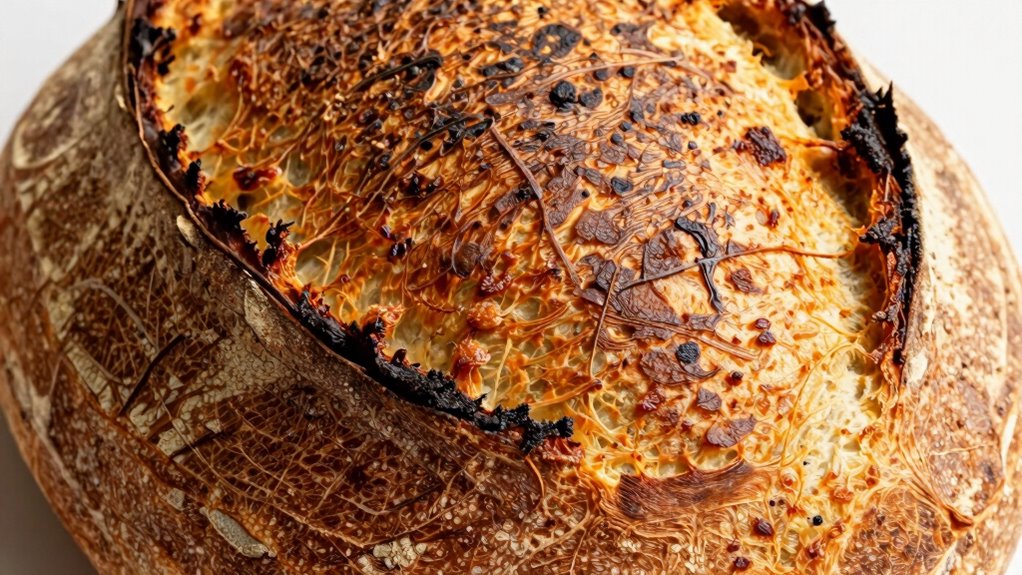
Have you ever opened a covered bread baker only to find the bottom of your loaf burnt and scorched? It’s frustrating because you’ve followed your recipe and trusted your equipment, yet that dark, bitter crust at the bottom ruins the whole baking experience. The root of this problem often comes down to crust coloration and baking temperature. When the crust turns overly dark or blackened on the bottom, it signals that the oven’s heat isn’t evenly distributed or that your baking parameters need adjustment.
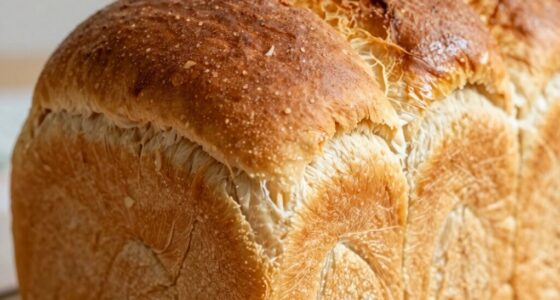
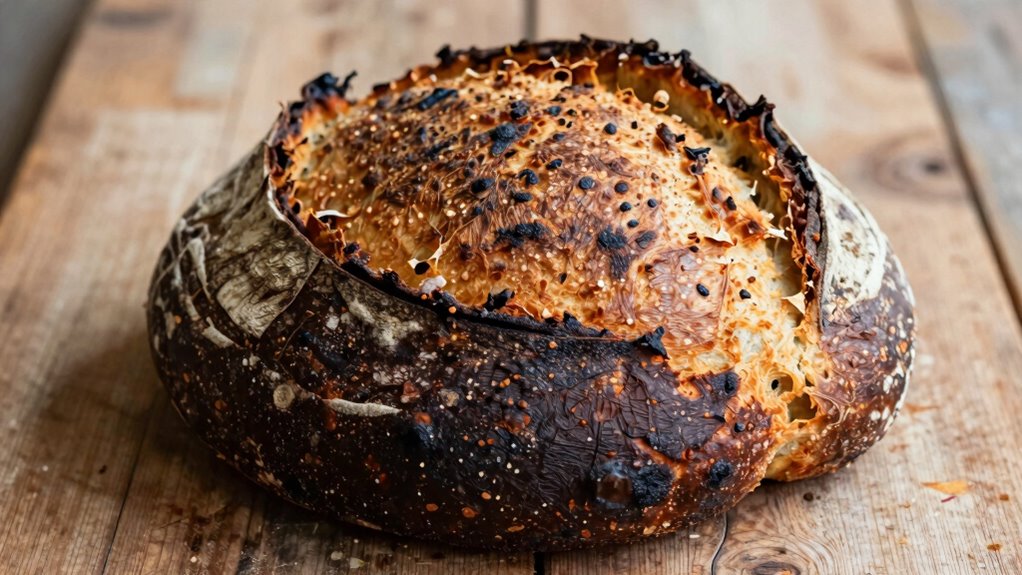
Crust coloration is a key indicator of how well your bread is baking. A perfectly baked loaf should have a golden-brown crust, signaling proper caramelization and Maillard reactions. However, when the bottom crust is significantly darker than the rest, it means the heat is too intense at the base. This uneven coloration is mostly caused by excessive baking temperature or direct contact with a hot surface. You want to aim for a uniform crust, which involves controlling the temperature and ensuring heat penetrates evenly without burning the bottom.
Aim for a golden-brown crust by controlling temperature and ensuring even heat distribution for perfect baking.
Baking temperature plays a critical role in preventing bottom scorch. If your oven or bread baker runs too hot, the heat can cause the bottom of the loaf to cook too quickly, leaving the interior underdone while the bottom burns. Many bakers make the mistake of setting the oven temperature too high initially, thinking it will give a better rise or crust. Instead, it often leads to uneven baking. To avoid this, start with a moderate temperature—usually around 375°F to 425°F, depending on your recipe—and adjust based on the dough and oven. Also, consider using an oven thermometer to ensure your oven isn’t running hotter than the dial indicates.
Another factor to consider is the baking vessel itself. Some covered bread bakers are made of materials that conduct heat differently. If your baker is too thin or heats unevenly, it can cause hot spots that scorch the bottom. You might try placing a baking stone or an insulated baking sheet underneath the baker to diffuse heat more evenly. Additionally, if your bread baker has a lid, make sure it’s properly fitted and that you’re not baking with the lid off, which can lead to uneven heat distribution and bottom scorching. Using heat-resistant baking accessories can also help improve heat distribution. Moreover, ensuring proper air circulation around the baker can prevent hot spots and promote even baking.
In essence, preventing the bottom-scorch problem involves paying close attention to crust coloration and baking temperature. Lowering the temperature slightly or adjusting your preheating method can make a significant difference. Keep a close eye on how your oven heats and how your bread bakes, and don’t hesitate to experiment with different methods to find the perfect balance. Proper heat distribution can significantly improve your baking results and help produce evenly baked loaves with a beautiful crust, free from that burnt, scorched bottom.
As an affiliate, we earn on qualifying purchases.
Frequently Asked Questions
How Does Humidity Affect the Bottom-Scorch Problem?
Humidity directly impacts the bottom-scorch problem by influencing humidity control and moisture balance inside your oven. Higher humidity helps prevent the bottom of the bread from scorching by creating a moist environment, which reduces direct heat contact. You should monitor and adjust humidity levels carefully, ensuring a balanced moisture environment. This way, you can minimize scorching, achieve an even crust, and improve overall bread quality.
Are There Specific Bread Types More Prone to Bottom Scorching?
Some bread types, like baguettes and rustic loaves, are more prone to bottom scorching, especially if their crusts are thin or delicate. When baking at high temperatures, the bottom heats up faster, increasing the risk of scorching. You can think of it as a race between crust development and heat transfer; controlling baking temperature and monitoring crust thickness helps prevent the bottom from burning, ensuring your bread bakes evenly.
What Are the Best Cleaning Practices to Prevent Scorch Buildup?
To prevent scorch buildup, you should regularly clean your bread crusts and baking equipment, removing any residue after each use. Use a gentle scrub with baking soda or vinegar to break down stubborn deposits. Adjust your baking techniques by lowering oven temperature slightly or adding a baking stone to distribute heat evenly. Proper cleaning and technique adjustments help minimize bottom scorching and keep your bread crusts perfectly baked.
Can Alternative Materials for Covers Reduce Scorching?
Using alternative cover materials can help reduce scorching by distributing heat more evenly. Silicone, for example, offers better heat resistance and prevents hot spots, which are common causes of scorch marks. Incorporate scorch prevention techniques like using parchment paper or insulating layers with fiber blankets. These options minimize direct contact with the heat source, ensuring your bread bakes evenly and stays free from bottom scorch marks.
How Does Oven Calibration Influence Bottom Scorch Occurrence?
Did you know that improper oven calibration can increase scorching by up to 30%? When your oven temperature isn’t accurate, it causes uneven heat distribution, especially near the baking rack’s bottom. This results in the crust burning before the loaf is fully baked. Regularly calibrate your oven to guarantee the temperature aligns with your settings, reducing bottom scorch and producing evenly baked bread every time.
As an affiliate, we earn on qualifying purchases.
Conclusion
To tame the troubling bottom-scorch problem, try tweaking your technique and tools. Test different temperatures, turn the bread, or add a baking sheet beneath to block the blaze. With patience and persistence, you’ll prevent the bottom from burning and bring out the beautifully baked bread you crave. Remember, small shifts lead to stunning results—so stay steady, experiment enthusiastically, and enjoy every perfectly baked bite!
As an affiliate, we earn on qualifying purchases.
As an affiliate, we earn on qualifying purchases.
Halloween Picks
halloween
As an affiliate, we earn on qualifying purchases.