
Countertop oven dials often lie because internal sensors can drift or become miscalibrated over time, causing the displayed temperature to be inaccurate. This misalignment is further affected by component aging, poor maintenance, and hot spots inside the oven. As a result, your oven might run hotter or cooler than the dial suggests, impacting your cooking. To fix this, you can easily verify and calibrate your oven—so keep exploring to learn how to get precise temperatures every time.

Get baking supplies delivered free with Prime
- Fast, free delivery on millions of items
- Prime Video, Amazon Music and more included
- Member-only deals all year
Key Takeaways
- Oven dials are often inaccurate due to sensor miscalibration and aging, leading to temperature discrepancies.
- Internal sensors can drift over time, causing the oven to heat unevenly or incorrectly.
- Hot spots and poor placement of the oven thermometer can mislead temperature readings.
- Regular calibration with an independent thermometer ensures the dial reflects true oven temperature.
- Proper maintenance and cleaning of sensors improve overall temperature accuracy and cooking results.
As an affiliate, we earn on qualifying purchases.
How Do Countertop Ovens Measure Temperature?
Have you ever wondered how your countertop oven knows when to turn on and off? It all comes down to temperature sensors, which are vital components that monitor the oven’s heat. These sensors, often thermocouples or thermistors, send temperature readings to the control system. To guarantee accurate readings, proper sensor calibration is essential; if calibration is off, the oven may not heat correctly. When you set the oven, the control system compares the current temperature from these sensors to your desired setting. Once the target temperature is reached, the oven turns off, and it turns back on when it cools down. This continuous feedback loop keeps your food cooking evenly, relying on precise measurements from well-calibrated temperature sensors. Sensor calibration is crucial for maintaining the accuracy and reliability of your oven’s temperature readings. Additionally, understanding how temperature sensors function can help you troubleshoot issues and ensure your oven operates safely and efficiently. Recognizing the importance of temperature measurement techniques helps in understanding how these sensors provide accurate feedback for optimal cooking performance, especially considering the potential discrepancies caused by sensor inaccuracies. Proper sensor maintenance can also extend the lifespan of your oven and maintain its precision over time.
oven temperature calibration tool
As an affiliate, we earn on qualifying purchases.
As an affiliate, we earn on qualifying purchases.
Why Are Oven Dials Sometimes Off?
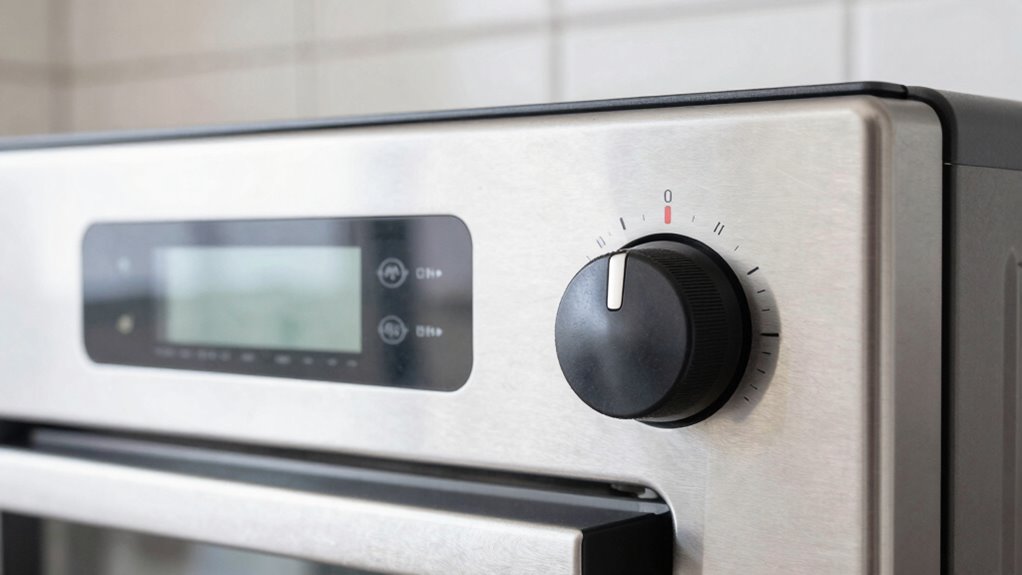
Oven dials can sometimes be off because the temperature sensors inside the oven may not be perfectly calibrated or may drift over time. When oven sensors are misaligned, the dial’s temperature settings don’t accurately reflect the actual heat inside. This means you might set the dial to 350°F, but the oven could be hotter or cooler. Dial calibration is essential to keep the temperature readings accurate, but over time, factors like age and usage can cause sensors to lose calibration. If your oven’s dial seems inconsistent, it’s often due to this drift. Regularly checking and recalibrating the dial can help ensure your oven’s temperature matches what you set, improving cooking results and avoiding under- or overcooking. Sensor calibration is a crucial factor in maintaining temperature accuracy over time, especially as balanced designs can help ensure the oven’s internal components function properly. Additionally, component aging can affect sensor performance, contributing to inaccurate temperature readings. Proper maintenance and periodic testing can help identify and correct calibration issues before they impact your cooking. Periodic calibration can also prevent unexpected temperature fluctuations, ensuring more consistent cooking outcomes.
countertop oven temperature sensor
As an affiliate, we earn on qualifying purchases.
As an affiliate, we earn on qualifying purchases.
How Does Temperature Inaccuracy Affect Your Cooking?
Temperature inaccuracies can cause your food to cook unevenly, leaving some parts overdone while others are undercooked. You might also notice that baking times are off, making it harder to follow recipes precisely. Both issues can sabotage your efforts and affect the quality of your meals. Using a connected thermometer can help ensure your oven’s temperature remains accurate, leading to more consistent cooking results. Additionally, understanding how compact living impacts kitchen setup can help you choose appliances that better suit smaller spaces while maintaining cooking precision. Embracing energy-efficient appliances can further enhance your kitchen’s performance and sustainability, especially in limited spaces. Being aware of temperature calibration can help you identify whether your oven needs adjustment or professional servicing to improve accuracy, and exploring simple hacks like sending money with MoneyGram might free up resources for upgrading your kitchen tools.
Uneven Cooking Results
When your countertop oven’s temperature isn’t accurate, you might notice that your food cooks unevenly. Poor oven placement can worsen this issue, as placing food too close to the heating element or in a hot spot may result in uneven browning or undercooked areas. Temperature fluctuation inside the oven causes some parts to cook faster while others lag behind, leading to inconsistent results. For example, baked goods might be overdone on one side and underdone on another. This inconsistency can be frustrating, especially when you’re aiming for precise cooking or baking. When your oven’s temperature isn’t steady, it becomes difficult to achieve evenly cooked meals, making it necessary to monitor and adjust oven placement and settings regularly. Additionally, temperature calibration is essential to ensure that your oven’s dial accurately reflects the actual heat, helping you achieve more reliable cooking outcomes. Recognizing and correcting temperature inaccuracies can significantly improve your cooking consistency and satisfaction. Regularly checking your oven’s temperature with an independent thermometer can help identify inaccurate readings, allowing for better adjustments and more consistent results. Implementing a proper calibration process can further ensure your oven maintains accurate temperatures over time, reducing cooking surprises. Being proactive about temperature monitoring can help you better understand your oven’s behavior and improve your overall cooking results.
Altered Baking Times
Inaccurate oven temperatures can profoundly alter your baking times, often leading to unexpected results. When your oven’s temperature fluctuates, it impacts how quickly or slowly your food cooks, forcing you to make baking adjustments. You might find that baked goods are underdone or overcooked despite following the recommended times. To compensate, you could:
- Increase or decrease baking time unexpectedly
- Adjust temperature settings frequently to maintain consistency
- Risk uneven doneness due to inconsistent heat distribution
These temperature fluctuations mean you need to pay close attention during baking, as standard times may no longer apply. Proper calibration ensures more reliable baking adjustments, helping you achieve the perfect texture and doneness every time. Additionally, using an oven thermometer can help you monitor and maintain accurate temperatures, reducing the likelihood of temperature inaccuracies affecting your baked goods. Regular calibration and oven temperature accuracy checks are key to consistent baking results. Ensuring your oven’s temperature calibration is accurate can save you time and prevent frustration in your baking endeavors. Recognizing the potential for temperature discrepancies emphasizes the importance of precise oven management for optimal baking outcomes. Moreover, understanding how oven temperature variation affects baking helps you develop better troubleshooting skills.
As an affiliate, we earn on qualifying purchases.
How Can You Tell If Your Oven’s Temperature Is Wrong?
To check if your oven’s temperature is off, start by using an oven thermometer to compare actual and set temperatures. Observe how your recipes cook and note if they take longer or shorter than usual. Testing multiple temperatures can help you identify inconsistencies and determine if your oven needs calibration.
Use an Oven Thermometer
Using an oven thermometer is the most straightforward way to determine if your countertop oven’s temperature is accurate. Place the thermometer in the center of the oven to get the best reading. This helps you identify issues with oven calibration or faulty temperature sensors. To guarantee accuracy, check the thermometer periodically and compare it to your oven’s dial. If the readings differ markedly, it may be time to recalibrate your oven or replace faulty sensors. Regular use of an oven thermometer helps you understand your oven’s true temperature and avoid under- or overcooking. Remember, even the best dial can lie, so relying on an external thermometer provides peace of mind and better cooking results.
- Verify oven temperature before cooking
- Detect calibration issues early
- Guarantee consistent, accurate heat
Observe Cooking Times
When your oven’s temperature is off, you’ll notice it by how your food cooks compared to expected times. If dishes take longer than usual or burn quickly, it’s a sign of temperature variation. Observe cooking times closely; if baked goods are undercooked or overdone despite following recipes, your oven’s sensor calibration might be inaccurate. Consistent deviations across different foods suggest the dial’s reading isn’t reliable. Keep track of how long each dish takes to reach the desired doneness and compare it to standard times. Significant discrepancies indicate your oven’s temperature could be off. By noting these differences, you can better understand whether your oven’s internal sensors need adjustment, helping you decide if a professional calibration or replacement is necessary to achieve accurate cooking results.
Test Multiple Temperatures
Testing your oven at multiple temperatures is an effective way to determine if it’s heating accurately across the entire range. By doing so, you can spot inconsistencies that suggest issues with oven calibration or faulty temperature sensors. To get accurate results, use an oven thermometer and set your oven to various levels—say 200°F, 350°F, and 450°F—and record the actual temperature. If your readings are off, it indicates your dial isn’t reliable. You might need to recalibrate your oven or check the temperature sensors for damage or misalignment. Regular testing guarantees your oven heats correctly at different settings, helping you cook precisely and avoid under- or overcooked dishes.
- Verify accuracy at different settings
- Identify calibration issues early
- Ensure consistent cooking results
How to Use a Thermometer to Check Your Oven’s True Temp
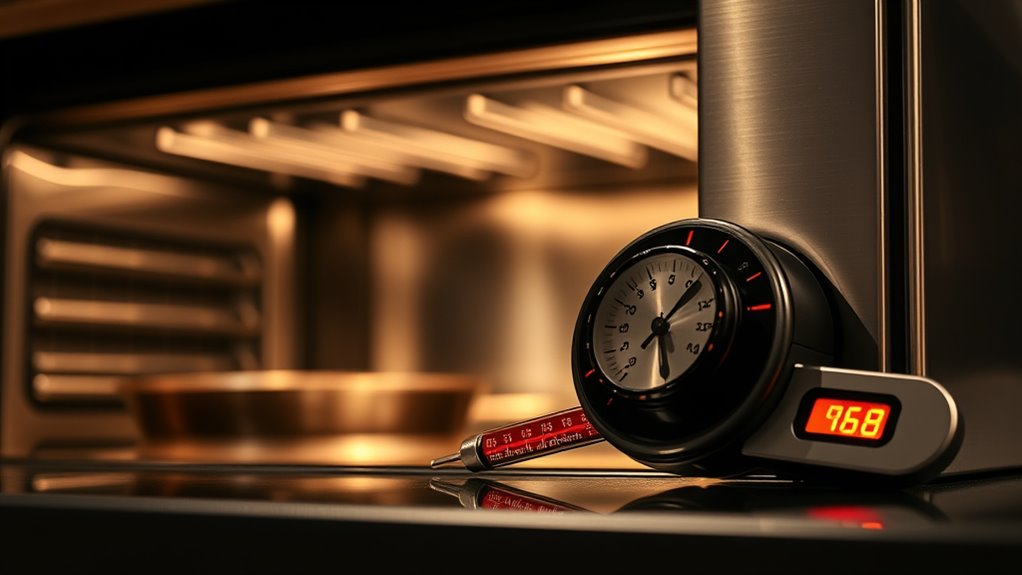
To accurately determine your oven’s true temperature, you need a reliable oven thermometer and a straightforward method to use it. Place the thermometer in the center of your oven, ensuring it’s not touching walls or racks. Preheat your oven to your desired setting, then let it stabilize for about 15-20 minutes. Record the thermometer reading to check for oven calibration issues. Use this table as a mental image:
| Oven Setting | Thermometer Reading | Difference |
|---|---|---|
| 350°F | 340°F | -10°F |
| 375°F | 365°F | -10°F |
| 400°F | 390°F | -10°F |
This process helps you assess temperature consistency and guides adjustments for more accurate cooking.
Simple Steps to Calibrate Your Countertop Oven
Calibrating your countertop oven guarantees it heats accurately, so your recipes turn out just right. Start by following simple calibration procedures: preheat your oven to a specific temperature, then place an oven thermometer inside. Check the reading against your oven’s dial. If there’s a discrepancy, consider these steps:
Calibrate your countertop oven for accurate heat and perfect cooking results.
- Adjust the oven’s temperature settings based on your thermometer readings.
- Inspect the temperature sensors for dirt or damage and clean or replace if needed.
- Repeat the process to ensure consistent accuracy after adjustments.
Many ovens allow for calibration adjustments via a settings menu or by manually tweaking the temperature sensor. Proper calibration ensures your oven’s temperature sensors work correctly, maintaining the precise heat needed for perfect cooking results.
How to Maintain Accurate Cooking Temperatures
Maintaining accurate cooking temperatures requires regular attention and proper oven care. Start by using calibration techniques, like placing an oven thermometer inside to verify temperature accuracy. If discrepancies arise, recalibrate your oven following the manufacturer’s instructions. Modern ovens often feature advanced sensor technology that helps monitor and regulate internal temperature more precisely. Ensure sensors are clean and free of debris, as dirt or grease can impair their function. Regularly inspecting and maintaining these sensors keeps your oven operating at its best. Avoid relying solely on the dial; instead, cross-check with a thermometer and recalibrate as needed. Proper calibration techniques combined with well-maintained sensor technology ensure your countertop oven consistently reaches the correct temperatures, leading to better cooking results.
How to Adjust Recipes for Your Oven’s Real Temperature
Once you’ve verified and adjusted your oven’s temperature with a thermometer, it’s important to recognize how these variations can impact your recipes. If your oven sensors or temperature calibration are off, you might need to tweak your cooking times or temperatures. To compensate:
Adjust oven temperatures based on thermometer readings to ensure perfect baking results.
- Lower your recipe’s temperature if your oven runs hot, avoiding overbaking.
- Increase cooking time slightly for cooler-than-expected temperatures.
- Use your thermometer readings to create a personalized adjustment chart for future use.
What Future Tech Will Make Ovens More Accurate?
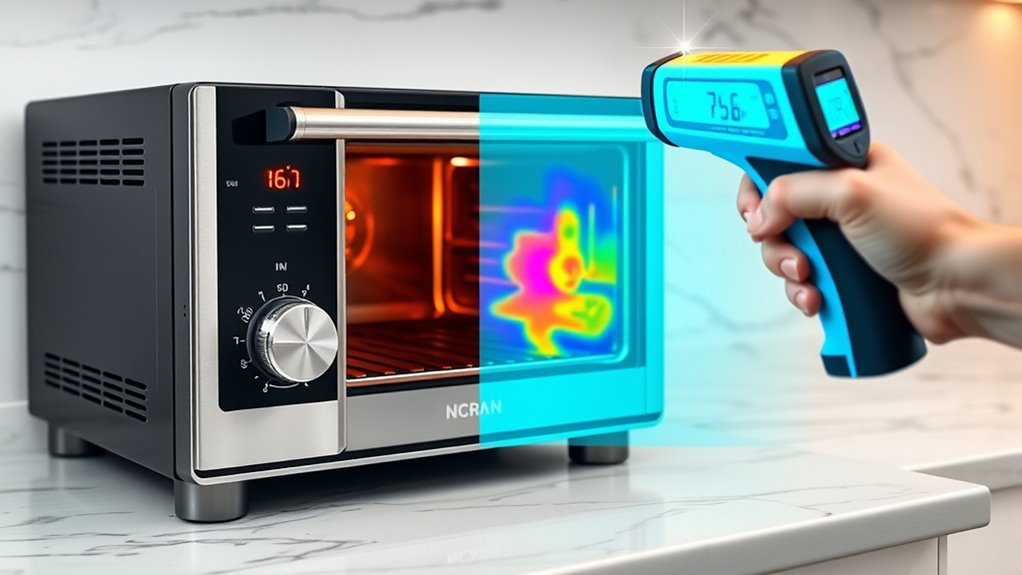
Advancements in smart technology are paving the way for ovens that automatically monitor and adjust their temperature with incredible precision. Future ovens will likely incorporate smart sensors that continuously track internal heat and environment conditions, providing real-time data. AI calibration will analyze this data to fine-tune temperature settings instantly, ensuring consistent results without user intervention. These smart sensors will detect even slight fluctuations, correcting them on the fly to prevent under- or overcooking. As AI algorithms learn your cooking habits, they’ll personalize temperature calibrations for different recipes, improving accuracy over time. This technology promises a future where your oven reliably delivers precise temperatures, eliminating guesswork and the need for manual adjustments. It’s a significant leap toward smarter, more dependable cooking appliances.
Frequently Asked Questions
Can I Rely Solely on the Oven’s Dial for Accurate Temperatures?
You shouldn’t rely solely on the oven’s dial for accurate temperatures. Dials can be off due to poor oven calibration, leading to inconsistent cooking results. To guarantee temperature consistency, use an oven thermometer to double-check and adjust settings as needed. This way, you’ll maintain precise temperatures, avoid over- or undercooking, and get the best results every time. Regular calibration checks are key for dependable oven performance.
How Often Should I Calibrate My Countertop Oven?
You should calibrate your countertop oven at least once a year, or more often if you notice uneven cooking. Regular temperature testing helps guarantee accuracy, so you can adjust the oven calibration as needed. Keep a thermometer handy, and compare its readings to the dial. If they differ considerably, recalibrate your oven to maintain precise temperatures and improve your cooking results.
Do All Ovens Have the Same Level of Temperature Inaccuracy?
Ever wonder if all ovens have the same temperature inaccuracies? Not really. Your oven’s insulation and heating element quality play huge roles in its precision. Cheaper models often have less effective insulation, leading to uneven heat, while high-quality heating elements maintain more consistent temperatures. So, don’t assume every oven performs equally; factors like build quality and design make a big difference in temperature accuracy.
Are Digital Ovens More Accurate Than Analog Dial Models?
Digital ovens are generally more accurate than analog dial models because they offer better digital precision. You’ll notice that digital controls provide consistent, precise temperature settings, unlike analog limitations that can lead to inaccuracies. With digital models, you can trust the displayed temperature more reliably, making them ideal for recipes that require exact heat. So, if accuracy is your priority, choosing a digital oven is a smart move.
What Are the Signs That My Oven Needs Professional Repair?
If your baked goods turn out uneven or burn quickly, it’s a sign your oven needs professional repair. For example, a faulty oven sensor might not accurately detect temperature, causing inconsistent heat. You should also check if the heating element is working properly—if it doesn’t heat uniformly or turns off unexpectedly, it’s time to call a technician. These issues indicate your oven requires expert attention to guarantee safe, reliable operation.
Conclusion
To truly trust your countertop oven, take time to test, tweak, and tune. By understanding how to measure and maintain your oven’s true temperature, you’ll transform tricky recipes into tasty triumphs. Remember, regular calibration and careful corrections can prevent pesky temperature problems. Perfecting your oven’s precision promises more predictable, professional results. So, stay savvy, stay sharp, and keep your cooker’s calibration constant—because consistent, confident cooking begins with temperature truth.
Halloween Picks
halloween
As an affiliate, we earn on qualifying purchases.