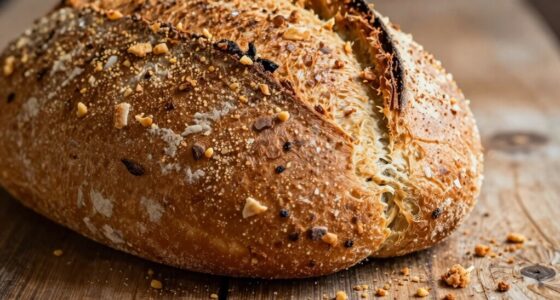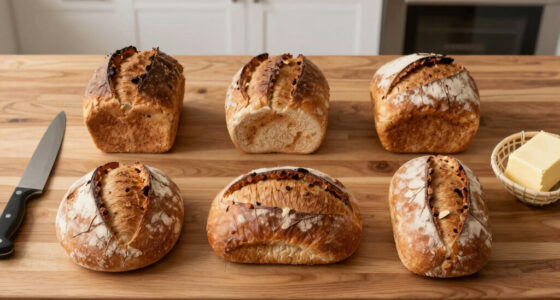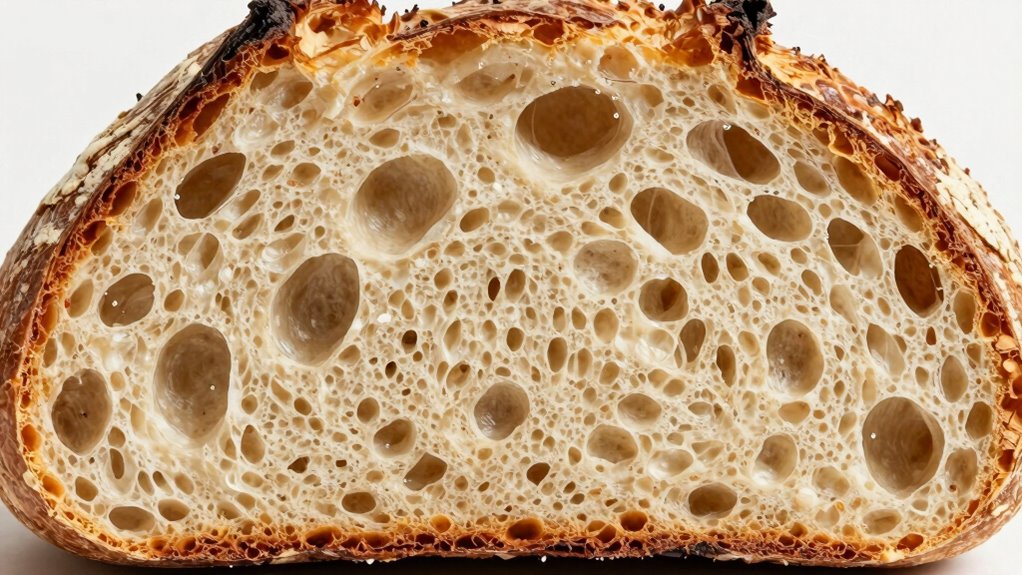

A tight crumb in sourdough often comes down to hidden proofing problems that stop your dough from expanding fully. If you under-proof, the dough doesn’t produce enough gas, leading to a dense texture, while over-proofing exhausts the yeast and weakens gluten, also causing tightness. Temperature, fermentation timing, and gluten development all play a role. By paying close attention to these factors, you can improve your crumb—more insights await if you keep exploring.
Key Takeaways
- Over- or under-fermentation can exhaust yeast or produce insufficient gas, causing a dense, tight crumb.
- Inadequate gluten development prevents proper gas retention, resulting in a compact texture.
- Incorrect proofing temperature slows fermentation and gluten formation, leading to a tight crumb.
- Low hydration levels hinder gluten stretchability, reducing the dough’s ability to trap gas effectively.
- Insufficient resting during bulk fermentation weakens gluten structure, causing a dense, tight crumb in the final bread.
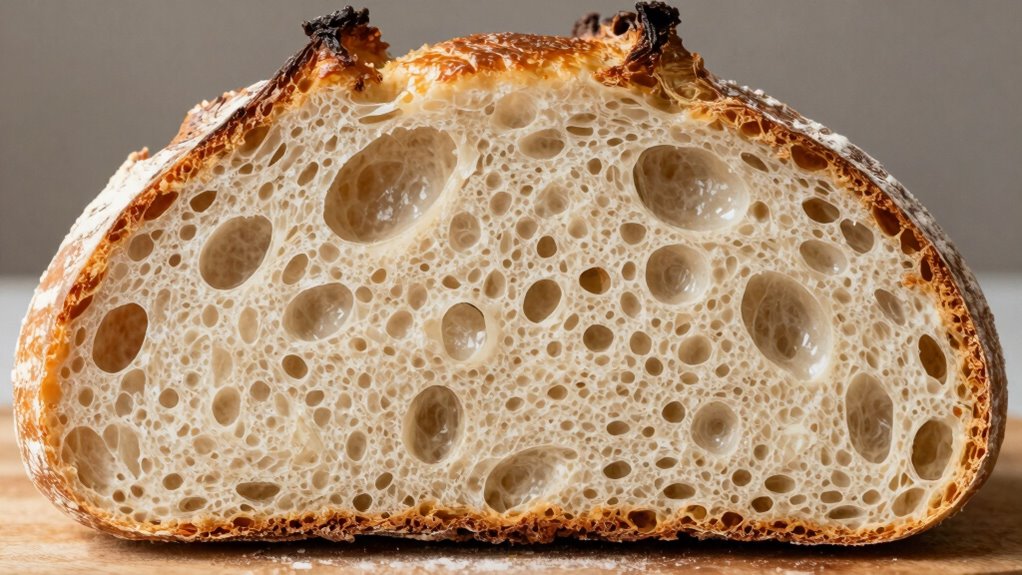
Ever wonder why your sourdough often has a tight, dense crumb instead of the airy holes you’re aiming for? The culprit usually boils down to fermentation issues and how well your dough develops gluten. When fermentation doesn’t proceed properly, your dough doesn’t produce enough gas to create those open, irregular holes that define great sourdough. Instead, it remains compact and heavy. You might notice that your dough either over- or under-ferments, both of which can lead to a tight crumb. Over-fermentation causes the yeast and bacteria to exhaust their food supply, weakening gluten structure and resulting in a dense texture. Under-fermentation, on the other hand, means the dough hasn’t produced enough CO2, leaving it insufficiently risen and tight once baked.
A dense sourdough crumb often results from improper fermentation or weak gluten development.
Gluten development is another key factor. Proper gluten formation creates a sturdy yet extensible network that traps gas produced during fermentation. If your dough lacks sufficient gluten development, it won’t hold the gas well, leading to a dense crumb. This can happen if you haven’t kneaded enough or if you used low-protein flour that doesn’t develop gluten easily. Additionally, inadequate rest periods during bulk fermentation can hinder gluten formation, making the dough less elastic and less capable of trapping gas. When gluten isn’t fully developed, the dough becomes tight and resistant, preventing the rise needed for those desirable holes.
Temperature plays a critical role in both fermentation and gluten development. If your kitchen is too cold, fermentation slows down considerably, meaning the yeast can’t produce enough gas, and gluten doesn’t develop as quickly. Conversely, if it’s too warm, fermentation can accelerate too much, leading to over-fermentation and weakening the gluten network. Finding the right temperature—around 75 to 78°F (24-26°C)—ensures a balanced fermentation process and ideal gluten development.
Hydration level also influences the crumb. Higher hydration dough tends to produce a more open crumb because it allows gluten strands to stretch and trap gas more effectively. If your dough is too dry, gluten strands don’t form and extend properly, resulting in a tight crumb. Conversely, overly wet dough can be difficult to handle but often results in a more open texture when managed correctly.
Ultimately, addressing fermentation issues and ensuring thorough gluten development are essential steps. Pay attention to your dough’s rise, temperature, and hydration. With proper fermentation and strong gluten networks, you’ll start seeing that airy, open crumb you’re craving instead of a dense, tight one.

Amazon Basics Silicone Rectangular Baking Mat, Non-Stick, Reusable, Dishwasher Safe, Food Safe, Heat Resistant, 16.5" x 11.6", Beige/Gray, 2-Pack
- Package Includes: 2 silicone baking mats
- Reusable Material: Food-safe silicone for repeated use
- Non-Stick Surface: Releases food easily without oil
As an affiliate, we earn on qualifying purchases.
Frequently Asked Questions
Can Hydration Levels Cause a Tight Crumb in Sourdough?
Yes, hydration levels can cause a tight crumb in sourdough. If your dough’s hydration consistency is too low, it reduces dough elasticity, making it less extensible and resulting in a dense crumb. On the other hand, higher hydration promotes a more open, airy crumb by improving gluten development. Adjust your hydration carefully, aiming for a balance that enhances dough elasticity and creates the desired crumb structure.
Does Kneading Technique Affect Crumb Texture in Sourdough Bread?
Think of kneading as sculpting your dough’s future. Your technique directly impacts gluten development and dough elasticity, shaping the crumb texture. For example, over-kneading can make the dough too tight, resulting in a dense, tight crumb. Conversely, gentle kneading promotes ideal gluten formation, creating a soft, open crumb. So, by mastering your kneading method, you control the bread’s structure and achieve a perfect, airy texture every time.
How Does Fermentation Time Influence Crumb Openness?
You’ll notice that longer fermentation duration at ideal fermentation temperature creates a more open crumb in your sourdough. Extended fermentation allows natural yeast and bacteria to produce more gas, which expands the dough’s structure. Keep your fermentation temperature steady—around 75-78°F (24-26°C)—to promote consistent gas production. This balance ensures your bread develops a light, airy crumb, giving you that desirable open texture every time you bake.
Are There Specific Flour Types That Prevent Tight Crumbs?
Like a master sculptor choosing the right tools, you find that alternative flours such as bread or high-gluten varieties promote better gluten development, preventing tight crumbs. These flours provide stronger frameworks, ensuring your dough can trap gas effectively and produce an open crumb. Using whole grain or rye flour may also help, but keep in mind they can alter the texture. With careful selection, you craft a loaf with a light, airy crumb every time.
Can Shaping Methods Impact the Final Crumb Structure?
Yes, shaping methods can impact your final crumb structure. When you shape your dough, pay attention to scoring techniques and patterns, as they influence how the bread expands during baking. Proper scoring allows the dough to stretch evenly, avoiding a tight crumb. Experiment with different scoring patterns to see how they affect openness and texture, helping you achieve a more desirable, airy crumb in your sourdough.

Koolstuffs Silicone Baking Mat, Nonstick and Reusable, 3 Pack
- Nonstick Surface: Prevents sticking without oil or paper
- Easy to Clean: Food releases easily, dishwasher safe
- Reusable Design: Durable for daily use, eco-friendly
As an affiliate, we earn on qualifying purchases.
Conclusion
To avoid the quiet challenges of a tight crumb, pay close attention during proofing. Sometimes, a gentle touch and patience can make all the difference, helping your sourdough develop its full potential. Remember, the best loaves often come from a bit of tender care and understanding. Keep experimenting, learn from each bake, and trust that with time, your bread will find its perfect balance—bringing out the best in every slice.

Luckyiren 2 Pack Silicone Baking Mat Set, Nonstick Half Sheet, Orange/Beige
- Perfect Fit for Half Sheet Pans: Sized at 16.54" x 11.62",...
- Thin, Flexible & Easy to Handle (0.4mm): Crafted from durable 0.4mm BPA-free...
- Non-Stick Surface for Effortless Baking: Enjoy non-stick baking without oils,...
As an affiliate, we earn on qualifying purchases.

Amazon Basics Non-Stick Silicone Baking Mat, Food Safe, Dishwasher Safe, Heat Resistant, 16.5" x 11.6", Beige/Gray, Rectangular, 4-Pack
- Pack Size: 4-pack baking mats
- Food Safety: Food-safe silicone material
- Reusable: Reusable and durable
As an affiliate, we earn on qualifying purchases.