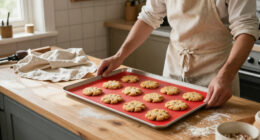
The toothpick test is unreliable because it only checks surface dryness, which can be misleading if the inside is still gooey or undercooked. Instead, you should rely on an instant-read thermometer to measure the internal temperature accurately. Watching for visual cues like crust color and firmness, or gently pressing for the right texture, gives better results. Keep going, and you’ll discover even more reliable techniques for perfect baked goods.

Get baking supplies delivered free with Prime
- Fast, free delivery on millions of items
- Prime Video, Amazon Music and more included
- Member-only deals all year
Key Takeaways
- Rely on internal temperature measurements with a digital thermometer for accurate doneness.
- Look for visual cues like golden crust, bubbling, or set filling instead of toothpick dryness.
- Check the texture by gently pressing, ensuring a springy or firm response appropriate for the baked good.
- Use tapping or listening techniques, such as a hollow sound in bread, to confirm doneness visually and tactilely.
- Avoid solely depending on the toothpick test, combining it with sensory cues and temperature readings for best results.
As an affiliate, we earn on qualifying purchases.
Why the Toothpick Test Can Be Misleading
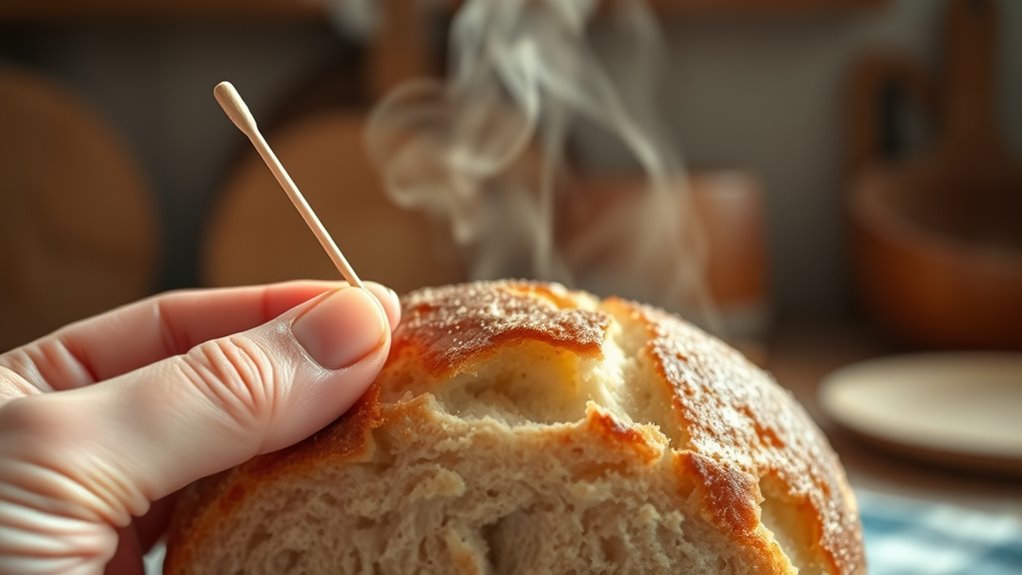
Although the toothpick test seems like a quick way to check if your cake is done, it can be misleading. Many believe the toothpick myth—that inserting a toothpick and having it come out clean guarantees perfect doneness. However, this is a common baking misconception. The test only indicates whether the surface or a specific spot is dry, not if the entire cake is fully baked. Moisture can hide inside, making the toothpick appear clean even if the center isn’t cooked through. Relying solely on this test can cause you to underbake or overbake your baked goods. To get a true sense of doneness, you need to take other signs and methods into account, rather than just trusting the toothpick myth. Understanding oven heat distribution and observing the cake’s texture and aroma can provide more reliable clues. Additionally, internal temperature measurement can give a precise indication of doneness, especially for denser baked goods. Using a baking thermometer ensures you reach the ideal internal temperature, leading to perfect results every time. Incorporating knowledge of baking science can help you develop a more accurate assessment of when your baked goods are truly done. Moreover, visual cues like the color and slight pulling away from the pan can serve as helpful indicators of doneness.
As an affiliate, we earn on qualifying purchases.
Why Internal Temperature Is the Key to Perfect Baked Goods
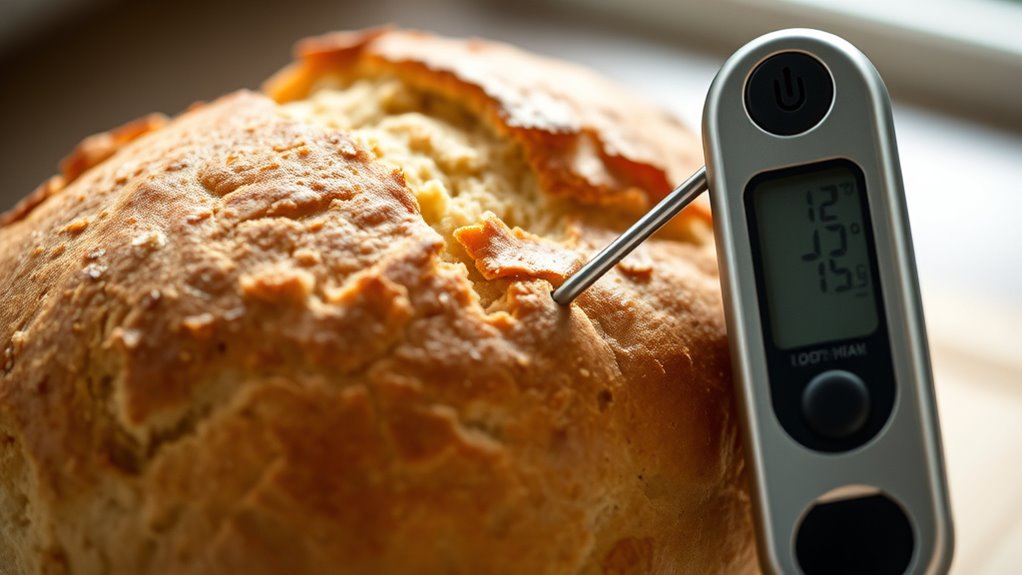
Internal temperature gives you a precise way to check if your baked goods are done, eliminating guesswork. It guarantees consistent results every time you bake. By focusing on temperature, you can trust your treats are perfectly baked through and through. Understanding core temperature helps you avoid under- or over-baking, ensuring optimal taste and texture. Using a baking thermometer provides an accurate reading that aligns with the ideal internal temperature for various baked items.
Accurate Doneness Indicators
Knowing the exact internal temperature of your baked goods is essential because it provides a reliable measure of doneness that visual cues alone can’t guarantee. In bakery science, precise temperature readings ensure consistent results and help prevent over- or under-baking. Relying on a toothpick or visual cues can be misleading, especially with complex recipes. Proper oven calibration is key here; an oven thermometer ensures your oven reaches and maintains accurate temperatures, making temperature readings trustworthy. Using a digital probe thermometer allows you to monitor internal temperatures accurately, giving you confidence that your baked items are perfectly cooked. This method removes guesswork, leading to better texture, flavor, and overall quality—something visual tests simply can’t consistently provide. Additionally, understanding baking science can improve your overall technique and results.
Consistent Baking Results
Achieving consistent baking results hinges on more than just following the recipe; it requires precise control over internal temperature. An oven that’s properly calibrated ensures your baked goods reach the correct internal temperature every time, preventing under- or over-baking. Relying solely on visual cues or toothpicks can be misleading, as they don’t account for variations in ingredient quality or oven performance. Using a reliable digital thermometer helps you monitor internal temperatures accurately, leading to predictable, perfect results. Quality ingredients also matter; fresh flour, eggs, and dairy can influence baking times and outcomes. By focusing on internal temperature, you eliminate guesswork and variability, ensuring your baked goods come out consistently delicious, moist, and perfectly cooked every time.
As an affiliate, we earn on qualifying purchases.
Use an Instant-Read Thermometer for Reliable Results
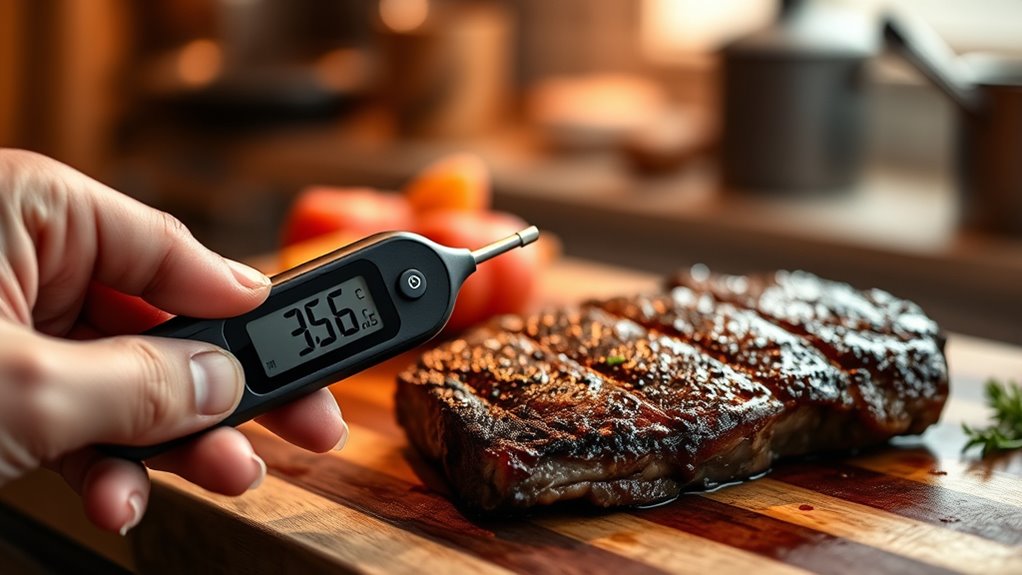
Using an instant-read thermometer is one of the most reliable ways to guarantee your food reaches the perfect temperature. Unlike the toothpick test, it provides precise readings, helping you monitor dough hydration and avoid under- or over-cooked results. When baking bread, checking the internal temperature ensures the dough has fermented enough without risking overproofing. Additionally, maintaining proper food safety standards with accurate temperature readings reduces the risk of foodborne illnesses. Incorporating temperature control techniques can further enhance your cooking precision. Proper thermometer calibration is essential to ensure your readings are accurate over time. Similarly, for perfect doneness, accurate readings help verify if your oven is properly calibrated, preventing uneven baking. Simply insert the thermometer into the thickest part of the food or dough, and within seconds, you’ll know if it’s ready. This method removes guesswork, saves time, and ensures consistent results. Investing in a quality instant-read thermometer makes your baking more reliable and takes the uncertainty out of judging doneness by sight or touch. Proper temperature techniques can further improve the clarity and professionalism of your writing.
As an affiliate, we earn on qualifying purchases.
How to Properly Check Doneness With a Thermometer
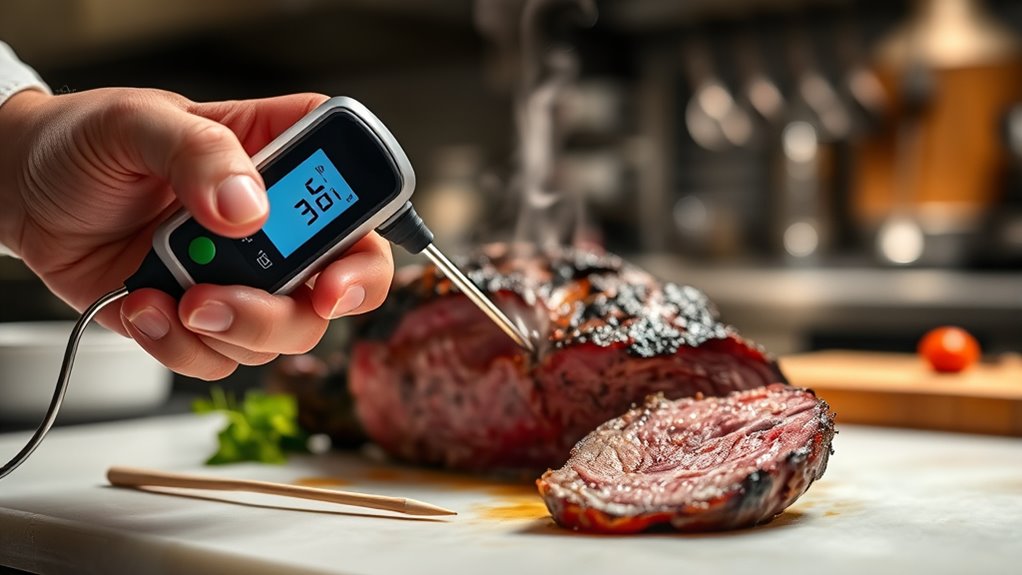
To check doneness with a thermometer, start by inserting the probe into the thickest part of the food, avoiding bones or fatty areas that can give false readings. For baked goods, monitor dough elasticity; when it feels firm and springy, it’s close to done. In meats, aim for the correct internal temperature to ensure safety and ideal texture. Keep an eye on crust coloration too; a golden-brown crust usually indicates proper baking. Use this table as a quick reference:
| Food Type | Target Temperature | Additional Indicator |
|---|---|---|
| Bread | 190-210°F | Crust coloration, dough elasticity |
| Roast Beef | 135-145°F (medium rare) | Firmness, juices run clear |
| Chicken | 165°F | Clear juices, firm texture |
| Fish | 145°F | Flaky texture |
| Pork | 145°F | Slightly pink center |
This approach ensures accurate doneness checks beyond toothpicks. Incorporating proper testing methods such as digital thermometers increases confidence in your results and helps prevent under- or over-cooking.
Look for Visual Cues and Feel for the Right Texture
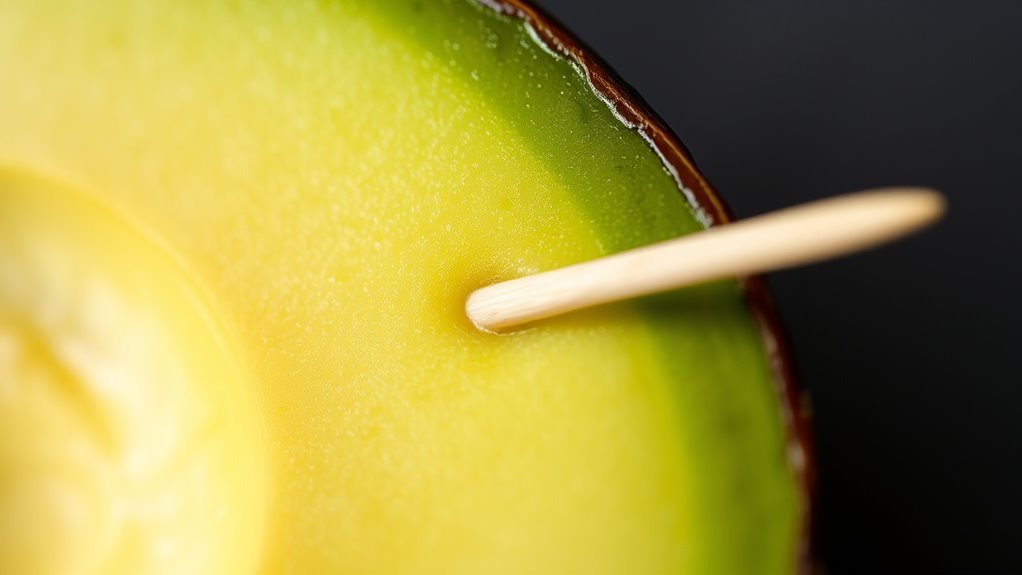
While a thermometer provides precise temperature readings, visual cues and texture are equally important for judging doneness. Look for clear visual cues like a golden-brown crust, bubbling edges, or a firm surface that signals your baked item is ready. Gently press the top or sides to assess tactile feedback—your baked good should feel firm but not hard, with a slight bounce or resistance. These sensory clues help you avoid over- or under-baking. Pay attention to moisture levels and surface appearance, which can indicate doneness even if the internal temperature isn’t perfect. Sensory evaluation techniques, such as sight and touch, are essential for accurate doneness assessment. Incorporating visual cues and tactile feedback into your baking routine improves consistency and ensures your baked goods come out perfectly cooked and ready to enjoy. Recognizing these internal and external indicators allows you to better trust your senses rather than relying solely on tools.
Adjust Your Doneness Checks for Different Baked Items
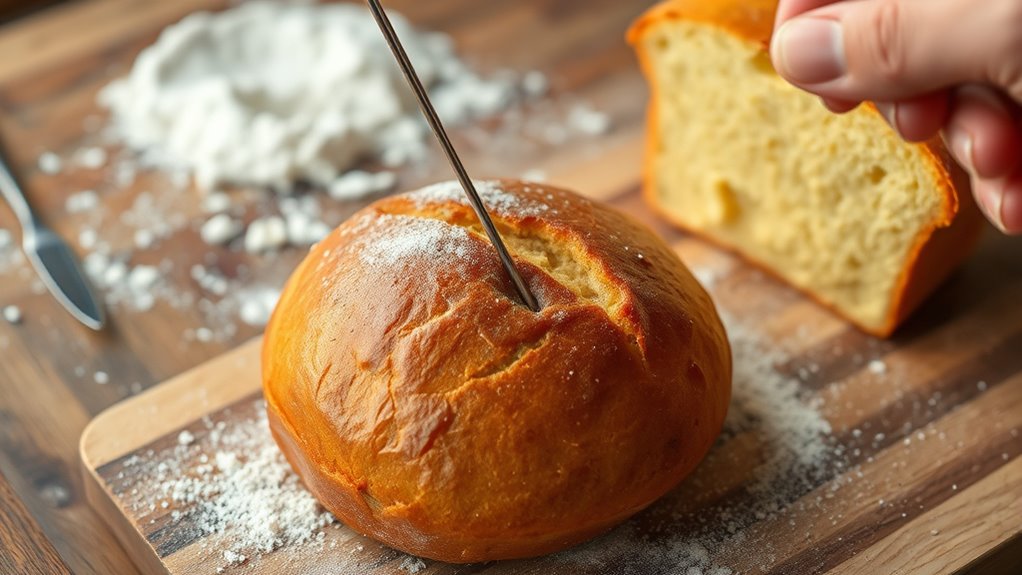
Since different baked goods have varying textures, you need to adjust your doneness checks accordingly. Pay attention to visual cues and rely on timing, but don’t depend solely on a toothpick for every item. For example, understanding the proper doneness indicators for different recipes can help you avoid under- or over-baking. Using a baking thermometer can provide more accurate results for certain baked goods, ensuring perfect doneness each time. Incorporating baking techniques tailored to each item can also improve your overall results.
Adjust for Different Textures
Different baked items require different textures to be considered perfectly done. Recognizing texture differences helps you avoid under- or over-baking. For example, a cake should be moist and springy, while bread needs a firm crust. The baking surface also influences texture; a dark pan may produce a crisper crust than a light one. To adjust your checks:
- For cakes, gently press the center—should bounce back without indentation.
- For bread, tap the bottom—should sound hollow.
- For cookies, edges should feel firm but not hard.
- For pies, the filling should be set but not overly runny.
Understanding these subtle cues ensures you account for texture differences and baking surface effects, leading to perfect results every time.
Use Visual Cues
Have you ever relied solely on the toothpick test and missed subtle visual cues that indicate your baked item is ready? Foolproof methods involve observing visual indicators like a golden-brown crust, slight bubbling, or firm edges, which often signal doneness more reliably. For cakes, look for a springy top and clean edges; for bread, check for a hollow sound when tapped. Muffins and cupcakes should have a consistent color and no wet batter visible on the surface. These visual cues give you immediate feedback without the guesswork of toothpicks. Paying attention to these indicators helps prevent under- or over-baking, ensuring perfect results every time. Using visual cues is a straightforward, reliable way to judge doneness tailored to each baked good. Additionally, understanding how heat distribution affects baking outcomes can help you better interpret these visual signals. Recognizing how oven hot spots influence baking can help you adjust your techniques to achieve more consistent results, especially when combined with visual cues for a more comprehensive approach.
Rely on Timing
While visual cues are helpful, relying on timing can streamline your baking process. Accurate timing depends on understanding your oven calibration and how different baked items respond. To improve timing accuracy, consider these tips:
- Adjust baking times based on your oven’s true temperature, not just the dial reading.
- Track average baking durations for each item to develop a reliable schedule.
- Recognize that denser baked goods require longer, while airy items bake faster.
- Use a timer to avoid opening the oven prematurely, which can affect doneness.
Tips to Guarantee Perfect Bakes Every Time
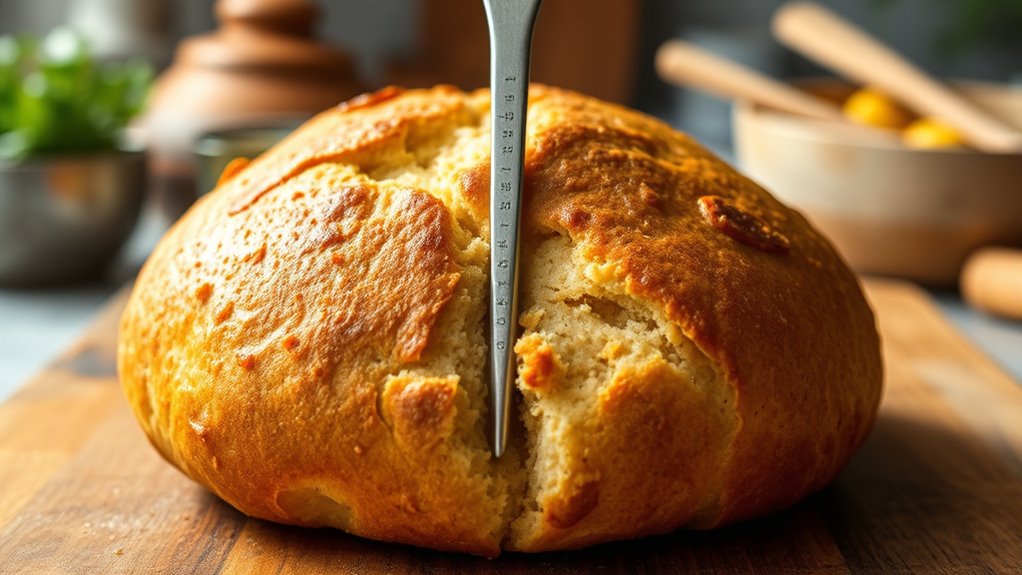
Achieving perfect bakes every time comes down to following some simple yet effective tips. First, understand the baking science behind your recipes—temperature, ingredients, and timing all influence the final result. Use accurate measurements and preheat your oven thoroughly to ensure even cooking. Don’t forget, proper ingredient balance enhances flavor development, making your baked goods more delicious. Avoid opening the oven too often, which can cause uneven baking. Keep an eye on your baked goods’s color and texture, trusting your senses over a timer alone. Consistently following these tips helps you master the art of baking, ensuring each bake is as perfect as the last. With practice, you’ll develop an intuition for when your treats are just right.
Frequently Asked Questions
Can the Toothpick Test Be Reliable for All Baked Goods?
The toothpick test isn’t reliable for all baked goods because of its limitations, especially with larger or moist items. You might find it tricky to judge doneness accurately. Instead, use alternative methods like checking the internal temperature or gently pressing the top—these give better results. Relying solely on the toothpick can lead to undercooked or overdone baked goods, so explore other techniques for more consistent outcomes.
What Types of Baked Items Benefit Most From Temperature Checks?
You’ll find that desserts like cakes and quick breads benefit most from temperature checks, ensuring perfect doneness. When you insert a thermometer into the center, it’s like revealing the secret to fluffy cake doneness or a golden bread crust. Unlike the unreliable toothpick test, temperature readings give you precise results, preventing underbaked or dry outcomes. Trust this method for consistently delicious baked goods—your baking game will skyrocket!
How Often Should I Calibrate My Instant-Read Thermometer?
You should calibrate your instant-read thermometer at least once every year or after dropping it. Regular thermometer maintenance guarantees accurate temperature readings, which is essential for baking safety and quality. Check calibration frequency if you notice inconsistent readings or after extreme temperature changes. To maintain accuracy, use the ice-water method or boiling water test periodically, especially before critical baking tasks, so your thermometer remains reliable every time you bake.
Are There Specific Brands of Thermometers Recommended for Baking?
You should choose baking thermometers from recommended brands like ThermoPro, Taylor, or CDN, which are known for accuracy and durability. Investigating the truth of brand reputation helps you avoid unreliable options. These brands offer models with easy-to-read displays and quick response times, ensuring precise temperature readings. Investing in reputable baking thermometers guarantees better results, making your baking consistent and successful every time.
How Do Humidity and Altitude Affect Baking Doneness Checks?
Humidity and altitude greatly impact baking doneness checks because they alter moisture levels and air pressure. Higher humidity can keep baked goods moist longer, while low humidity might cause quick drying. At higher altitudes, decreased air pressure affects rising and baking times, making it harder to judge doneness. To adapt, check for visual cues and use a reliable thermometer, rather than relying solely on traditional tests, to ensure your baked goods are perfectly done.
Conclusion
So, next time you’re tempted to rely on the toothpick, remember it’s about as accurate as your grandma’s weather predictions. Instead, grab that instant-read thermometer and let science do the work. Because who wants perfectly baked goods to be a guessing game? Trust the temperature, not the toothpick, and you’ll be a baking genius—without all the silly poking and hoping. Happy baking, and may your treats always reach the perfect internal temp!
Evergreen bestsellers Picks
bestsellers
As an affiliate, we earn on qualifying purchases.