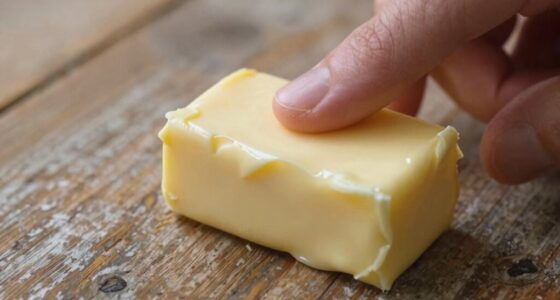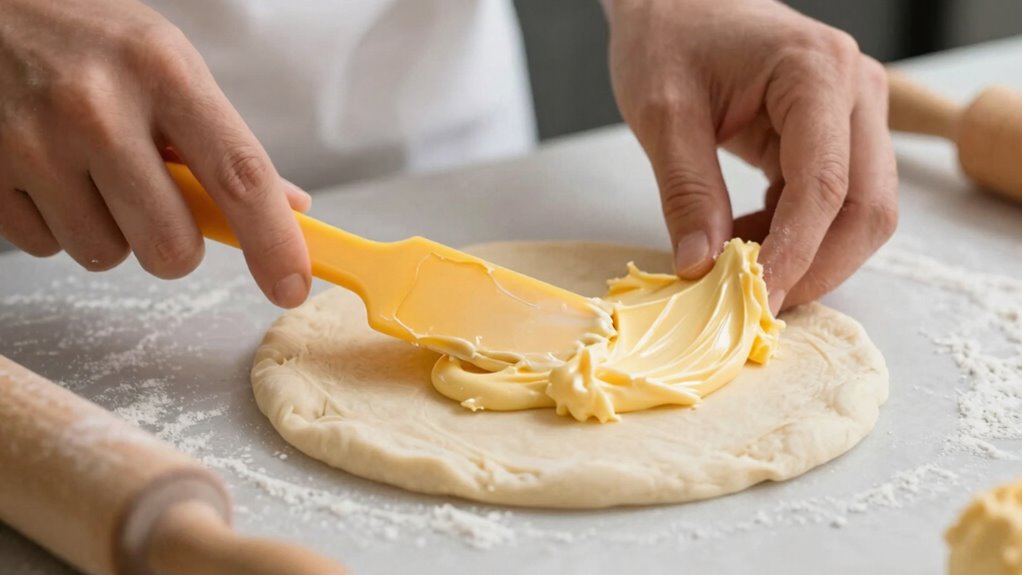
To avoid smearing butter into your dough, keep the butter cold—ideally between 40°F and 50°F—and handle it quickly and gently. Cut or grate the butter into small pieces to help it blend without softening too much. Use tools like a pastry cutter or food processor for controlled mixing, and pause if the butter starts to melt or smear. Staying attentive to butter temperature and dough texture will lead to flaky, tender results; there’s more to master for perfect pastries.
Key Takeaways
- Keep butter cold (40°F-50°F) and handle quickly to prevent melting into the dough.
- Cut or grate butter into small pieces for easier, controlled incorporation.
- Use gentle folding or mixing techniques to avoid excessive blending.
- Pause and chill the dough if butter begins to smear during mixing.
- Avoid overmixing, which can cause butter to break down and smear into the dough.

Ever wondered how to incorporate butter into your dough without it turning into a greasy mess? The secret lies in understanding the right butter temperature and maintaining the proper dough consistency. When you’re mixing butter into dough, the temperature of the butter is essential. If it’s too cold, it won’t blend easily, leading to uneven pockets that can cause smearing or tearing. If it’s too warm, the butter melts too quickly, resulting in a greasy texture that’s hard to work with. Ideally, you want your butter to be cold but pliable—around 40°F to 50°F. This allows you to incorporate it smoothly without it melting into the dough or creating streaks. To achieve this, take your butter out of the fridge just before mixing and give it a few minutes to soften slightly, but don’t leave it out too long, or it will become too warm.
Next, pay attention to your dough’s consistency. A properly mixed dough should be cohesive, not sticky or overly dry. If your dough is too sticky, it’s tempting to add more flour, but this can lead to a tougher texture and make the butter harder to incorporate smoothly. Instead, aim for a dough that just holds together when pinched and is soft but not sticky. This consistency helps the butter distribute evenly, preventing smears. When adding butter, cut it into small pieces or grate it to make blending easier. Work quickly but carefully, using gentle folding or mixing motions. The goal is to distribute small bits of butter evenly throughout the dough, creating a flaky, tender result. Maintaining the proper butter temperature is crucial for achieving this, as it directly affects how well the butter can be incorporated without smearing. Additionally, understanding the science behind dough consistency can help you troubleshoot common issues more effectively. Being aware of cold butter techniques can also improve your baking results, especially for flaky pastries. Developing a sense of the right butter-to-flour ratio can further enhance your ability to produce ideal textures in your baked goods. Practicing these techniques will help you develop a more intuitive feel for baking science and improve your overall results.
Using the right technique makes a big difference. If you’re using your hands, keep them cool and work swiftly to avoid warming the butter. For a more controlled approach, use a pastry cutter or a food processor—these tools help incorporate butter evenly without melting it into the dough. As you mix, watch the texture closely. You want small, pea-sized bits of butter still visible in the dough, which will create those desirable flaky layers. If the butter starts to smear or melt, pause and chill the mixture briefly in the fridge. This helps maintain the right dough consistency and prevents the butter from smearing into the dough, ensuring your final product is light, tender, and perfectly textured.

Spring Chef Medium Dough Blender Hand Tool – Durable Pastry Cutter – Black
- Durable Metal Blades: Twice as thick as standard blades
- Improves Baking Texture: Creates flakier, fluffier baked goods
- Efficient and Easy to Use: Cuts cold butter quickly and effectively
As an affiliate, we earn on qualifying purchases.
As an affiliate, we earn on qualifying purchases.
Frequently Asked Questions
Can Using Cold Butter Prevent Smearing?
Yes, using cold butter can prevent smearing into dough. Cold butter has a firmer consistency, which makes it easier to cut into the flour without melting or smearing. This helps maintain the dough’s elasticity, allowing you to fold and handle it more effectively. When butter stays cold, it creates those desirable layers in pastries, ensuring a flaky texture without the mess of smearing, leading to better baking results.
What’s the Best Tool for Adding Butter to Dough?
The best tool for adding butter to dough is a pastry cutter or a crumb cutter. These tools help evenly distribute butter, guaranteeing consistent dough texture. By cutting the butter into small pieces before mixing, you achieve better butter distribution and maintain the proper dough consistency. This method prevents smearing and ensures your dough remains flaky and tender, giving you perfect baked goods every time.
How Does Butter Temperature Affect Dough Texture?
Butter temperature greatly influences dough texture and elasticity. When your butter is cold and firm, it creates pockets that contribute to flaky layers, but too cold can hinder mixing. Slightly softened or room temperature butter blends smoothly, enhancing dough elasticity and resulting in a tender crumb. If the butter is too warm, it melts into the dough, reducing flakiness and making it harder to work with, so aim for just the right temperature.
Should I Chill the Dough Before Incorporating Butter?
Yes, you should chill the dough before incorporating butter. Chilling helps maintain a firm dough consistency, making it easier to handle without smearing the butter. It also prevents the butter from melting too quickly, which can affect the final texture. By chilling, you guarantee even baking temperature and better control over the dough’s structure, resulting in a flaky, tender pastry rather than a greasy or dense one.
Does the Type of Flour Influence Butter Smearing?
Yes, the type of flour influences butter smearing. Alternative flours like almond or coconut flour have different textures and gluten development, which can make butter easier to smear or harder to incorporate smoothly. Using traditional wheat flour with good gluten development helps create a resilient dough that minimizes smearing. Understanding each flour’s properties lets you adjust your technique, ensuring butter stays intact and your dough maintains the right texture.
As an affiliate, we earn on qualifying purchases.
Conclusion
By following these tips, you’ll keep your butter beautifully intact, like a delicate brushstroke on a masterpiece. Remember, patience and gentle handling are your best allies in avoiding smearing. When you master this dance, your dough will thank you with a flaky, tender texture that melts in your mouth. So, handle your ingredients with care, and let your baking be a symphony of precision and love—your perfect pastry awaits just beyond the mishaps.
As an affiliate, we earn on qualifying purchases.

LorAnn Oils Cookie Butter Bakery Emulsion: True Essence, Ideal for Boosting Fruit Tones in Cakes, Cookies & Desserts, Gluten-Free, Keto-Friendly, Extract Substitute Essential for Your Kitchen, 4 Oz
- Baking Essential: High-quality baking alternative
- Stronger Flavor Impact: Provides a deeper, bakery-grade flavor
- Versatile Flavoring: Enhances cookies, cakes, and desserts
As an affiliate, we earn on qualifying purchases.
As an affiliate, we earn on qualifying purchases.