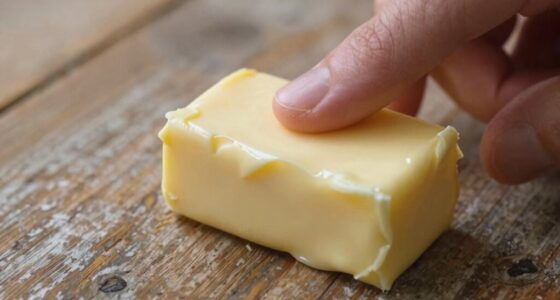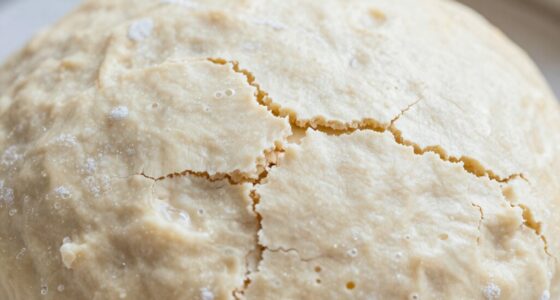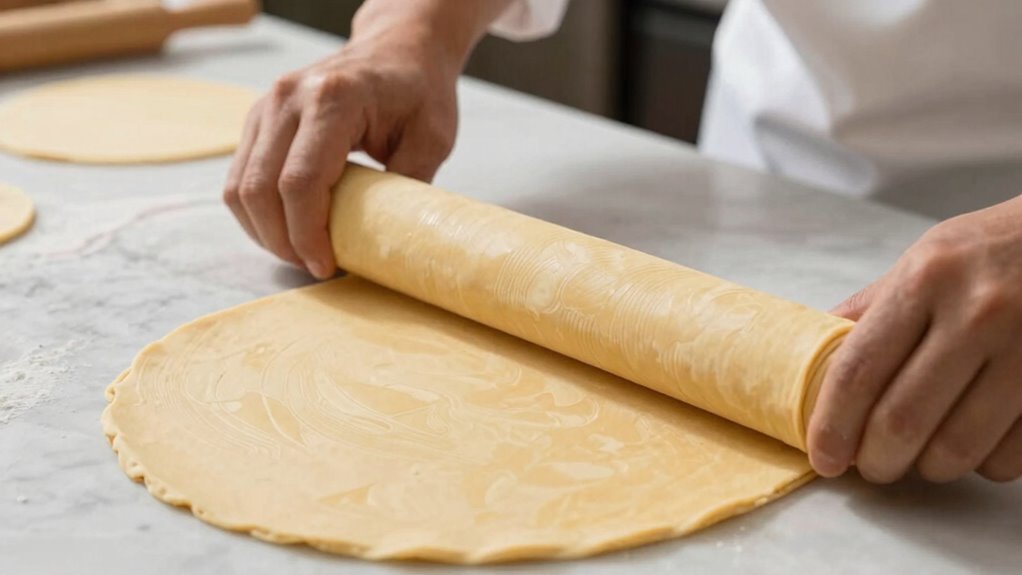

You should prioritize maintaining consistent dough thickness over rushing because even layers guarantee proper puffing and a flaky texture. Speed increases the risk of uneven layers, tearing, or uneven puffing, which can ruin your pastry. By focusing on control and patience, you help keep the dough at the right temperature and elasticity, leading to better results. If you want to master the perfect laminated pastry, understanding why thickness consistency matters will guide your technique.

Get baking supplies delivered free with Prime
- Fast, free delivery on millions of items
- Prime Video, Amazon Music and more included
- Member-only deals all year
Key Takeaways
- Consistent thickness ensures even expansion and puffing during baking, resulting in a flaky final product.
- Maintaining uniform layers prevents uneven puffing and flaky textures caused by variable dough thickness.
- Speed increases risk of tearing or thinning dough, compromising lamination quality.
- Precise, steady handling preserves dough elasticity and prevents uneven layer formation.
- Proper thickness control is essential for achieving the desired flaky, airy texture in laminated pastries.

Many bakers believe that speed is the key to successful lamination, but more important is the consistency of the dough’s thickness. When you rush, you risk uneven layers, which can result in uneven puffing and a less desirable flaky texture. Speed often leads to temperature fluctuations, especially if you don’t keep the dough chilled enough. As the dough warms, its elasticity diminishes, and rolling it out becomes more challenging. This can cause uneven thickness, tears, or overworking the dough, all of which compromise the final product. Instead, focusing on steady, deliberate movements and maintaining consistent thickness helps you produce layers that expand uniformly during baking. Proper temperature control is crucial because it directly influences dough elasticity. When your dough is at the right temperature, it stretches easily and folds smoothly, creating those distinct layers that puff up during baking. Use chilled surfaces and keep the dough refrigerated between folds to stay within the ideal temperature range. This not only preserves dough elasticity but also prevents the butter from melting into the dough prematurely, which could ruin the lamination process. A uniform thickness is easier to achieve when the dough remains cool and pliable, allowing you to work efficiently without rushing or forcing it. Achieving consistent thickness also requires mindfulness of the dough’s elasticity, which can be compromised by improper handling. Maintaining proper temperature management can make a significant difference in achieving uniform layers. Additionally, paying attention to dough handling techniques can help prevent unnecessary tearing or thinning. In essence, consistent thickness isn’t about speed but about precision and patience. When you prioritize maintaining the right dough elasticity through temperature control, you set yourself up for success. The layers will be even, the dough will stretch effortlessly, and you’ll end up with that perfect flaky, airy texture that makes laminated pastries so irresistible. Rushing might seem tempting, but it’s the careful, controlled approach—based on consistent thickness and proper temperature management—that truly elevates your baking.
As an affiliate, we earn on qualifying purchases.
Frequently Asked Questions
How Does Inconsistent Thickness Affect the Final Layered Structure?
Inconsistent thickness disrupts the dough’s elasticity and hampers gluten development, leading to uneven layers. When some parts are thicker, they don’t stretch uniformly, causing weak spots or blowouts during baking. Conversely, thinner sections may over-expand or tear. This imbalance results in a final layered structure that’s uneven, affecting texture and appearance. To achieve perfect lamination, maintaining a consistent thickness guarantees proper gluten formation and a stable, beautifully layered pastry.
Can Uneven Dough Thickness Cause Oven Spring Issues?
Uneven dough thickness can indeed cause oven spring issues. When dough isn’t evenly rolled, areas with less elasticity and weaker gluten development won’t expand uniformly during baking. This results in uneven rise, with some sections over-expanding and others collapsing. Maintaining consistent thickness guarantees proper gluten development and dough elasticity, which promotes a controlled, even oven spring, giving your laminated dough a beautifully layered and professional appearance.
What Tools Help Maintain Consistent Lamination Thickness?
Did you know that using a dough rolling pin with thickness guides can improve consistency by up to 30%? To maintain even lamination thickness, you should use tools like dough rolling pins with adjustable thickness gauges or specialized rulers. These tools help you apply uniform pressure, ensuring your dough stays consistent throughout the process. This consistency prevents uneven layers, leading to better oven spring and flaky results.
How Does Thickness Variation Impact Dough Fermentation?
Thickness variation affects dough fermentation by disrupting dough elasticity, making it harder for gases to distribute evenly. When dough isn’t uniformly thick, fermentation becomes inconsistent, leading to uneven rise and texture. You might notice some areas over-proofed while others remain under-proofed. Maintaining consistent thickness guarantees even fermentation, which is crucial for ideal dough elasticity and achieving a uniform, flaky lamination. This consistency results in better final product quality.
Is There a Visual Way to Check for Uniform Dough Thickness?
Yes, you can visually check for uniform dough thickness using a dough roller and a thickness gauge. After rolling, hold a clear ruler or a dedicated thickness gauge against the dough surface to see if it matches the desired measurement. You can also compare multiple spots on the dough to verify evenness. This hands-on approach helps you maintain consistent thickness, which is essential for perfect laminated pastries.
As an affiliate, we earn on qualifying purchases.
Conclusion
Remember, maintaining consistent thickness in laminated dough is more vital than rushing through the process. If you don’t, you’ll risk uneven layers, which can compromise texture and rise. Studies show that even slight variations can reduce puffiness by up to 20%. So, take your time, focus on precision, and you’ll achieve beautifully flaky, airy pastries that impress every time. Speed is tempting, but consistency truly makes the difference in perfect laminated dough.
pastry dough temperature control
As an affiliate, we earn on qualifying purchases.
As an affiliate, we earn on qualifying purchases.
As an affiliate, we earn on qualifying purchases.
Halloween Picks
halloween
As an affiliate, we earn on qualifying purchases.