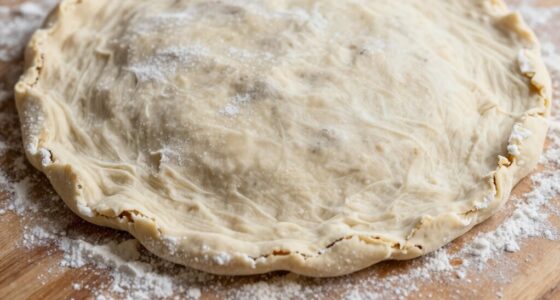
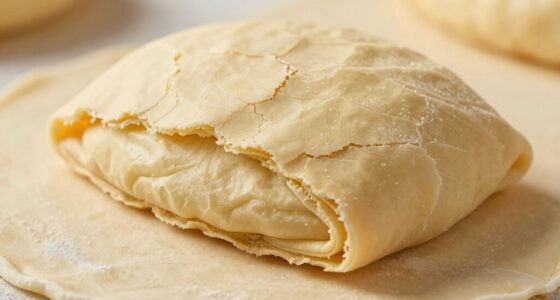
Dough tears during sheeting because its gluten network isn’t fully developed or strong enough to stretch without breaking. If your dough is too dry, underworked, or overly sticky, it can cause tearing. Insufficient kneading or resting also weakens elasticity, making the dough fragile. Hydration levels and proper gluten development are key for smooth sheeting. To prevent tearing, you need to understand how these factors come together—keep exploring to discover more about fixing common dough issues.

Get baking supplies delivered free with Prime
- Fast, free delivery on millions of items
- Prime Video, Amazon Music and more included
- Member-only deals all year
Key Takeaways
- Incomplete gluten development weakens dough structure, increasing tearing risk during sheeting.
- Insufficient resting prevents gluten relaxation, making dough more prone to tearing when stretched.
- Overly dry or stiff dough lacks elasticity, leading to tears during sheeting.
- Excess hydration causes stickiness, reducing dough strength and causing tearing.
- Poor mixing or under kneading results in weak gluten networks, increasing fragility during sheeting.

If your dough tears during sheeting, it’s a sign that something in the process needs adjustment. Usually, this happens because the dough hasn’t developed enough gluten or lacks the necessary dough elasticity. When gluten development is incomplete, the dough doesn’t possess the strength and flexibility required to stretch smoothly without tearing. When the gluten network is weak, the dough becomes more prone to tearing under stress, indicating a need for better development gluten development. You want to ensure that during mixing and kneading, gluten strands form properly, creating a network that can handle the stretching involved in sheeting. If you stop kneading too early or don’t knead long enough, the gluten network remains weak, making the dough fragile and prone to tearing. Resting the dough after kneading allows gluten strands to relax and align, which can significantly improve elasticity during sheeting dough resting. Dough elasticity plays a critical role here. A well-formed, elastic dough can stretch thin without breaking, thanks to the balanced gluten network. If the dough feels stiff and resists stretching, it’s a sign that it might be too dry or hasn’t been worked enough to develop sufficient gluten. Conversely, if it’s overly sticky and tears easily, you might need to incorporate a little more flour or adjust hydration levels. Proper dough elasticity allows for a smooth, even stretch during sheeting, reducing the chances of tearing. Achieving the right elasticity requires a combination of proper mixing, kneading, and resting times. Resting the dough allows gluten strands to relax and strengthen, making it more manageable during sheeting. Ensuring the dough has adequate hydration is essential because hydration level directly impacts gluten development and elasticity, influencing how well the dough stretches without tearing. Maintaining an appropriate dough hydration level is crucial for optimal gluten network formation and elasticity. When the dough has adequate gluten development and proper elasticity, it will stretch smoothly and thin out without tearing. Additionally, understanding how to measure dough elasticity can help troubleshoot common sheeting issues more effectively.
As an affiliate, we earn on qualifying purchases.
Frequently Asked Questions
How Does Dough Hydration Affect Tearing?
Higher dough hydration makes the dough more elastic, which helps prevent tearing during sheeting. When you add more water, it strengthens the gluten network, creating a more flexible dough that stretches easily. Conversely, low hydration results in a less elastic dough with a weaker gluten network, increasing the chances of tearing. So, adjusting hydration levels carefully allows you to control dough elasticity and minimize tearing during sheeting.
Can Mixing Time Influence Dough Elasticity?
Ever wonder if mixing time influences dough elasticity? Absolutely. Longer mixing develops gluten, making dough more elastic and less prone to tearing. But timing matters—overmixing can weaken structure, while under-mixing leaves it too weak. Consider fermentation timing and ingredient freshness; fresher ingredients and proper fermentation enhance elasticity. You want a dough that stretches without tearing, so find that sweet spot in mixing time for perfect results.
Do Different Flour Types Impact Dough Strength?
Yes, different flour types impact dough strength because of their flour protein content, which influences the gluten network formation. Higher protein flours, like bread flour, develop a stronger gluten network, making the dough more elastic and resistant to tearing during sheeting. Conversely, low-protein flours, like cake flour, create a weaker gluten network, making the dough more prone to tearing, especially if not properly handled.
How Does Dough Temperature Affect Tearing?
If your dough is too cold, it becomes stiff and prone to tearing during sheeting. For example, using alternative kneading techniques to warm the dough slightly can improve elasticity. Proper dough stretching methods, like gentle, even pressure, help prevent tears. Keep the dough at the right temperature—around 75-80°F—to maintain ideal stretchability, making sheeting smoother and reducing the risk of tearing.
What Role Does Gluten Development Play?
Gluten development is essential because it forms a strong gluten network that gives dough its elasticity. If the gluten network isn’t well-developed, the dough lacks the necessary elastic properties, making it prone to tearing during sheeting. As you knead, you’re strengthening this network, allowing the dough to stretch smoothly. Without proper gluten development, the dough becomes fragile and tears easily when you try to roll it out.
As an affiliate, we earn on qualifying purchases.
Conclusion
So, next time your dough tears just when you’re about to impress, remember it’s almost poetic—like a stubborn artist refusing to stay within the lines. You’ve worked so hard to perfect that silky sheet, only for it to break apart, revealing the chaos beneath. Ironically, that tiny tear might be a sign you’re pushing it just right—stretching limits, testing patience, and turning a simple task into a lesson in resilience. Sometimes, imperfections make the masterpiece.
As an affiliate, we earn on qualifying purchases.
As an affiliate, we earn on qualifying purchases.
Evergreen bestsellers Picks
bestsellers
As an affiliate, we earn on qualifying purchases.