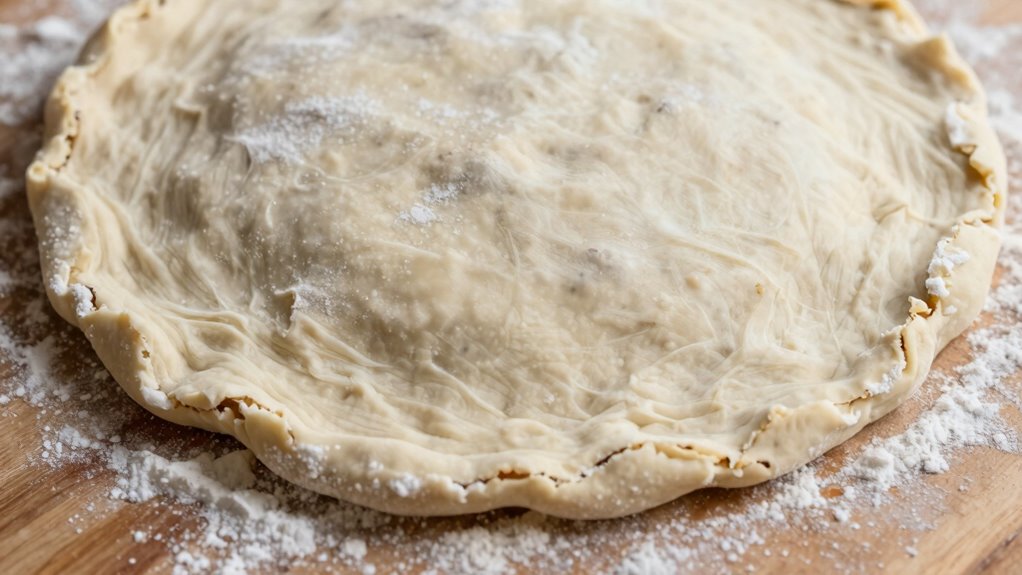

To spot overworked pie dough before baking, look for signs of toughness and difficulty handling. If the dough feels stiff, less pliable, and resists when pressed, it’s likely overmixed. Visual cues include a very smooth, shiny surface with no small fat bits visible. If it cracks or pulls apart when rolled, it’s a sign of excessive gluten development. Keeping an eye on these indicators can help you avoid tough, shriveled crusts—even if you want to learn more.
Key Takeaways
- Overworked dough feels stiff, tough, and less pliable to the touch.
- It appears overly smooth and shiny, lacking visible fat bits or crumbly texture.
- When rolled, it cracks, pulls apart, or resists shaping easily.
- Excess gluten development causes the dough to shrink during handling or baking.
- Properly mixed dough remains soft, cohesive, and rolls out smoothly without cracking.
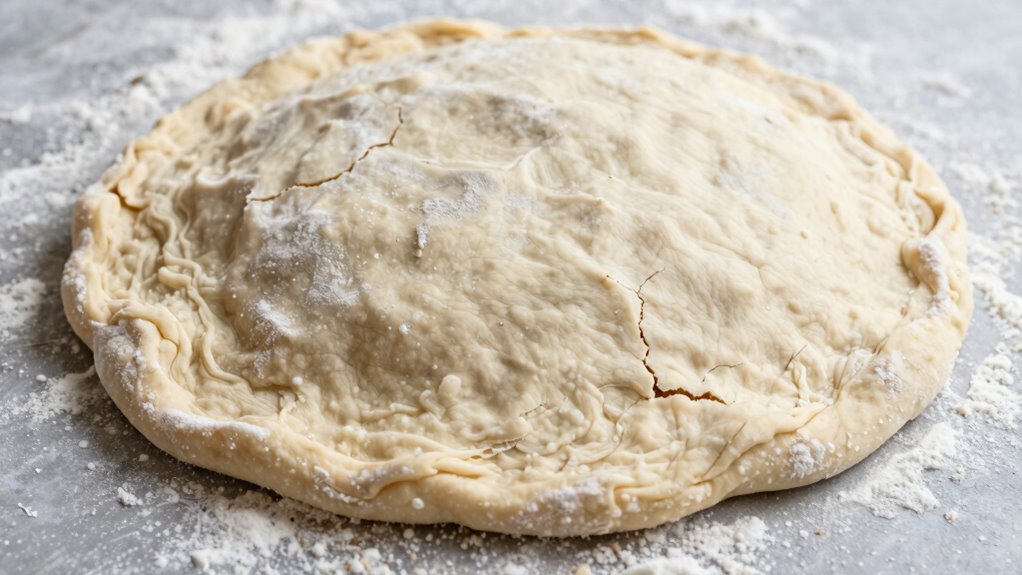
If you’ve ever made pie dough, you know that overworking it can ruin the final crust. When you knead or mix the dough excessively, you trigger the gluten development process too much, which can lead to a tough, dense crust instead of the tender, flaky one you’re aiming for. To avoid this, it’s essential to recognize the signs of overworked dough early, especially during texture analysis. As you work with the dough, pay close attention to how it feels and looks. Properly mixed dough should be just combined, not elastic or overly firm. When it’s overworked, it often becomes stiff and difficult to handle, indicating that the gluten network has been overdeveloped. This results in a crust that’s chewy rather than tender, lacking the delicate flakiness that makes a good pie crust so appealing.
In terms of texture analysis, an overworked dough will feel tougher and less pliable. When you press it with your fingers, it may resist and feel hard, unlike the smooth, soft consistency of properly mixed dough. If it starts to crack or if you notice it pulling apart easily when you try to roll it out, those are strong signs you’ve gone too far. Overworking causes the gluten strands to become too tight, which makes the dough less elastic and more prone to shrinking or toughness during baking. You want your dough to be crumbly yet cohesive, holding together without feeling sticky or overly stiff. When you recognize these signs, it’s a good idea to stop working the dough immediately to preserve its ideal texture. Additionally, understanding the gluten development process can help you better control the dough’s final quality. Being aware of how gluten formation progresses can assist in preventing overmixing from the start. Also, paying attention to the dough’s elasticity can give you instant feedback on its readiness and help avoid overworking it.
Another key indicator is the appearance of the dough. Properly mixed dough should have small visible bits of fat dispersed evenly throughout, giving it a slightly crumbly look. Overmixed dough, on the other hand, may look smooth and more uniform, a sign that the gluten has been overdeveloped. This visual cue often correlates with the tactile signs you feel when handling the dough. If you notice a shiny, elastic surface or find it difficult to roll out without cracking, it’s a sign that you’ve overdone it. The goal is to stop mixing or kneading before these signs appear, ensuring the gluten development stays minimal for a tender, flaky crust. Paying attention to the texture and appearance of your dough can help prevent overworking and lead to better baking results. Recognizing these signs early can save you from having to start over or accept a less-than-perfect crust.
As an affiliate, we earn on qualifying purchases.
Frequently Asked Questions
Can Overworked Dough Still Be Salvaged?
Yes, overworked dough can sometimes be salvaged. When dough becomes too elastic or tough, gently knead in a little cold water to restore some flexibility, but be cautious not to overdo it. Adjust your baking temperature slightly higher to help crisp the crust, and avoid overworking it again. While it might not be perfect, these steps can improve its texture and make it more manageable before baking.
What Are the Risks of Using Overworked Pie Dough?
Using overworked pie dough risks gluten development, which makes your crust tough and chewy instead of tender. The texture alteration results in a dense, less flaky pastry that’s difficult to cut and enjoy. Overworking the dough also increases the likelihood of cracks and uneven baking. To avoid these issues, handle your dough gently and stop mixing once it just comes together, ensuring a light, flaky crust every time.
How Does Overworking Affect the Final Crust Texture?
Overworking your pie dough causes excessive gluten development, which makes the crust tough and chewy instead of tender. As you knead or roll it too much, the texture degrades, resulting in a dense, coarse consistency. Instead of a flaky, delicate crust, you’ll end up with one that’s hard to cut and doesn’t melt in your mouth. To avoid this, handle your dough gently and stop mixing once it just comes together.
Can Overworked Dough Cause a Soggy Crust?
Overworked dough is like a fragile bridge—it can collapse under pressure, leading to a soggy crust. When you overwork your pie dough, excessive gluten development reduces dough elasticity, preventing it from forming a proper barrier against moisture. This weakens the crust’s structure, allowing filling juices to seep in and turn it soggy. To prevent this, handle your dough gently and stop mixing as soon as it comes together.
Is Overworking Dough More Common With Certain Types of Flour?
Yes, overworking dough is more common with certain flour types, especially those with higher protein content like bread flour. These flours develop more gluten when kneaded, increasing the risk of overworking. Your kneading techniques also matter—overly aggressive or prolonged kneading can cause this, regardless of flour type. To avoid overworking, use gentle, short kneading sessions and choose flour suited for pastry, like all-purpose or cake flour, for tender crusts.
As an affiliate, we earn on qualifying purchases.
Conclusion
Think of your pie dough as a delicate dance partner—you want gentle, confident movements, not a hurried, frantic flurry. Overworking it is like forcing a dancer to perform beyond their grace, risking a stumble. When you spot signs of overworking, step back, breathe, and give your dough a rest. With patience and care, you’ll guide it back to a smooth, harmonious rhythm—ready to create a perfectly flaky masterpiece that’s as graceful as a well-rehearsed ballet.
As an affiliate, we earn on qualifying purchases.
As an affiliate, we earn on qualifying purchases.