
Baking steel transfers heat faster than stone because it heats up quickly, stores higher temperatures, and conducts heat more efficiently. Its thermal mass absorbs and retains heat longer, providing a stable, intense heat source during baking. This results in better crusts, improved dough rise, and shorter preheat times. If you want to understand how these heat properties work together for perfect baking, keep exploring the details behind baking steel’s advantages.

Get baking supplies delivered free with Prime
- Fast, free delivery on millions of items
- Prime Video, Amazon Music and more included
- Member-only deals all year
Key Takeaways
- Baking steel has higher thermal conductivity than stone, allowing faster and more efficient heat transfer.
- Steel heats up more quickly due to its lower specific heat capacity compared to stone.
- Its dense, metallic structure retains heat better, maintaining high temperatures during baking.
- Steel reaches oven temperature faster, reducing preheating time and improving baking efficiency.
- The superior heat transfer promotes better crust development and oven spring in baked goods.
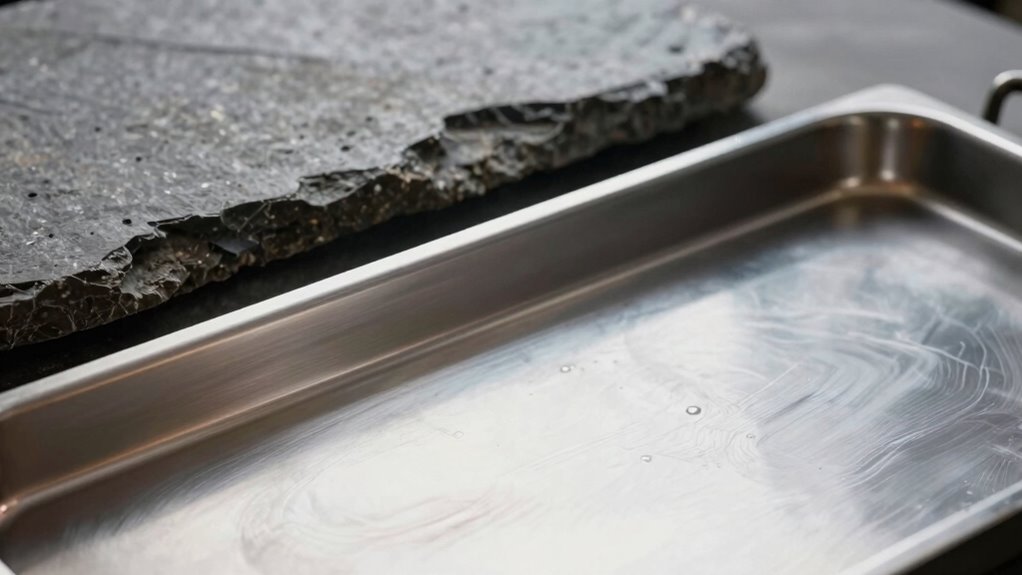
If you’re looking to improve your baking game, you’ll find that baking steel heats up faster and more efficiently than traditional stone. This difference isn’t just about speed; it’s about the quality of your baked goods. When you place a baking steel in your oven, it quickly absorbs and retains heat, allowing you to reach higher oven temperatures more reliably. This quick heating capability is essential because it creates a consistent, intense heat that helps your dough develop a better crust and overall texture. Unlike stones, which can take a long time to heat evenly, steel conducts heat with remarkable efficiency, ensuring your oven reaches the desired temperature faster. As a result, your baked items are exposed to a stable, high heat from the moment they go in, improving their rise and crust.
This rapid heat transfer directly impacts your dough’s elasticity, which is key for achieving the perfect bake. When your oven hits the right temperature quickly, your dough’s proteins and gluten structures respond more effectively, resulting in better dough elasticity. You’ll notice your dough stretches smoothly without tearing, making it easier to shape and handle. The improved elasticity means your bread or pizza dough can expand uniformly in the oven, creating an airy crumb and a crisp crust. Since baking steel maintains its temperature even when you open the oven door, it guarantees that your dough continues to bake evenly without temperature fluctuations. This consistency is essential for achieving professional-quality results at home.
Furthermore, because steel heats more rapidly and maintains temperature better, you won’t need to preheat your oven as long, saving you time and energy. You also gain better control over the baking process, allowing you to experiment with higher oven temperatures that might be impractical with a traditional stone. The ability to quickly reach and sustain this high heat means you can produce that desired char and caramelization on your bread or pizza, elevating your baked goods from average to exceptional. Additionally, understanding the heat conduction properties of steel can help you optimize your baking techniques for even more consistent results. Recognizing the thermal mass of baking steel can also aid in managing how it influences your oven’s heat retention during baking. Proper use of thermal properties helps in achieving the ideal baking environment.
As an affiliate, we earn on qualifying purchases.
Frequently Asked Questions
How Does Steel’s Thermal Conductivity Compare to Other Metals?
Steel’s thermal conductivity is higher than many metals, making it excellent at transferring heat quickly. Compared to copper or aluminum, steel has moderate thermal properties, but it still outperforms stone substantially. When you compare metal properties, steel’s ability to conduct heat efficiently is why it’s favored for baking surfaces. Its speed in heat transfer helps you achieve consistent, evenly baked results, especially when compared to slower, less conductive materials like stone.
Can Baking Steel Be Used on Induction Cooktops?
Yes, you can use baking steel on induction cooktops because it’s induction compatible. Imagine the steel glowing intensely, transferring heat efficiently from your cooktop to your oven or skillet. Its high thermal conductivity ensures rapid heat transfer efficiency, making it ideal for high-temperature baking and searing. Just make certain the steel has a flat, smooth bottom to maximize contact and performance on your induction surface.
What Is the Ideal Thickness for a Baking Steel?
The ideal thickness for a baking steel is typically between 3/16 inch and 1/4 inch. Thicker steel enhances heat transfer efficiency and retains heat better, giving you crispier crusts, while thinner options heat up quickly but may warp over time. Alternative materials like ceramic or stone heat differently, but steel’s superior heat transfer makes this thickness range perfect to optimize baking performance and durability.
How Does Baking Steel Affect Pizza Crust Texture?
Think of your baking steel as a fiery maestro, orchestrating the perfect crust. It boosts crust crispness by delivering intense, even heat directly to the dough, creating a satisfyingly crunchy exterior. Meanwhile, it helps maintain a chewy texture inside, balancing crispness with tenderness. As a result, your pizza develops a beautifully browned crust with delightful texture contrast, elevating your homemade pies to restaurant-quality perfection every time.
Is Baking Steel More Durable Than Traditional Stone?
Yes, baking steel is more durable than traditional stone. You’ll notice better material longevity because steel resists cracking and chipping over time, unlike stone. Its superior heat retention means it stays hot longer, which helps maintain consistent cooking temperatures. Because of these qualities, baking steel withstands frequent use without deteriorating, making it a reliable choice for high-quality, long-lasting baking equipment.
As an affiliate, we earn on qualifying purchases.
Conclusion
Now that you know why a baking steel outshines stone, it’s like having a lightning bolt in your oven, delivering intense heat in an instant. You’ll get that perfect, crispy crust every time, turning your baking into a fiery dance that transforms dough into delicious perfection. So, grab a baking steel and let it be your secret weapon—faster, hotter, and ready to make your culinary creations shine brighter than ever.
As an affiliate, we earn on qualifying purchases.
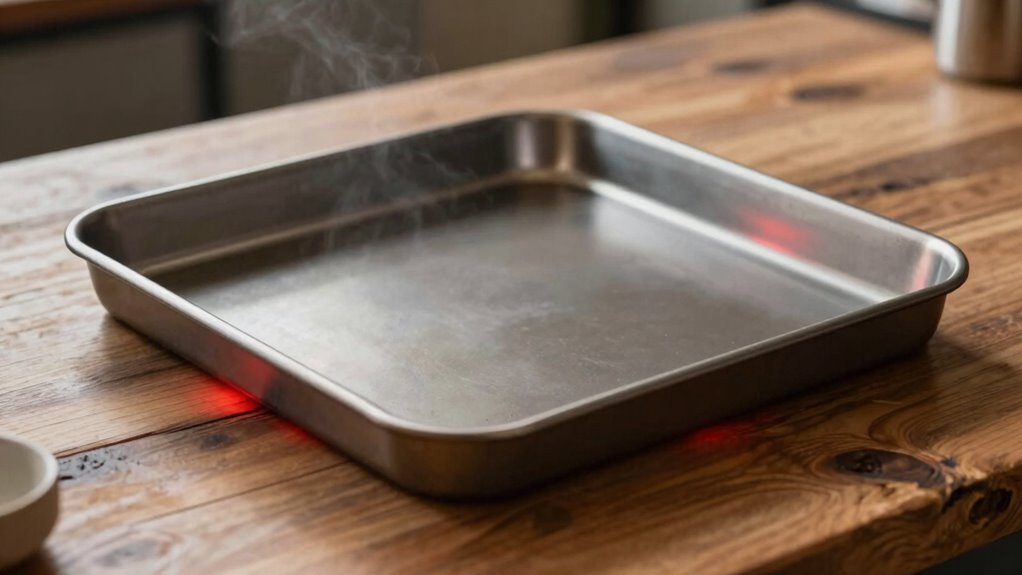
baking steel with high thermal conductivity
As an affiliate, we earn on qualifying purchases.
As an affiliate, we earn on qualifying purchases.
Halloween Picks
halloween
As an affiliate, we earn on qualifying purchases.