To make better buttercream flowers, controlling the frosting temperature is key. Too warm and it’s too soft for detailed petal shaping; too cold and it hardens, making piping difficult. Chill your buttercream slightly before piping, and keep your tools cool to prolong its workability. If it gets too stiff or soft, adjust by briefly warming or chilling. Mastering this trick helps your flowers stay realistic and professional-looking—just keep going for more secrets.
Key Takeaways
- Chill buttercream slightly before piping to achieve optimal consistency for detailed flower petals.
- Keep piping tools and bags cool to prevent frosting from softening during intricate work.
- Warm or soften frosting briefly if it becomes too stiff for smooth, delicate petal shaping.
- Monitor workspace temperature, adjusting frosting temperature for consistent flower quality.
- Use gentle stirring and timing to maintain the right frosting temperature for precise, realistic floral designs.
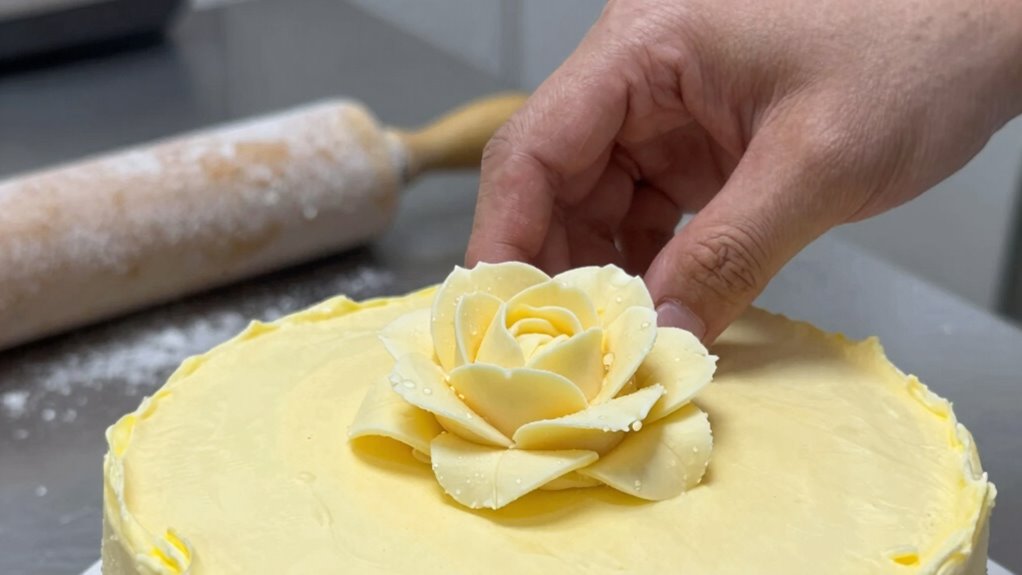
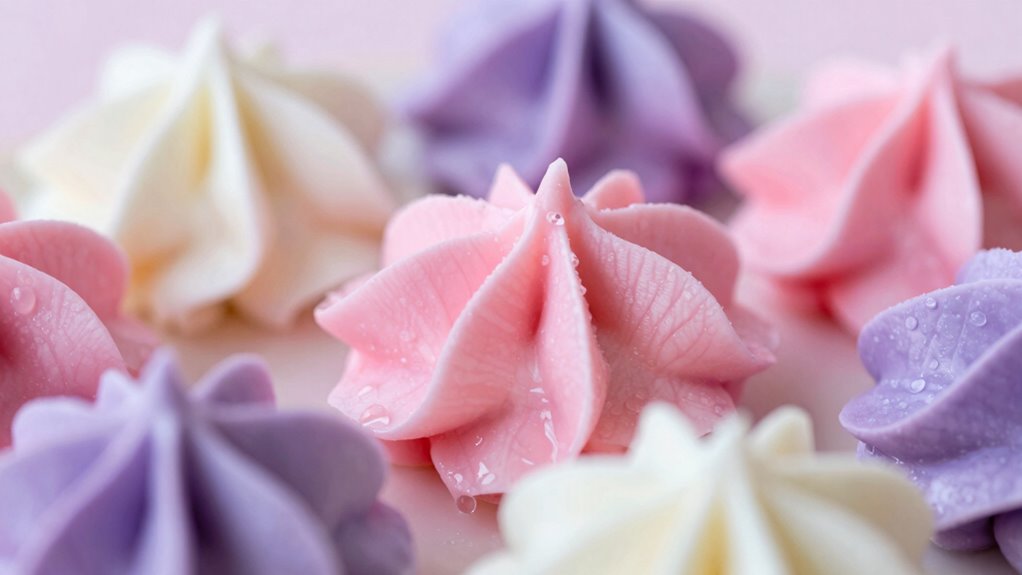
When it comes to creating stunning buttercream flowers, the temperature of your frosting can make all the difference. If your buttercream is too warm, it becomes too soft, making it difficult to pipe delicate petals that hold their shape. On the other hand, if it’s too cold, it hardens quickly, preventing smooth piping and detailed designs. The key is to find that perfect temperature window where your frosting is firm enough to hold intricate shapes but still pliable enough to work with comfortably. This balance ensures your flowers look professional and stay intact without collapsing or cracking.
One effective trick is to slightly chill your buttercream before you start piping. Place your frosting in the refrigerator for about 10 to 15 minutes, then take it out and give it a gentle stir. This cooling step firms up the frosting just enough for better control. When you pipe, your buttercream will be less likely to slide or lose shape, which is especially important for creating fine petals and delicate details. If your frosting begins to feel too stiff during piping, let it sit at room temperature for a few minutes to soften slightly, ensuring it remains workable. Maintaining this temperature balance is essential, especially when working on complex floral designs. Additionally, understanding frosting consistency can help you troubleshoot and achieve better results. Experimenting with different frosting temperatures can help you find the ideal working conditions for various piping techniques. Incorporating temperature control tools, such as chilled piping bags or cool spatulas, can further assist in maintaining the perfect frosting temperature during your decorating process.
Chill your buttercream briefly for better control and delicate floral piping.
In addition to temperature control, understanding fondant modeling and icing techniques can elevate your buttercream flowers. For instance, you might use fondant modeling to create tiny centers or accents that complement your buttercream petals. This technique adds dimension and realism to your blooms. The key is to keep your fondant at the right temperature—warm enough to be pliable but not so soft that it loses shape. Similarly, mastering icing techniques, such as using petal tips and controlling pressure, relies heavily on your frosting’s consistency. When your buttercream is at the right temperature, it responds more predictably to your piping movements, resulting in cleaner, more detailed flowers.
Paying attention to your frosting’s temperature throughout the process can make all the difference. Always keep your tools and workspace cool if needed, especially in warm environments. Using chilled piping bags or cold spatulas can help maintain the perfect frosting temperature longer. When your buttercream is at an ideal temperature, your flowers will have better structure and more natural-looking petals. Proper temperature management is crucial for achieving professional-looking results and can be improved with practice. This simple temperature trick, combined with skilled fondant modeling and refined icing techniques, will give your buttercream flowers a professional finish that truly impresses.
chilled piping bags for buttercream flowers
As an affiliate, we earn on qualifying purchases.
As an affiliate, we earn on qualifying purchases.
Frequently Asked Questions
How Long Should Buttercream Flowers Be Refrigerated Before Decorating?
You should refrigerate buttercream flowers for about 15 to 30 minutes before decorating. This quick chill helps with flower preservation, making the buttercream firmer and easier to handle. Use proper refrigeration techniques by placing them on a tray or parchment paper and covering loosely to prevent moisture build-up. This step guarantees your decorations stay pristine, vibrant, and easier to work with, resulting in beautifully crafted buttercream flowers.
Does Temperature Affect the Color Vibrancy of Buttercream Flowers?
Yes, temperature affects the color vibrancy of buttercream flowers. Cooler temperatures help maintain the color intensity, preventing fading or dullness. When your workspace or ingredients are too warm, colors can become muted or bleed, reducing temperature stability. To keep your buttercream flowers vibrant, work in a cool environment and store them properly. This way, you’ll preserve the bright, beautiful hues of your decorations and guarantee they look stunning on your cake.
What Tools Are Best for Measuring Buttercream Temperature Accurately?
Think of your tools as the compass guiding your creative journey. To measure buttercream temperature accurately, use a digital or infrared thermometer—like a trusted lighthouse in your kitchen. These tools give precise readings, ensuring your fondant techniques shine and your edible glitter adheres perfectly. Avoid guesswork with these reliable devices, so every bloom you craft stays vibrant and flawless, turning your cake artistry into a true masterpiece.
Can Temperature Fluctuations Cause Buttercream Flowers to Melt or Deflate?
Yes, temperature fluctuations can cause buttercream flowers to melt or deflate. When the butter consistency warms, the flowers lose their floral stability, becoming soft and droopy. Conversely, if it cools too much, the buttercream becomes stiff and difficult to work with. Maintaining a consistent temperature guarantees your flowers stay firm and beautiful, preserving their delicate details and overall appearance throughout your decorating process.
What’s the Ideal Room Temperature for Piping Detailed Buttercream Flowers?
A stitch in time saves nine, especially with piping detailed buttercream flowers. Keep your room temperature around 70°F (21°C) to guarantee the best color consistency and smooth piping techniques. Too hot, and the buttercream may melt or lose shape; too cold, and it becomes difficult to work with. Maintaining this ideal temperature helps you create beautifully detailed flowers without frustration, making your decorating efforts truly blossom.
As an affiliate, we earn on qualifying purchases.
Conclusion
By mastering the temperature trick, you hold the key to revealing flawless buttercream flowers, transforming your baking dreams into edible art. Think of your kitchen as a forge where your passion molds each delicate petal, and the perfect temperature is the fire that brings your creations to life. Embrace this secret, and with each flower, you’re not just decorating a cake—you’re crafting a symbol of your dedication, blooming beautifully with every precise chill and warm touch.
temperature control buttercream tools
As an affiliate, we earn on qualifying purchases.
As an affiliate, we earn on qualifying purchases.
As an affiliate, we earn on qualifying purchases.