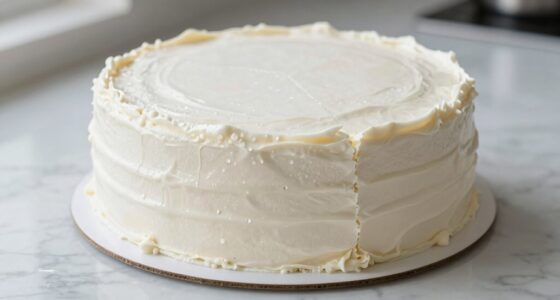

Your whipped cream frosting deflates quickly because air bubbles escape when not properly stabilized, especially if temperatures rise or handling is rough. Over-whipping or warm conditions weaken the foam, while excess sugar or crystals disrupt the structure. To keep it fluffy longer, use stabilizers, chill your tools, and handle gently. If you want to understand how to prevent this and keep your whipped cream perfect, there’s more to discover.

Get baking supplies delivered free with Prime
- Fast, free delivery on millions of items
- Prime Video, Amazon Music and more included
- Member-only deals all year
Key Takeaways
- Insufficient stabilization allows air bubbles to escape quickly, causing rapid deflation.
- Using warm cream or improper handling breaks down foam structure and accelerates deflation.
- Sugar crystallization weakens the foam, leading to faster loss of volume.
- Not chilling ingredients or bowls reduces whipping efficiency and shortens foam stability.
- Over-whipping damages fat structure, resulting in quicker collapse of the whipped cream.
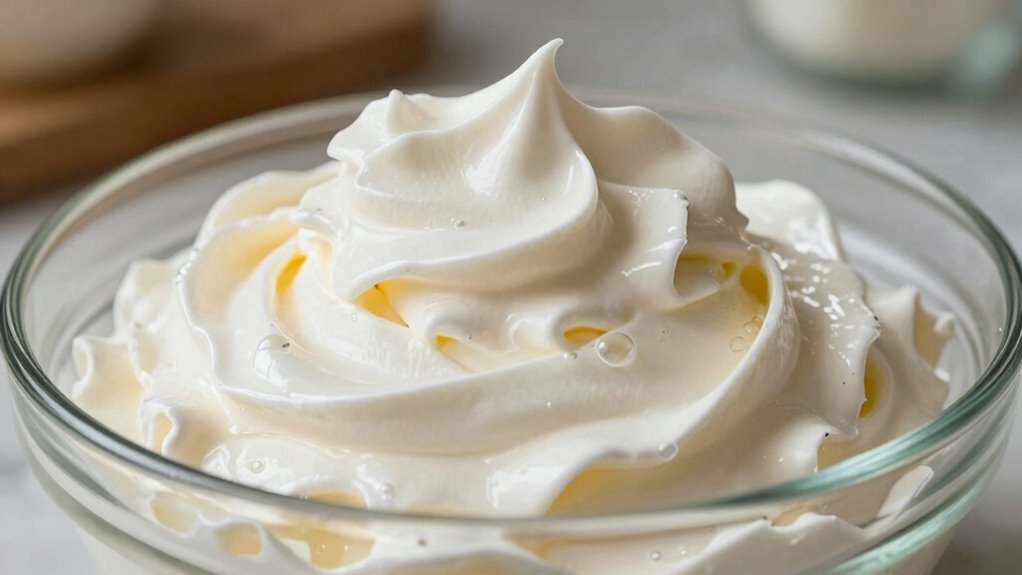
Whipped cream frosting often seems to deflate faster than you’d like, leaving your dessert looking less than perfect just a short while after preparing it. This quick deflation isn’t just frustrating—it’s rooted in the delicate balance of how whipped cream is made and maintained. Two main factors contribute to this: sugar crystallization and air incorporation. Understanding these can help you keep your frosting fluffy longer.
Whipped cream deflates quickly due to sugar crystallization and air loss; proper stabilization and handling extend its fluffiness.
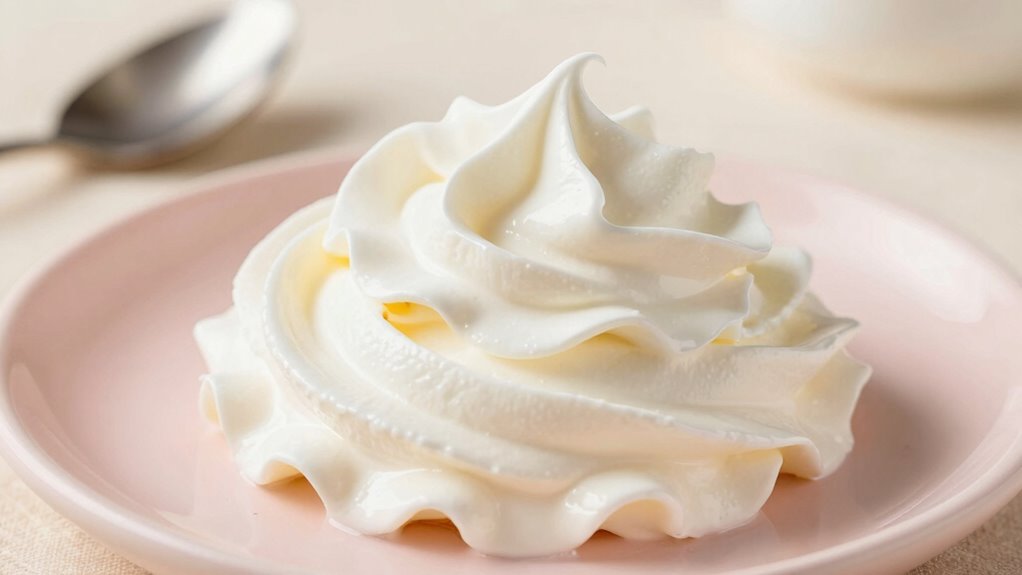
When you whip cream, you’re practically trapping air bubbles within the liquid, creating a light, airy texture. This process is called air incorporation, and it’s crucial for achieving the perfect consistency. However, if you don’t stabilize the whipped cream properly, those air bubbles can escape over time. As the air leaks out, the whipped cream deflates, turning from fluffy peaks to a runny mess. That’s why stabilizers like gelatin or commercial stabilizing agents are often recommended—they help lock in the air, maintaining volume for longer.
Sugar crystallization plays a surprisingly significant role in the longevity of your whipped cream. As you add sugar, it dissolves into the cream, but if you add too much or if the sugar isn’t fully dissolved before whipping, tiny sugar crystals can form. These crystals disrupt the smooth structure of the whipped cream, weakening the network of air bubbles. The result? The cream becomes less stable and more prone to deflating as those crystals interfere with the foam’s stability. To avoid this, add sugar gradually while whipping, ensuring it dissolves completely, creating a smooth, stable mixture. Additionally, proper dissolving techniques can prevent unwanted crystallization and help maintain the whipped cream’s structure. Using a fine sugar or pre-dissolving the sugar in a small amount of liquid can also improve stability. Proper temperature control during whipping is also crucial, as warmer conditions can accelerate crystallization and destabilize the foam.
Temperature is another critical factor. Cold cream whips more easily and holds its structure better because the fat molecules are firm enough to trap air effectively. Warm cream, on the other hand, tends to deflate faster because the fat melts slightly, releasing the air bubbles trapped within. If your kitchen is warm or if you forget to chill your bowl and cream beforehand, you might notice your whipped cream losing volume quicker than expected. Additionally, fat consistency plays a vital role in how well the cream can hold its shape. Properly chilled ingredients are essential for optimal whipping results and prolonged stability.
Finally, be mindful of the environment and how you handle your whipped cream. Over-whipping can cause the fat to break down, turning the mixture from fluffy to greasy and leading to rapid deflation. Similarly, exposure to air after whipping can accelerate the loss of air bubbles. Cover your whipped cream tightly if you’re not serving it immediately, and avoid stirring vigorously once it’s whipped. Proper handling techniques can significantly extend the life of your fluffy frosting. Additionally, understanding the role of stabilizers can make a noticeable difference in maintaining volume over time.
In short, controlling sugar crystallization, ensuring proper air incorporation, and paying attention to temperature and handling can dramatically improve how long your whipped cream frosting stays fluffy.
As an affiliate, we earn on qualifying purchases.
Frequently Asked Questions
Can Adding Sugar Prevent Whipped Cream From Deflating?
Adding sugar can help prevent whipped cream from deflating temporarily, but it’s not foolproof. Sugar increases stability by promoting sugar crystallization, which helps maintain structure. However, too much sugar can cause texture alteration, making the cream grainy. To keep your whipped cream fluffy longer, add sugar gradually and whip until soft peaks form. This balances sweetness with stability, reducing the risk of quick deflation.
Does the Type of Cream Affect How Quickly It Deflates?
Think of your whipped cream as a delicate dance, where the cream’s type sets the rhythm. Higher fat content creams, like heavy cream, hold their shape longer, keeping their consistency vibrant. Lower fat options, like light cream, tend to deflate faster, losing their airy texture quickly. The cream’s consistency, influenced by fat content, directly affects how long your whipped topping stays fluffy—so choose wisely for perfect peaks.
How Does Temperature Influence Whipped Cream Stability?
Temperature greatly influences whipped cream stability, as it’s highly temperature-sensitive. If your environment is too warm, the cream’s consistency softens, causing it to deflate quickly. Cold temperatures help maintain its structure, keeping the whipped cream fluffy longer. For best results, keep the cream refrigerated before whipping and serve immediately. Managing temperature is key to preventing your whipped cream from deflating prematurely, ensuring it stays firm and appealing.
Can Stabilizers Help Keep Whipped Cream Firm Longer?
Stabilizers can definitely help keep your whipped cream firm longer. Think of them as the backbone of your dessert, supporting flavor variations and ensuring consistency. A friend once used gelatin, and her whipped cream stayed perfect for hours, unlike the usual quick deflation. Alternative stabilizers like cornstarch or cream of tartar also work well. Using these keeps your whipped cream stable, so your desserts stay picture-perfect and delicious longer.
Is There an Ideal Time to Serve Whipped Cream After Whipping?
You should serve whipped cream immediately after whipping for the best texture and volume. If you wait too long, it deflates and loses its fluffiness. To enhance flavor combinations, consider adding vanilla or cocoa powder before whipping. For presentation tips, pipe or spoon it just before serving to maintain its shape. Keeping whipped cream chilled until serving also helps preserve its firmness and appeal, ensuring your dessert looks and tastes fabulous.
As an affiliate, we earn on qualifying purchases.
Conclusion
So, next time you whip up cream, remember it’s like a delicate balloon—you need to handle it gently. If you’re not careful, it’ll deflate faster than you’d think, leaving your cake less fluffy and more flat. Keep your mixing steady, use cold cream, and serve soon after whipping. That way, your frosting stays as bright and airy as a summer cloud, ensuring your dessert looks just as good as it tastes.
As an affiliate, we earn on qualifying purchases.
cold stainless steel mixing bowls
As an affiliate, we earn on qualifying purchases.
As an affiliate, we earn on qualifying purchases.
Columbus Day / Indigenous Peoples' Day Picks
long weekend sales
As an affiliate, we earn on qualifying purchases.