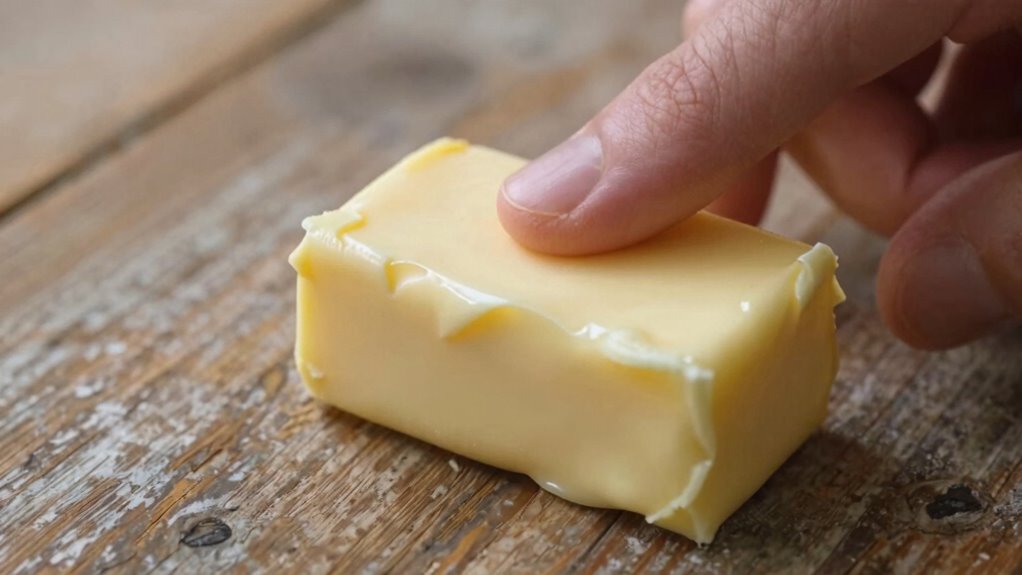
To tell if butter is at the right temperature without a thermometer, gently press it with your finger or a utensil. Firm butter that springs back slightly is ideal for slicing or grating. Soft, pliable butter is ready for spreading or mixing. If it feels greasy or leaves a fingerprint easily, it’s too soft, indicating warmth. Learning to recognize these textures helps you determine butter’s perfect state each time—keep reading to discover more tips.
Key Takeaways
- Gently press the butter with your finger or utensil to check if it yields slightly or springs back.
- Observe if the butter is firm, soft, or greasy, indicating its temperature and readiness for use.
- Look for a visible fingerprint; a clear mark means the butter is too soft for certain tasks.
- Assess the butter’s response to slight pressure to determine if it needs chilling or warming.
- Feel for a smooth, consistent texture without greasiness to ensure proper plasticity for your recipe.
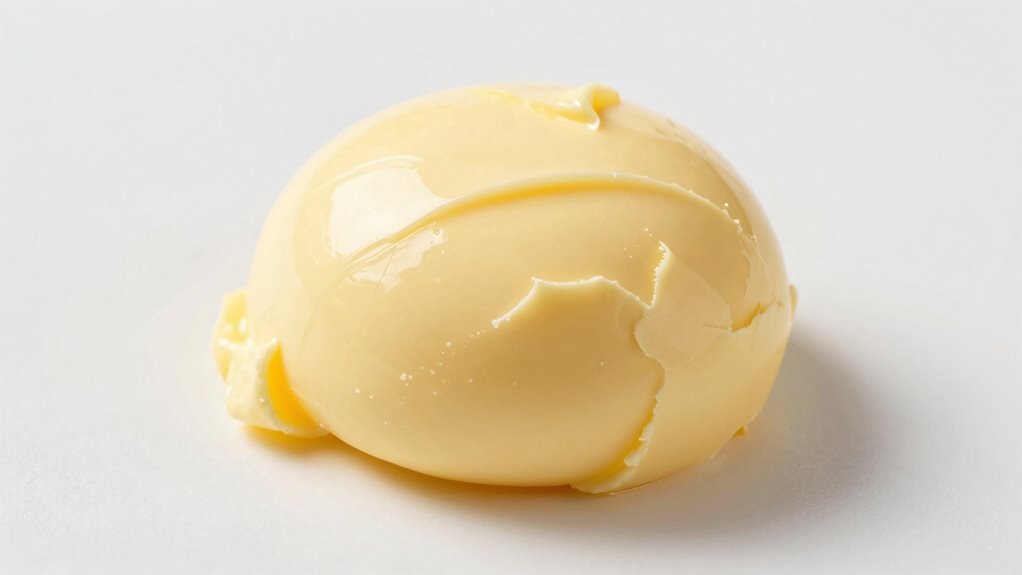
Ever wondered how to interpret butter plasticity, a key concept in material science? Understanding butter’s plasticity can greatly improve how you work with it, especially when you don’t have a thermometer handy. The way butter feels and behaves at different times reveals a lot about its temperature and freshness, which are vital for proper butter preservation and ideal baking results. When you keep butter at the right kitchen temperature, it’s easier to manipulate and incorporate into recipes, so learning to read its plasticity becomes a handy skill.
Master butter’s plasticity by feeling its firmness—no thermometer needed for perfect baking and storage.
As you handle butter, pay attention to its texture and firmness. When it’s cold—straight from the fridge—it feels firm, almost solid, and resists your touch. This is ideal for slicing or grating, but it’s less workable for spreading or mixing. When butter warms slightly, it becomes softer and more pliable, indicating that it’s approaching a temperature suitable for spreading or blending. If it’s too warm, it turns greasy and overly soft, which can be problematic for baking or creating delicate pastries. This softness signals that the butter is nearing or exceeding the essential kitchen temperature for certain tasks. Additionally, butter’s physical properties change noticeably with temperature, helping you gauge its readiness without tools. Recognizing these changes is part of material behavior in everyday cooking, which is influenced by thermal properties.
In terms of butter preservation, knowing its plasticity helps you decide how best to store or use it. If butter is too soft, it may need to be refrigerated longer; if it’s too hard, you might warm it briefly or leave it at room temperature until it softens naturally. Being familiar with butter’s consistency can also guide you in selecting the correct storage method for maintaining its quality over time. This understanding prevents waste and guarantees you’re always working with butter at its ideal state. The key is to observe how butter responds when you press it lightly with your finger or a utensil. A well-preserved piece of butter will yield slightly but not be sticky or greasy. If it leaves a fingerprint that’s clearly visible and doesn’t spring back immediately, it’s probably too soft for certain uses.
You don’t need fancy equipment to read butter’s plasticity; just use your senses. Feel its firmness, observe how it responds to pressure, and note how it behaves at different kitchen temperatures. This simple tactile assessment guides you in adjusting storage conditions or choosing the right moment to use it. By mastering this skill, you’ll guarantee your butter stays fresh longer, preserves its quality, and helps you achieve perfect results in baking and cooking. So next time you’re about to use butter, take a moment to read its plasticity—no thermometer needed—and you’ll be surprised how much easier your culinary tasks become. Understanding butter’s physical properties can help you make more informed decisions about storage and usage.
butter plasticity tester
As an affiliate, we earn on qualifying purchases.
As an affiliate, we earn on qualifying purchases.
Frequently Asked Questions
Can Environmental Factors Affect Butter Plasticity Readings?
Environmental influence and temperature variability definitely affect butter plasticity readings. If the environment is warmer or cooler than usual, the butter’s consistency changes, making it seem more or less plastic. You should consider room temperature, humidity, and air flow because these factors impact the butter’s softness and stiffness. To get accurate readings, try to perform tests in a stable environment with consistent temperature and minimal external influences.
How Accurate Is Visual Assessment Compared to Thermometers?
Like a painter’s eye for color, your sensory evaluation offers a nuanced glimpse into butter’s plasticity, but it’s less precise than a thermometer. Visual cues can be helpful but are subjective, often influenced by lighting and experience. While your instincts serve as a useful guide, relying solely on them risks inaccuracies. Combining visual cues with a thermometer guarantees a more reliable reading, much like blending art with science for best results.
What Tools Besides Your Hands Can Be Used?
You can use alternative tools like a plasticity testing tool or a textured surface to gauge butter’s plasticity. These tools allow for a visual comparison, helping you assess softness and workability without relying solely on your hands. By pressing or flattening the butter against these surfaces, you observe changes and compare them to known standards, making the process more precise and consistent without needing a thermometer.
How Does Butter Age Affect Its Plasticity?
Butter aging decreases its plasticity, making it firmer and less malleable over time. As it ages, the fat crystals within butter grow larger, reducing its plasticity consistency. You’ll notice that aged butter resists shaping and feels harder to manipulate. To assess this, gently press or bend it, and if it feels stiff or cracks easily, it’s likely aged and less plastic. Fresh butter, by contrast, remains soft and more pliable.
Is There a Standardized Method for Non-Thermometer Readings?
Think of plasticity measurement as tuning a delicate instrument—you need consistent methods. While there isn’t a single standardized approach, you can assess butter texture visually and by touch, comparing its softness and malleability. Gently press with your finger to gauge pliability, and observe how it responds. These non-thermometer readings rely on your experience to interpret butter’s plasticity, making it a skill refined through practice rather than strict standards.

TempTag Pro Milk Thermometer Pack – Professional-Grade Temperature Indicator Stickers for Perfect Milk Frothing – Reusable & Easy to Use – Essential for Baristas & Coffee Enthusiasts, Pack of 4
Accurate Temperature Indication: The TempTag Pro changes color to indicate the perfect milk frothing temperature range, ensuring your…
As an affiliate, we earn on qualifying purchases.
As an affiliate, we earn on qualifying purchases.
Conclusion
Understanding butter’s plasticity without a thermometer is simple once you know what to look for. By feeling its softness and flexibility, you can gauge its temperature accurately. Did you know that butter’s plasticity changes markedly at just 5°C (41°F)? Recognizing these subtle cues helps you perfect your baking and cooking. So next time, trust your senses—no thermometer needed—and enjoy better results with every recipe. Happy cooking!

Healifty 2pcs Wooden Crepe Spreader and Spatula Butter Spreading Tool with Natural Polished Texture for Pancake Cooking and Tortilla Raking Kitchen Utensils
Pan spatula–made of wood which is , well made, comfortable and easy to use, offering better strength and…
As an affiliate, we earn on qualifying purchases.
As an affiliate, we earn on qualifying purchases.

Cooraby 2 Pack Plastic Butter Spreader Corn Cob Butter Holder Spreads Butter Dispenser with Built-in Cover
Material: the corn cob butter holder is made of durable plastic, cute in look and easy for you…
As an affiliate, we earn on qualifying purchases.
As an affiliate, we earn on qualifying purchases.