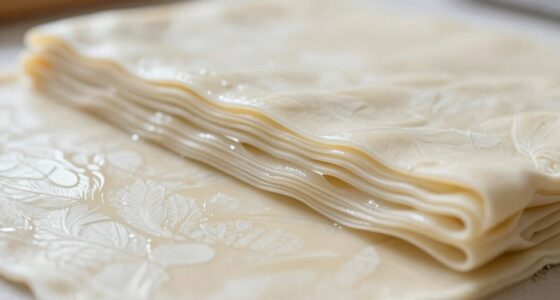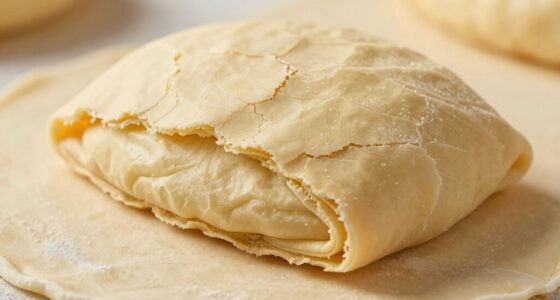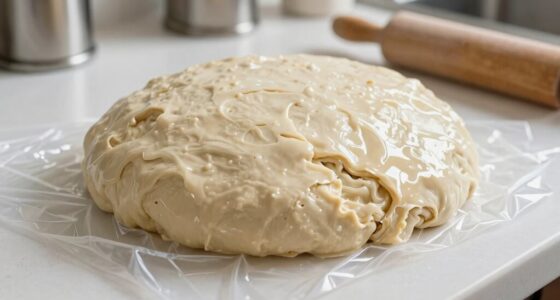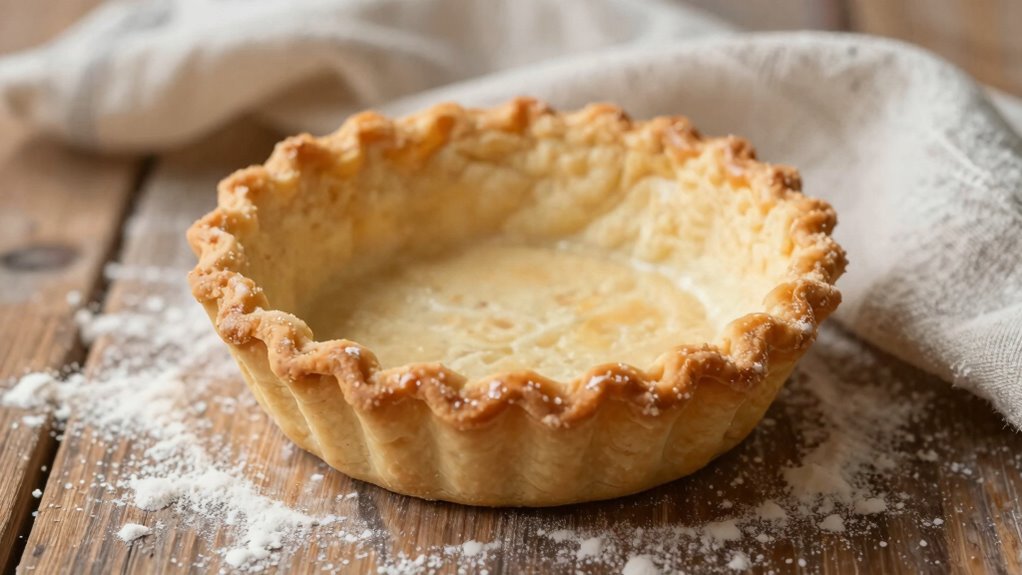

To save tart shells from cracking or shrinking, you need to give your dough proper rest. Wrap it tightly in plastic, shape it into a disc, and chill for at least 30 minutes. Resting relaxes gluten, firms fats, and guarantees even hydration, making the dough easier to handle and shape. Keep it cold but pliable during rolling. Start mastering this technique now, and you’ll be surprised how perfect your tart shells can turn out.
Key Takeaways
- Rest dough in the fridge for at least 30 minutes to relax gluten and solidify fats.
- Wrap dough tightly in plastic to maintain consistent temperature and prevent drying out.
- Shape dough into a disc before chilling for easier rolling and even temperature distribution.
- Let dough sit at room temperature briefly before rolling to improve pliability.
- Proper resting ensures the tart shell maintains shape, stays tender, and avoids cracking or shrinking.
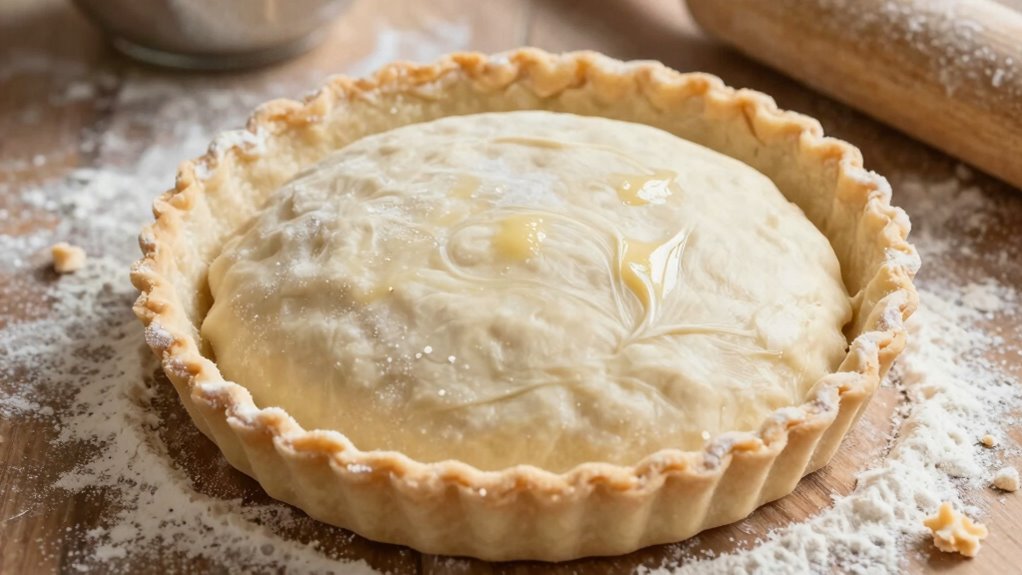
Have you ever struggled with flaky, tender tart shells that crack or shrink during baking? It’s frustrating when your beautiful dough just doesn’t hold together or ends up misshapen after going into the oven. The secret often lies in how you handle the dough before it hits the oven. Achieving the perfect dough elasticity is essential; it guarantees your tart shells are tender yet sturdy enough to hold fillings without cracking or shrinking. When your dough is well-rested, it becomes more elastic, making it easier to roll out smoothly and maintain its shape.
Resting temperature plays a pivotal role here. If your dough is too warm, it becomes sticky and difficult to work with—making it prone to tearing or shrinking during baking. Conversely, if it’s too cold, it’s stiff and hard to roll out evenly. The ideal resting temperature is just cool enough to firm up the fats without making the dough brittle. Chilling the dough in the refrigerator for at least 30 minutes allows the gluten to relax and the fats to solidify. This balance enhances dough elasticity, giving you better control and reducing the risk of cracks or shrinkage when baking. Additionally, dough resting techniques like wrapping tightly in plastic wrap help maintain an even temperature and prevent moisture loss.
When you’re preparing your tart dough, incorporate the right amount of cold fat and guarantee your ingredients are chilled. This helps in achieving the right dough consistency and elasticity. After mixing, shape the dough into a disc and wrap it tightly in plastic wrap. Resting it in the fridge at the right temperature for at least half an hour allows the gluten to relax, which is key to preventing shrinkage. During this resting period, the flour fully hydrates, and the fats become firm, making the dough less sticky and more pliable. Proper dough hydration is crucial for a smooth rolling experience and a flawless tart shell. This step is often overlooked but is indispensable for a smooth rolling experience and a flawless tart shell.
Furthermore, understanding the role of resting time in developing the dough’s structure can make a significant difference in your baking outcomes. Once rested, take the dough out of the fridge and let it sit at room temperature briefly—just enough to make it easier to roll without warming it too much. As you roll, keep the dough cold but pliable, maintaining its elasticity. If you notice it cracking, it’s a sign that it needs a little more resting time or that the dough is too warm. Properly rested dough retains its shape during baking, resulting in a tender, flaky shell that doesn’t crack or shrink. Mastering this resting technique transforms your tart shells from temperamental to perfect, guaranteeing a beautiful, professional-looking finish every time.

Hans Grill Pizza Dough Proofing Box – Pack of 2 Stackable BPA-Free Trays with Covers – Perfect as a Bread Proofing Box and Dough Container – Premium Quality Pizza Storage Container (2 Pack Large)
- Keeps Dough Fresh: Maintains optimal dough texture and freshness
- Large Capacity: Holds up to 6 dough balls per container
- Multi-Purpose Use: Suitable for fruits, vegetables, and food storage
As an affiliate, we earn on qualifying purchases.
As an affiliate, we earn on qualifying purchases.
Frequently Asked Questions
Can Dough Rest Time Vary for Different Types of Tart Shells?
Yes, dough rest time can vary for different tart shells. Longer resting periods improve dough elasticity, making it easier to roll out and shape, especially for delicate shells. Additionally, resting allows flavors to develop fully, enhancing taste. For certain types like pâte sablée, a longer rest can be beneficial, while more tender or flaky shells might need shorter times. Adjust your resting time based on the dough’s texture and flavor goals.
What Are Common Signs of Over-Rested or Under-Rested Dough?
Over-rested dough feels like a tired dancer—sticky, overly relaxed, losing its elasticity, making it hard to work with. Under-rested dough, on the other hand, is tight and brittle, resisting shaping and lacking tenderness. You’ll notice a dull flavor development if it’s over-rested, while under-rested dough might taste bland. Pay attention to elasticity and flavor; they’re your clues to perfect tart shells every time.
Is Refrigeration Necessary During the Dough Rest Period?
Refrigeration isn’t strictly necessary during the dough rest period, but it’s highly recommended. It helps control the dough temperature, preventing it from becoming too warm and sticky. Resting duration varies, but chilling for at least 30 minutes allows the gluten to relax and flavors to develop. If your dough feels soft or warm, refrigerate it to maintain ideal texture and ease of handling.
How Does Dough Resting Affect the Tart Shell’s Texture?
Dough resting improves the tart shell’s texture by allowing gluten development, which creates a tender, flaky crust. It also enhances flavor, as resting gives the ingredients time to meld and develop richer notes. During this period, the dough’s structure becomes more manageable, making it easier to roll out evenly. Resting is a vital step that results in a more flavorful, perfectly textured tart shell, elevating your baking results.
Can You Freeze Dough During the Resting Process?
Did you know that freezing dough can extend its shelf life by up to three months? Yes, you can freeze dough during resting, but it may affect resting time variability. To do this effectively, wrap the dough tightly and freeze it for up to a month. When ready, thaw it in the fridge overnight, then proceed with your recipe. Freezing helps preserve freshness, but plan for slightly longer resting times afterward.

MAQIHAN 100 Bowl Covers Bread Proofing – Extra Large Plastic Wrap for Food
- Elastic Edge for Easy Fit: Stretchable elastic cord for secure fit
- Durable and Reusable Material: Thick, tear-resistant, washable plastic
- Dust Protection and Visibility: Keeps food clean and easily identifiable
As an affiliate, we earn on qualifying purchases.
As an affiliate, we earn on qualifying purchases.
Conclusion
So, next time you’re about to toss out a stubborn tart shell, remember that a simple dough rest might just be your secret weapon. It’s funny how a little patience can turn a flaky disaster into a perfect crust. Sometimes, the tiniest details—like giving your dough time to relax—make all the difference. Trust that quiet pause; it might save your tart and surprise you with a flawless finish you didn’t expect.

RICHSC-PAN Mini Tart Pan 12PCS, 4 Inch Tart Pan Removable Bottom Non-Stick.
- Set of 12 Mini Tart Pans: Includes 12 non-stick 4-inch pans
- High-Quality Carbon Steel: Durable construction with advanced coating
- Removable Bottom Design: Easy release and clean-up
As an affiliate, we earn on qualifying purchases.
As an affiliate, we earn on qualifying purchases.

Adjustable Rolling Pin with Thickness Rings for Baking, Stainless Steel Designs Dough Roller Pins for Cookie Decorating Baking Supplies Fondant Cake Baker
- Material: Stainless steel for durability and rust resistance
- Length: 17-inch rolling pin for versatile use
- Adjustable Rings: Includes 1/16, 1/8, 1/4, 3/8 inch rings
As an affiliate, we earn on qualifying purchases.
As an affiliate, we earn on qualifying purchases.