Your pie dough can shrink even after chilling if you overwork it, causing too much gluten development that leads to toughness and contraction. Uneven fat distribution or improper temperatures during baking can also cause shrinkage, as melting fats create gaps and weaken the dough’s structure. Proper handling, gentle mixing, and chilling help stabilize the dough, but if these aren’t balanced, shrinking can still happen. Keep exploring to discover how to achieve a perfectly stable crust.
Key Takeaways
- Overworking or excessive kneading develops gluten, causing the dough to shrink during baking.
- Uneven fat distribution creates gaps that lead to crust contraction as fats melt.
- High oven temperatures cause rapid fat melting, resulting in shrinkage during baking.
- Insufficient chilling or handling can fail to set the dough’s structure, leading to shrinking.
- Overmixing the dough weakens the gluten network, making it more prone to shrinking even after chilling.
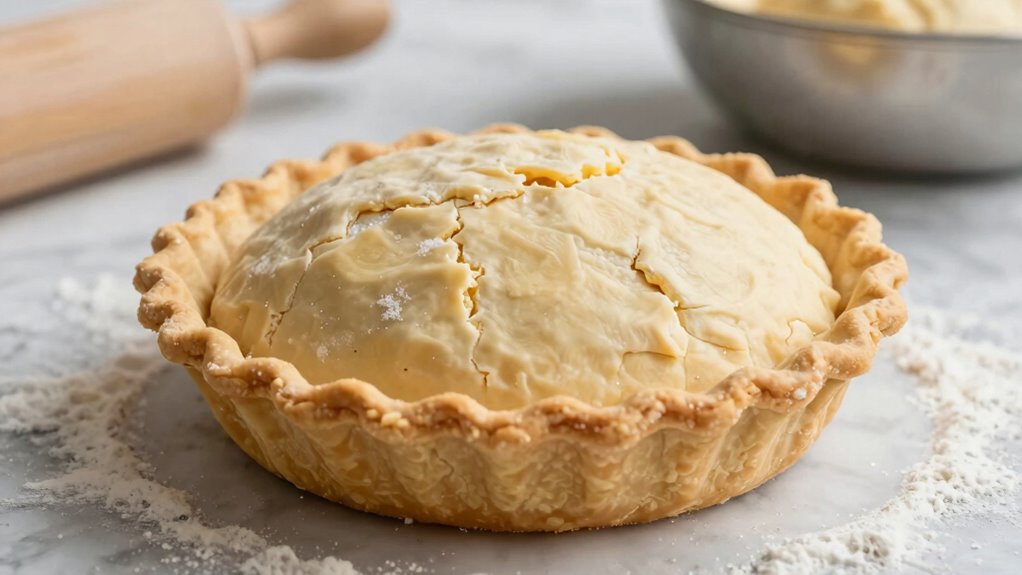
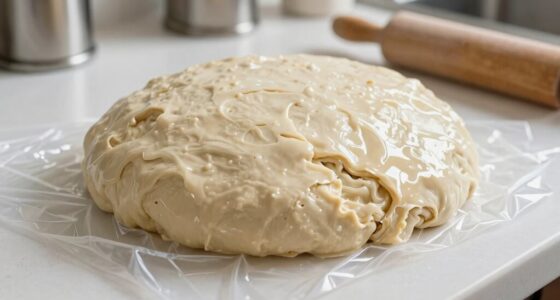
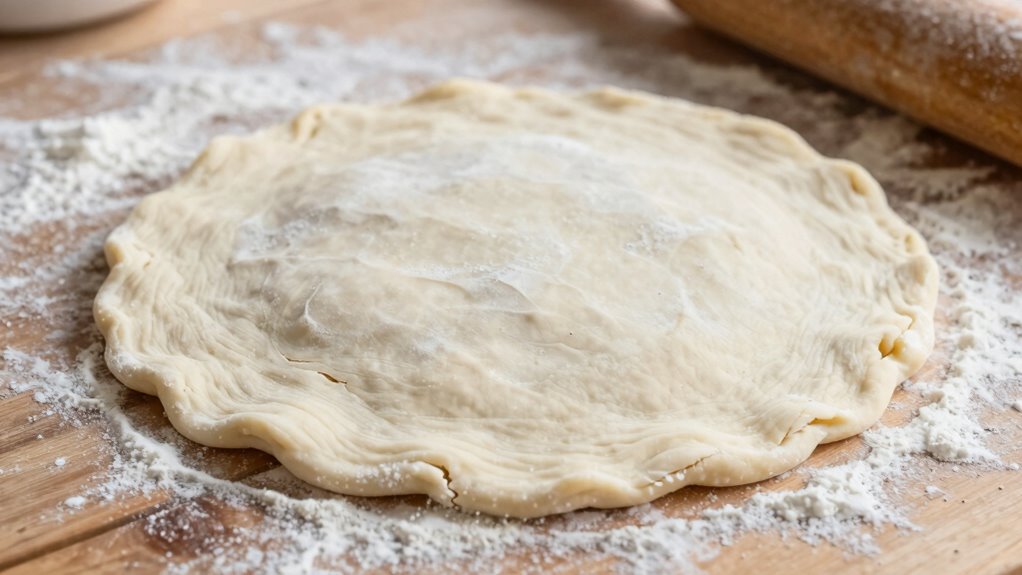
Pie dough shrinking even after a long chill can be frustrating, but understanding what causes it can help you fix the problem. One key factor is gluten development. When you mix your dough, gluten proteins form a network that provides elasticity, which is great for shaping and handling. However, if you develop too much gluten—by overworking the dough or kneading it excessively—the crust becomes tough and more prone to shrinking during baking. The elasticity pulls inward as the dough heats, causing the crust to contract and pull away from the sides of the pan. To prevent this, handle your dough gently, mixing just enough to bring it together, and avoid kneading it like bread dough.
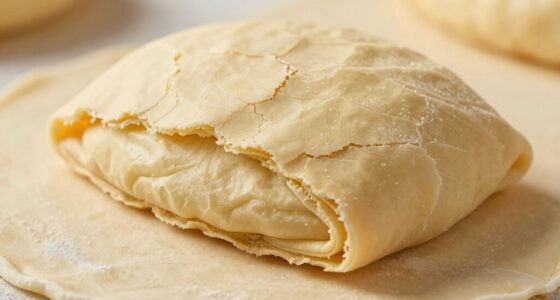
Another crucial aspect is fat distribution within the dough. Fat, typically butter or shortening, coats the flour particles and inhibits gluten formation. When distributed evenly, fat ensures a tender, flaky crust that holds its shape. If the fat isn’t well incorporated or if chunks of it remain unevenly dispersed, the dough can bake unevenly and be more susceptible to shrinking. When fats melt during baking, the gaps they leave behind can cause the crust to contract, especially if the dough was overworked or had too much moisture. Chilling the dough helps the fat to solidify, creating a barrier that limits gluten development and maintains the dough’s structure. Proper fat distribution is essential to prevent shrinkage and ensure a tender crust. Additionally, understanding the temperature at which you bake and chill your dough can significantly influence the final result. Proper temperature control can help reinforce the dough’s structure during baking. Moreover, controlling the hydration level of your dough can also impact its ability to retain shape, as excess moisture can weaken the gluten network. However, even after a long chill, if your dough was overmixed or if the fat wasn’t evenly distributed to start with, shrinkage can still occur. Controlling gluten formation through gentle handling and precise mixing is key to a stable crust.
Temperature also plays a role. If you don’t chill the dough long enough or if your oven temperature is too high, the rapid expansion of the fat as it melts can lead to shrinkage. Allowing the dough to chill thoroughly slows down gluten development and sets the fat in place, giving the crust a better chance to retain its shape. Still, if the dough is overmixed or if the fat isn’t properly incorporated, chilling won’t fully prevent shrinking. It’s a delicate balance: handle your dough just enough to develop structure without overworking it, and ensure even fat distribution for a tender, stable crust.
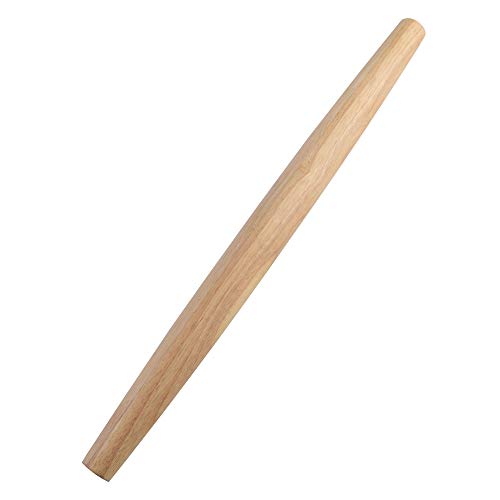
French Rolling Pin (17 Inches) –WoodenRoll Pin for Fondant, Pie Crust, Cookie, Pastry, Dough –Tapered Design & Smooth Construction – Essential Kitchen Utensil
Solid Wood Construction: This rolling pin is made from solid rubber wood for required durability and long-lasting use….
As an affiliate, we earn on qualifying purchases.
As an affiliate, we earn on qualifying purchases.
Frequently Asked Questions
Can Overworking the Dough Cause Shrinkage?
Yes, overworking the dough can cause shrinkage because it affects dough elasticity, making it less flexible. When you knead or handle the dough too much, gluten develops more, leading to a tougher texture that contracts during baking. Using a flour type with higher protein content creates more gluten, increasing shrinkage risk. To prevent this, handle the dough gently and avoid overmixing, especially after chilling.
Does Using Cold Ingredients Prevent Dough Shrinkage?
Using cold ingredients helps prevent dough shrinkage because it slows gluten development, maintaining better dough elasticity. When you start with cold butter and water, the dough remains less sticky and easier to handle. During baking, maintaining an appropriate baking temperature ensures the butter melts evenly, reducing shrinkage. So, cold ingredients combined with proper baking temperature keep your pie crust firm and stop it from shrinking as it bakes.
How Does Gluten Development Affect Pie Dough Shrinking?
A chain is only as strong as its weakest link, and the same applies to dough. When gluten develops too much, the gluten structure becomes overly elastic, causing the dough to shrink as it bakes. Overworking your dough increases elasticity, making it prone to shrinking. To prevent this, handle your dough gently, limit kneading, and let it rest. Proper gluten development guarantees a tender, flaky crust without unwanted shrinkage.
Is It Necessary to Prick the Dough Before Chilling?
It’s not necessary to prick the dough before chilling, but doing so can help manage dough elasticity and prevent bubbles during baking. Pricking allows steam to escape and promotes even chilling, which can minimize shrinking caused by uneven gluten development. If you want a smoother, more uniform crust, a gentle prick before chilling is beneficial. Otherwise, the chilling process alone often suffices to relax the dough’s gluten and reduce shrinkage.
Does Adding More Fat Reduce Dough Shrinkage?
Adding more fat can help reduce dough shrinkage, but beware—too much can make it greasy. Fat acts as a barrier, preventing gluten from developing too strong, which keeps the dough from pulling away during baking. Keep in mind, sugar crystallization and ingredient temperature also play roles; cold ingredients and minimal sugar can help maintain dough’s stability. So, strike a balance for a perfect, shrink-free crust.

Pro Dough Pastry Scraper/Cutter/Chopper Stainless Steel Mirror Polished with Measuring Scale Multipurpose- Cake, Pizza Cutter – Pastry Bread Separator Scale Knife
【Simple and Modern style】Pizz cutter/Dough scraper/Dough Cutter designed to scrape and split bread dough,So it's easy to use…
As an affiliate, we earn on qualifying purchases.
As an affiliate, we earn on qualifying purchases.
Conclusion
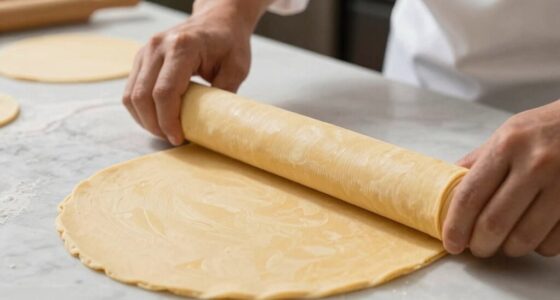
Even after a long chill, your pie dough might still pull away like a stubborn tide. Remember, patience is your best ally—give it gentle coaxing, not force. When you finally roll it out, treat it like a delicate dance partner, guiding it softly to prevent further shrinkage. With a little love and understanding, your crust will blossom perfectly, wrapping your filling in a tender embrace, ready to delight with every buttery, flaky bite.
flaky pie crust baking mat
As an affiliate, we earn on qualifying purchases.
As an affiliate, we earn on qualifying purchases.
butter for pie crust
As an affiliate, we earn on qualifying purchases.
As an affiliate, we earn on qualifying purchases.